

Poly Bushes vs Rubber Bushes: Which Is Best?
Posted by Matthew Marks on 1st Aug 2024
Poly Bushes vs Rubber Bushes: Which Is Better for Your Car?
Rubber bushes and polyurethane bushes both work, but they suit different cars. The right choice depends on whether you care more about comfort and refinement or sharper steering and suspension control.
At Exoracing, we help UK enthusiasts choose suspension parts for daily drivers, fast road cars, track builds and drift cars, so the best answer is usually based on how the car is actually used.
Shop Hardrace Suspension PartsIf your car feels vague, knocks over bumps, wanders under braking or refuses to hold alignment properly, worn suspension bushes can be part of the problem. Replacing them with fresh rubber, hardened rubber, polyurethane, or spherical bushes can change how the car feels more than many people expect.
This guide explains the real difference between rubber and polyurethane bushings, when poly bushes are worth it, when rubber is still the better choice, and what to check before fitting them.
The simple answer
Rubber bushes are usually best for comfort, low noise and a factory-style ride. They are a good choice for standard daily drivers and restorations where refinement matters.
Polyurethane bushes are usually better if you want sharper steering, better feedback and more consistent suspension geometry under braking, cornering and acceleration.
Hardened rubber sits between the two, while spherical or pillowball bushes are best kept for serious track, drift or race use where precision matters more than comfort.
- Choose rubber bushes if comfort, quietness and original road feel matter most.
- Choose poly bushes if you want sharper handling, cleaner steering response and less unwanted suspension movement.
- Use hardened rubber if you want a road-friendly middle ground.
- Use spherical bushes only when the car is focused on track, drift or race performance.
- Always inspect worn parts, fit bushes correctly and book an alignment after major suspension bush work.
Poly bushes vs rubber bushes: quick decision table
The easiest way to choose is to start with the car's job. A comfortable commuter, a fast road car and a track car should not always use the same bush setup.
Best for low noise, soft ride quality and factory-style refinement.
A useful upgrade if you want a tighter response without making the car too harsh.
Better for keeping geometry stable when the suspension is loaded hard.
Often, the best choice if the goal is to make an older car feel tight again without changing its character.
Why do most road cars use rubber bushes?
Most road cars leave the factory with rubber bushes because rubber is quiet, flexible and comfortable. It absorbs sharp bumps, helps reduce road noise and makes a car feel more civilised on poor roads.
That does not mean rubber is bad. Fresh OEM-style rubber bushes can transform an older car that has perished, cracked or separated bushes. If your goal is to restore the original ride quality, rubber is often the correct answer.
The compromise is movement. Rubber allows the suspension arms, subframes and anti-roll bars to move more under load. That helps comfort, but it can also make the steering feel softer and the alignment less consistent when you brake hard, turn in quickly or load the car up through a bend.

How do polyurethane bushes improve handling?
Polyurethane bushes are stiffer than normal rubber bushes, so they reduce unwanted flex in the suspension. This helps the suspension arms hold their position more accurately when the car is under load.
Think of your alignment settings as a target. They only work properly if the suspension can hold those angles while the car is moving. If the bushes flex heavily under braking, cornering or acceleration, the wheel can move away from the alignment position you paid to set.
With less bush movement, the car can feel more direct. Steering response is usually cleaner, the front end can react faster, and the car can feel more stable when loaded through a corner. This is why poly bushes are popular on fast road, track and drift builds.
Bushes are not a replacement for a good suspension setup, though. They work best as part of a wider package with healthy arms, correct torque settings, good tyres and a proper alignment. If you are also upgrading dampers, our coilovers guide explains how ride height, damping and alignment work together.
Are poly bushes worth it?
Poly bushes are worth it if you want the car to feel more precise and you are happy to accept a little more noise, vibration and harshness. They make the most sense when the car is driven hard enough for the standard rubber bushes to feel vague or inconsistent.
They are less worthwhile if the car is a comfort-focused daily driver, and the existing bushes are only being replaced because they are worn. In that case, fresh rubber or hardened rubber may be a better balance.
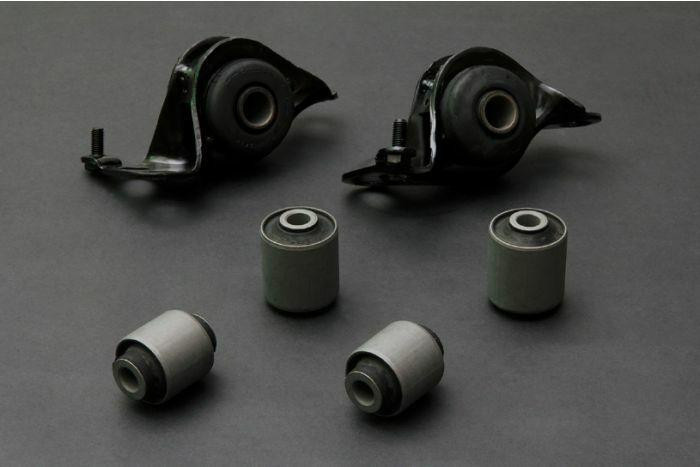 Hardrace Front Lower Control Arm Bushes Rubber For Honda Civic EG DC2 92-00
A hardened-rubber front arm bush option for tightening control while keeping a more road-friendly feel than a full spherical setup.
From £144.30
 Hardrace Rear Upper Camber Arms Rubber For Honda Civic CRX EF EG EK DC2 88-00
A road-friendly option for improving rear alignment control while keeping a more compliant rubber-bushed feel.
From £99.89
Do poly bushes make a car noisy or uncomfortable?
They can, but it depends on the bush position, hardness, car setup and installation quality. A sensible poly bush upgrade on a road car does not automatically make the car unpleasant, but it will normally transmit more road feel than soft factory rubber.
Squeaking is one of the biggest concerns. In many cases, squeaks come from poor lubrication, incorrect fitting, contaminated sleeves or low-quality bush design rather than polyurethane itself. Use the correct grease, follow the manufacturer's instructions and make sure the bush is not being twisted or clamped incorrectly.
From our experience with suspension part enquiries, the harshest setups usually come from replacing too many comfort-critical bushes with very hard material at the same time. If the car still needs to be pleasant on the road, upgrade in stages and judge the result.

How do you know if suspension bushes need replacing?
Worn bushes are often found during an MOT or suspension inspection, but you can also look for obvious symptoms. Rubber bushes can crack, perish, split or separate from their metal sleeve. Poly bushes can wear, dry out, move in the housing or become noisy if fitted incorrectly.
Inspect the full suspension rather than assuming the bush is the only issue.
Worn control arm, steering rack or subframe bushes can reduce steering accuracy.
The wheel can move backwards, or the toe can change as the bush deflects.
Check bushes, arms and joints before paying for repeated alignments.
If you are refreshing more than just bushes, our Honda Civic EP3 suspension guide is useful for understanding how bushes, arms, coilovers and alignment changes fit together.
What do poly bush hardness ratings mean?
Some polyurethane bushes are available in different hardness ratings, often measured on the Shore A scale. A lower number is softer and more road-friendly. A higher number is stiffer and more focused on response, control and aggressive use.

Softer and more forgiving than harder motorsport-focused options.
A common middle ground for cars that still see road miles.
Stiffer response, but more likely to increase harshness on the road.
Usually too firm for comfort-focused road cars.
Do not choose purely by the number. Bush location matters just as much. A firmer anti-roll bar bush may be acceptable on a road car, while an ultra-hard control arm bush can make the same car feel much harsher.
Rubber, hardened rubber, polyurethane or spherical: what should you fit?
The material is only part of the choice. The correct bush also depends on the part of the car, the road surface, tyre grip, damper setup and how much noise you are willing to live with.
Best for quiet daily drivers, but allows more movement.
A useful middle ground when you want more control without a full poly feel.
Good for fast road and track use, but can increase noise and harshness.
Excellent for serious use, but usually too noisy and unforgiving for comfort.
If steering feel matters to you, it is also worth looking at the driver contact points. Our guide on how to choose a steering wheel explains how wheel size, shape and dish can affect feedback from the car.
 Hardrace Rear Trailing Arm Bushes Hardened Rubber 2pc For Honda Civic 88-00
A popular hardened-rubber refresh option for older Civic rear suspension, where road manners still matter.
From £91.49
 Hardrace Front Lower Arm Bushes Caster Increase Spherical For Honda Civic Integra EP3 DC5 01-05
A track-focused spherical option for drivers chasing sharper caster, steering precision and front-end response.
From £378.18
Common mistakes when choosing bushes
Choosing the stiffest bush because it sounds best
The stiffest option is not always the fastest or nicest to drive. If the car is too harsh, skips over rough roads or makes every journey tiring, it may be worse for your use case.
Replace bushes before checking the rest of the suspension
Bushes can make a big difference, but worn ball joints, bent arms, tired dampers, poor tyres or loose hardware can cause similar symptoms. Inspect the whole corner before ordering parts.
Skipping the alignment afterwards
Fresh bushes can change how the car sits and behaves under load. If you replace the control arm, camber, toe, subframe or steering-related bushes, book a proper alignment afterwards.
Fitting offset bushes in the wrong orientation
Offset camber or caster bushes must be fitted in the correct position. If the orientation is wrong, you may not get the intended geometry change, and the car can feel worse rather than better.
How do you fit replacement suspension bushes?
Some polyurethane bushes come as two-piece designs with two bush halves and a metal insert. Others are bonded into a metal outer sleeve and need pressing into the arm or housing.
For many people, removing the old bush is harder than fitting the new one. Old rubber can be seized, bonded tightly or difficult to remove without damaging the arm. If you do not have access to a press, it can be worth removing the arms and taking them to a garage or specialist to have the bushes pressed out and fitted correctly.

After fitting, recheck all hardware after the first few drives and again after the car has settled. If the bush manufacturer supplies specific grease, sleeves, washers or orientation notes, follow those instructions rather than treating every bush the same.
What happens if you ignore worn bushes?
Ignoring worn bushes can make the car less predictable. The wheel may move around more than it should, the alignment can change under load, and the car may feel unsettled when braking or cornering.
It can also waste money. If the bushes are badly worn, repeated alignments may not hold properly, and tyres can wear unevenly. In more serious cases, worn bushes can put extra stress on arms, joints and surrounding hardware.
If the car is knocking, wandering or wearing tyres oddly, do not just fit stiffer parts and hope for the best. Diagnose the cause, replace worn components, then choose the bush material that suits how the car is used.
Common concerns about polyurethane bushes
Will poly bushes ruin a daily driver?
Not always. Sensible poly bush choices can work well on a daily-driven fast road car. Problems usually come from using very hard bushes in comfort-critical locations or replacing every bush without thinking about the car's real use.
Are polyurethane bushings better than rubber?
They are better for handling precision and feedback, but not always better for comfort. Rubber is still better when quietness and refinement are the main goals.
Do polyurethane bushes last longer than rubber?
Good quality polyurethane bushes can last a long time when fitted and lubricated correctly. Lifespan still depends on road use, contamination, installation quality, bush design and the part of the car they are fitted to.
FAQs about poly bushes and rubber bushes
What are poly bushes?
Poly bushes are suspension bushes made from polyurethane. They replace standard rubber bushes and are normally used to reduce unwanted movement in suspension arms, anti-roll bars, steering racks, subframes and other mounting points.
Do poly bushes make a difference?
Yes, they can make a noticeable difference if the original bushes are worn or too soft for the way the car is driven. The main difference is usually sharper steering response, better feedback and more consistent suspension movement.
Are poly bushes good for road cars?
They can be good for road cars, especially fast road builds, but the choice needs to be sensible. Softer or well-designed poly bushes in the right locations can improve feel without making the car too harsh.
Are rubber bushings better for daily driving?
Rubber bushings are usually better for daily driving if comfort, low noise and a factory-style ride are the main priorities. Fresh rubber can also be a big improvement over old, worn rubber.
Do polyurethane bushings squeak?
They can squeak if they are dry, incorrectly lubricated, badly fitted or of poor quality. A good kit fitted with the correct grease and hardware should not automatically be noisy.
Should I replace all bushes at once?
Not always. If comfort matters, it can be better to replace the most important worn or movement-heavy bushes first, then judge the result. Full bush kits make more sense for track, drift, or complete restoration builds.
Are spherical bushes better than polyurethane?
Spherical bushes can be more precise than polyurethane, but they usually transmit more noise and harshness. They are best suited to serious performance use rather than comfort-focused daily driving.
Do I need an alignment after fitting poly bushes?
Yes, if you replace bushes that affect suspension arm position, steering geometry, camber, caster, toe or subframe alignment. Fresh bushes can change how the car sits and how the alignment holds under load.
Conclusion: Should you choose rubber or poly bushes?
Choose rubber bushes if you want comfort, low noise and a factory-style ride. Choose polyurethane bushes if you want sharper handling, better steering feel and more consistent suspension control when the car is driven harder.
For many fast road cars, the best setup is not the stiffest possible option. It is the setup that removes the movement you can feel without making the car unpleasant to use. That might mean poly bushes in key locations, hardened rubber elsewhere, and spherical bushes only where the car's purpose justifies them.
If you are ready to choose parts, browse our Hardrace suspension parts. If you are unsure which setup suits your car, contact us, and we will help point you in the right direction.
Shop Hardrace Suspension PartsAbout the Author
Exoracing is a UK-based performance parts specialist helping enthusiasts and workshops choose the right parts for road, track and modified cars since 2018.
Our guidance is built around practical fitment, product knowledge and helping customers choose parts that suit how their cars are really used.