
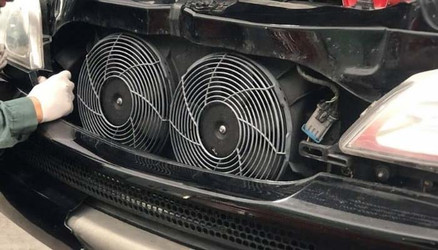
How to Choose the Right Radiator Fan: Size, CFM, Push vs Pull
Posted by Matthew Marks on 1st Aug 2024
How to Choose the Right Radiator Fan for Your Car
If your car runs hot in traffic, after hard driving, or during long summer journeys, the radiator fan is one of the first parts worth checking.
At Exoracing, we stock SPAL radiator fans and help customers choose cooling parts for modified cars, so we see how fan size, airflow, clearance and mounting choice affect real setups.
Shop SPAL Radiator FansA good radiator fan helps pull heat out of the radiator when road speed alone is not enough. That makes it important for road cars, track cars, drift cars, engine swaps and turbo builds where engine bay heat and low-speed airflow can quickly become a problem.
The right choice is not always the biggest fan you can physically fit. You need to consider push or pull direction, fan depth, CFM, current draw, shroud design, radiator condition and how the car is actually used.
The simple answer
For most modified cars, the best radiator fan setup is a quality electric pull fan mounted behind the radiator with a properly designed shroud.
Use a push fan only when you do not have enough clearance behind the radiator. Choose the fan based on available space, airflow requirement, electrical load and whether the radiator and coolant system are already healthy.
If the car still overheats with the fan working, the issue may be the radiator, thermostat, water pump, coolant bleeding, ducting or trapped heat in the engine bay.
- Pull fans are usually the best choice when there is enough room behind the radiator.
- Push fans are useful when engine bay clearance is tight behind the radiator.
- A shroud helps the fan pull air through more of the radiator core, not just one small area.
- Fan diameter, depth, CFM, current draw and mounting position all matter.
- Turbo, track, drift and thick-radiator setups usually need stronger cooling support than standard road cars.
What Does a Radiator Fan Do?
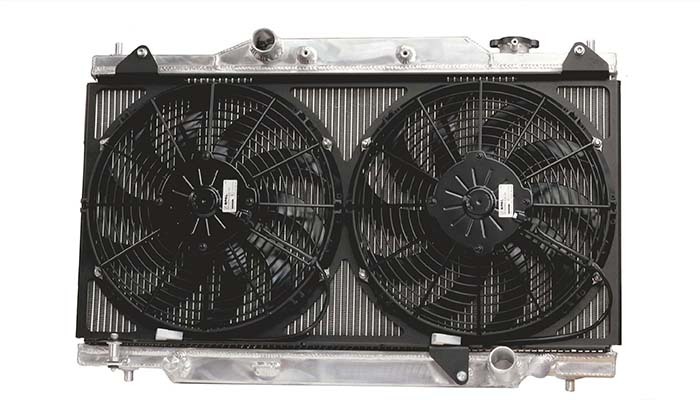
A radiator fan moves air through the radiator core so heat can transfer out of the coolant. When the car is moving quickly, natural airflow through the front of the car does much of the work. When the car is stationary, moving slowly, sitting in traffic or cooling down after hard driving, the fan becomes much more important.
If the fan cannot move enough air through the radiator, the coolant temperature can keep climbing. That can lead to overheating, boiling coolant, reduced performance and expensive engine damage.
This matters even more on modified cars. More power usually means more heat, and parts such as turbo kits, intercoolers, thicker radiators, oil coolers and air conditioning condensers can all affect the airflow reaching the radiator.
Radiator fan vs cooling fan
In most car searches, radiator fan and engine cooling fan mean the same thing. Both usually describe the fan that moves air through the radiator to help control coolant temperature.
Some vehicles also have extra fans for the air conditioning condenser or auxiliary cooling. For most aftermarket cooling upgrades, the main decision is still choosing the correct fan to move enough air through the radiator without causing fitment, wiring or airflow problems.
Why the Fan Shroud Matters
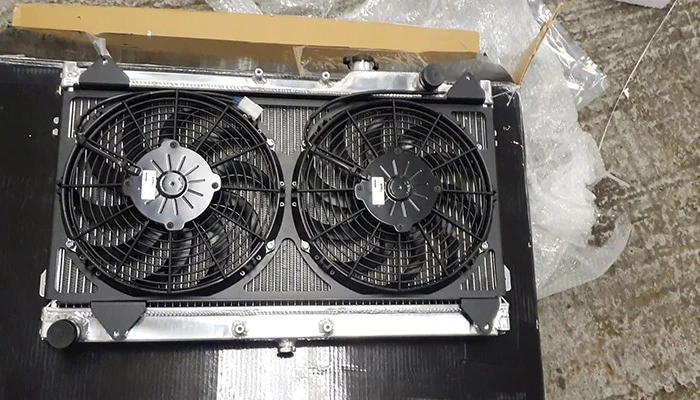
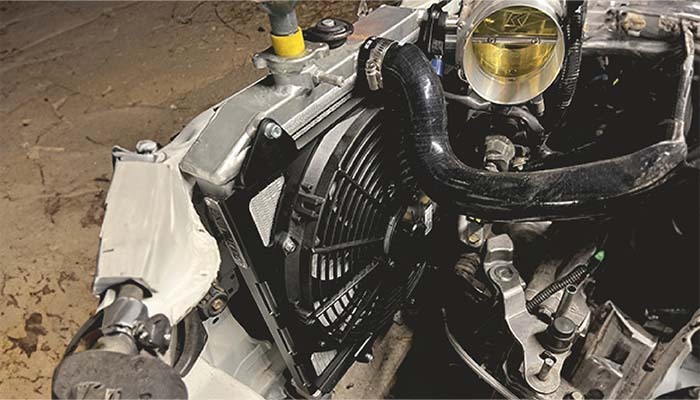
A radiator fan shroud helps the fan pull air through more of the radiator core. Without a good shroud or close mounting, the fan may only move air through the area directly in front of the blades.
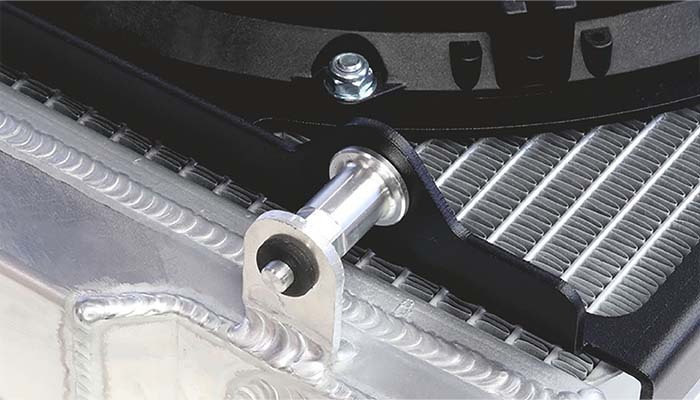
The fan should sit close enough to the radiator core to pull air through it effectively, but not so close that movement or vibration can cause contact. That gap and mounting method matter because poor installation can reduce airflow or mark the core.
If you want the full explanation, our guide to what a fan shroud is and why it is used explains how shrouds affect airflow, clearance and radiator core coverage.
Watch: In our MX5 cooling upgrade video, we show the radiator and fan shroud package fitted on a real car, which is useful if you want to see the layout before choosing parts.
Push vs Pull Radiator Fans

Push and pull describe where the fan sits and which way it moves air through the radiator.
It sits behind the radiator and pulls air through the core, working with the normal airflow path through the front of the car.
It sits in front of the radiator and pushes air through the core, which helps when the engine side is blocked by turbo parts, pipework or limited space.
Which is better, push or pull?
A pull radiator fan is usually better if you have enough space behind the radiator. A push fan is the practical choice when rear clearance is limited. The best setup depends on fitment, airflow path, radiator design and whether you can use a proper shroud.
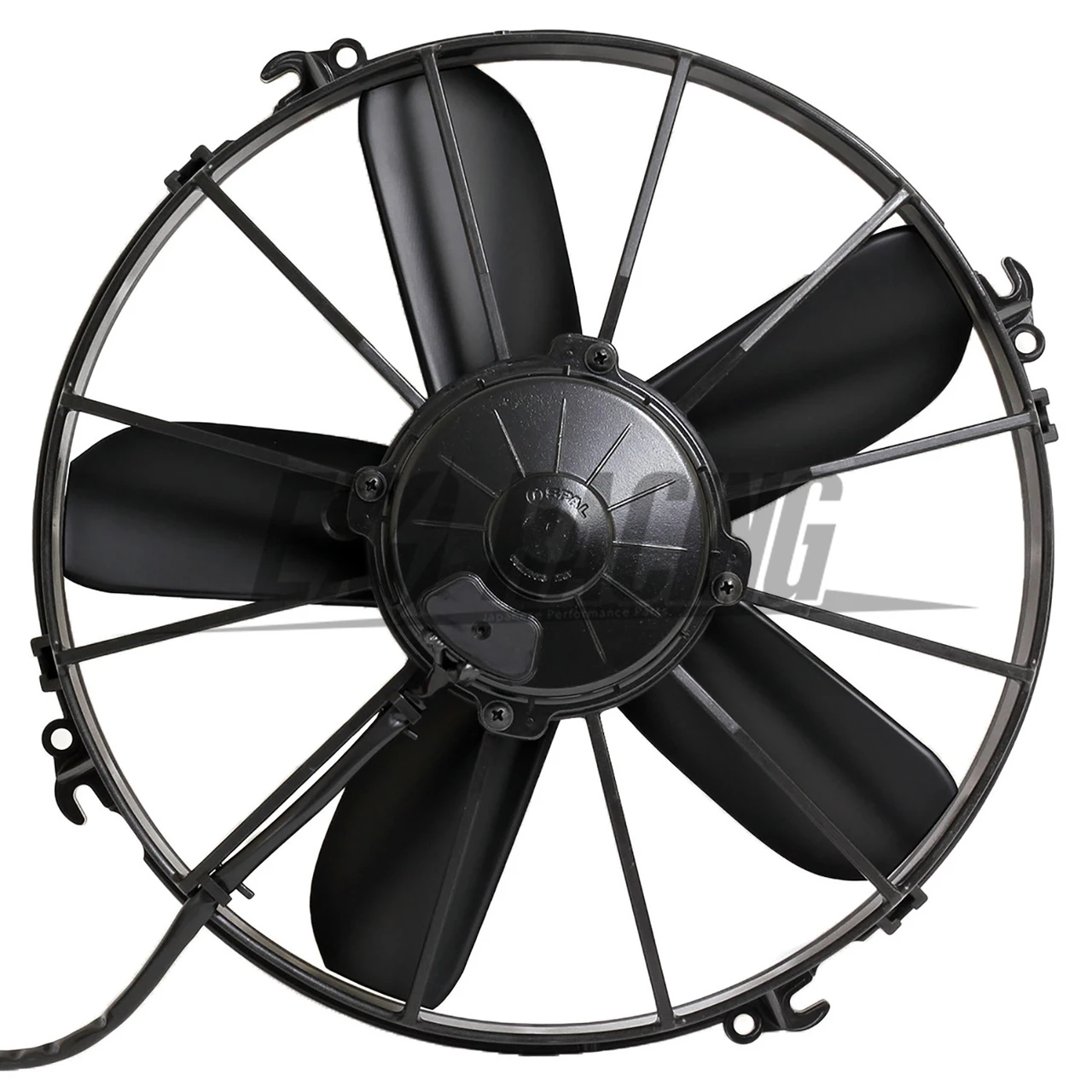
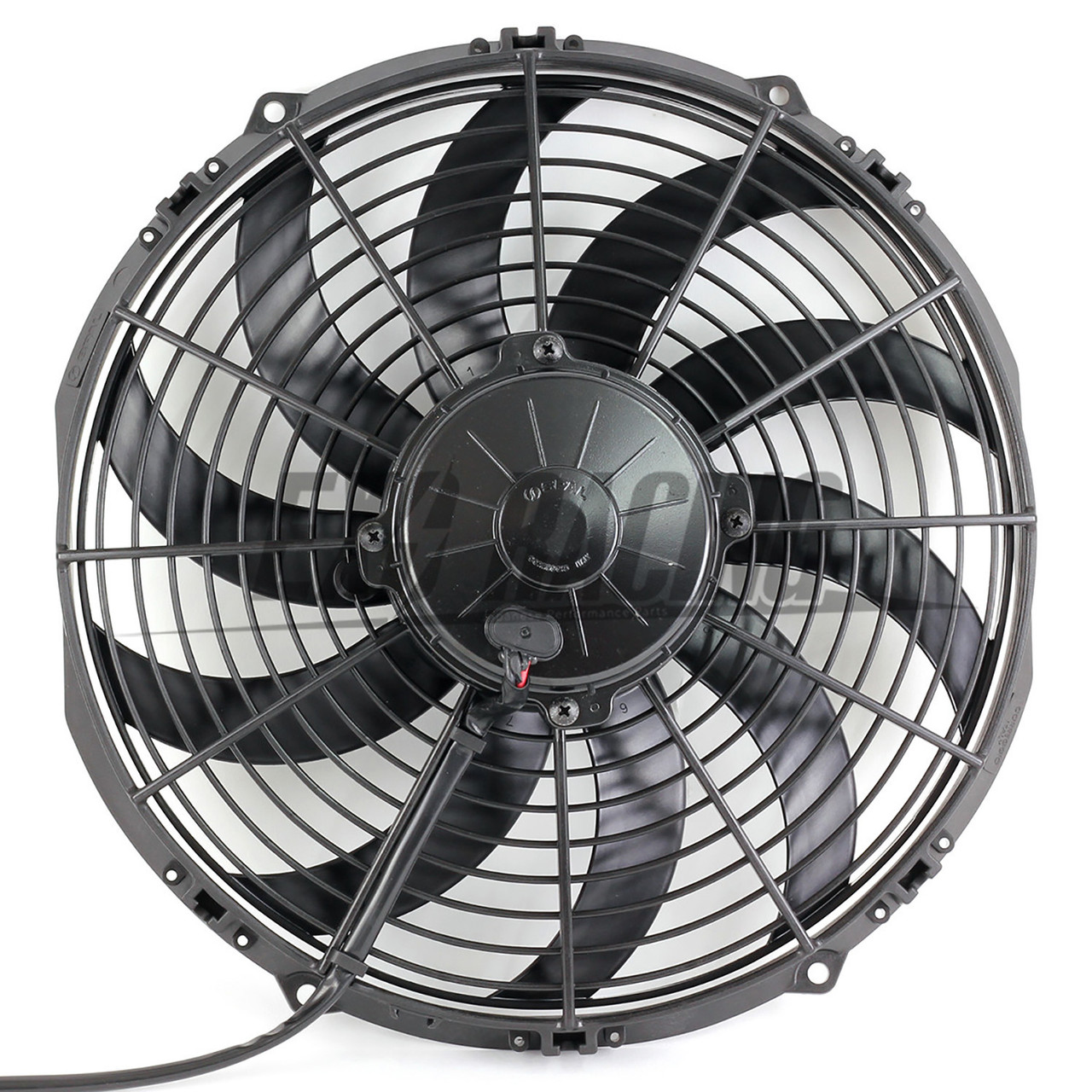 Spal Radiator Fan 12" 305mm Pull 1328Cfm
A strong pull fan option when you have room behind the radiator and want proven SPAL airflow.
From £255.96
 Spal Radiator Fan 12.0" 305mm Push 1687Cfm
A high-flow push fan option for cars where clearance behind the radiator is limited.
From £255.96
Electric vs Mechanical Radiator Fans
Most modern cars use electric radiator fans. Older vehicles may use mechanical or viscous fans driven by the engine. Both can work, but they suit different setups.
Electric radiator fans
Electric radiator fans are powered by an electric motor and controlled by the ECU, a thermostatic switch, a fan controller or a manual switch. They are popular because they can run when needed rather than being tied directly to engine speed.
On our SPAL fan product guidance, we recommend temperature-based control over relying only on a toggle switch. A manual switch can work as an override, but it is easy to forget if there is no automatic control.
Mechanical radiator fans
Mechanical radiator fans are driven by the engine, often through a viscous fan clutch. They are simple and can be durable, but they are less flexible than electric fans and rely on engine speed to move air.
Best for most modified cars, engine swaps, turbo builds and cars with limited mechanical fan space.
Can work well when the clutch, shroud, radiator and engine bay layout are still close to the factory design.
How to Choose the Right Radiator Fan
Before buying a fan, look at the full cooling package rather than only the fan diameter. A fan that is too shallow, too weak, wired incorrectly or mounted in the wrong place may not solve the overheating problem.
1. Measure the available space
Measure height, width and depth around the radiator. Check clearance to the engine, manifold, turbo, belts, pulleys, intercooler pipework, bonnet, slam panel and any existing shroud.
2. Match airflow to the setup
Radiator fan airflow is usually measured in CFM, or cubic feet per minute. Higher CFM can help, but figures are not always tested the same way across every brand. Fan quality, blade design, static pressure, shroud design and mounting position all affect real performance.
3. Consider radiator thickness and blocked airflow
Extra-thick radiators, air conditioning condensers, intercoolers and oil coolers can all make the fan work harder. For these setups, it is worth looking at stronger fan options rather than assuming a basic low-output fan will be enough.
4. Check current draw and wiring
Electric fans can draw a significant amount of current, especially on start-up. Use the correct fuse, relay, wiring gauge, connectors and controller for the fan. Poor wiring can cause voltage drop, slow fan speed, melted connectors or fan failure.
5. Think about how the car is used
A standard road car used for commuting has different cooling needs from a turbocharged track car, drift car or high-power build. The more heat the engine creates, and the more often the car sits at low road speed, the more important fan and shroud performance becomes.
A quality OEM-style or aftermarket electric fan is usually enough if the cooling system is healthy.
Intercoolers and turbo hardware can increase heat and reduce clean airflow to the radiator.
Repeated high-load use means the fan needs to help when the road speed drops.
A slim fan, push fan or suitable mounting solution may be needed to avoid contact.
Radiator Fan Size and CFM
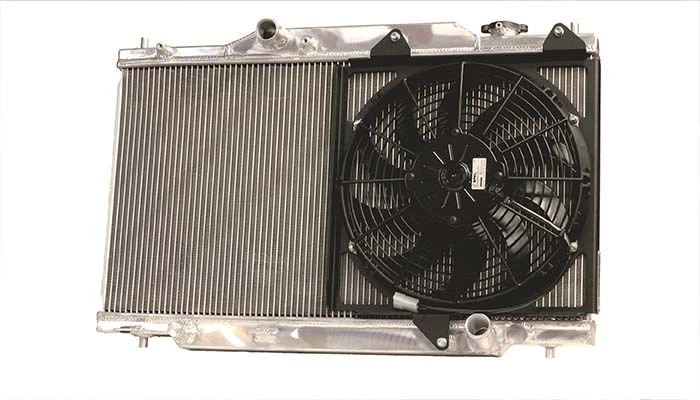
Radiator fan size is usually listed by blade diameter, such as 10 inch, 12 inch, 14 inch or 16 inch. Bigger fans can move more air, but only if they fit properly and have enough motor power behind them.
Depth is often the limiting factor. A slim fan may be needed on a tight car, but a shallow fan is not automatically better if it moves less air than a deeper unit.
Is a bigger radiator fan always better?
No. The best radiator fan is the one that fits correctly, moves enough air, works with the shroud and radiator core, and does not overload the electrical system. A fan that is too big, too deep, poorly mounted or blocking airflow can create new problems.
Can you put any fan on a car radiator?
No. Use an automotive radiator fan designed for engine bay temperatures, vibration, moisture and electrical load. A general-purpose fan or home radiator fan is not suitable for cooling a car engine.
When a Fan Is Not the First Fix
A radiator fan can only help if the rest of the cooling system can actually remove heat. If the radiator is blocked, the thermostat is stuck, the water pump is weak, or the coolant system has air trapped inside it, a stronger fan may not solve the issue.
The same applies to wider engine bay heat. A turbo, manifold or downpipe can radiate heat into nearby wiring, hoses and intake parts even when coolant temperature looks reasonable. In that case, a fan may help airflow, but you may also need proper heat management parts around the source of the heat and the vulnerable components.
Our guide to engine bay heat transfer explains the difference between radiant heat, conductive heat and convective heat if you are trying to diagnose a wider heat problem.
Common Radiator Fan Problems

A blown fuse or failed relay can stop the fan from receiving power.
Directly test the fan before replacing the fan motor.
Stop using the fan if it can touch the radiator core or nearby parts.
A working fan cannot compensate for a blocked radiator or trapped air in the cooling system.
What happens if you ignore it?
Ignoring a weak fan, poor shroud, or cooling fault can lead to repeated overheating, coolant loss, heat-soaked wiring, brittle hoses and avoidable engine damage. The correction is to diagnose the fault first, then improve the fan, shroud, radiator or heat management parts that actually match the problem.
If the issue is broader engine bay temperature rather than only coolant temperature, our guide to engine bay heat problems and simple solutions is a useful next step.
Installation Mistakes to Avoid
Using weak through-core mounts on heavy fans
Through-core mounts can damage radiator fins or tubes if used badly or left to vibrate. On heavier SPAL fans, our product guidance advises against through-core fitting. Use proper brackets, straps or a suitable mounting solution where possible.
Running the fan the wrong way
Some brushed fans can run when wired in reverse, but the blades are designed to work in one direction. Running the wrong direction can reduce airflow and make the fan look weaker than it really is.
Ignoring the electrical load
A high-performance fan can draw more current than a small OEM fan. Use suitable wiring, relays and fuses, and consider staged fan control on twin fan setups to reduce sudden electrical load.
Fitting parts before fixing faults
Do not use a fan upgrade to hide a coolant leak, bad thermostat, slipping water pump, blocked radiator or poor coolant bleeding. Fix the fault first, then upgrade the fan if the setup still needs more low-speed airflow.
Common Concerns Before Buying
Will a higher CFM fan fix overheating?
Only if airflow is the limiting issue. If the radiator is blocked, coolant flow is poor, or the system has air trapped inside it, a higher CFM fan may not fix the root cause.
Do I need a fan shroud?
A shroud is strongly worth considering where the fan only covers part of the radiator, where idle cooling is weak, or where you need a clean vehicle-specific mounting solution. It is not a shortcut for a failed radiator or poor coolant flow.
Should I choose SPAL or a cheaper fan?
For performance and modified cars, we prefer quality fans from proven manufacturers because airflow, motor reliability and water resistance matter. Cheap fans can look similar online, but may not perform the same once fitted in a hot engine bay.
Best Radiator Fan Brands
SPAL Automotive
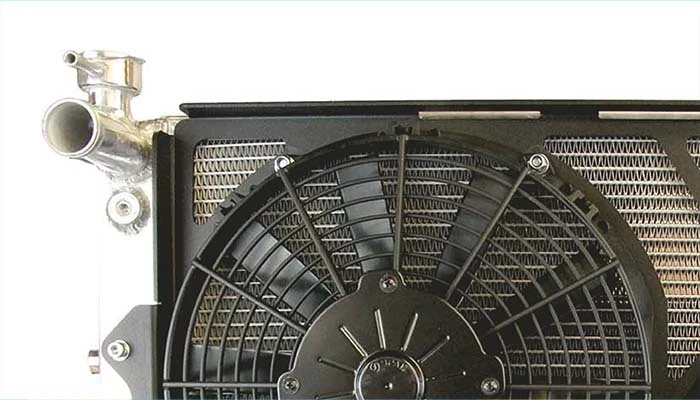
SPAL is one of the most trusted names for electric radiator fans. Their fans are widely used in performance, motorsport, kit car and aftermarket cooling applications because they offer strong airflow, reliable motors and a wide choice of sizes in both push and pull designs.
You can browse the full range of SPAL automotive fans to compare size, airflow, depth and fan direction.
Mishimoto
Mishimoto is another popular cooling brand, offering radiator fans, shrouds, radiators, intercoolers and other cooling parts. Their products are often used on modified road cars and performance builds where the full cooling package needs upgrading.
Radiator Fan FAQs
What is a radiator fan in a car?
A radiator fan is the cooling fan that moves air through the radiator to help lower the coolant temperature. It is most important when the car is stationary, moving slowly, sitting in traffic or cooling down after hard driving.
What does a radiator fan do?
A radiator fan helps remove heat from the coolant by pulling or pushing air through the radiator core. This helps prevent overheating when natural airflow through the front of the car is not enough.
How do radiator fans work?
Electric radiator fans use a motor and are usually controlled by the ECU, a temperature switch or a fan controller. Mechanical fans are driven by the engine, often through a viscous fan clutch.
Are electric radiator fans worth it?
Yes, for many modified and performance cars. Electric radiator fans offer better control at low speed, can be packaged more flexibly and can be paired with thermostatic switches or fan controllers.
Which type of cooling fan only operates when needed?
An electric cooling fan can operate only when needed if it is controlled by the ECU, a thermostatic switch or a fan controller. This can reduce unnecessary noise and power use compared with a fan that runs constantly.
How many radiator fans does a car have?
Some cars have one radiator fan, while others use twin fans or separate fans for the radiator and air conditioning condenser. The number depends on the vehicle design and cooling requirements.
Can a bad radiator fan cause overheating?
Yes. A faulty radiator fan can cause overheating, especially in traffic, at idle or after hard driving. However, overheating can also be caused by radiator, thermostat, water pump, coolant or airflow problems.
What is the best radiator fan for a modified car?
For most modified cars, a high-quality electric pull fan with a proper shroud is the best starting point. If rear radiator clearance is limited, a push fan or slim mounting arrangement may be the better option.
Conclusion
The best radiator fan for your car depends on the space available, whether you need a push or pull setup, how much airflow the engine needs and whether the fan is being used with a proper shroud. For most modified cars, a quality electric pull fan and shroud setup gives the best balance of cooling performance, control and packaging.
If your car is overheating, diagnose the full cooling system before buying parts. Radiator condition, coolant flow, thermostat operation, ducting, fan control, engine bay heat and wiring quality all affect the final result.
If you are ready to compare options, start with our SPAL radiator fan range. If you need help choosing the right fan or cooling package for your setup, contact us, and we can point you in the right direction.
About the Author

Exoracing is a UK-based performance parts and heat management specialist.
Since 2018, we have helped enthusiasts and workshops choose practical parts for road, track and modified cars, including cooling, turbo, exhaust and engine bay heat management solutions.