

Do Performance Air Filters Increase Power?
Posted by Matthew Marks on 1st Aug 2024
Jump to a section
Are Performance Air Filters Worth It?
A performance air filter can improve airflow, induction sound and throttle feel, but the real result depends on the full intake system, not the filter alone.
We work with intake, turbo and heat management parts every day, so we look at air filters as part of the whole engine bay rather than a magic bolt-on fix.
Shop Performance Air FiltersIf you are looking at a performance air filter, you are probably trying to work out whether it will actually make your car faster, louder, more responsive or more efficient.
The honest answer is that a good filter can help, but it cannot fix every intake problem by itself. If the rest of the intake is restrictive, the filter is boxed into a hot corner of the engine bay, or the pipework is poorly routed, the gains can be smaller than expected.
This guide explains what a performance air filter does, what it will not do, how it compares with a standard filter, and how to choose the right setup for a road, track or modified car.
The simple answer
A performance air filter is worth it if your current intake is restrictive, dirty, small or built more for quietness than airflow. It can improve airflow, add induction noise and make the engine feel sharper.
It is not worth expecting huge power from a filter alone on every car. Modern factory airboxes can be very good, and a filter upgrade is only one part of the intake system.
For the best result, think about the filter, pipework, air source, heat soak, maintenance and engine setup together.
- A performance air filter can improve airflow and induction sound, especially if the standard setup is restrictive.
- Power gains vary by car, engine, intake layout and whether the ECU can make use of the extra airflow.
- A hot open filter can lose some of its advantage if it pulls warm engine bay air.
- Panel filters are simple and subtle, cone filters are usually louder, and full intake systems can offer a more complete improvement.
- Choose the filter by neck size, available space, filtration quality, maintenance and heat exposure.
What Does A Performance Air Filter Do?
A performance air filter is designed to let the engine breathe with less restriction than a basic paper filter, while still stopping dirt and debris from entering the engine.
An engine needs air and fuel to make power. If the intake path is restrictive, the engine has to work harder to draw air in. A higher-flow filter can reduce that restriction, especially at higher rpm or on modified engines that need more air than the original setup was designed for.
Most performance filters use cotton, foam or synthetic filter media with a pleated or layered design. This gives the air more surface area to pass through while keeping filtration at a sensible level.

Why standard filters can be restrictive
Factory air filters are usually built around several priorities at once: filtration, quietness, cost, service life, emissions requirements and packaging inside a tight engine bay.
That means the filter and airbox are not always optimised for maximum airflow. Some standard intake pipes also use tight bends, small openings, resonators or ribbed plastic sections that can disturb airflow before it reaches the throttle body or turbo inlet.
Replacing only the filter will not remove every restriction, but it can be a useful first step.
Performance Air Filter Vs Stock Filter
The best choice depends on what you want from the car. A standard filter is usually quiet, cheap and perfectly fine for a stock daily driver. A performance filter makes more sense when you want better airflow, more intake noise, reusability or a setup that supports later modifications.
Quiet, simple and reliable, but usually disposable and not focused on maximum airflow.
Fits the factory airbox, keeps the OEM look and can improve airflow without a major intake change.
Usually louder and less restrictive, but placement and heat protection matter more.
Can improve the filter, pipe route, air source and airflow path together when designed properly.
Do Performance Air Filters Increase Horsepower?
They can, but not always by a huge amount. A performance air filter only adds useful power when airflow was a limiting factor in the first place.
If the factory filter or airbox is restrictive, a higher-flow filter can help the engine draw in air more easily. If the original intake is already efficient for the current power level, the difference may be smaller and more noticeable as sound or response than peak bhp.
This is why two cars can react differently to the same type of upgrade. A modified Honda, turbo car or high-revving engine with a restrictive intake may see a clearer benefit than a standard car with a well-designed factory airbox.
Will it improve throttle response?
A performance filter can make the engine feel more eager, especially if it reduces restriction before the throttle body or turbo. That does not always mean a large peak power gain; sometimes the improvement is in how quickly the engine reacts when you open the throttle.
On turbocharged cars, a freer-flowing intake can also make induction and turbo noises more obvious. That is one of the main reasons many owners enjoy the upgrade even when the dyno difference is modest.
Will it improve fuel economy?
Fuel economy should be treated as a possible bonus, not the main reason to fit one. If the old filter was dirty or restrictive, replacing it can help the engine breathe more efficiently. But a performance filter will not automatically make every car use less fuel.
Driving style matters more. If the new induction sound encourages you to use more throttle, any small efficiency benefit can disappear quickly.
What A Performance Air Filter Cannot Fix
A performance filter is not a cure for every intake problem. It cannot overcome poor routing, crushed pipework, bad placement, heat soak or a filter that is too small for the engine.
If your intake is pulling hot air from beside a manifold, turbo or radiator, the engine may still receive warmer, less dense air even if the filter flows well. If the pipe after the filter is narrow or full of sharp bends, the filter may not be the main restriction.
A filter also will not fix running issues caused by a faulty MAF sensor, vacuum leak, boost leak, poor mapping, dirty throttle body or mechanical engine problem. If the car already has a fault, diagnose that first.
What happens if you ignore intake heat?
If the intake pipework and filter sit in a hot engine bay, they can absorb heat over time. This is heat soak. The intake may work well from cold, then feel less effective after sitting in traffic, idling in the paddock or doing repeated pulls.
The correction is to improve the air source, increase separation from hot parts, control the heat source where possible and protect vulnerable intake surfaces from radiant heat. Our guide to automotive heat management explains this in more detail.
How To Choose The Right Performance Air Filter
Choosing the right air filter is not only about buying the biggest cone filter you can find. You need the right fitment, enough surface area, good filtration and a sensible position in the engine bay.
Measure the pipe outside diameter and choose a filter with the correct internal neck size.
A filter that technically fits the pipe can still be wrong if it rubs, crushes or sits against hot parts.
Try to feed the filter from a cooler area or shield it from radiant heat where practical.
Do not chase airflow so hard that filtration quality becomes an afterthought.
A washable filter is only a benefit if it is serviced at sensible intervals and refitted correctly.
Panel filter, cone filter or cold air intake?
A panel filter is the safest, simplest upgrade if you want to keep the standard airbox. A cone filter is a better fit for custom pipework, more intake sound and modified engine bays. A cold air intake makes sense when you want the filter, pipe route and air source improved as a system.
If you are building a Honda K-Series setup, our Honda Civic EP3 engine tuning guide explains how intake upgrades fit into a wider engine package.
 Exoracing 2.5"/ 3.0"/ 3.5" Universal Air Filter
A simple cone filter upgrade for custom intake pipework, more airflow and a sharper induction sound.
From £34.99
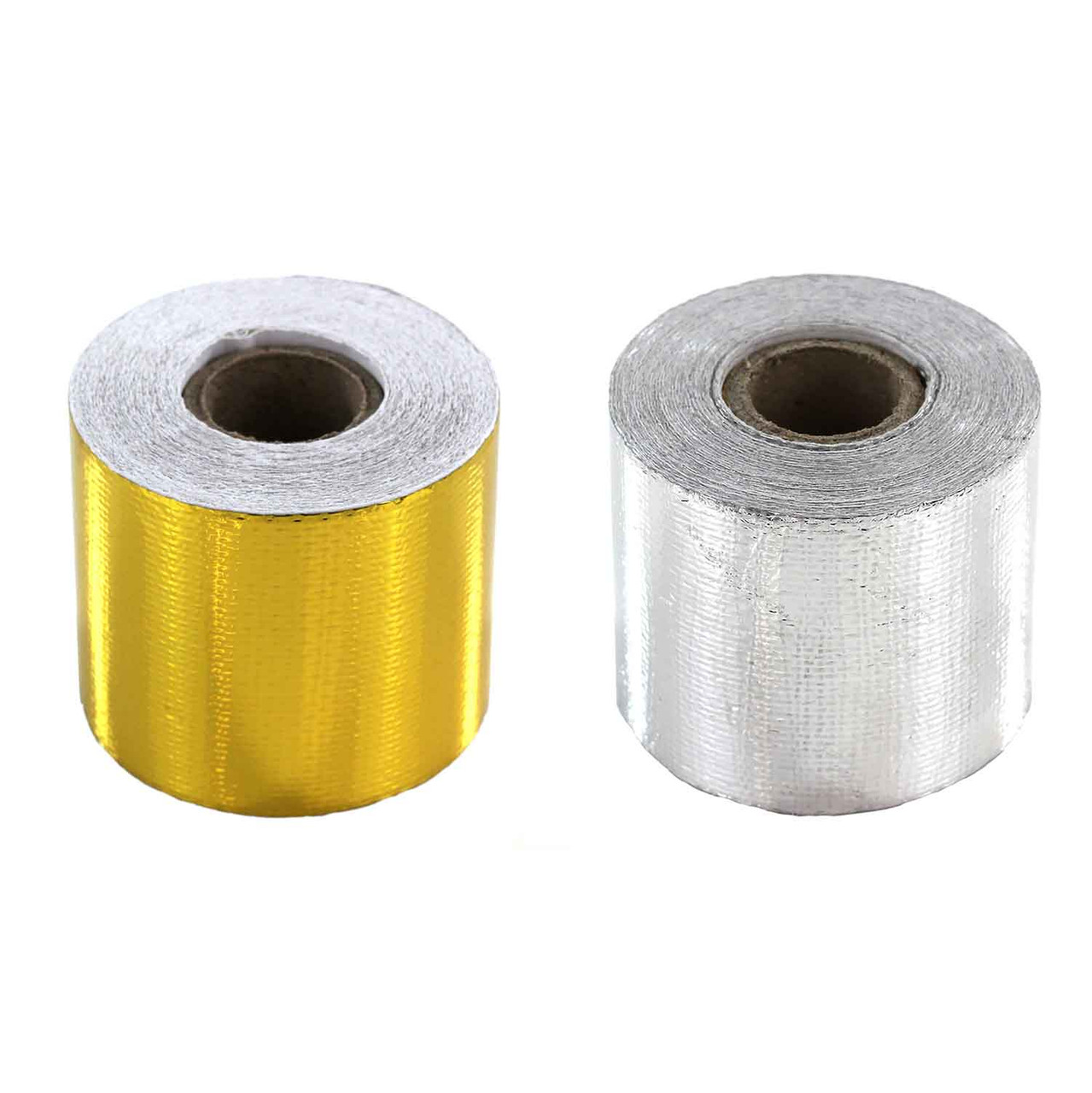 Exoracing Gold and Silver Heat Reflective Tape
Useful for intake pipes, airboxes and panels that face radiant heat from manifolds, turbos or downpipes.
From £29.99
Why Heat Soak Matters As Much As Airflow
Airflow is only half the story. The engine also benefits from cooler, denser air. If an open filter sits close to a turbo, manifold, downpipe or radiator, the intake can pull in warm air and absorb radiant heat from nearby parts.
Radiant heat is heat travelling in line of sight from a hot part. Heat soak is what happens when surrounding parts absorb that heat over time. Together, they can make a good filter feel less effective in real driving than it did on a cold start.
From our experience with heat management parts, the best approach is to identify the heat source first, then protect the vulnerable intake component. If the heat source is a turbo, source control may mean a turbo blanket. If the vulnerable part is the intake pipe or airbox, surface protection such as heat reflective tape or reflective sheet can make sense.
What Is A Velocity Stack?
A velocity stack is a bellmouth-shaped entry fitted at the start of an intake. Its job is to help air enter the intake pipe more smoothly instead of crashing into a sharp edge.
On a well-planned intake, a velocity stack can help improve the transition from open air into the pipe. This is most useful when the rest of the intake is already fairly well designed and the engine actually needs the extra airflow.
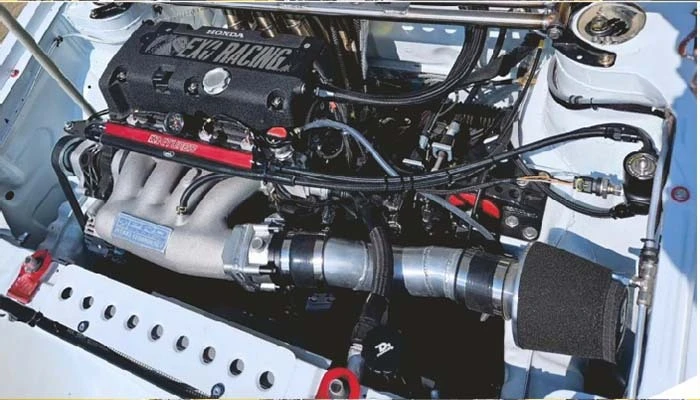
A velocity stack is not essential for every basic road car. It makes more sense on custom intakes, Honda builds, high-revving naturally aspirated engines and more serious setups where intake design matters as much as the filter itself.
If you are planning a boosted Honda setup, our Honda turbo B/K-Series conversion guide shows how intake parts fit into the bigger turbo system.
Common Mistakes When Fitting A Performance Air Filter
Choosing the wrong neck size
Measure the intake pipe before ordering. A filter that is too small will not fit correctly, and a filter that is too large may not clamp securely.
Putting an open filter in the hottest part of the bay
A badly positioned cone filter can pull hot air from around the exhaust side of the engine. If you cannot move it, consider shielding, ducting or reflective protection on the surrounding surfaces.
Ignoring the MAF sensor
Some cars are sensitive to airflow changes around the mass airflow sensor. Poor pipe design, air leaks or turbulent air near the sensor can cause rough running, hesitation or warning lights.
Forgetting maintenance
A reusable filter still needs cleaning. If it becomes clogged with dust, oil mist or dirt, it becomes a restriction just like a tired standard filter.
Expecting a filter to replace mapping or a proper engine setup
A filter can support airflow, but it is not a substitute for a proper tune, healthy sensors, good pipework or the right supporting modifications.
When Not To Fit A Performance Air Filter First
Do not make the air filter your first fix if the car has an obvious fault. A performance filter should be fitted to a healthy intake system, not used to cover up a problem.
Unmetered air can cause running issues that a better filter will not solve.
Changing the filter can make diagnosis harder if the original issue remains.
More filter area will not help much if the engine keeps breathing hot air.
Even simple intake changes can matter to insurers or manufacturers.
Common Concerns About Performance Air Filters
Can a performance air filter damage my engine?
A good quality filter fitted and maintained correctly should protect the engine while allowing more airflow. Problems are more likely when a poor filter is used, the filter is not secured properly, the car is driven in very dusty conditions without maintenance, or the intake lets unfiltered air in after the filter.
Are oiled filters bad for MAF sensors?
Oiled filters can work well, but over-oiling after cleaning can contaminate nearby sensors on some cars. Follow the filter instructions carefully and avoid applying more oil than required.
Is a bigger air filter always better?
Not always. A larger filter can offer more surface area, but only if it fits properly and sits in a sensible position. A smaller filter in a cooler, better-fed location can be a better real-world setup than a huge filter trapped beside a heat source.
Will a performance air filter make my car louder?
Usually, yes. Panel filters can add a subtle change, while open cone filters and full intake systems normally make induction noise more obvious. Turbo cars may also make more spool and recirculation valve noise.
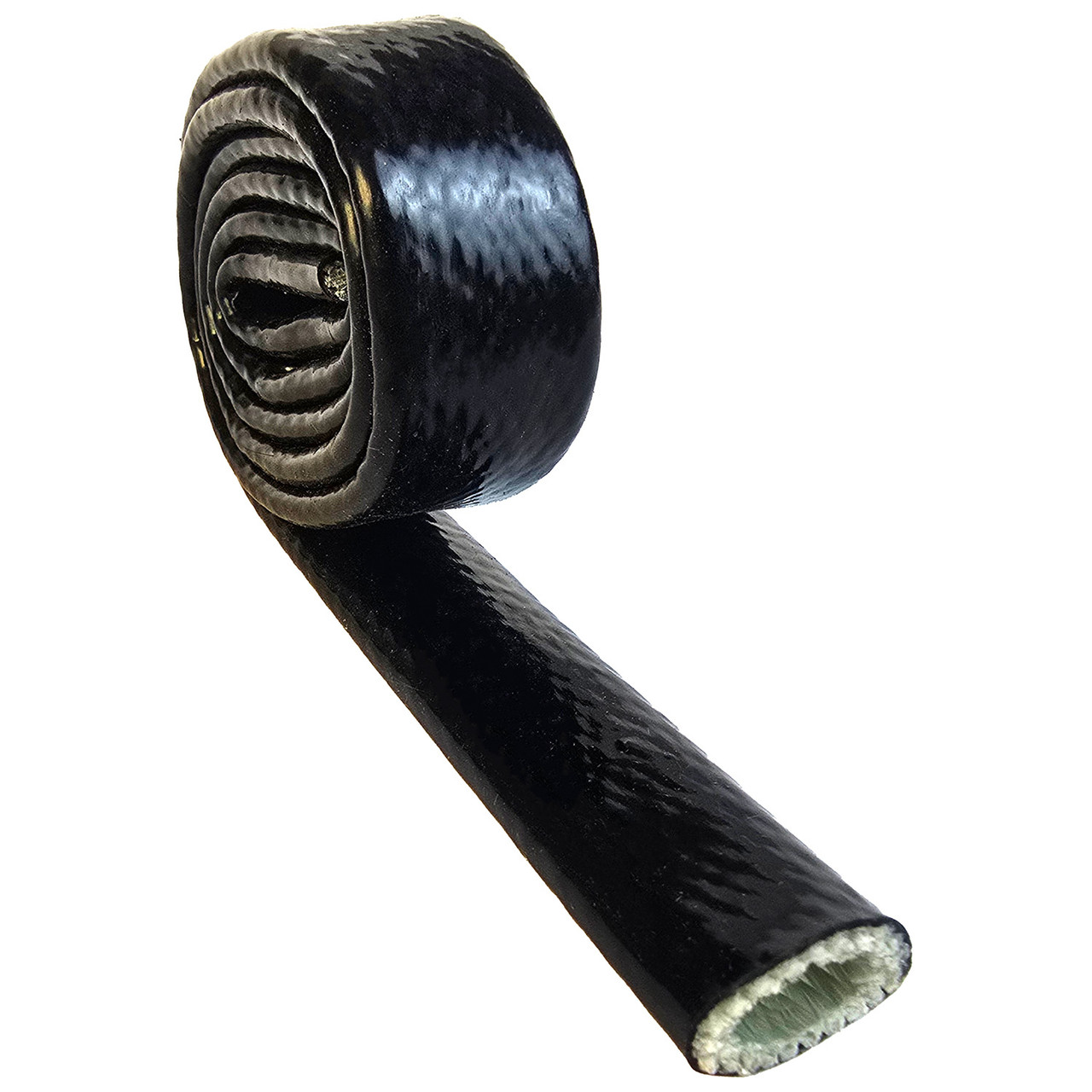 Exoracing Silicone Fibreglass High Temperature Heat Sleeve 0.5m
Protects nearby hoses, wiring and lines when the intake route sits close to turbo or exhaust heat.
From £14.99
 Hybrid Racing Cold Air Intake System For Honda Civic Integra EP3 DC5 02-05
A fuller intake option for EP3 and DC5 builds where pipe route, filter and velocity stack design all matter.
From £316.00
Performance Air Filter Brands
There are plenty of strong air filter brands, and the best choice usually depends on the vehicle, filter type and intake design rather than the logo alone.
K&N, Pipercross, Ramair, Mishimoto, Hybrid Racing, Skunk2 and Exoracing are all names enthusiasts commonly look at. For a simple universal cone filter, focus on the neck size, filter dimensions, filtration quality and where it will sit in the bay. For a full intake, look for a design that has been made for the car rather than a generic pipe and filter squeezed into place.

Performance Air Filter FAQs
Do performance air filters work?
Yes, they can reduce intake restriction and improve airflow. The result depends on how restrictive the standard intake was and whether the rest of the setup can use the extra airflow.
Are performance air filters worth it?
They are worth it if you want better airflow, more induction sound, a reusable filter or an intake setup that supports other modifications. They are less worthwhile if the factory intake is already efficient and you only expect a large power gain from the filter alone.
Does a performance air filter increase bhp?
It can increase bhp if the original filter or intake was restrictive. On some cars, the biggest difference is throttle response and sound rather than a large peak power number.
Does a performance air filter use more fuel?
The filter itself does not automatically use more fuel. Fuel use depends on the engine setup and how you drive. If the extra induction sound makes you use more throttle, fuel economy can drop.
Do aftermarket air filters make a difference?
A good aftermarket filter can make a difference, especially if the standard filter is dirty or the original intake is restrictive. The difference is usually bigger when the filter is part of a well-designed intake route.
What is better, a panel filter or a cone filter?
A panel filter is better if you want a simple upgrade inside the factory airbox. A cone filter is better for custom pipework, more intake noise and modified setups, but it needs good placement and heat management.
Can I fit a performance air filter myself?
Usually, yes. Many panel filters and universal cone filters are straightforward to fit. Make sure the filter seals properly, the clamp is tight, no pipes are left loose, and any MAF sensor or breather connections are refitted correctly.
How often should I clean a reusable air filter?
Follow the filter manufacturer's guidance. Cars used in dusty conditions, motorsport, drifting or track days may need checking more often than a normal road car.
Conclusion: Should You Upgrade Your Air Filter?
A performance air filter is a sensible upgrade when you understand its role. It can improve airflow, sound and response, but it works best as part of a complete intake setup rather than as a single part expected to transform the car.
If you want a simple first step, choose a quality panel or cone filter that fits properly. If you want the best result from a modified car, think about filter size, pipe route, velocity stack design, cold air supply and heat management together.
Ready to choose your next intake part? Start with our performance air filter range, or browse heat management parts if your intake route is fighting engine bay temperature as much as airflow restriction.

About the Author
Exoracing is a UK-based performance parts and heat management specialist.
Since 2018, we have helped enthusiasts and workshops choose practical parts for modified road, track, drift and turbocharged cars, from intake upgrades to engine bay heat protection.