
What Does a Boost Controller Do? Complete Guide
Posted by Matthew Marks on 1st Aug 2024
What Does a Boost Controller Do?
A boost controller helps a turbocharged engine control how much boost reaches the wastegate, giving the tuner more control over boost pressure, spool behaviour and consistency.
From our experience with turbo builds, the controller is only half the job. Vacuum routing, wastegate setup, tuning and heat protection all decide how stable the car feels on boost.
View Boost Control SolenoidsThe simple answer
A boost controller changes how much pressure reaches the wastegate actuator. By controlling that pressure, it lets the engine make more controlled boost than wastegate spring pressure alone.
On an electronic setup, the ECU or boost controller pulses a solenoid using a PWM signal, so boost can be adjusted by gear, RPM, throttle position or tuning strategy.
The best setups use short, tidy vacuum lines, correct port routing, a suitable wastegate spring and heat protection where lines pass near turbos, manifolds or external wastegates.
- A boost controller gives more control than wastegate spring pressure alone.
- A 3-port solenoid suits most road, fast-road and many track turbo setups.
- A 4-port solenoid is mainly for external wastegate setups needing tighter control at bigger boost.
- Boost spikes are usually caused by poor setup, weak control, incorrect plumbing or tuning issues.
- Heat-damaged vacuum lines can make even a good controller behave badly.
Why Has My Boost Changed After Fitting a Controller?
If boost changes after fitting a controller, do not assume the solenoid is faulty straight away. Most problems come from the setup around it: incorrect port routing, a poor pressure source, loose vacuum lines, heat-damaged hose, wastegate spring mismatch or boost control settings that are too aggressive.
A car that overboosts after installation may have the solenoid ports connected incorrectly, a stuck or undersized wastegate, or a duty cycle that is too high for the setup. A car that makes less boost than expected may leak, reversed plumbing, weak spring pressure or a controller setting that is not allowing enough pressure control.
Heat can make the fault harder to spot. We have seen turbo cars behave normally when cold, then become inconsistent once the engine bay heat soaks the vacuum lines near the turbo, manifold or wastegate are affected. That is why line routing and heat protection should be checked before changing parts or chasing the tune.
Confirm the solenoid is plumbed to the correct diagram, then check wastegate movement, spring pressure and duty cycle.
Look for split hose, loose fittings, reversed ports, low duty cycle or a weak base spring.
Inspect vacuum lines near the turbo, manifold, downpipe and wastegate, then reroute or sleeve the line where needed.
If your vehicle has a turbocharged or supercharged engine, a boost controller can be one of the most useful upgrades you fit. It is not just about chasing a bigger number on the boost gauge. It is about making boost easier to control, safer to tune and more consistent when the car is driven hard.
That consistency matters. A car that overshoots its target boost, drops boost at the top end or behaves differently once the engine bay is heat-soaked is harder to tune and less confidence-inspiring to drive.
We have seen this on real turbo cars where the boost control hardware looked fine, but the vacuum lines were routed too close to hot parts. Once those lines soften, leak or deform, the solenoid cannot control pressure properly.
How a Boost Control Solenoid Works
The wastegate controls how much exhaust gas bypasses the turbine. When the wastegate opens, less exhaust energy drives the turbo, so boost is controlled.
Without a boost controller, the wastegate actuator mainly reacts to spring pressure and the boost reference line. With a boost control solenoid, the ECU or electronic controller can manage how much pressure reaches that actuator.
The solenoid works like a fast-switching valve. It opens and closes rapidly, changing the pressure signal going to the wastegate. This is why many electronic solenoids are described as PWM solenoids, because they are controlled by a pulse width modulation signal.

The result is more control. A tuner can shape the boost curve, reduce spikes, improve traction and make the car behave more consistently across different gears and loads.
Boost Controller Diagram: What Each Line Does
A lot of people search for a boost controller diagram because the ports can be confusing. The exact layout depends on the solenoid, controller and wastegate type, but the basic job is always the same: route boost pressure so the wastegate opens at the right time.
On a typical turbo boost controller setup, one line comes from a pressure source, one line goes to the wastegate actuator, and one port vents or redirects pressure depending on the solenoid type. On an external wastegate, a 4-port boost solenoid diagram may also show pressure going to both the top and bottom wastegate ports.
This is often taken from the compressor housing, charge pipe or another suitable boost reference point.
This pressure opens the wastegate based on spring pressure and controller strategy.
This is how the solenoid changes what the wastegate sees and allows boost to rise above spring pressure.
3-Port vs 4-Port Boost Control Solenoid
For most road and fast-road turbo builds, a 3-port boost control solenoid is the usual starting point. It is simple, effective and works with internal or external wastegate setups when plumbed correctly.
A 4-port boost control solenoid is normally used with external wastegates where the tuner wants more authority over both sides of the wastegate diaphragm. It can help with higher boost targets, lower spring pressures and more aggressive launch or boost-by-gear strategies, but it also needs careful setup.
A clean upgrade over spring pressure alone and usually enough for most sensible boost targets.
A 3-port is simpler. A 4-port can give more control, but it needs a tuner who understands the setup.
Useful when the setup needs stronger wastegate control, especially with external wastegates.
Boost Controller Plumbing Matters
A boost controller can only work with the pressure signal it receives. If the vacuum lines are too long, routed badly, kinked, leaking or cooked by heat, boost control will be inconsistent.
The common rule is simple: keep the lines short, secure and away from major heat sources. On a turbo car, that usually means avoiding the manifold, turbine housing, downpipe and external wastegate body wherever possible.
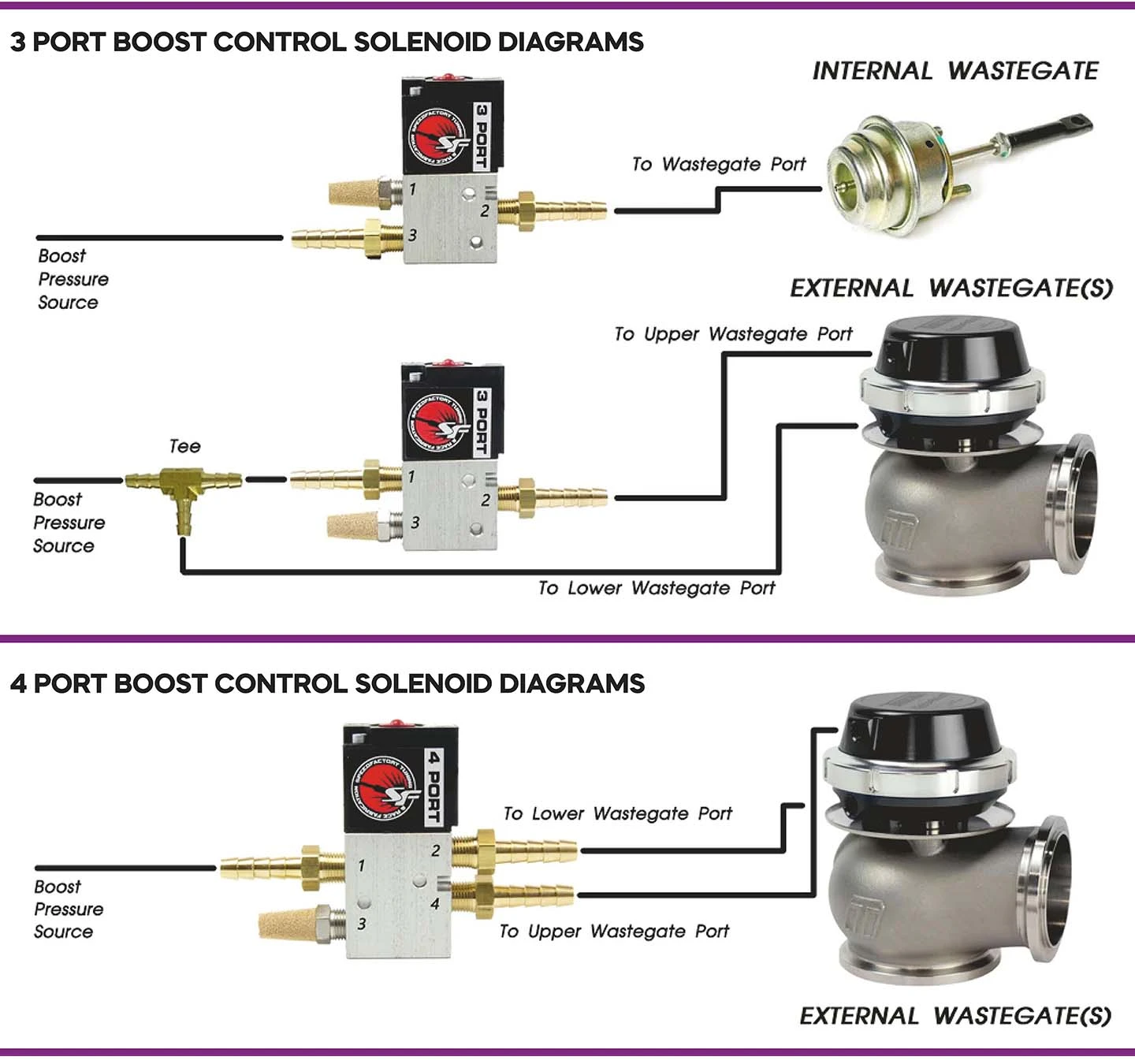
Follow the solenoid manufacturer's diagram for your exact wastegate type. Port numbers matter, and swapping ports can cause overboost, underboost or a setup that cannot be tuned properly.
Why Heat Protection Is Part of Good Boost Control
Boost control lines often live near the hottest parts of the engine bay. That is especially true on compact turbo builds, external wastegate setups and cars with tight manifold or downpipe clearance.
We saw this first-hand on Tom's turbo Mazda MX5. At first, the issue looked like a boost controller problem, but the vacuum lines were running too close to the wastegate. Heat exposure was the real weakness in the setup.
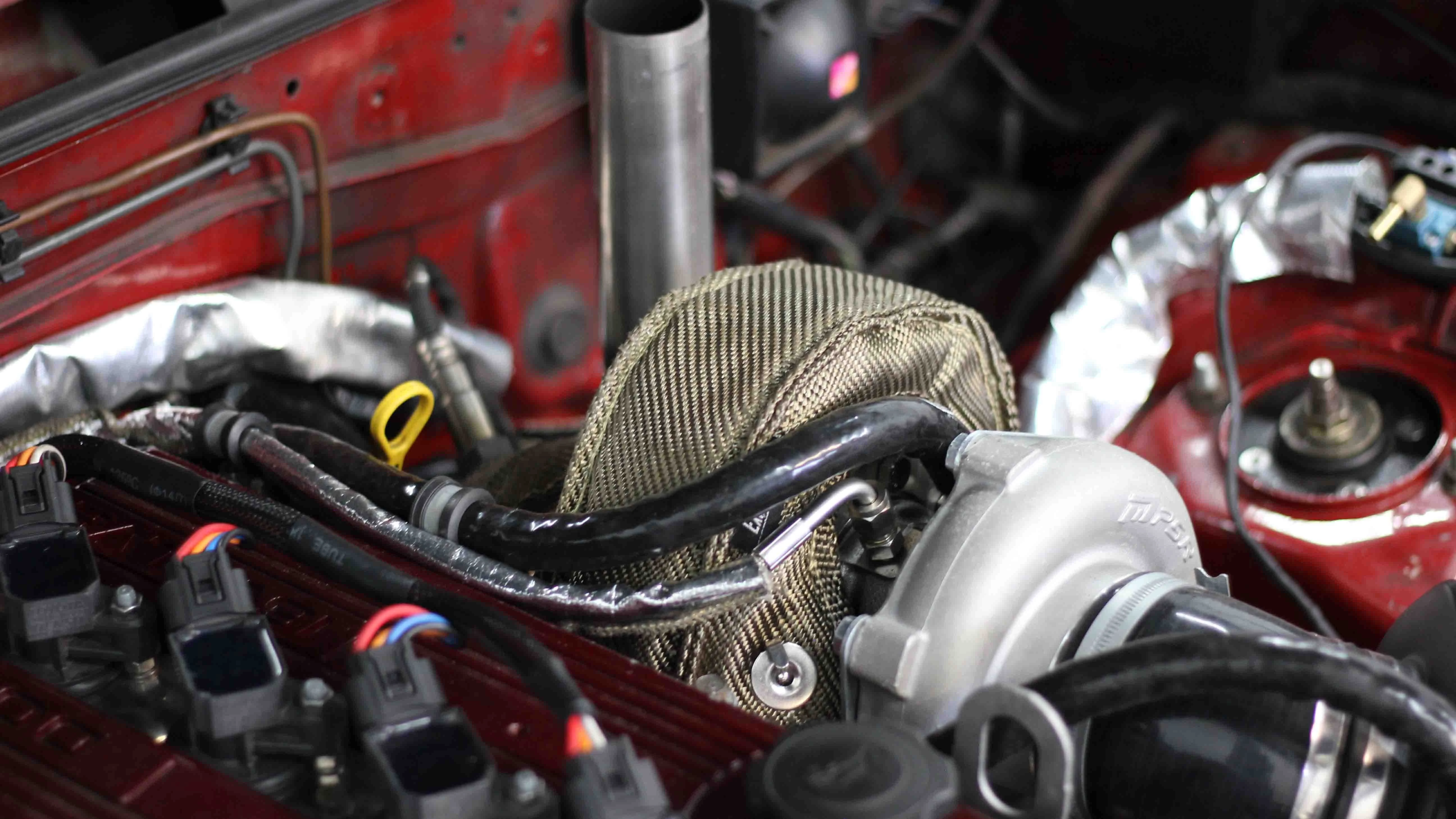
The fix was to protect the lines with a silicone fibreglass heat sleeve. That gave the vacuum lines a proper insulation layer and made it much better for him long-term.
The lesson is simple: do not treat the solenoid as the whole system. The boost controller, wastegate, tune, pressure source, vacuum routing and heat management all need to work together.
Watch: In our silicone heat sleeve install video, we show how to measure, cut and fit the sleeve over the lines properly. This is useful when boost control or vacuum lines run close to turbo heat.
 Exoracing Silicone Fibreglass High Temperature Heat Sleeve 0.5m
Direct protection for vacuum lines, hoses and wiring that can be removed or slid through before final routing.
From £14.99
 Exoracing Gold and Silver Velcro Heat Sleeve 0.5m
Useful when lines are already fitted, and you need wrap-around heat protection without disconnecting everything.
From £14.99
What Are Boost Spikes?
A boost spike is when the boost pressure briefly rises above the intended target. For example, if the car is tuned for 15 psi but momentarily jumps to 20 psi, that is a spike.
Small, controlled overshoot can happen on some setups, but large or repeated spikes are a warning sign. They can increase cylinder pressure, push the tune outside its safe area and make the car feel unpredictable.
Common causes include incorrect wastegate spring choice, poor solenoid plumbing, weak wastegate flow, boost control settings that are too aggressive, leaks, line restrictions or heat-damaged vacuum hose.
Boost Solenoid Symptoms: When to Test the Solenoid
A failing or incorrectly controlled boost solenoid can cause low boost, overboost, unstable boost, slow spool or boost that does not follow the target in the ECU. It can also trigger boost control fault codes on some vehicles, especially where the factory ECU monitors the circuit.
Before replacing the solenoid, check the basics. Many boost solenoid symptoms are actually caused by split hoses, blocked restrictors, poor wiring, incorrect plumbing, sticky wastegate movement or heat-damaged vacuum line.
Check hoses, clamps, solenoid ports, wastegate actuator and boost control duty.
Check solenoid routing, wastegate movement, boost target, duty cycle and any blocked line.
Inspect vacuum lines near hot parts, electrical connectors, solenoid mounting and hose condition after heat cycles.
Manual vs Electronic Boost Controllers
Manual boost controllers are simple mechanical valves. They are usually cheaper, easy to install and adjusted by hand. They can work well on basic setups, but they do not offer the same control strategy as ECU-based electronic control.
Electronic boost controllers use a solenoid and a controller, often the ECU. This makes them more flexible because the boost target can be adjusted around gear, RPM, throttle position, launch control or traction needs.

How does a manual boost controller work?
A manual boost controller usually works by delaying or restricting the pressure signal that reaches the wastegate actuator. The wastegate stays closed for longer, so the turbo can make more boost before the actuator opens.
Most manual boost controller adjustments are done with a screw or knob. Turning it changes how much pressure reaches the wastegate. The downside is that it cannot automatically adjust for gear, traction, temperature or load in the same way an electronic boost controller can.
How does an electronic boost controller work?
An electronic boost controller uses a boost control solenoid to adjust pressure quickly and repeatedly. The ECU or controller changes the solenoid duty cycle, which changes how much pressure the wastegate actuator sees.
This is why electronic boost control is useful on tuned turbo cars. It can support boost by gear, closed-loop control, launch strategies and more consistent boost pressure, provided the system is mapped correctly.
Limited adjustment and no intelligent boost-by-gear or ECU strategy.
Needs correct wiring, plumbing and tuning to work safely.
Common Boost Control Mistakes
Using long or messy vacuum lines
Long lines add volume and delay. Keep boost reference lines as short and direct as possible without creating tight bends or heat risk.
Routing lines too close to the heat
Vacuum hose near a manifold, turbo, or wastegate can harden, soften or split. Reroute first where possible, then use a heat sleeve if the line still runs near hot parts.
Choosing the wrong wastegate spring
If the base spring pressure is badly matched to the target boost, the controller has a harder job. Start with a sensible mechanical setup before relying on the duty cycle to fix everything.
Fitting parts before checking the tune
A boost controller changes how the engine reaches its boost target. The car should be checked and tuned properly after installation, especially if boost pressure is being increased.
What Happens If You Ignore Boost Control Problems?
Ignoring boost control problems can lead to overboost, inconsistent power delivery, poor traction, limp mode, detonation risk or an engine that is difficult to tune safely.
Heat-related line damage is one of the easiest problems to overlook. A car may behave normally on a cold test drive, then start spiking or drifting away from the target once the engine bay is heat-soaked.
The correction is not always to turn the boost down or change the solenoid. Inspect the whole control system: pressure source, hose condition, port routing, wastegate movement, spring pressure and nearby heat sources.
Boost Control Setup Checklist
The spring should suit the target boost, and the controller should not be doing all the work.
No kinks, leaks, soft hose or loose fittings.
Check the exact 3-port or 4-port layout for your wastegate type.
Boost control duty, target boost, fuel, ignition and safety limits should all be checked.
Common Concerns
Should I fit a boost controller before mapping the car? You can install the hardware first, but increasing or changing boost control should be checked during tuning. Do not simply raise boost on an unmapped setup.
Will a boost controller fix boost creep? Not usually. Boost creep is often caused by wastegate flow limitations, not controller choice. The wastegate and exhaust setup need checking first.
Should I heat sleeve every vacuum line? Not every line needs a sleeve. Use it where routing leaves vacuum hose, wiring or fluid lines close to turbo, manifold, downpipe or wastegate heat.
Boost Controller FAQs
What does a boost controller actually do?
It controls the pressure signal going to the wastegate actuator. This lets the engine control boost more accurately than wastegate spring pressure alone.
What is a boost solenoid?
A boost solenoid is an electronically controlled valve used in a turbo boost control system. It changes the pressure signal going to the wastegate so the ECU or controller can manage boost pressure.
Do I need a boost controller on a turbo car?
If you want a boost above spring pressure, boost by gear, better control or a more tuneable setup, then yes, a boost controller is usually needed. A standard or low-power setup may not need one.
Is a 3-port or 4-port boost solenoid better?
A 3-port is better for most simple setups because it is easier to install and tune. A 4-port is better for specific external wastegate setups where higher control authority is needed.
How do you connect a boost controller?
Connect it using the diagram for your exact controller and wastegate type. In general, the system needs a pressure source, a line to the wastegate actuator and the correct solenoid vent or control port routing.
Can a boost controller damage an engine?
The controller itself is not the issue, but an incorrect setup can cause unsafe boost levels. Wrong plumbing, too much duty cycle, poor tuning or boost spikes can damage an engine.
Why does my boost change when the car gets hot?
Heat soak can expose weak hoses, poor routing, leaks or inconsistent wastegate behaviour. Check the vacuum lines, solenoid location and any lines near the turbo, manifold or wastegate.
Where is the boost control solenoid located?
On many cars, it sits between the boost pressure source and the wastegate actuator, often mounted near the turbo or intake pipework. The exact location varies by vehicle, so use the manufacturer's diagram for your car or aftermarket kit.
Should I protect the boost controller lines from heat?
Yes, if they run near the hot side parts. First, improve routing and clearance, then use a heat sleeve where the lines still need protection from radiant heat.
Conclusion
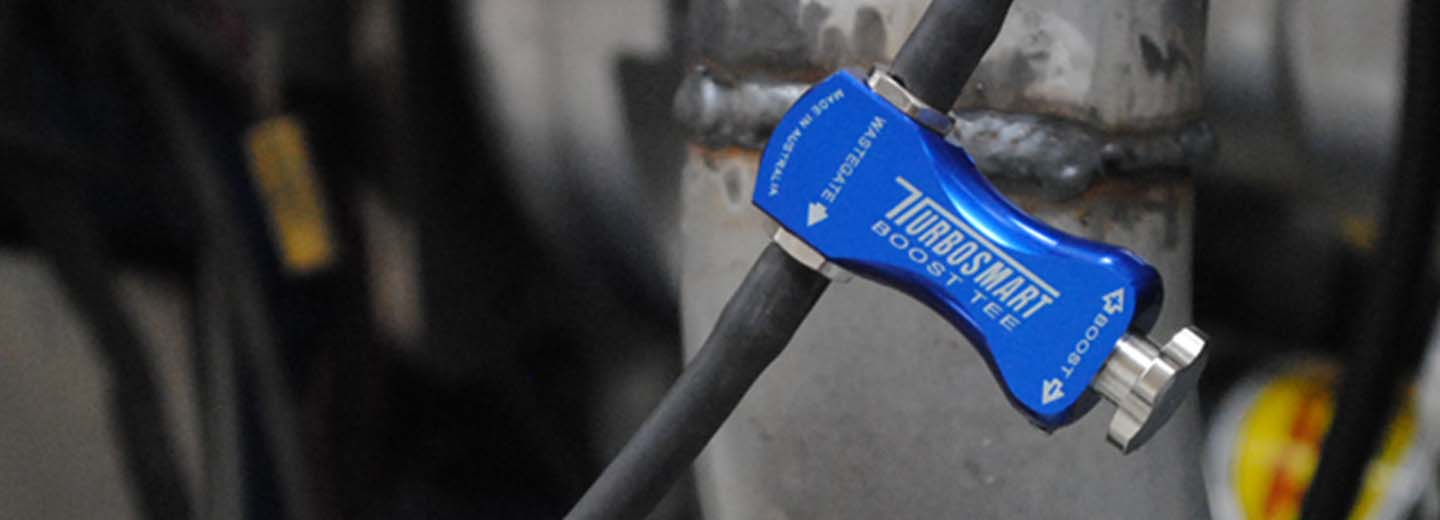
A boost controller is one part of a complete boost control system. The solenoid matters, but so do the wastegate, spring pressure, vacuum routing, pressure source, ECU setup and heat protection.
If you are building a road or fast-road turbo car, a 3-port solenoid is usually the sensible starting point. If you are running an external wastegate, higher boost targets or more advanced launch control, a 4-port setup may be worth discussing with your tuner.
Before increasing boost, inspect the basics. Fix leaks, route lines properly, protect anything near heat and make sure the car is tuned around the new control strategy.
For the next step, view our boost control solenoids, browse heat management parts, or use our silicone heat sleeve installation guide if your boost lines run close to turbo heat.
Shop Heat Management PartsAbout the Author

Exoracing is a UK-based heat management and performance parts specialist.
Since 2018, we have helped enthusiasts and workshops protect turbo cars, track builds and modified road cars from the heat problems that damage hoses, wiring, fluids and nearby components.