
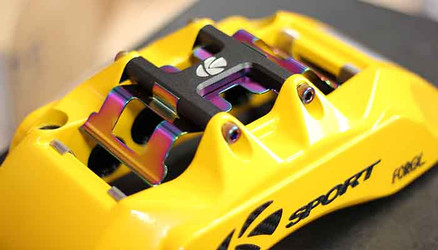
6 Best Honda Civic Type R EP3 Braking Upgrades
Posted by Matthew Marks on 1st Aug 2024
Jump to a section
We get asked about EP3 brake upgrades all the time, so it was finally time to pull together one proper guide covering the options we recommend most.
The stock braking system on an EP3 is alright, but it could do with an upgrade in multiple aspects.
Most of the time, the Honda Civic Type R EP3 braking system was assembled from the factory using the most cost-effective and road-friendly parts, such as rubber flexible brake hoses.
When the car is entirely stock, these parts give the best feel vs performance.
Using OEM parts is fine until you modify your car and add more horsepower, where the brakes quickly become the car's weak point.
If you are building the whole car rather than just fixing one weak point, our ultimate EP3 engine tuning guide shows how quickly supporting mods like brakes become more important as power rises.
That is not just because you are going faster. It is also because you are putting far more heat into the braking system, and once pads, discs, fluid, or lines get too hot, braking confidence can disappear very quickly.
- If you want the biggest single gain, start with a big brake kit
- If you want the best value upgrade, start with pads, braided lines and fluid
- Brake discs matter most when heat becomes a problem
- For road cars, choose parts that work well in cold weather and stay consistent in traffic
- For track or high-power EP3 builds, heat resistance matters just as much as outright stopping power
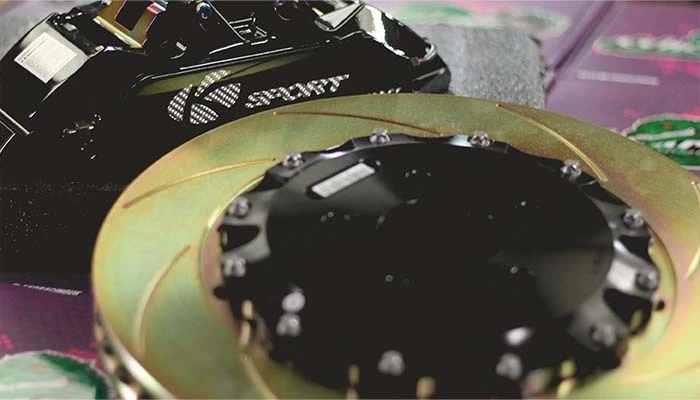
1. Best Honda Civic EP3 big brake kits
First up on the list is the biggest purchase you can make regarding braking, the almighty big brake kit.
These can range anywhere from second-hand kits at around £700 up to thousands, depending on disc size and the number of pistons.
Installing a big brake kit would make the most significant difference from anything on this list, as most kits also come with other parts, such as braided brake lines, to maximise the feel and performance of your brand-new brakes.
That said, a big brake kit is not always the first thing every EP3 owner needs.
If the car is mostly road driven, a good pad, fluid and braided line setup can already transform confidence under braking.
Big brake kits make the most sense when power, weight, repeated hard use, or track time are all starting to exceed what the standard size setup can comfortably handle.
Let's get into the two brands we recommend.
Ep3 Yellow Speed Racing 6-pot big brake kit
The first brand in the EP3 braking guide would be Yellow Speed Racing.
They are relatively new in the braking game but have been proven on multiple winning race cars; they are now one of the most popular suspension and braking brands.
They are available in multiple calliper colours and finishes to match the exact look you're going for.
The standard version is available in powder-coated red, which looks good on any EP3!
Their standard kit includes 330mm slotted discs, massive 6-pot callipers and braided brake lines; they are one of the most cost-effective options when looking at big brake kits for your EP3.
Because a big brake kit only works as well as the parts around it, our guide to choosing performance brake pads is worth reading if you want to understand compounds and real-world use a bit better.
We've sold multiple Yellow Speed big brake kits over the years, and every single customer has said how much they have massively increased their braking game.
At the time of writing, they currently retail at £1,518.80 but are well worth the money for how much extra performance you get.
 Yellow Speed 6 Pot Front Big Brake Kit 330mm Slotted Disc for Honda Civic EP3
A serious step up with larger discs, multi-pot callipers and braided lines in one package.
From £1518.80
KSport big brake kit
The second performance big brake kit we recommend on this list would be the KSport big brake kit.
KSport has a much more comprehensive range of options regarding the number of pistons, disc size and colours than the Yellow Speed versions, but it also comes with a slightly higher price tag.
They also now have multiple calliper options, such as the classic forged monoblock, forged hollow, and forged hollow race, which all increase in price as you go through the range.
For this example, to compare both brands, we will choose the closest option to the Yellow Speeds: the 8-pot callipers with 330mm discs.
Going with the closest specifications, they come out at £1899, but also have an 8-pot calliper instead of 6.
With the wide range of calliper options, the KSports would be much better if you use your EP3 for race use. Their forged hollow callipers are much lighter than the other options to reduce unsprung weight.
To learn about weight reduction, such as the differences between sprung and unsprung, head over to our weight reduction guide.
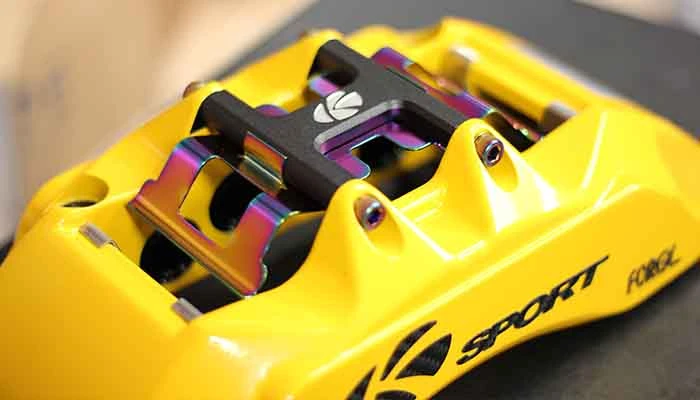
2. Best Honda Civic Ep3 brake pads
Now, we move on to the next important part of the braking system: the brake pads.
Ep3 Brake pads from the factory use a very hard-wearing compound, which creates minimal dust and has a very low disc wear rate.
The compound is due to mass manufacture, and they last longer than the other types of performance brake pads we're about to go into.
If you want to learn about the different types of brake pads, such as compounds, friction coefficients, etc., head over to our performance brake pads guide, where we go over this in depth.
We will break down two sections here: brake pads for track or race use.
The easiest way to choose brake pads is to be honest about how the car is used.
A road and occasional track EP3 usually needs a pad that works well in cold weather and can still handle heat. A race only EP3 can use a more aggressive compound because comfort, noise and dust matter far less than outright stopping performance.
The range of brake pads would change depending on what you're using the car for.
For example, if you use the car for race use only and are not ever used as a road car, then something aggressive, such as the Ferodo DS3000 or PBS Prorace pads, would be the best option.
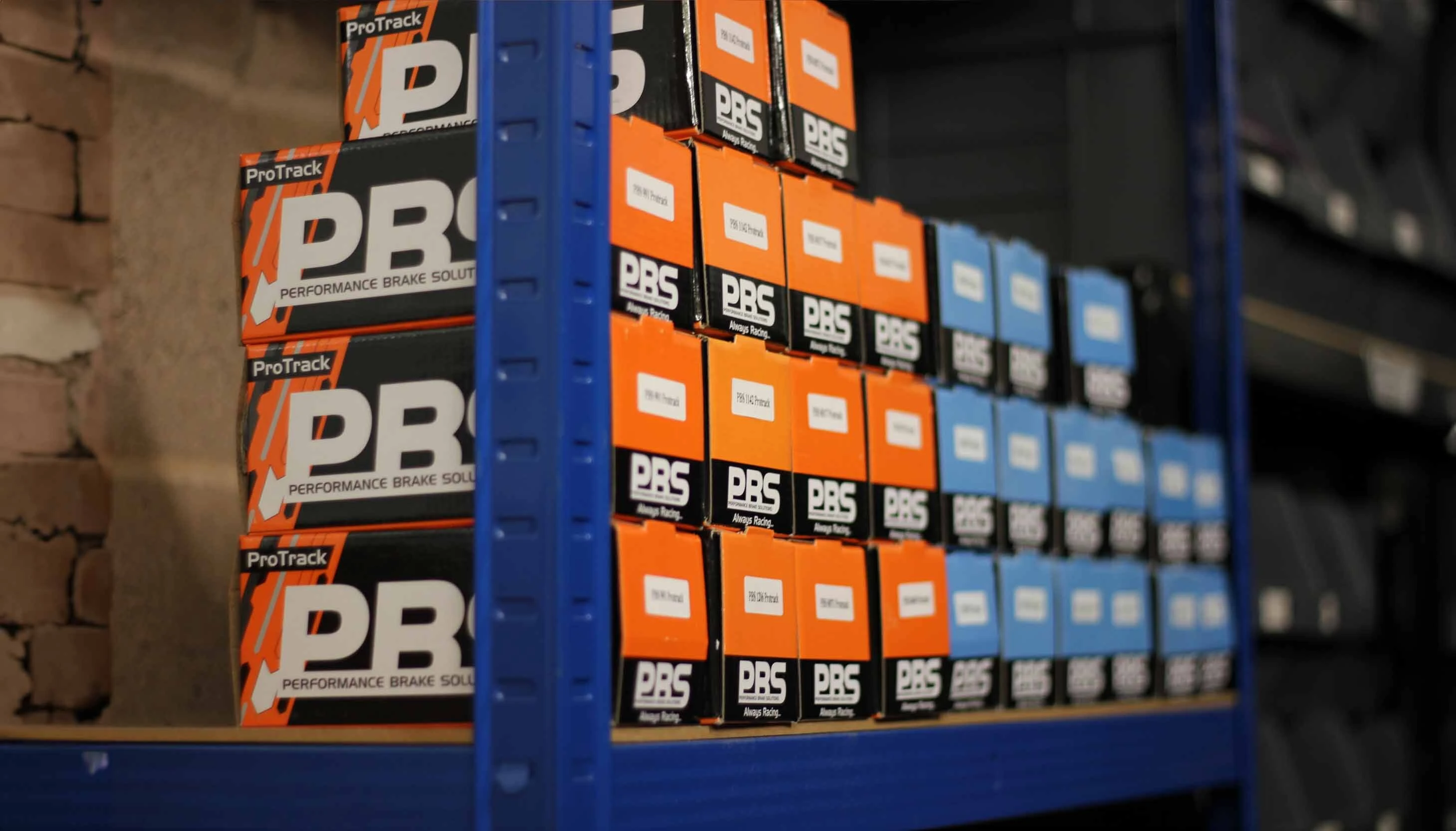
Brake pads for track use
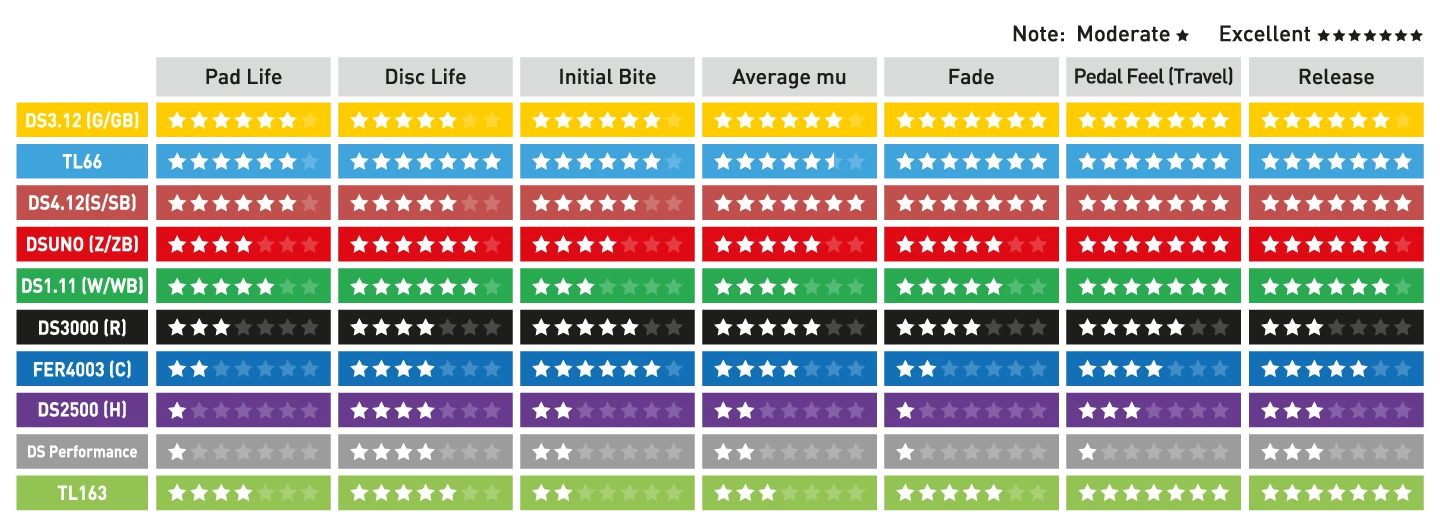
Ferodo DS2500
The first brake pads in our EP3 braking guide would be the Ferodo DS2500 option.
Ferodo has been around for years and is considered one of the best options for high-performance brake pads.
This is mainly down to the composition of the brake pads and the fact that they have a friction coefficient of 0.41 from 0°C-500°C.
You can jump in the car and have maximum braking performance rather than warming them up like some of the more aggressive pads, making them a winner for spirited road use and track.
However, one thing to note about the DS2500 brake pads is that they do not have R90 certification, so in some countries, it would be illegal to run on the road.
PBS Protrack
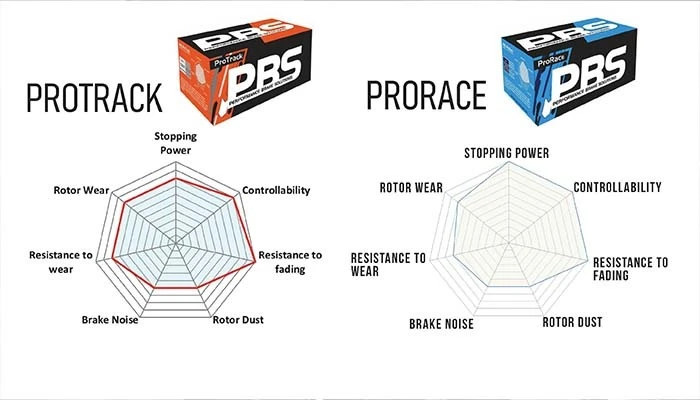
The next brake pads on the list would be the PBS Protrack.
We use these in our AWD turbo Civic, and we know many customers who use them on their track cars with outstanding results.
PBS are also cheaper for a better performance when comparing both.
The PBS Protrack brake pads offer a 0.40-0.48 friction coefficient, and the temperature range runs from 0°C-700°C, which beats the Ferodo DS2500 pads in both aspects.
That wider temperature window matters because braking performance is heavily tied to heat control, which is something we explain in our guide to automotive heat management.
Because of this, the PBS would be our first option, although either brake pad would give you incredible results over the stock brake pads and many other aftermarket pads, for that matter!
Brake pads for race use
ferodo DS3000
Now, we move on to the more aggressive brake pads designed solely for race use and are not road-legal due to the temperature ratings.
Most of these brake pads perform optimally at a minimum of a few hundred degrees, making them unsuitable for road use.
On the other hand, because of the compounds used, they are the best options for pure race cars. They are nearly always based on ceramic fibres, which are more expensive but offer better performance than organic or semi-metallic.
The Ferodo DS3000 brake pads are a step up from their track-based cousin, the DS2500.
With an average friction coefficient of 0.48 and an optimal temperature range of 200°C-650°C, they can get much hotter and perform well.
At the time of writing, these pads are £171, so there is a slight increase on the DS2500 price point.
PBS Prorace
The last brake pads on the list would be the PBS Prorace, the race version compared to the Protrack.
These are incredible brake pads, and although very dusty, they would be our go-to race pads due to their performance.
They again outperform the Ferodo brake pads by offering a 0.36 to 0.58 coefficient but an incredible operating temperature range of 0°C-800°C.
If you have used PBS before, you will know these brake pads have a fantastic feel, and again, they would be our choice in the brake pad department.
They are also much cheaper than the DS3000 pads; at the time of writing, they are only £133.00.
3. Best Honda Civic EP3 brake discs
Now that we've covered brake pads, we move on to the all-important brake discs.
Brake discs are just as important as the brake pads when trying to improve the performance of your EP3 brakes.
Suppose you use a cheap set of brake discs which aren't set up to dissipate heat very well or are manufactured from inferior materials. They will be at a higher risk of warping, creating a juddering feel and decreasing performance.
When looking for performance EP3 brake discs, most people go directly to the shiny, grooved, drilled or a combination of both. Still, it's just as essential to ensure they are vented and will reject heat as fast as possible.
If you want to understand why cooling and heat rejection matter so much, our article on engine bay heat transfer helps explain how heat builds and moves through performance parts.
That is especially important on heavier EP3 builds, turbo cars, or any setup that sees repeated hard braking, because once disc temperature gets out of control, you are not just fighting fade.
You are also increasing the risk of pad glazing, uneven deposits, cracking, and pedal inconsistency.
This is where RPB and PBS come in, with both options being vented and being by far the most popular EP3 brake discs we sell.
RPB Ep3 brake discs
RPB EP3 brake discs are always a good option for upgrading from OEM discs.
They are grooved and vented to dissipate as much heat as possible and to stop the brake pads from glazing over.
They also include a high carbon content, which gives them extra strength over the cheaper OEM brake discs and can outperform heavier heat cycles.
RPB discs were tested and proven on the Civic Cup cars, which already gives them good authority to be one of the best brake discs for a Civic EP3.
They also include directional vents, which help to control the airflow going through the brake discs as much as possible.
Currently, the RPB EP3 brake discs are £168.07, making them excellent value for money!
PBS Ep3 brake discs
The last EP3 brake discs we recommend are PBS.
We've used PBS brake pads and discs with massive success for several years now, and they consistently impress.
They also have a high carbon content to withstand harsh heat cycles and are incredibly strong.
Regarding features, there isn't a significant difference between PBS and RPB, so whichever option you choose would be a fantastic upgrade over the stock brake discs.
The PBS brake discs are retailing for £179.99, which is slightly higher than the RPB discs, but they are just as good for all-around performance on the road or track.
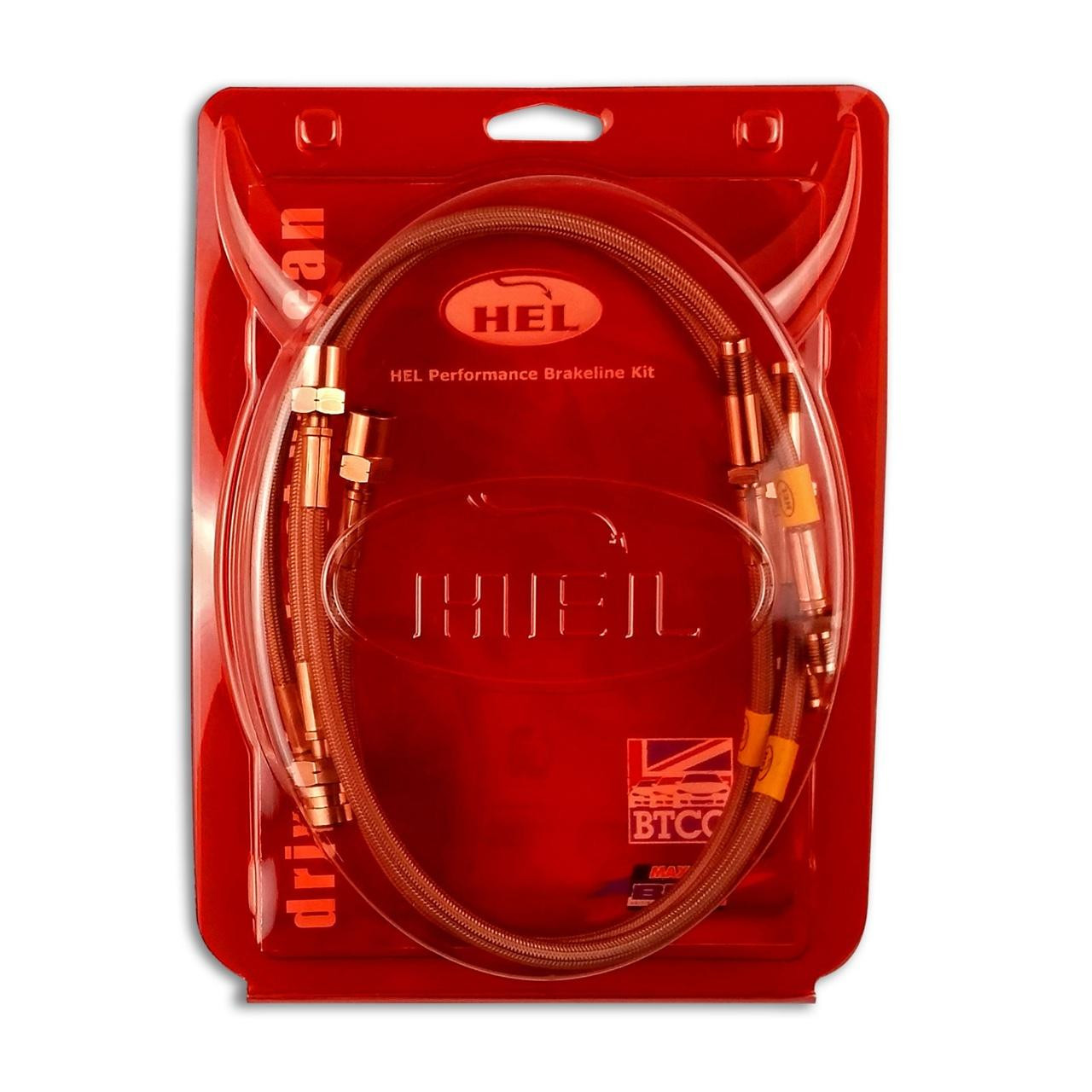 HEL Braided Brake Lines for Honda Civic EP3 2.0 Type R 01 to 05
One of the best first upgrades if you want a firmer pedal and less sponge under hard braking.
From £97.20
 Motul RBF 660 Factory Line 500ml
A proven road and track fluid with strong boiling points to help resist fade when heat builds.
From £22.99
 PBS Protrack Front Brake Pads for Honda Civic EP3 FN2 S2000
A strong step up for harder road and track use when heat resistance matters more than low dust.
From £143.00
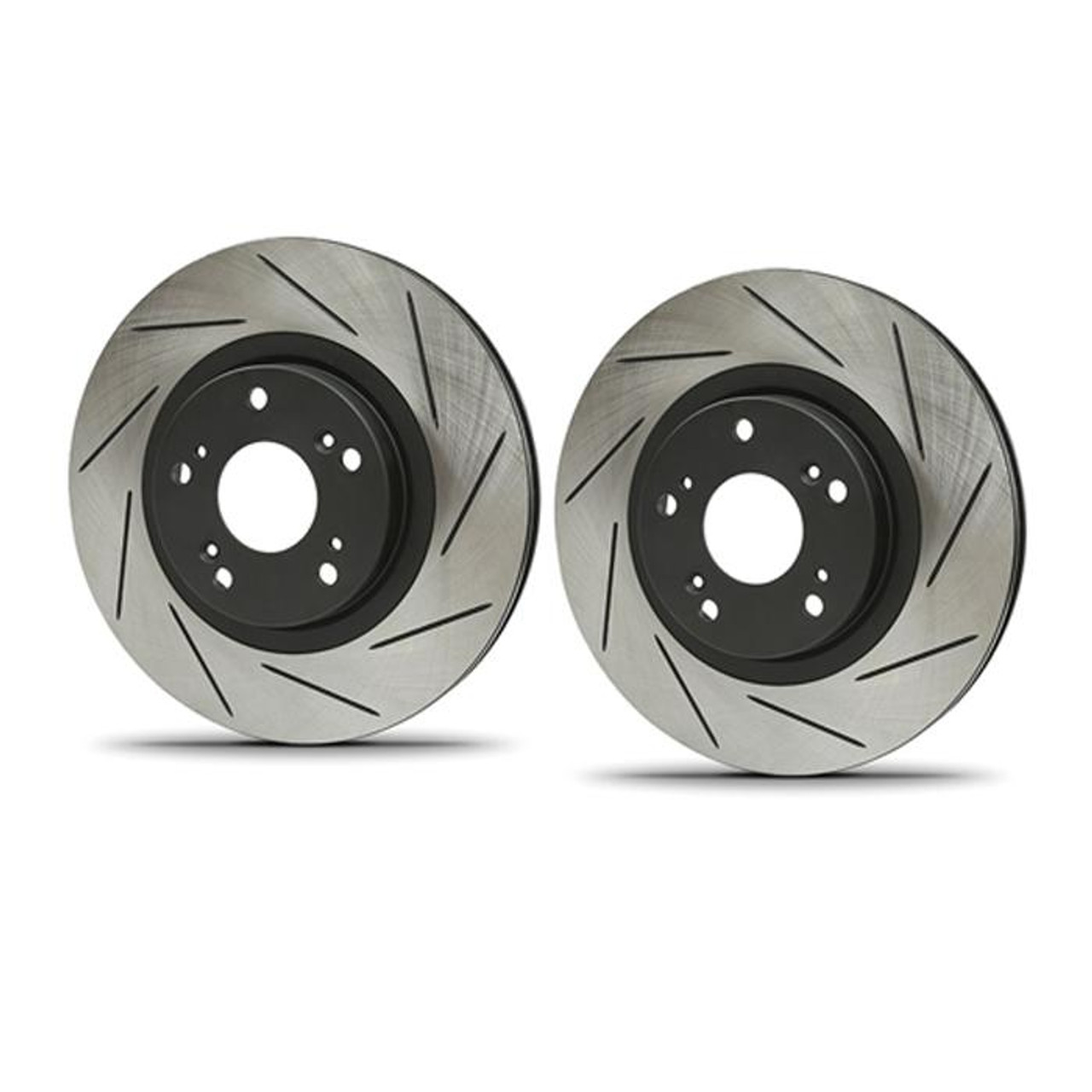 RPB Brake Discs Front for Honda Civic Type R EP3 FN2
Grooved and ventilated front discs that help manage heat cycles better than cheap plain replacements.
From £168.07
4. Best Ep3 braided brake lines
How many times have you started to brake hard and felt the spongy feel in the brake pedal?
This is likely due to the flexible rubber brake lines used on the stock system.
The most common upgrade to fix this would be to swap the brake lines out for stainless steel braided brake lines.
If you want to know why braided lines make such a noticeable difference, we also break it down in our article on why HEL brake lines are a must-have.
This upgrade will remove the spongy feel of the brakes and offer a much better braking feel.
Most brake line manufacturers use PTFE with a stainless steel outer braid to strengthen the line while being compatible with every brake fluid you want.
Hel Performance
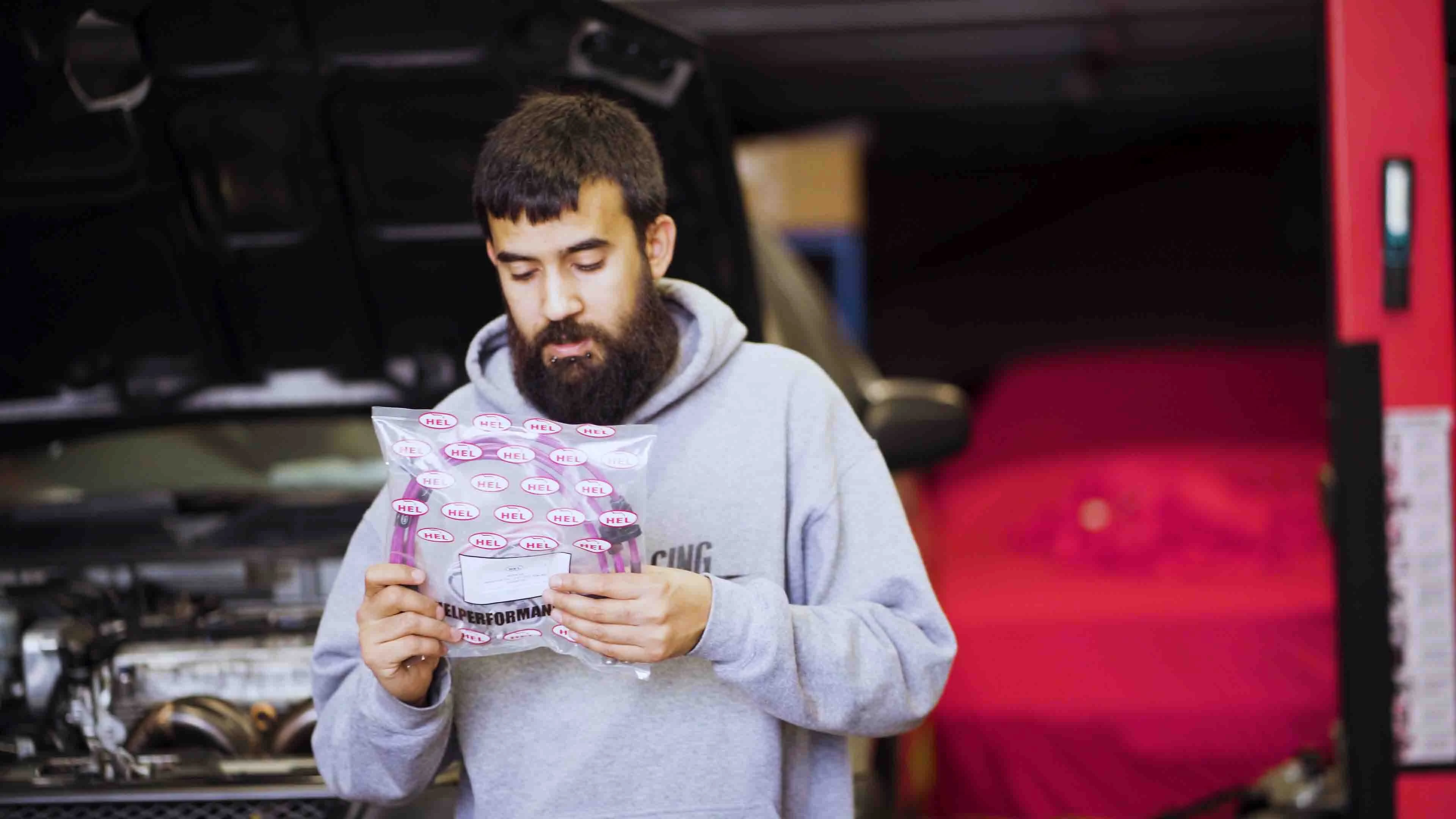
Hel Performance is our go-to on this list as they are one of the only companies that manufacture everything in-house and have the broadest range of options available.
We did a brand feature on Hel and the 5 reasons you need Hel brake lines.
It also helps that they are just down the road from us, so collecting on the same day is always a bonus!
Hel Performance has been around for 20+ years, manufacturing brake lines and performance fittings and has got it down to an art.
You'll struggle to go anywhere without finding at least one car with Hel Braided brake lines installed!
Currently, they are only £108, which is pretty cheap with the colours and finishes they offer without an extra fee.
Goodridge
Goodridge is the next brand we have had massive success with, and, again, it has been established for many years.
There is a good reason for that when you look at their product lines.
They manufacture many brake lines for aftermarket and OEM applications, so you know they will create quality products.
Using the same industry standard as Hel Performance, Goodridge has top-level products, although they are slightly more expensive, currently at £119.98
Overall, Goodridge brake lines are a trusted option that has been around for years. They perform exactly as they should, increasing pedal feel and giving you more confidence in your EP3 brakes.
5. Best Ep3 Brake fluid
Brake fluid is the next upgrade to improve your EP3 braking, and although there are fewer manufacturers, choosing the correct brake fluid is essential.
Brake fluid transfers pressure from your brake pedal to the calliper, which presses against the brake pads to stop or slow the car.
We've written a complete brake fluid guide, which might be worth looking at if you want to learn more about it and how it works.
For choosing brake fluid, we only use two companies, Motul and PBS, although, as always, there are a few options depending on what you're using the car for.
Motul brake fluid
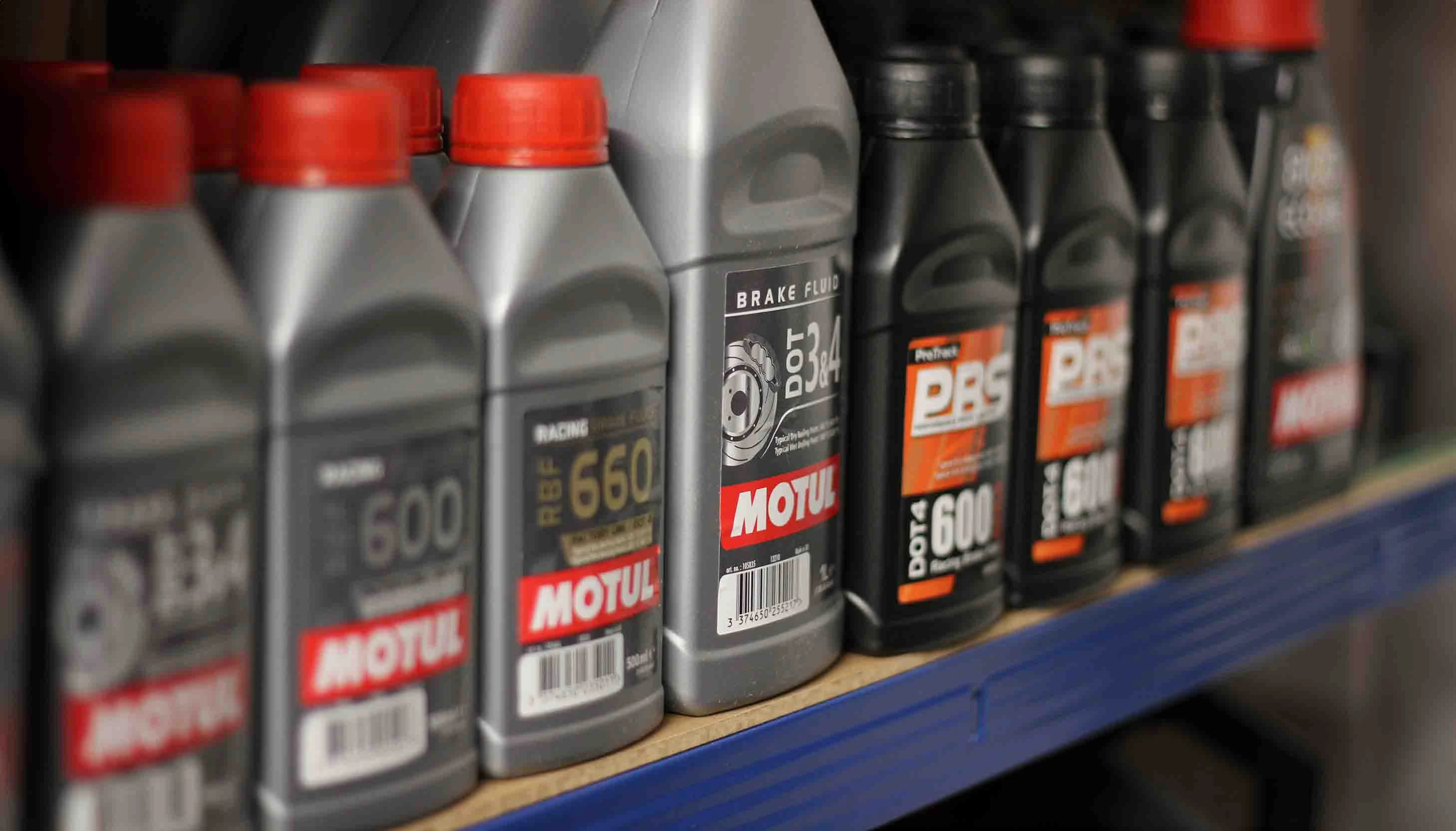
First up is the most popular brake fluid brand, Motul.
Motul has been manufacturing lubricants for over 160 years, making some of the best brake fluids today.
They make multiple fluids, but for performance, the three we are mainly interested in are the Motul 600, 660 and 700 series of brake fluid.
All three have different wet and dry boiling points, as shown below, but the best all-rounder for road and track would be the Motul 660.
Motul 600 boiling points:
Dry boiling point: 312°C / 594°F
Wet boiling point: 204°C / 399°F
Motul 660 boiling points:
Dry boiling point: 328 °C / 622 °F
Wet boiling point: 204 °C / 399 °F
Motul 700 boiling points:
Dry boiling point: 336°C / 637°F
Wet boiling point: 205°C / 401°F
The Motul 660 brake fluid is by far the most popular brake fluid we sell, and providing you do not mix with a different DOT-rated fluid, bleed the brakes correctly and make sure there aren't any contaminants in the line, you will get the most performance from your EP3 brakes.
PBS brake fluid
The next brake fluid contender on the list would be PBS.
PBS are a much newer company than Motul, but their brake fluids are just as good as we'll see in the boiling points below.
Rather than multiple options here, they only offer two. The PBS 600 max and 660 max are very similar to the Motul 600 and 660 options.
Again, these brake fluids are both solid options, but the 660 would be the best option for road and track due to the slightly higher dry boiling point.
PBS 600 max boiling points:
Dry boiling point: 312° C (594° F)
Wet boiling point: 204° C (399° F)
PBS 660 max boiling points:
Dry boiling point: 328° C (622° F)
Wet boiling point: 204° C (399° F)
As you can see from comparing the Motul and PBS brake fluids, the 600 and 660 range have precisely the same boiling points, wet and dry, so it all depends on which one you can find cheaper.
Currently, the PBS 660 max fluid is cheaper, so that would be the option we would choose at this point, but they are both outstanding viable options.
6. Best Ep3 brake stoppers
The last of the 6 EP3 braking upgrades on our list would be the mighty brake stopper.
Brake stoppers are designed to bolt to the chassis or firewall and stop the movement in the brake servo.
The brake stopper is an excellent product to get the maximum braking performance.
The less flex in the brake servo, the more solid and precise the feel you get with the pedal.
Brake stoppers are inexpensive, and you will feel a massive difference once you install one!
Tegiwa brake stopper
There is only one company currently making the EP3 brake stopper, and that is Tegiwa.
We've sold a load of these brake stoppers as they are made well and have made an enormous difference to our customers' cars.
The brake stopper is powder-coated blue for a long-lasting finish and to stop rust.
Plus, once combined with everything else on this list, you will have the ultimate braking performance for your Honda Civic EP3.
 Tegiwa Brake Stopper for Honda Civic Type R EP3
A small but effective upgrade that helps reduce servo flex and sharpen pedal feel.
From £45.74
Frequently Asked Questions
Do I need to upgrade my EP3 braking system?
If you have increased the performance or need to change parts of the braking system anyway, then yes.
Performance modifications are always welcome, whether the car is stock or running more horsepower.
How do I choose which Ep3 braking brands to go with?
Choosing the best brands is totally up to you, and luckily, there are now enough options on the market for you not to have to go down one avenue.
Although we've advised which brands we have had the most success with, you can always choose a different route depending on price.
Which performance EP3 brake pads should I choose?
The EP3 brake pad choice is totally up to you, but if we were to choose pads for road use, we would use the Ferodo DS2500, or if going for a complete track/race brake pad, we would select the PBS Pro Race.
How do I choose performance brake fluid?
Choosing a performance brake fluid is entirely up to you.
Still, we recommend using the Motul or PBS 660 fluid as they both have excellent boiling points for road and track use.
Do I need to upgrade my EP3 callipers?
Upgrading your callipers is entirely up to you and isn't a must.
Although having a brand new calliper is beneficial (as EP3s are around 20 years old now), you can either rebuild your callipers or retrofit another upgrade, such as the Renault Clio/Megane Brembos, which isn't as expensive.
How much difference do performance brake discs make?
Going with vented and grooved brake discs over the standard solid blanks is always a welcome upgrade.
Still, the brake pads would come first over the discs and make more of a difference if you're on a budget.
Should I only change my EP3 front brakes?
In an ideal world, you would change the front and rear brakes, including the pads, discs, and brake lines. Still, as the front has the most significant bias in braking, these are always the most critical positions of the car to change first.
Front braking upgrades usually come first because most braking load is at the front, but rear condition still matters for balance and confidence.
If you have the budget and want the optimal performance, then yes, upgrade the front and rear discs and pads.
What is the best first brake upgrade for an EP3 on a budget?
If you are starting from a standard EP3 and want the best value upgrade, begin with quality brake pads, braided brake lines, and fresh high-temperature brake fluid.
That combination often gives the biggest confidence boost per pound before you move on to discs or a full big brake kit.
Conclusion
So, here are our top 6 picks for the best Honda Civic EP3 braking upgrades, including all the brands we recommend.
Hopefully, this guide has helped clear up any doubt you may have had about upgrading your brakes or which performance brands are the best.
If you click any of the product links in the article, it will take you directly to our shop, where you can use this discount code for 5% off:
BLOG5
This is solely for our blog readers, which you can use on nearly every brand in our shop!
If this guide has helped you, or you want to let us know you enjoyed reading it, please leave us a message below or on our contact form.
If you want to get the most out of your EP3, be sure to check out our ultimate EP3 engine tuning guide or Ultimate EP3 suspension guide.
If you are planning a more complete EP3 build, it is also worth reading our guides on EP3 suspension upgrades and EP3 interior upgrades, because braking, handling and driver confidence all work together.
Thank you for reading, and we'll look forward to seeing you in the next blog!