
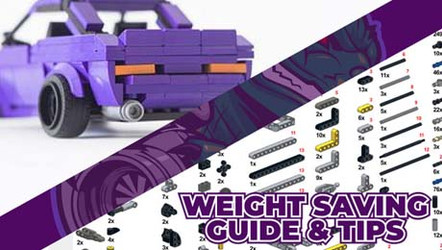
Car Weight Reduction: How To Make Your Car Lighter
Posted by Matthew Marks on 1st Aug 2024
Car Weight Reduction: How To Make Your Car Lighter
Reducing car weight is one of the simplest ways to improve acceleration, braking, cornering and response without asking the engine to make more power.
At Exoracing, we help UK enthusiasts and workshops build lighter, faster and more reliable track cars with performance parts, heat management and practical setup advice.
Shop Heat Management PartsYou may hear people talking about power-to-weight ratio, car weight reduction and removing unnecessary mass from a track car. They are right to care about it. If we go back to Newton's second law of motion, Force = Mass x Acceleration, the basic idea is simple: the lighter the car is, the less work the engine, brakes, tyres and suspension have to do.
That is why a very light car can embarrass a much more powerful one. The Ariel Atom 500 is a good example of this because it can reach high speeds with far less power than a heavy hypercar thanks to its low weight. Gearing, traction, tyres and aerodynamics still matter, but starting with less mass gives every system an easier job.
The simple answer
The best car weight reduction starts with removing items you do not need: boot clutter, spare tools, rear seats, heavy trim and sound deadening on track-focused cars.
Once the free weight is gone, the biggest performance feel usually comes from reducing unsprung and rotational weight with lighter wheels, wheel hardware, brakes and suspension parts.
For a dedicated track car, lightweight seats, polycarbonate windows, fibreglass or carbon panels, a lighter exhaust and a sensible fuel load can remove much more weight, but safety and rules must come first.
- The cheapest weight saving usually comes from removing interior and boot items you do not need.
- Unsprung weight is weight not supported by the springs, such as wheels, tyres, hubs and brakes.
- Rotational weight matters because the engine and brakes have to speed it up and slow it down.
- Do not remove structural, safety or road-legal equipment unless the car and rules allow it.
- A lighter and faster track car often creates more heat stress, so heat management should not be ignored.
Best Ways To Reduce Car Weight
What you remove depends on how the car is used. A daily driver still needs comfort, safety equipment, heating, demisting and road legality. A dedicated track, race or drag car can go much further because comfort matters less and lap time matters more.
Start with parts that are easy to remove, cheap to reverse and not safety-critical. Boot items, rear seats, unused trim, heavy sound deadening and unnecessary brackets are common first steps. Once you are cutting, drilling or removing metal, the job needs more planning because you may affect strength, safety or event rules.
Best first step because it costs little and is easy to understand.
Reduces unsprung and rotational mass, so the car often feels sharper than the number suggests.
Good when the car needs better support, control and repeatable braking as well as less mass.
Useful on dedicated cars, but cost, safety and regulations matter much more here.
Sprung Vs Unsprung Weight Reduction
Before changing parts, you need to understand the difference between sprung and unsprung weight.

What is sprung weight?
Sprung weight is the mass supported by the suspension springs. This includes the shell, engine, gearbox, interior, fuel, driver and most body parts. Reducing sprung weight helps the whole car accelerate, brake and change direction more easily.
What is unsprung weight?
Unsprung weight is the mass not supported by the springs. This includes wheels, tyres, brake discs, brake callipers, hubs, wheel nuts and some suspension parts. Less unsprung weight helps the suspension control the wheel and tyre more effectively.
Rotational mass matters even more because it spins. A lighter wheel, tyre, brake disc or flywheel can make the car feel more responsive because the engine and brakes have less rotating weight to speed up and slow down.
Which has more impact?
As a rough rule, 1kg removed from unsprung mass can feel more valuable than 1kg removed from the interior because the suspension has less mass to control. You may see ratios such as 1.7-2kg of sprung mass for every 1kg of unsprung mass, but the exact result depends on the car, tyre, suspension and where the weight is removed.

Because of this, many serious builds eventually move towards lighter Rota lightweight wheels, lighter wheel hardware, brake upgrades and suspension parts.
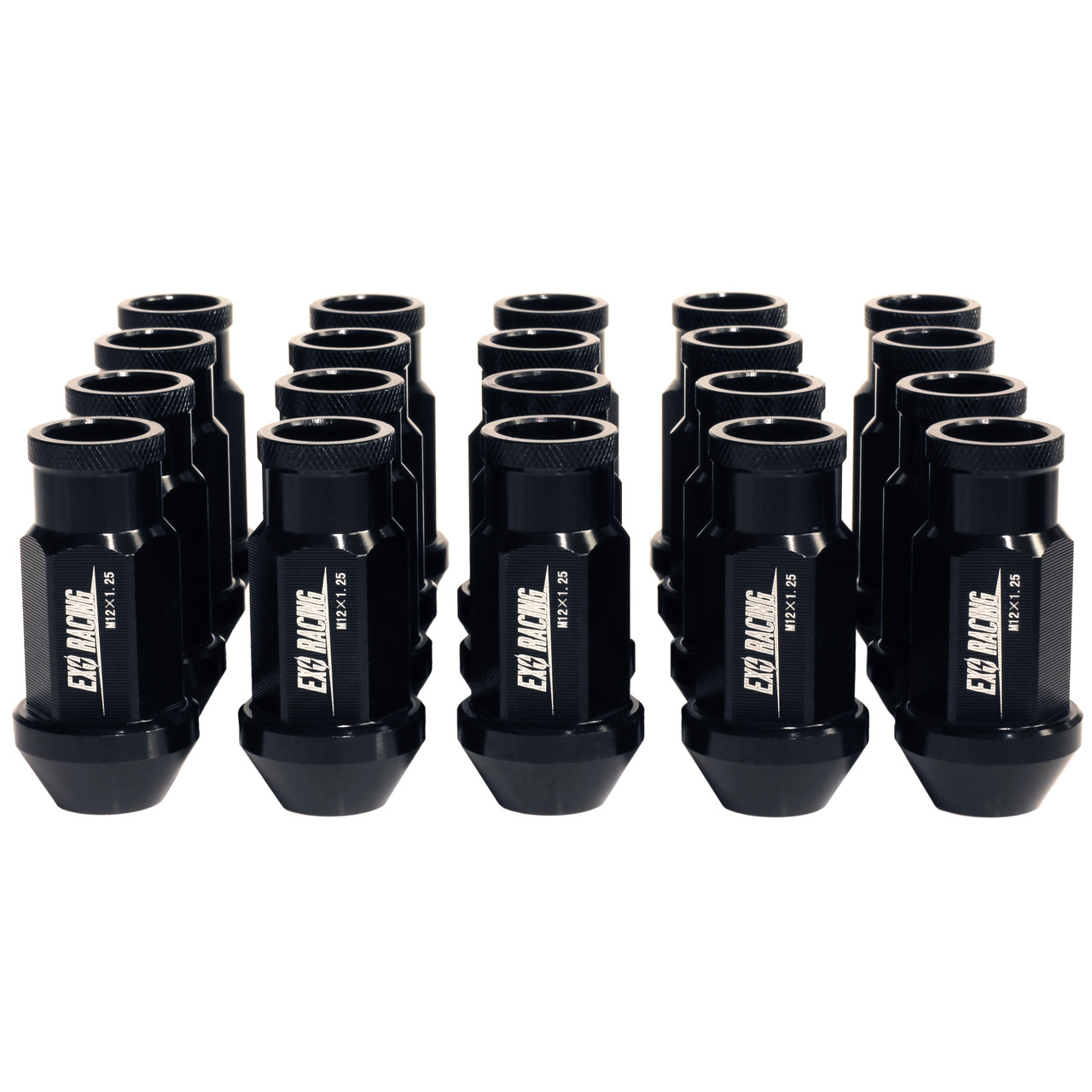 20 x Exoracing Wheel Nuts Forged Steel or Aluminium
Open-ended wheel nuts for aftermarket wheels, with aluminium options available for a lighter wheel-area setup.
From £59.99
Interior Weight Reduction
The interior is where most cheap car weight reduction starts. Removing interior parts is usually straightforward, and many jobs only need basic hand tools.
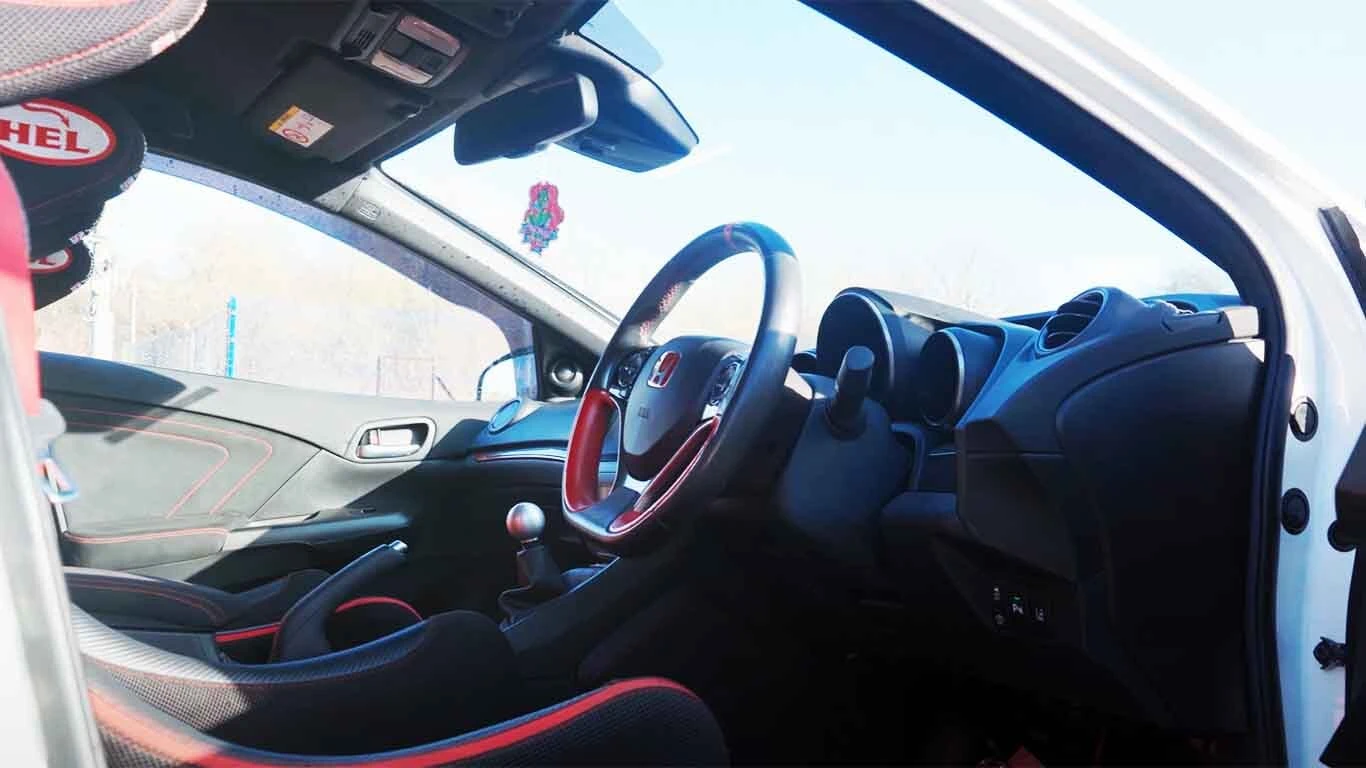
Seats
Factory seats can be heavy, especially when they include electric adjustment, heating, airbags and large steel frames. Removing rear seats and fitting lightweight front bucket seats can save weight while improving support on track.
If you plan to enter events, check the rules before buying seats, side mounts, rails or harnesses. Many UK motorsport events require approved seats and correct mounting hardware.
Boot spares and trim
Most cars carry a spare wheel, jack, tools, compressor kit, boot carpet and trim. These are useful on the road, but on a track day, you may have tools and spares in the paddock instead.
For a road car, make sure you still have a sensible recovery plan before removing puncture equipment. For a track car, this is one of the easiest free weight savings.
Sound deadening, carpets and roof lining
Carpets, sound deadening, roof lining and interior plastics can add up quickly. Removing them makes the cabin louder, hotter and less comfortable, but it is effective on a track-focused car.
Removing weight from high up, such as a sunroof assembly or roof lining, can also lower the centre of gravity. This helps reduce roll and makes the car feel more eager to change direction.
Carbon Fibre, Fibreglass, and Polycarbonate
Carbon fibre and fibreglass panels are popular because they can replace heavy steel panels with lighter parts. The bonnet and boot lid are usually the first exterior panels people look at because they can be large and heavy.

Removing weight high up on the car can be especially useful because it lowers the centre of gravity. The E46 BMW M3 CSL is a famous road car example because it used a carbon fibre roof from the factory.
Polycarbonate windows are another serious car weight reduction option. They are lighter than glass and much more impact-resistant, but they scratch more easily, so hard-coated motorsport window kits are usually the better choice.
If you are replacing doors, roof skins or removing metal, plan the safety side properly. A cage, correct door bars, safe seat mounting and event rules matter more than chasing the lowest possible number.
Suspension, Wheels, and Brakes
Suspension, wheels and brakes are where weight reduction starts to overlap with handling and lap time. Many aftermarket performance parts are lighter than OEM parts, but the bigger gain is often the combination of less weight, better control and better heat capacity.

Coilovers
Coilovers are not usually the cheapest weight-saving per kilogram, but they can transform how a car handles. Depending on the factory suspension and the kit fitted, they may also save some weight.
There are many coilover options available. We often recommend Yellow Speed Racing because we have used them on our own cars and supplied them for customer race cars with good results.
Arms and bushes
Suspension arms and bushes can improve handling while sometimes reducing weight. For example, an OEM steel arm may be replaced with an aluminium version, depending on the car and part.
Our go-to brand for arms is Hardrace suspension arms and bushes. Fresh bushes or spherical joints can make the car feel much sharper than old cracked rubber, even when the weight saving is small.
Brakes
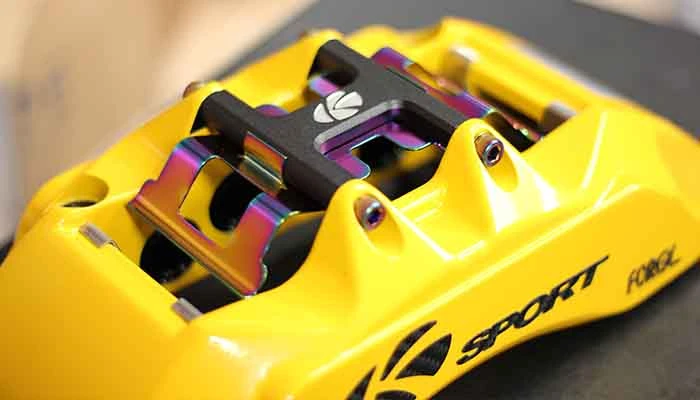
Brakes are part of the unsprung assembly, so weight matters. A well-chosen brake upgrade can improve stopping power, pedal feel and heat control. Some aftermarket callipers are lighter than factory callipers, although larger discs can add weight if they are chosen for heat capacity.
For track use, choose the brake setup for repeatable stopping first, not just weight. Pads, fluid, cooling and disc choice usually matter more than removing the last kilogram.
Lightweight wheels
Replacing heavy OEM wheels with lightweight racing wheels can save several kilograms per corner on some cars. Because wheels are unsprung and rotational mass, even a 2kg saving per wheel can be noticeable.
Fuel Load, Exhaust, and Lightweight Replacements
Fuel load is easy to overlook because it changes every time you drive the car. Petrol usually weighs around 0.7-0.8kg per litre, so carrying an extra 20 litres can add roughly 14-16kg.
If you only need enough fuel for a session, sprint, or drag run, a full tank is extra weight you may not need. Serious drag cars often carry only the fuel needed for the job, partly for weight and partly for weight distribution.
The exhaust system can also save weight. Stainless steel aftermarket systems are often lighter and more corrosion-resistant than old OEM steel systems. Titanium is lighter again, but the cost is much higher.

Not every weight saving has to mean deleting comfort. A lightweight heater can still provide demist and cabin heat without carrying the bulk of a factory heater box, which is useful for stripped cars that still need visibility and some usability.
 3.5kw Lightweight Heater 12v
A compact heater option for stripped builds where demist and cabin heat still matter.
From £183.60
Do Not Forget Heat Management
A lighter car often spends more time at higher RPM, higher load and higher speed. It may brake later, stay on boost longer and spend more time close to its limits. That creates more heat stress in the engine bay, brakes, fluids and exhaust area.
Use the same heat management logic we use when helping customers choose parts: identify the heat source, identify the vulnerable part, check routing and clearance, control the heat source where possible, then protect the vulnerable part.
Watch: Our exhaust wrap video shows why wrapping hot exhaust pipework can help control under-bonnet heat on performance cars.
Exhaust wrap is for manifolds, headers, downpipes and hot exhaust pipework. Reflective tape is for panels, intake pipes, airboxes, reservoirs and surfaces facing radiant heat. Heat sleeve is for hoses, wiring, brake lines, fuel lines and other vulnerable parts near heat.
 Exoracing Titanium or Carbon Exhaust Wrap
Controls heat from manifolds, downpipes and hot exhaust sections on track-focused builds.
From £24.99
 Exoracing Gold and Silver Heat Reflective Tape
Useful for intake pipes, bulkheads, tunnels and surfaces facing radiant exhaust heat.
From £29.99
Common heat management mistakes
- Using reflective tape on exhaust pipework instead of exhaust wrap.
- Using a heat sleeve to hide already damaged wiring or a leaking hose instead of repairing it first.
- Ignoring routing and clearance, then expecting heat protection to fix a bad layout.
- Fitting parts and never rechecking after heat cycles.
For more details on choosing heat products, see our guide on what heat reflective tape is used for and our exhaust wrap calculator.
How Much Weight Can Be Removed From A Car?
A light track day strip can remove 20-50kg from many cars by taking out boot items, rear seats, trim, sound deadening and unnecessary interior parts. A more serious build with lightweight seats, wheels, exhaust, polycarbonate windows, lighter panels and reduced heater setup can remove 100kg or more from some cars.
The trade-off is comfort, noise, heat, legality, safety and cost. Removing everything is not automatically the best answer if the car becomes unpleasant, unsafe or unsuitable for the events you want to attend.
Is weight reduction worth it?
For track, race, sprint, and drag cars, yes, weight reduction is usually worth it. For a daily driver, it depends on how much comfort, refinement and practicality you are willing to lose.
The best road and track compromise is usually selective weight reduction: remove what you do not need, keep safety and visibility, and spend money where the car will actually feel better.
Common Car Weight Reduction Mistakes
- Removing safety equipment without a plan: if the car needs a cage, harnesses, approved seats or road-legal parts, plan those before cutting weight.
- Chasing carbon before free weight: remove unnecessary interior and boot weight before spending heavily on panels.
- Ignoring unsprung weight: lighter wheels, tyres and brake parts can make a bigger difference to feel than the same weight removed from trim.
- Forgetting heat and reliability: a lighter track car may work harder for longer, so wiring, hoses, fluids and exhaust heat need attention.
- Making the car worse to use: if the car still sees the road, keep demisting, safe seating, mirrors, lighting and sensible noise levels in mind.
Car Weight Reduction FAQs
How do I reduce the weight of my car for free?
Start with boot clutter, unused tools, spare trim and items you do not need. On track cars, rear seats, carpets, boot plastics and sound deadening are common next steps.
Does weight reduction make a car faster?
Yes. Reducing weight improves the power-to-weight ratio, so the same engine has less mass to move. It can also improve braking, cornering, tyre wear and suspension response.
What is the best weight reduction for cars?
The best first step is free interior and boot weight reduction. The best performance-focused upgrade is usually reducing unsprung or rotational mass with lighter wheels, tyres, wheel hardware and braking parts.
Why is unsprung weight important?
Unsprung weight affects how easily the suspension can control the wheel and tyre. Less unsprung weight helps the tyre follow the road surface more effectively, which can improve grip, steering feel, braking and ride control.
How much weight can you remove from a car?
A basic track strip may remove 20-50kg. A more serious build with seats, wheels, panels, windows, exhaust and heater changes can remove 100kg or more from some cars, depending on the vehicle.
Can weight reduction increase horsepower?
Weight reduction does not increase engine horsepower. It improves the power-to-weight ratio, so the car can feel quicker without the engine making more power.
Should I remove everything from my car?
Only on a dedicated race or track car where comfort, road use and resale value are not priorities. For a road car, selective weight reduction is usually the better choice.
Conclusion
Car weight reduction is one of the most effective ways to improve performance without adding more power. Start with simple free weight savings, then move towards lighter seats, wheels, braking parts, panels, windows and exhaust components as the build becomes more serious.
The best result is not always the lightest possible car. It is a car that is lighter, sharper, safer and still suitable for how you actually use it. If the car is becoming faster and spending more time on track, also make sure heat management, brakes, tyres and safety equipment keep up with the weight reduction work.
Shop Heat Management PartsAbout The Author
Exoracing is a UK-based performance parts and heat management specialist.
Since 2018, we have helped enthusiasts, workshops, and modified car owners choose practical parts for road, track, race and drag builds.