
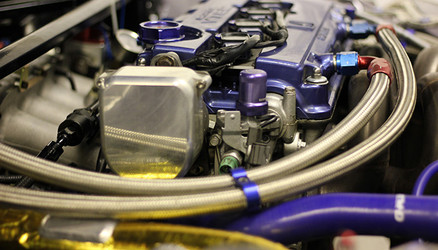
How To Install AN PTFE Fittings To Braided Hose
Posted by Matthew Marks on 2nd Aug 2024
How To Install AN PTFE Fittings To Braided Hose
Learn how to cut braided PTFE hose, fit the olive correctly and tighten AN PTFE hose ends without damaging the fitting or creating a leak.
Written from our own hose assembly process for fuel, oil and coolant line builds.
Shop AN PTFE Hose EndsIf you are building fuel lines for E85, race fuel, oil, coolant or an in-car fuel system, PTFE braided hose is often the right choice. The important part is using the correct PTFE hose end, because PTFE fittings seal with a small crush olive rather than the same internal design used on standard rubber braided hose fittings.
In this guide, we will show the full process using AN PTFE full flow hose ends and braided PTFE hose. By the end, you will know how to cut the hose cleanly, fit the olive, assemble the hose end and check the finished line before it goes on the car.
The simple answer
To install AN PTFE fittings, cut the braided PTFE hose cleanly, slide the socket onto the hose, fit the olive between the PTFE liner and outer braid, push the fitting body into the liner, then tighten the socket onto the fitting body.
You must use PTFE-specific hose ends with PTFE hose. Standard AN hose ends for rubber braided hose will not seal the PTFE liner correctly.
Always blow the hose out after cutting and pressure test the finished line before fitting it to the car.
- PTFE hose needs PTFE hose ends because the olive creates the seal.
- Masking tape helps keep the braid together while cutting.
- A 1mm cutting disc gives a cleaner cut on braided hose than forcing it through with unsuitable cutters.
- The olive fits between the PTFE liner and the braid, with the liner seated against the olive lip.
- The fitting may not fully bottom out; the crushed olive is what seals the line.
- Pressure test the finished hose before installing it on the car.
Watch: In our AN fitting assembly video, we show the difference between PTFE hose ends and standard braided hose fittings so you can see how the olive seats inside the hose.
When Should You Use PTFE Hose?
PTFE hose is a good choice when fuel compatibility, vapour control or motorsport safety matters. It is commonly used for high ethanol fuels such as E85, race fuel, oil lines, coolant lines and fuel systems where the hose may run inside the vehicle.
For normal pump fuel outside the cabin, a rubber braided hose may still be suitable and can be more flexible. If you are unsure which hose type you need, our ultimate guide to AN fittings explains the differences between push lock, rubber braided and PTFE hose.
PTFE handles high ethanol fuel better than a normal rubber inner hose.
PTFE helps prevent fuel vapour from passing through the hose wall.
Nylon braided PTFE is usually more flexible than stainless braided PTFE.
Stainless braid gives extra abrasion protection where the route is more exposed.
If the hose passes near a turbo, manifold or downpipe, treat heat as a separate routing problem. Keep the line away from the heat source where possible, then protect the vulnerable line with a suitable heat sleeve if clearance is limited.
Tools And Parts Needed
You do not need a huge tool list, but clean cutting and protected tightening make a big difference. Aluminium AN tools are optional, but they help reduce marks on anodised fittings.
Parts needed
- 2 x AN PTFE fittings
- A suitable length of AN PTFE braided hose
Tools needed
- Bench-mounted vice
- Masking tape
- WD40 or grease
- Clean cloth or microfibre cloth
- Tape measure
- Disc cutter with a 1mm cutting disc
- Goggles or suitable eye protection
- Correct size spanner for the AN fitting
Optional tools
 AN Ptfe Full Flow Hose End An04-An12
PTFE-specific hose end with the olive required to seal braided PTFE fuel, oil and coolant lines.
From £9.99
 Exoracing AN Ptfe Black Nylon Braided Hose 1.0m
Flexible black nylon braided PTFE hose for fuel, oil and coolant line builds.
From £9.90
 Exoracing AN Ptfe Stainless Steel Braided Hose 1.0m
Stainless braided PTFE hose for routes that need extra abrasion protection.
From £9.99
Step 1: Measure And Tape The PTFE Hose
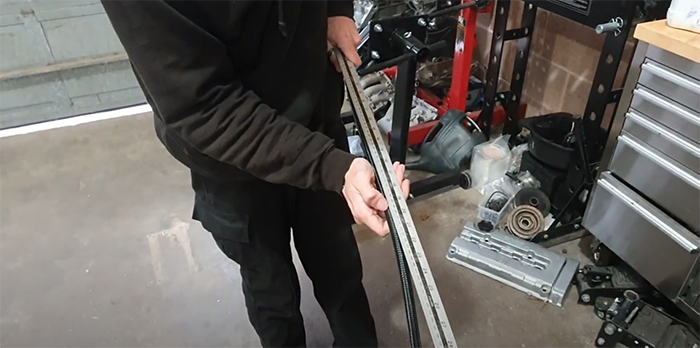
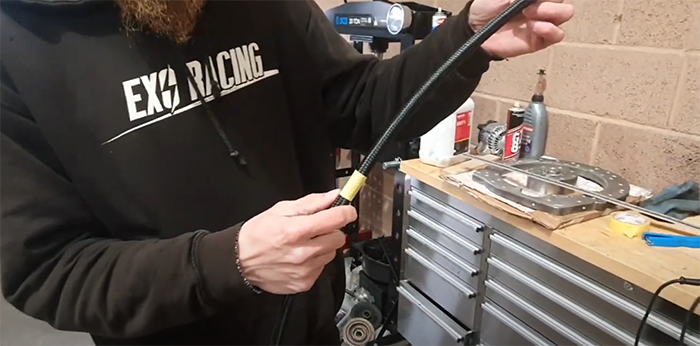
Measure the hose length you need, then wrap masking tape around the hose where it needs to be cut. Keep the cut line in the centre of the tape so the braid is held together on both sides of the cut.
Step 2: Cut The Braided PTFE Hose
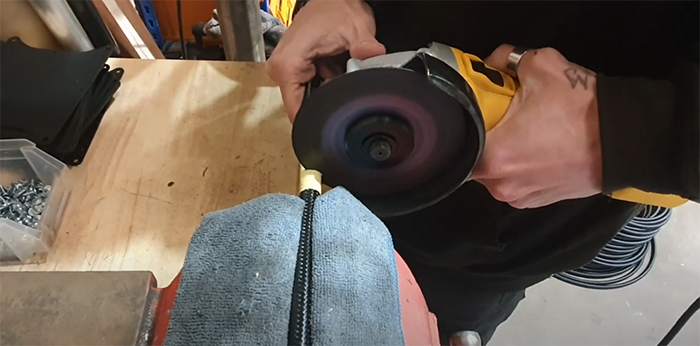
Place the hose in a vice, using aluminium vice jaws or a clean cloth to protect it. Leave roughly 10mm to 20mm of hose overhanging the vice so the hose is supported while you cut.
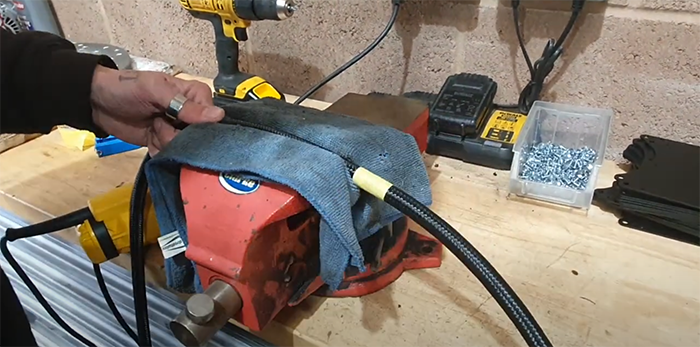
Fit a 1mm cutting disc, wear eye protection and cut through the centre of the masking tape. Aim for a straight cut, as a badly angled cut can make the olive harder to seat evenly.
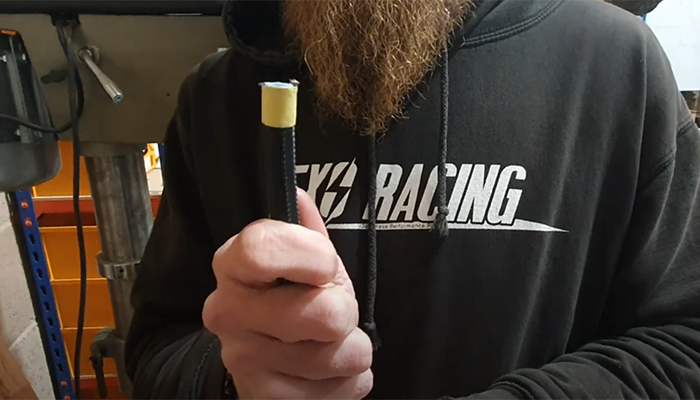
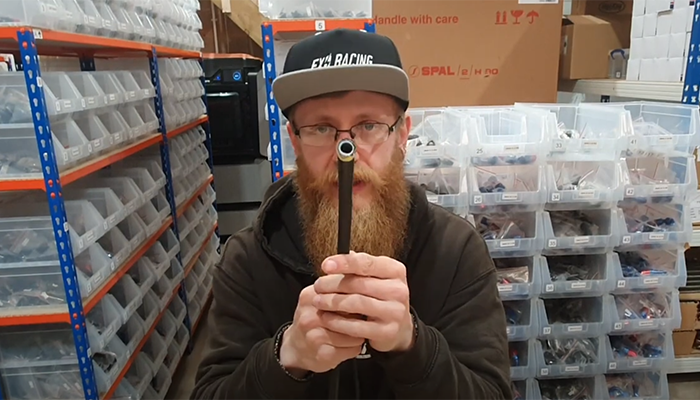
After cutting, blow the hose out fully. Cutting dust, braid fragments or metal particles left inside the line can damage pumps, injectors, regulators or the engine.
Step 3: Slide The Socket Onto The Hose
Unscrew the PTFE hose end and remove the olive from inside the fitting. Slide the socket end over the hose before fitting the olive. The threaded end of the socket needs to face the cut end of the hose so it can screw back onto the fitting body later.
This is an easy step to forget. If the socket is not on the hose before the olive and fitting body are installed, you will need to take the end apart and start again.
Step 4: Fit The Olive Between The Liner And Braid
Open the braid slightly at the end of the hose, then fit the olive between the PTFE liner and the outer braid. The tapered edge of the olive should point inwards towards the hose.
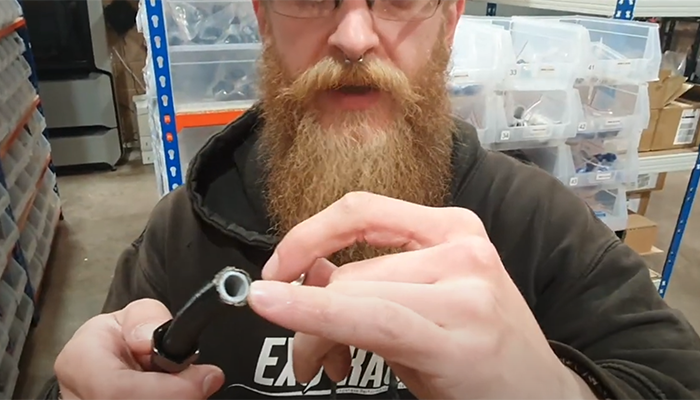
The PTFE inner liner should sit against the internal lip of the olive. If the liner is not seated squarely, the fitting may not crush and seal evenly.
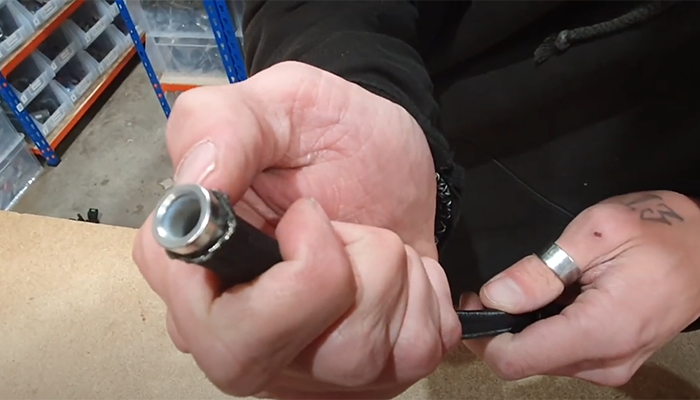
Step 5: Push The Fitting Body Into The PTFE Liner
Apply a small amount of WD40 or grease to the male end of the fitting body. Push the fitting body into the PTFE liner until the olive sits close to the fitting threads.
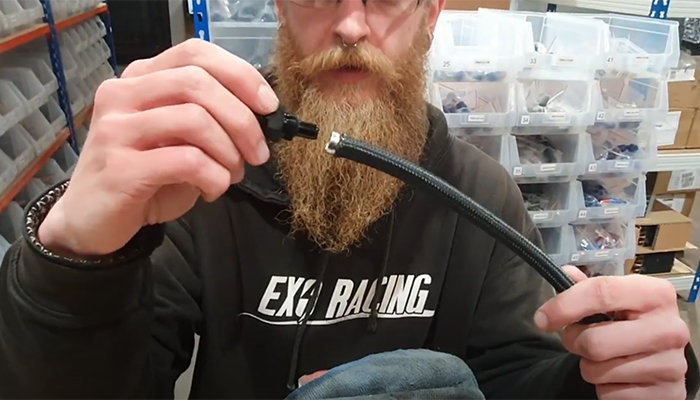
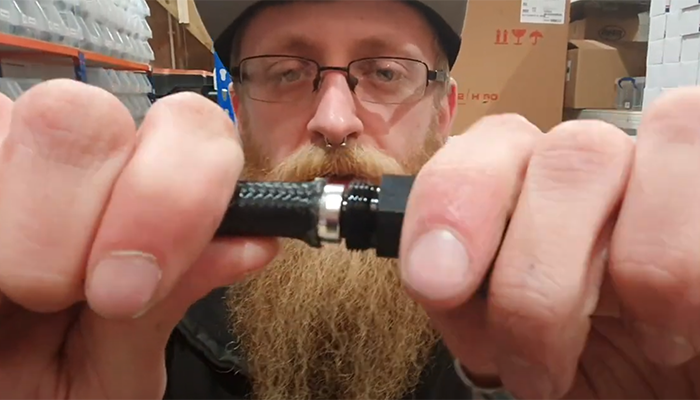
Keep the fitting straight as it goes into the liner. If it starts at an angle, stop and reset it rather than forcing it in.
Step 6: Tighten The PTFE Hose End
Pull the socket back down the hose and start threading it onto the fitting body by hand. Go as far as you can by hand first so you know the thread has started cleanly.
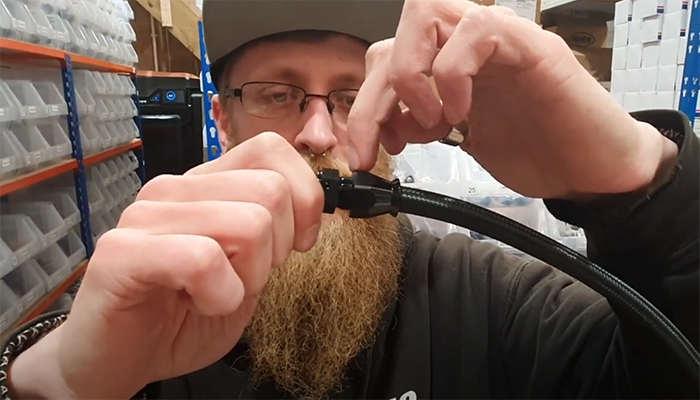
Place the fitting body in the vice using aluminium vice jaws or a clean cloth. Seat the fitting securely so it does not slip or mark while tightening.
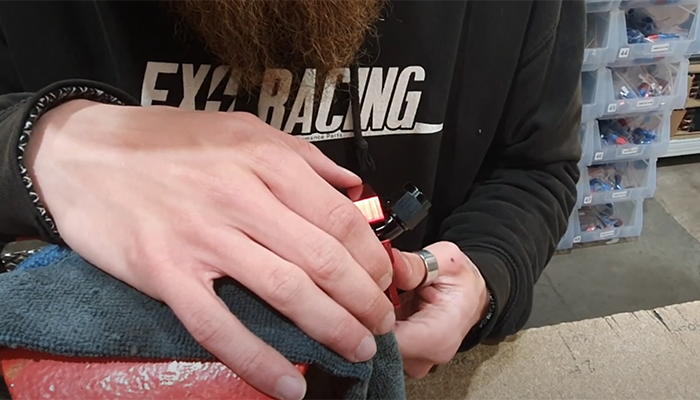
Use the correct spanner or an aluminium AN spanner to tighten the socket onto the fitting body. From our experience, one smooth pull is usually easier than stopping and starting repeatedly.
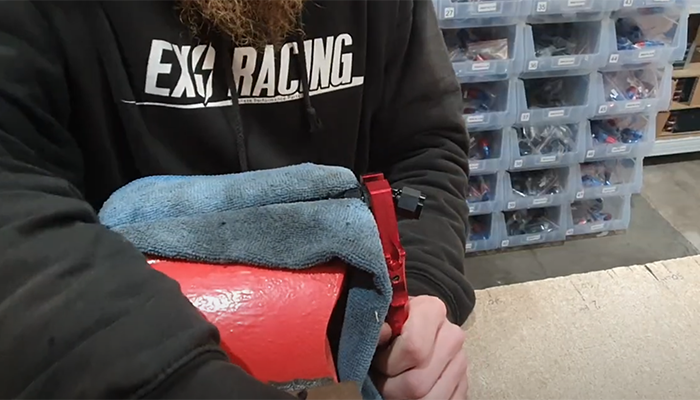
The fitting may not fully bottom out against the socket. That can be normal on PTFE hose ends because the olive is the sealing part. Once the fitting is tight and the hose is assembled squarely, repeat the process on the other end of the hose.
Final Checks Before Fitting The Hose
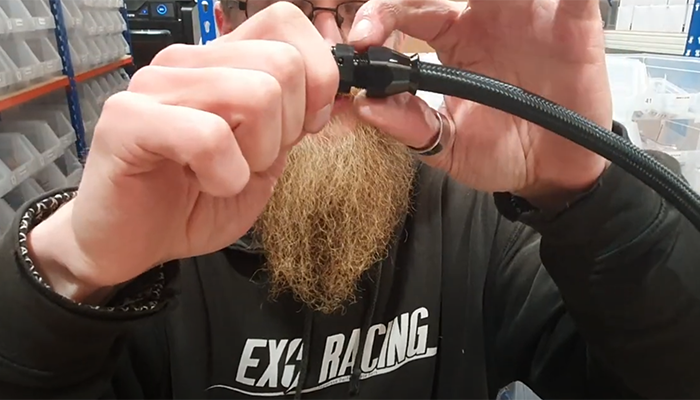
Before the line goes on the car, check that both hose ends are straight, the braid is not trapped badly outside the socket, and the fitting has not cross-threaded. Then, pressure test the line before use.
This is especially important for fuel systems. A small leak on the bench is annoying; a fuel leak in the engine bay or inside the car is a safety risk.
Common AN PTFE Fitting Mistakes
Using standard AN hose ends on PTFE hose
Standard swivel hose ends are for rubber braided hose. PTFE hose needs the PTFE fitting and olive to seal correctly.
Forgetting to slide the socket on first
The socket must go onto the hose before the olive and fitting body. If you forget it, the assembled end has to come apart again.
Reusing the olive
The olive crushes to seal the hose. Once it has been tightened, replace it if the fitting is removed and rebuilt.
Leaving debris inside the hose
Always blow the hose out after cutting. Swarf and braid fragments can damage components or block small fuel system parts.
Treating heat protection as a repair
If a hose is leaking, damaged, kinked or routed against a hot part, fix that first. A heat sleeve can protect a correctly routed line, but it is not a repair for a bad hose or unsafe routing.
Frequently Asked Questions
Can I use normal AN fittings with PTFE hose?
No. PTFE hose must be used with PTFE-specific AN fittings because the olive seals the PTFE liner. Standard rubber hose ends are not designed to seal PTFE hose correctly.
Can I use a jubilee clip on PTFE hose?
No. PTFE hose will not clamp and seal correctly onto a barb with a jubilee clip. Use the correct AN PTFE hose end in the matching hose size.
Can PTFE hose be used with normal pump fuel?
Yes. PTFE hose can be used with normal pump fuel as well as higher ethanol fuels and race fuels. It usually costs more than a rubber inner hose, but it gives better fuel compatibility if your setup may change later.
Can I run a PTFE fuel hose inside the car?
PTFE hose is commonly used for in-car fuel line routes because it helps prevent fuel vapour from passing through the hose wall. The line still needs to be secured properly, protected from rubbing and installed to suit the rules for your car or race series.
Can I assemble PTFE hose without the olive?
No. The olive is required to seal the PTFE liner inside the fitting. Without it, the hose end will not seal correctly and the line can leak.
Can I reuse a PTFE olive?
No. PTFE olives are designed to crush during installation. If you remove and rebuild the hose end, use a new olive in the correct size.
Should PTFE fittings fully bottom out when tightened?
Not always. On PTFE hose ends, the olive is the sealing part, so the socket and fitting body may not fully touch when tightened. The important checks are correct olive position, clean thread engagement and a leak-free pressure test.
Conclusion
AN PTFE fittings are simple once you understand how the olive seals the hose. Cut the hose cleanly, keep the braid controlled, seat the olive between the liner and braid, tighten the fitting carefully and pressure test the finished line before installation.
If you are still choosing parts, start with the correct matching sizes of AN PTFE hose ends and braided PTFE hose. For a broader comparison of hose types, read our AN fittings guide, or compare the process with our rubber braided hose fitting guide.
You can use the discount code BLOG5 at checkout for money off your order. If you need help choosing the right hose, fitting angle or AN size, contact us, and we will help you choose the right parts for your setup.
Shop AN PTFE Hose EndsAbout the Author
Exoracing is a UK-based automotive heat management and performance parts specialist.
Since 2018, we have helped enthusiasts and workshops choose parts for fuel systems, turbo builds, exhaust heat control, wiring protection and track car preparation using practical product knowledge from real modified cars.