How To Fit AN Fittings To Rubber Braided Hose
Posted by Matthew Marks on 2nd Aug 2024
Jump to a section
How To Install AN Fittings To Rubber Braided Hose
A clean AN line starts with the right hose, the right fitting and a straight cut. This guide shows you how to assemble rubber braided AN hose without fraying the braid, damaging the fitting or creating a leak.
Written from our own AN hose and fitting installation experience at Exoracing.
Shop AN Hose And FittingsAN hose is one of the tidiest ways to build custom oil, coolant and fuel lines, but the assembly has to be done properly. A poor cut, the wrong hose end or a fitting that is not fully seated can leave you with a leak exactly where you do not want one.
This guide is for stainless steel or nylon outer braid over a rubber hose. It is not for PTFE hose, push-lock hose or generic rubber hose with jubilee clips. If you are still choosing between hose types, our ultimate AN fittings guide explains the differences in more detail.
The simple answer
To install AN fittings on rubber braided hose, cut the hose cleanly through taped braid, remove any swarf, push the hose fully into the socket until it reaches the internal lip, lubricate the male fitting threads and tighten the fitting until the two fitting halves fully seat together.
The most important checks are hose and fitting compatibility, a clean square cut, no loose braid inside the line, no cross-threading and no visible gap once the fitting is assembled.
Always pressure test the finished line before fitting it to the car, especially if it will carry fuel, oil, coolant or any pressurised fluid.
- Use swivel seal AN hose ends only with rubber braided AN hose.
- Masking tape keeps the braid tight while you cut through the hose.
- A 1mm cutting disc gives a cleaner cut than crushing the hose with blunt cutters.
- The hose must sit fully against the lip inside the fitting socket.
- Pressure test the finished hose before installing it on the car.
Watch: In our AN fittings video, we show how the hose, fitting and assembly process work together, which is useful if you want to see the steps before building your first line.
Before You Start: Check The Hose And Fitting Match
The biggest mistake is mixing hose and fitting types. Rubber braided hose needs a standard swivel seal hose end. PTFE hose needs a PTFE hose end with an olive. Push-lock hose needs a push-on fitting. They are not interchangeable.
Rubber braided AN hose is useful for many oil, coolant and pump fuel applications, but it is not the correct choice for every fuel system. If the line runs inside the car, or you are using high ethanol fuel such as E85 or race fuel, use PTFE hose and the correct PTFE fittings instead.
The hose seals when it is fully seated inside the fitting, and the fitting halves are tightened together.
The olive crushes and seals against the PTFE liner, so a normal rubber hose end will not seal correctly.
The hose grips the barb differently and should not be assembled like braided rubber or PTFE hose.
Parts And Tools You Need
You can assemble an AN hose with basic tools, but aluminium AN tools make the job cleaner because they reduce the chance of marking the anodised fittings.
Parts
- 2 x AN swivel seal hose end fittings.
- A length of rubber braided AN hose, cut longer than the finished line so you can trim it accurately.
Tools
- Bench vice.
- Masking tape.
- WD40, light oil or grease.
- Clean microfibre cloth.
- Tape measure.
- Disc cutter with a 1mm cutting disc.
- Goggles or eye protection.
- Correct size spanner, or ideally an adjustable AN wrench spanner.
- Aluminium AN vice jaws to hold the fitting without scratching it.
 AN Swivel Seal Hose End Fitting AN04-AN20
Correct hose end for rubber braided AN hose in oil, coolant and suitable pump fuel line setups.
From £5.99
 Exoracing AN Black Nylon Braided Hose 1.0m
Flexible braided rubber hose for custom fuel, oil and coolant line routing where suitable.
From £19.99
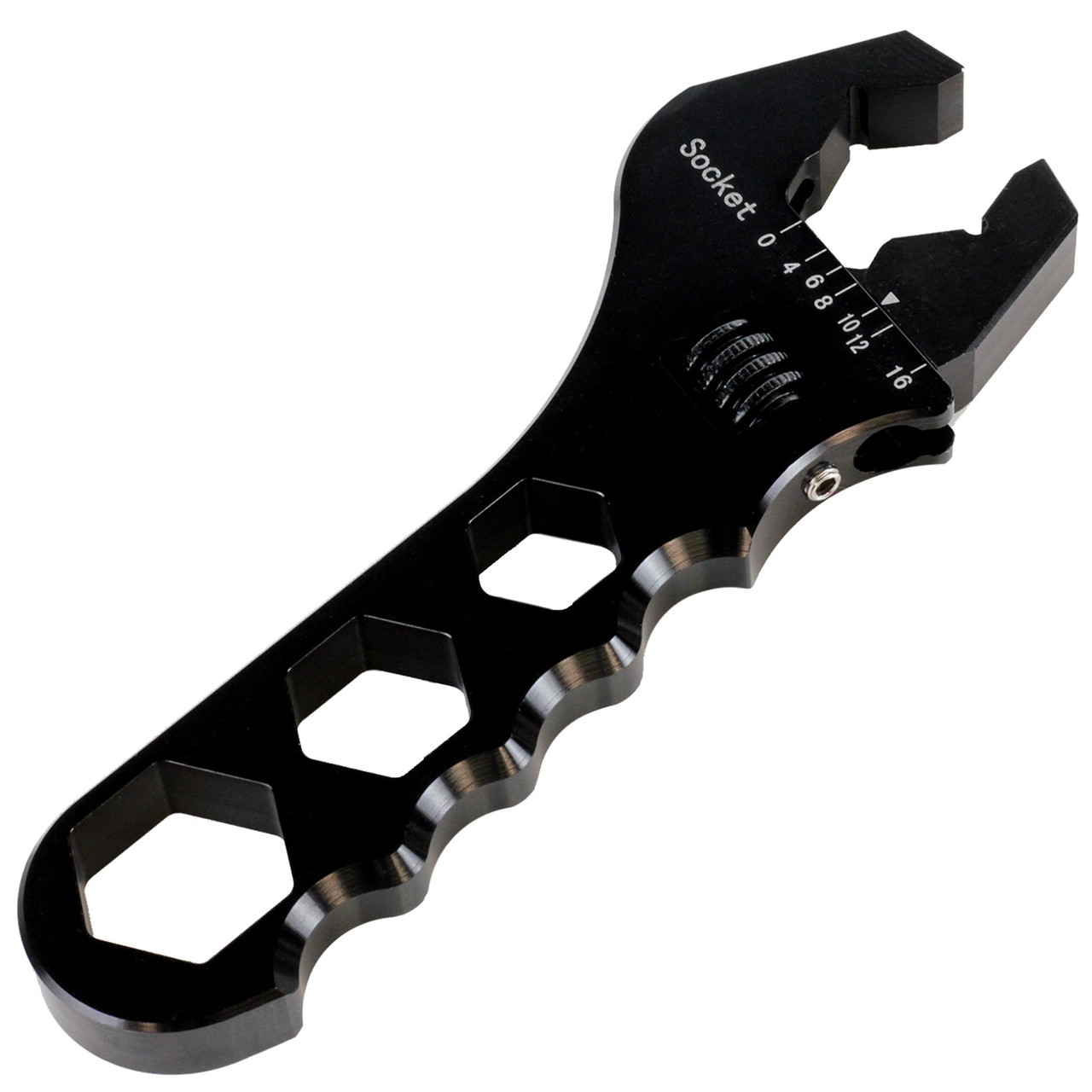 Exoracing Adjustable AN Wrench Spanner AN03-AN16
Aluminium AN spanner for tightening fittings with less risk of marking the anodised finish.
From £49.99
 Exoracing Magnetic AN Vice Jaws 6061 Billet Aluminium
Billet vice jaws that hold AN fittings securely while reducing the chance of scratches.
From £39.99
Step 1: Measure And Mark The Braided Hose
Measure the hose route on the car first, allowing enough length for engine movement, fitting angle and a sensible bend radius. Do not pull the line tight between two points. A tight AN line can put stress on the fitting, especially on engines that move under load.
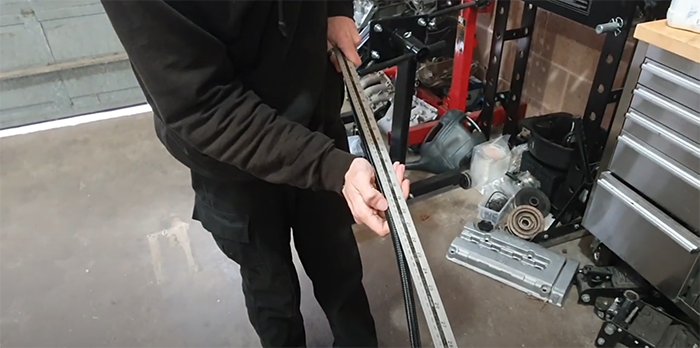
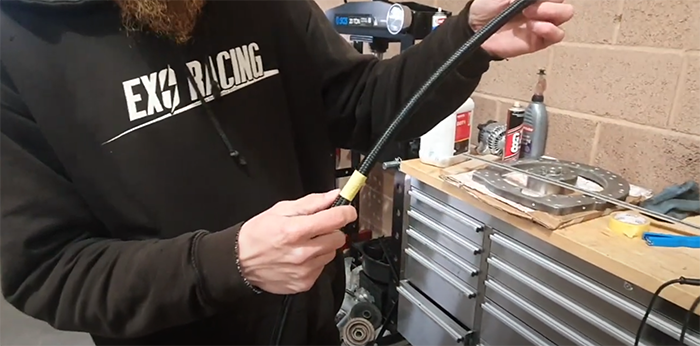
Once you know the length, wrap masking tape around the hose at the cut point. Put the cut line through the centre of the tape so the braid stays together as the disc passes through it.
Step 2: Hold The Hose And Cut It Cleanly
Place a clean cloth in the vice, then clamp the hose gently so the taped cut point sits around 10-15mm past the edge of the vice. The vice should support the hose without crushing it.
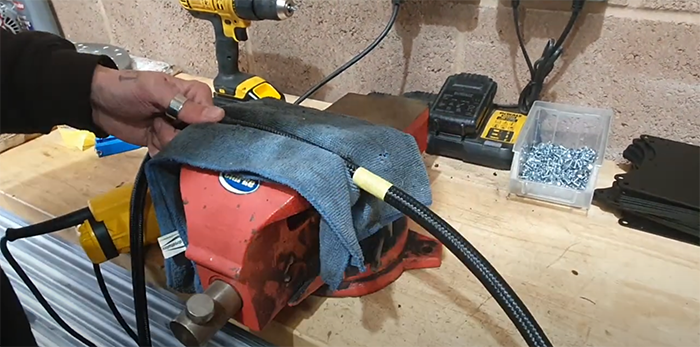
Put on eye protection and cut through the centre of the masking tape using a 1mm cutting disc. Aim for one clean, straight cut. A rough cut can make it harder to seat the hose in the fitting and can leave loose braid inside the line.
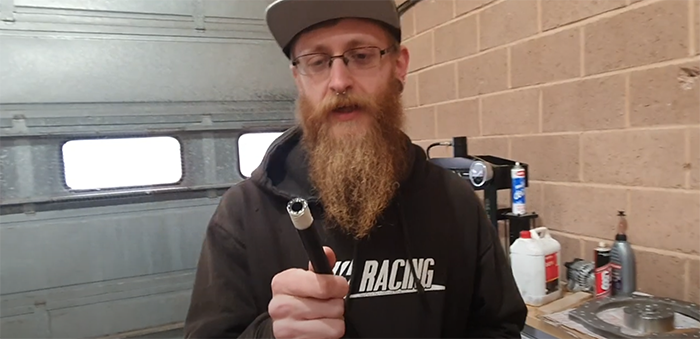
After cutting, check the inside of the hose carefully. Remove any swarf or loose braid. Blow through the line if needed. Metal particles inside an oil, coolant or fuel line can damage components, block small passages or mark the fitting threads during assembly.
Step 3: Push The Hose Into The AN Fitting Socket
Unscrew the hose end fitting so you have the socket section and the male insert section separated. Push the socket over the braided hose until the hose reaches the internal lip inside the fitting.
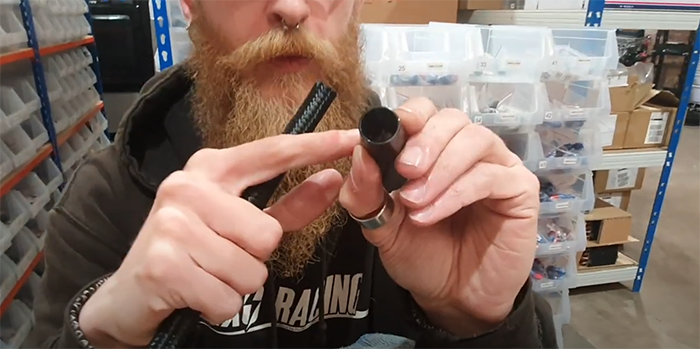
This lip is important because it shows where the hose needs to sit for the fitting to seal properly. If the hose is not fully seated, the insert can push it back during tightening and leave a weak connection.
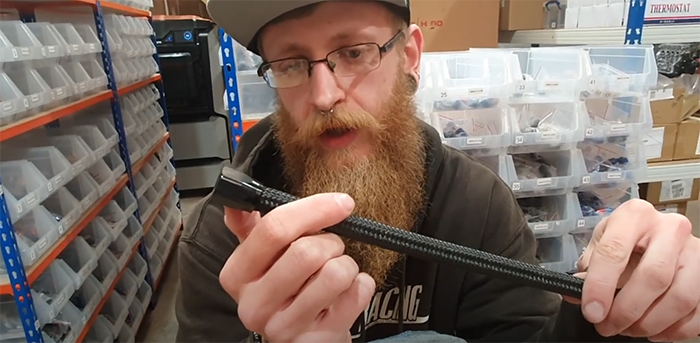
Step 4: Lubricate And Thread The Fitting By Hand
Place the socket section in the vice, ideally using aluminium AN vice jaws. Apply a small amount of WD40, light oil or grease to the male fitting threads and the insert area. This helps the fitting start smoothly and reduces the chance of tearing the hose's inner.
Start the fitting by hand. This step matters because cross-threading an aluminium AN fitting can ruin the fitting quickly. If it does not start cleanly, stop, back it out and try again.
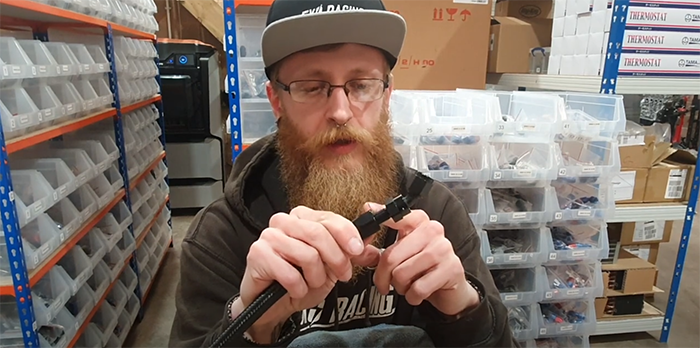
Step 5: Tighten The Fitting Until It Fully Seats
Once the fitting is tight by hand, use an AN spanner or a normal spanner with a cloth between the jaws and the fitting. Tighten the fitting until the two halves fully seat together.
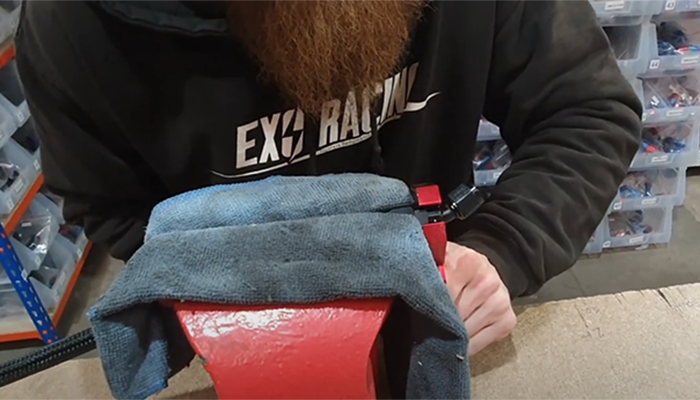
On a rubber braided hose, the fitting should bottom out with no obvious gap between the two fitting halves. The hose should still be seated against the internal lip. From our experience, a smooth, continuous turn with the spanner is usually easier than stopping and starting repeatedly.
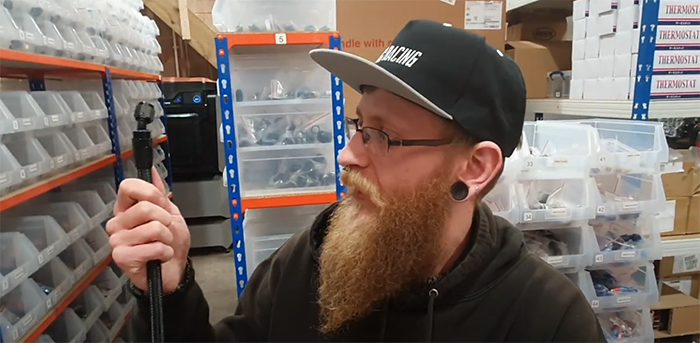
Final Checks Before Installing The Hose On The Car
Repeat the same process on the other end of the hose, then inspect the finished line before it goes anywhere near the car.
- Check that both fittings are fully seated.
- Check that there is no braid trapped in the sealing area.
- Check that the fitting angles are correct for the route.
- Check that the line is clean inside.
- Pressure test the hose before use.
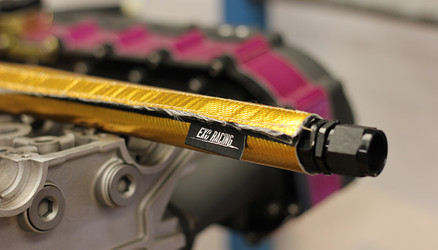
If the hose will run near a turbo, manifold or downpipe, plan the heat protection before fitting the line permanently. Fix the route and clearance first, then protect the vulnerable part. Heat sleeve can help protect AN hose, wiring and fluid lines from radiant heat, but it should not be used to hide a poor route or a damaged hose.
Shop Heat Management PartsCommon AN Hose Assembly Mistakes
Using The Wrong Fitting Type
Do not use PTFE fittings on rubber braided hose, and do not use rubber hose fittings on PTFE hose. The sealing method is different, so the wrong combination can prevent the fitting from sealing correctly.
Cutting Without Taping The Braid
An untaped braid can flare out and make the hose difficult to push into the socket. Tape the cut point first, then cut through the middle of the tape.
Leaving Swarf Inside The Hose
A small shard inside a line can cause much bigger problems later. Clean and inspect the hose after cutting, especially before using it for oil or fuel.
Forcing The Threads
AN fittings are usually aluminium, so damaged threads are easy to create if the fitting is started at an angle. Always start by hand before using a spanner.
Skipping The Pressure Test
A hose can look correct and still leak. Pressure testing is the sensible final check before a custom line is trusted on a fuel, oil or coolant system.
When Not To Use Rubber Braided AN Hose
Rubber braided hose is not always the correct first choice. Use PTFE hose if the fuel line runs inside the cabin, if you are using high ethanol fuel, or if the application specifically requires PTFE compatibility.
Do not use a new AN hose to cover up a bigger problem. If the hose route is too close to a heat source, improve the routing and clearance first. If a fitting is damaged, replace it. If a hose has been overheated, split, kinked or contaminated with oil, start again with a new line.
For fuel system planning, our swirl pot guide is also useful because it explains how fuel lines, pumps and surge tanks work together on harder-driven cars.
Frequently Asked Questions
Can I use PTFE fittings on rubber-braided AN hose?
No. PTFE fittings use an olive to seal against a PTFE liner. Rubber braided hose needs a standard swivel seal hose end. Mixing the two can stop the fitting from sealing correctly.
Can I use rubber braided AN hose for fuel?
It can be used for suitable pump fuel applications, but it is not the right choice for every fuel system. For fuel lines inside the car, high ethanol fuel or race fuel, PTFE hose is usually the correct choice.
Should AN fittings fully bottom out on rubber braided hose?
Yes, with rubber braided hose and swivel seal fittings, the fitting halves should fully seat together with no obvious gap. PTFE fittings are different because the olive is the sealing part.
What is the best way to cut braided AN hose?
Wrap masking tape around the cut point, hold the hose securely without crushing it and cut through the centre of the tape with a 1mm cutting disc. Then clean out any loose braid or swarf.
Do I need an AN vice jaws?
They are not essential, but they make the job cleaner. Aluminium AN vice jaws hold the fitting securely and reduce the chance of scratching or marking the anodised finish.
Do I need to pressure test an AN hose after assembly?
Yes. Any custom hose carrying fuel, oil, coolant or pressure should be tested before installation. It is much better to find a leak on the bench than in the engine bay.
Should I choose stainless steel or nylon braided hose?
Nylon braided hose is usually more flexible and easier to route around tight bends. Stainless braided hose gives more abrasion protection where the line may rub against other parts. The right choice depends on the route and application.
Conclusion
Installing AN fittings to rubber braided hose is straightforward once you understand what matters: use the correct hose and fitting combination, cut the hose cleanly, keep the braid under control, seat the hose fully and pressure test the finished line.
If you are building a custom oil, coolant or suitable pump fuel line, start with the correct AN hose and fittings, then choose the right tools to protect the fittings during assembly. If the line will run near a turbo, manifold or downpipe, add the correct heat protection after the route and clearance are sorted.
Shop AN Hose, Fittings, and ToolsAbout the Author
Exoracing is a UK-based automotive heat management and performance parts specialist. Since 2018, we have helped enthusiasts and workshops choose, fit and troubleshoot parts for modified road, track and turbocharged cars, using practical product experience, installation guides and customer build knowledge.