
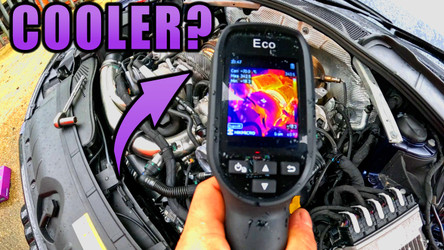
We Destroyed Our Civic Wiring Loom to Test Silicone Heat Sleeve
Posted by Matthew Marks on 9th Jan 2026

Imagine lining up for your best drag strip run of the day, only for your car to die halfway down the track suddenly.
That’s exactly what happened to me. My turbo Honda Civic’s engine was playing up mid-run, and once we turned it off in the pits, it wouldn't start again.
The culprit?
A few wires in the engine harness melted to bare metal and shorted, blowing multiple fuses.
All because the surrounding plastic loom couldn’t handle the under-bonnet heat.
I’m Matt, owner of Exoracing. Since 2018, I’ve been building and helping fellow enthusiasts solve heat-related issues. From turbocharged street Hondas to dedicated track builds, I’ve seen how excessive engine bay heat can quietly wreak havoc on wiring, hoses, and components if left unchecked.
By the end of this guide, you’ll know exactly what caused our Honda Civic’s wiring meltdown and how we recreated the failure in today's controlled test.
More importantly, you’ll see how a simple fix, a silicone fibreglass heat sleeve, could have saved my drag day (and how it can save yours). We’ll walk through the problem, the experiment, the real results, and the solution step-by-step.
If you would prefer to watch our testing video, click the link below and make sure to check some of our other videos out for product testing!
This guide is brought to you by Exoracing – UK specialists in heat management and performance parts.
- A heat-soaked / melted wiring harness caused our Civic to shut down during a drag run.
- We recreated the failure in a test.
- Adding a silicone heat sleeve slashed the wire temperature massively and didn't melt.
The Drag Day Wiring Disaster
Our AWD Civic had been running flawlessly at a drag-and-drift event a few years back until it suddenly wasn't.
At the time, we had absolutely no is what the issue was; everything seemed fine, and it was turning over, so we assumed it was something spark-related. We checked fuel and spark and were baffled. Everything seemed fine mechanically, but the car just wouldn't restart.
Only later, once we got the car back to our workshop, did we find the issue.
The plastic wiring conduit near the back of the head had become brittle and cracked from the intense heat, and one critical wire inside had melted and was shorting out. That one tiny wire shut the whole car down, blowing multiple fuses and abruptly ending our day at the track.

Sadly, I don't have any images from the day to show you the damaged harness, but it ended up being the death of the car, where we ended up ripping every wire out, including the interior loom, just in case. As you can imagine, the wiring is 30 years old and wasn't worth patching up, as we have done multiple times.
The once-flexible plastic loom had literally cooked itself; it was discoloured, split open, and the copper wires inside were all touching each other.
As you can imagine, discovering that a heat-fried wire was the culprit was equal parts relief and frustration.
Sure, it would have been a cheap fix (a bit of solder and heat-shrink, and we were back in business), but we realised that because we hadn't sleeved the entire loom, we were just going to encounter more problems in the months to come.
The takeaway was crystal clear to us; under-bonnet heat had silently attacked our wiring, and we hadn’t realised it until it was too late.
Why the Wiring Failed: Heat vs. Harness
So, what exactly went wrong?
In short, extreme engine bay heat turned our wiring harness into a time bomb.
The area where the failure occurred was right next to the thermostat housing, which wasn't even the hottest part of the engine bay, but it was enough to cause the problem.
During hard runs over the years, especially being turbocharged, parts such as the exhaust manifold and turbo exhaust housing can reach hundreds of degrees, and we should have protected the wiring to stop heat soak killing the wiring loom.
The stock plastic wire loom on our Civic was never intended to endure that level of heat continuously, as from the factory the engine only produced 160bhp, and we are now running around 500bhp MORE than that...

Over time, the plastic became brittle, and the wire insulation hardened. Eventually, the constant heat cycles and vibration caused the insulation to crack and the plastic sleeving on the wires to break and expose the copper core.
Modern wiring insulation typically can handle around 80–100°C, but a turbo manifold can easily exceed that.
Once the protective conduit split, the wires were directly exposed to even more radiant heat. It’s a quiet process, and usually there are no obvious signs until you start encountering problems.
We didn’t smell burning plastic or see smoke. The failure made itself known only when the engine suddenly lost power and wouldn't start once we were back in the pits.
In hindsight, all the clues were there with our faded, crispy loom.
Heat was the invisible enemy that day, weakening our harness until it literally fell apart, which brings us nicely into our test!
Recreating the Heat: Our Wiring Harness Test
We decided to go for a brand new engine loom, which Phil at XDR Motors kindly made from scratch for us to suit the new Haltech setup. Knowing it was all made to motorsport spec and correctly heat sleeved, we knew we weren't going to have these issues again.
To demonstrate just how much heat the poor harness was subjected to, we set up a little experiment back at the shop to recreate the conditions that killed our wiring.
Using a spare section of our exact Civic wiring loom (the exact kind of wire that failed in the Civic), we decided to run a blow torch test, which is more than you would ever see in a car, but would prove the point perfectly.

Instead of an actual turbo, we used a propane torch to blast the loom with, simulating the exhaust side of a turbocharger.
As this wasn't the most data-driven test, we just decided to hold the blowtorch on until we saw visible signs of melting and heated it until we didn't need to do any further.

The results were pretty crazy, as in around 5 seconds, the entire outer sleeve just melted completely exposing the copper wire, and to be honest, this is exactly what we expected. There aren't many things that can hold up to a direct flame from a blowtorch.
The plastic outer got so hot it started to smoke lightly and deform, a clear indicator that it was nearing its failure point.
The copper wire inside was also heating up rapidly by conduction. Essentially, we recreated the abuse our Civic’s harness had gone through at the track. (just much faster and hotter as we didn't have 30 years to film the video haha!).

At around 120–130°C, most common wire insulation will soften or scorch, and that’s exactly what we saw.
The bare loom in our test became extremely hot to the touch, and the wire inside hit roughly the same temperature.
If this were happening in your car, it would only be a matter of time before the wiring insulation cracks or a conductor inside breaks, just like what happened to us on drag day.
This little test confirmed our suspicions; the engine bay heat alone was enough to break the harness when no additional protection was in place.
How a Silicone Heat Sleeve Could Have Saved the Day
Next, we wanted to see how much difference the heat sleeving solution could make.
Enter the silicone fibreglass heat sleeve.
This is a thick, tubular sleeve made from braided fibreglass insulated with high-temp silicone. It’s designed to reflect and absorb heat before it ever reaches your wires or hoses.
We slipped a length of this sleeve over our secondary test wires and repeated the heat gun torture test under the same conditions. The outcome was immediately impressive.

Just a quick side note before we go any further, our heat sleeve is only designed for intermittent temperatures up to 1200°C and a continuous temperature of 260°C.
We weren't too sure what was going to happen as the propane torch can reach temperatures of up to 1900°C, 700°C more than our heat sleeve is rated to. We decided to test it anyway to see what happens!
This time, as the propane torch blazed away, the outside of the silicone sleeve certainly got hot (as it’s meant to), but the wire inside remained at a far safer temperature.
The outer silicone actually caught fire for a second or two, then self-extinguished as it's designed to do.

The wire itself (under the sleeve) was warm to the touch, but nowhere near the danger zone for the insulation or copper.
The heat sleeve’s silicone-coated fibreglass acted like an armour, soaking up the heat and keeping it away from the wire.
Unlike the bare loom, which started to smoke and buckle, the sleeved loom showed no signs of distress. After several minutes of exposure, the sleeve’s exterior was incredibly hot, but intact, and the wire beneath was cool enough to hold.
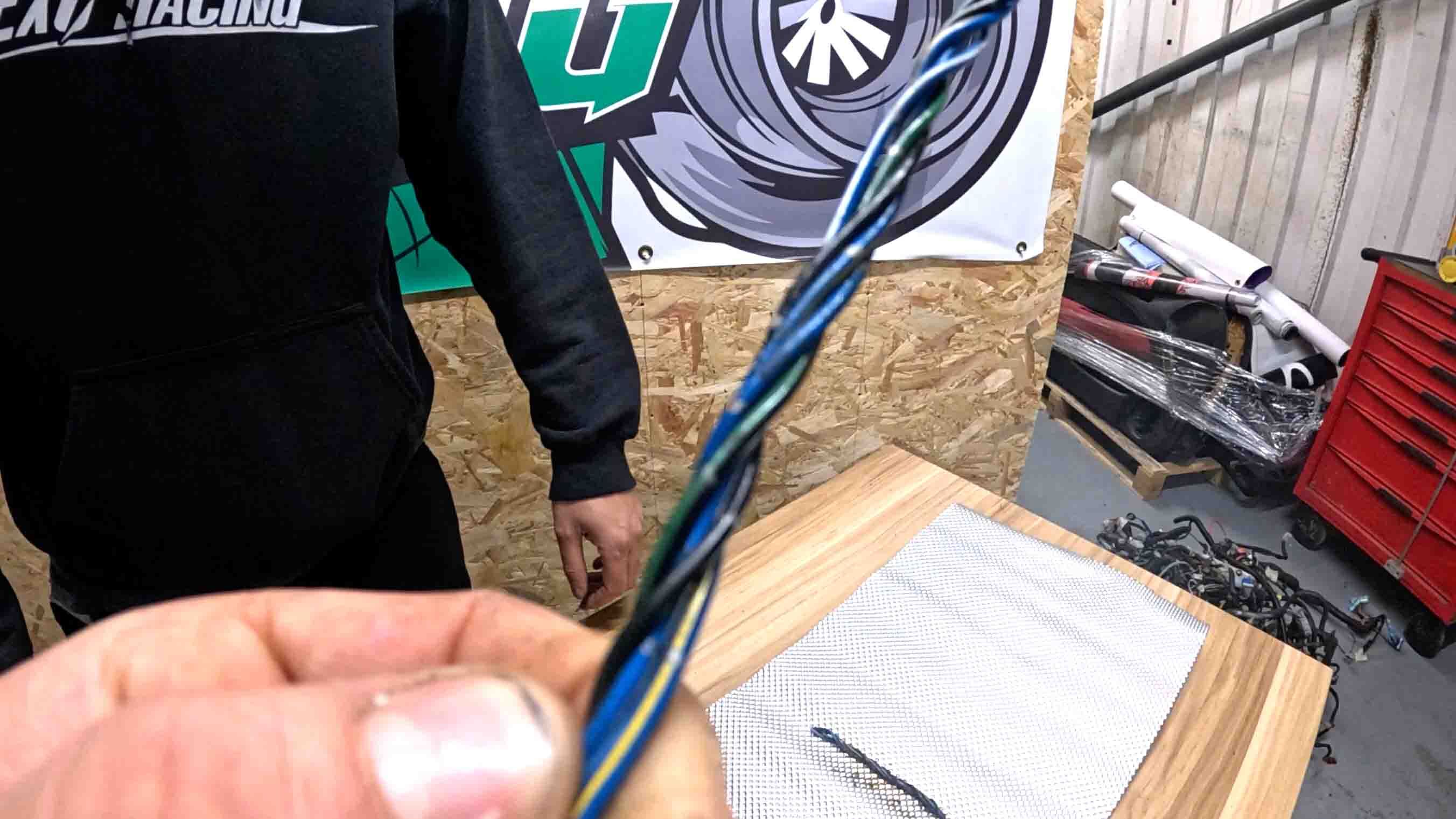
We decided to then cut it open, and the fibreglass inner, although slightly discoloured, was still in one piece and was doing its job perfectly.
Scott even pointed out in our video that even though the outer went white, you could have still used that heat sleeve, even after a 1900°C degree nuking from a blowtorch.

For reference, the most a turbocharger and exhaust manifold usually reaches is around the 1200°C mark (hence the heat sleeve rating), and we were well above that.

If we had installed one of these silicone heat sleeves on our Civic’s wiring harness before that drag event, we’d likely have finished the day without a hiccup.
The sleeve would have shielded the wiring from the turbo and manifolds' intense heat, preventing the conduit from ever getting brittle and the wire from ever melting.

In fact, after this test, I’ve made it a rule with any of our builds or cars going forward.
Any critical wiring or hoses that run near a turbo or exhaust on my builds get a heat sleeve. It’s cheap insurance against exactly the kind of failure we experienced.
Real Results: Heat Sleeve vs. Bare Harness
Let’s put the test in perspective.
With no protection, our sample wiring loom took around 5 seconds of direct heat before failing, and the temperatures were far above what most wiring insulation can tolerate long-term.
Now compare that to when we added the silicone heat sleeve, we actually held it for longer on the heat sleeve, around 7-10 seconds, and although the outside was charred, the inside wiring was still perfect.
In practical terms, the heat sleeve cut the wire’s heat exposure massively. Instead of the plastic outer sleeve charring and the wire inside breaking, everything under the sleeve stayed well within safe operating temperatures.
These results give me a lot of confidence in the product and the fact that we are going to be using it on every build going forward.

In a future test, we will run a thermocouple inside the heat sleeve to show the exact drop and log the results. We can show you the exact temperature reduction in degrees and as a percentage.
My estimate is going to be around the 95% mark, just looking at the results we captured here in this test.
It’s one thing to know a product’s rated for “1200°C heat” on paper; it’s another to see it in action, and even better with a higher heat source, knowing it will save your wiring from certain death.
The silicone heat sleeve essentially gave our harness a thermal shield, and after the tests, the sleeved wire was perfectly fine, no cracks, no burnt insulation, no surprises.
It’s proof that a relatively inexpensive silicone heat sleeve can be the difference between driving home from your track day or waiting for a tow truck.
Watch the demo of our heat test in the video below:
Conclusion
Managing under-bonnet heat is a critical part of building a reliable performance car, but it doesn’t have to be complicated or expensive.
In our case, a simple heat protection step could have spared us a lot of headaches. You can bet that now every vulnerable wire, hose, or line in my car is either rerouted or shielded with a heat sleeve or reflective wrap.
A silicone heat sleeve would have saved our Civic’s wiring loom (and our drag day), and it’s saving many others from a similar fate.
The bottom line: don’t wait for a wire to melt or a hose to burst. A little proactive heat management goes a long way toward keeping your car running strong.
Shop the Exoracing Heat Management Range →
Related Products & Links
Related Products:
Related Articles:
About the Author
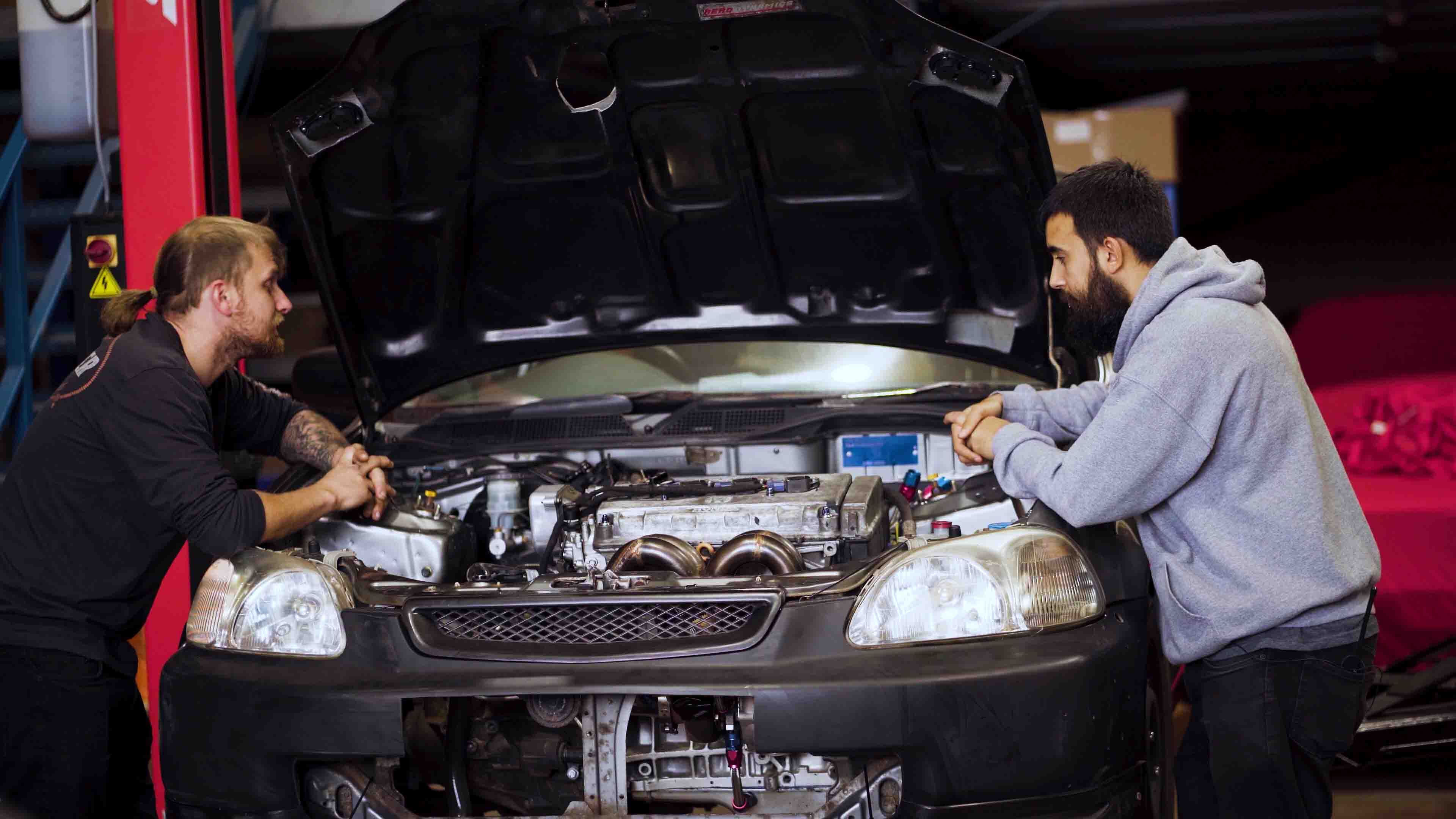
I’m Matt, the owner of Exoracing Ltd, a UK-based performance parts brand specialising in heat management and performance upgrades.
Since 2018, we’ve helped thousands of car enthusiasts and workshops reduce engine bay temperatures with tested, proven products, all backed by a lifetime warranty and firsthand experience from our own builds and our customers’ projects.
Got questions about your setup? Message us on Instagram (@exoracinguk) or click the contact button on our website. We love hearing about your builds and helping out where we can!