

What Does An Oil Catch Can Do?
Posted by Matthew Marks on 1st Aug 2024
An oil catch can is a simple device that can do wonders in preventing oil and other contaminants from causing build-up inside your engine's intake manifold.
The science behind it is pretty straightforward.
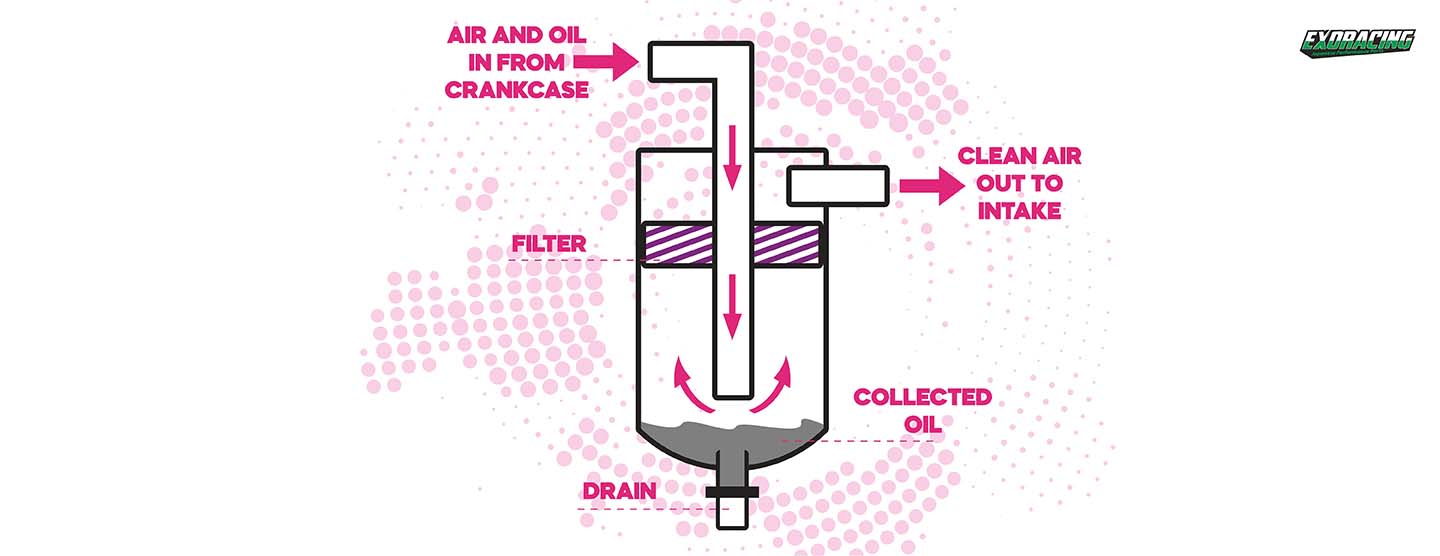
The catch can is designed to plug into a hose from the top of your engine's crankcase to the intake manifold or vented to the atmosphere. Once installed, it relieves pressure in the crankcase caused by blow-by.
Blow-by is when exhaust gases escape past the piston rings and enter the crankcase. Without an oil catch can, this can lead to oil buildup and other harmful contaminants inside the intake manifold.
Direct-injected engines shoot fuel directly into the cylinder, which makes it easier for gunk to build up. Fuel acts as a cleanser in port-injected engines, but this is not true for direct-injected engines.
As a result, a catch can serve as a filter by catching the contaminants before they reach the intake.
The market offers various oil catch cans, from simple push-fit options to complex battery tray replacement catch cans designed for specific car models.
Quick Summary
An oil catch can helps separate oil vapour and contaminants from the crankcase ventilation system before they reach the intake. This is especially useful on direct-injected engines and on higher-performance builds where blow-by becomes more of a problem.
Why Should You Use An Oil Catch Can?

The catch can is an essential engine breather and intake system component. It functions as an oil/air separator, effectively removing oil vapour from the air circulating through these systems.
One reason for the need for an oil catch can is the imperfections in internal combustion systems that can lead to positive crankcase pressure.
This pressure occurs when pressure from the combustion chamber enters the oil pan or crankcase, and it is released through a ventilation system known as the positive crankcase ventilation valve.
However, positive crankcase pressure is not the only issue that catch cans address.
Engine friction-reducing characteristics prevent piston rings from creating a perfect seal against the cylinder wall, causing oil droplets to vaporise. This occurs when pressurised air mixes with the spinning crankshaft and other engine components.
These vaporised oil particles contain combustion-produced contaminants that escape through the positive crankcase ventilation valves and are redirected back into the engine's intake system.
While this process is necessary to reduce air pollution and comply with guidelines, it can harm the intake system.
That's why the catch can is so important. It captures these oil droplets before mixing with the air and entering the engine's intake system.
By removing these droplets, the oil catch can help reduce the amount of oil consumed by the engine.
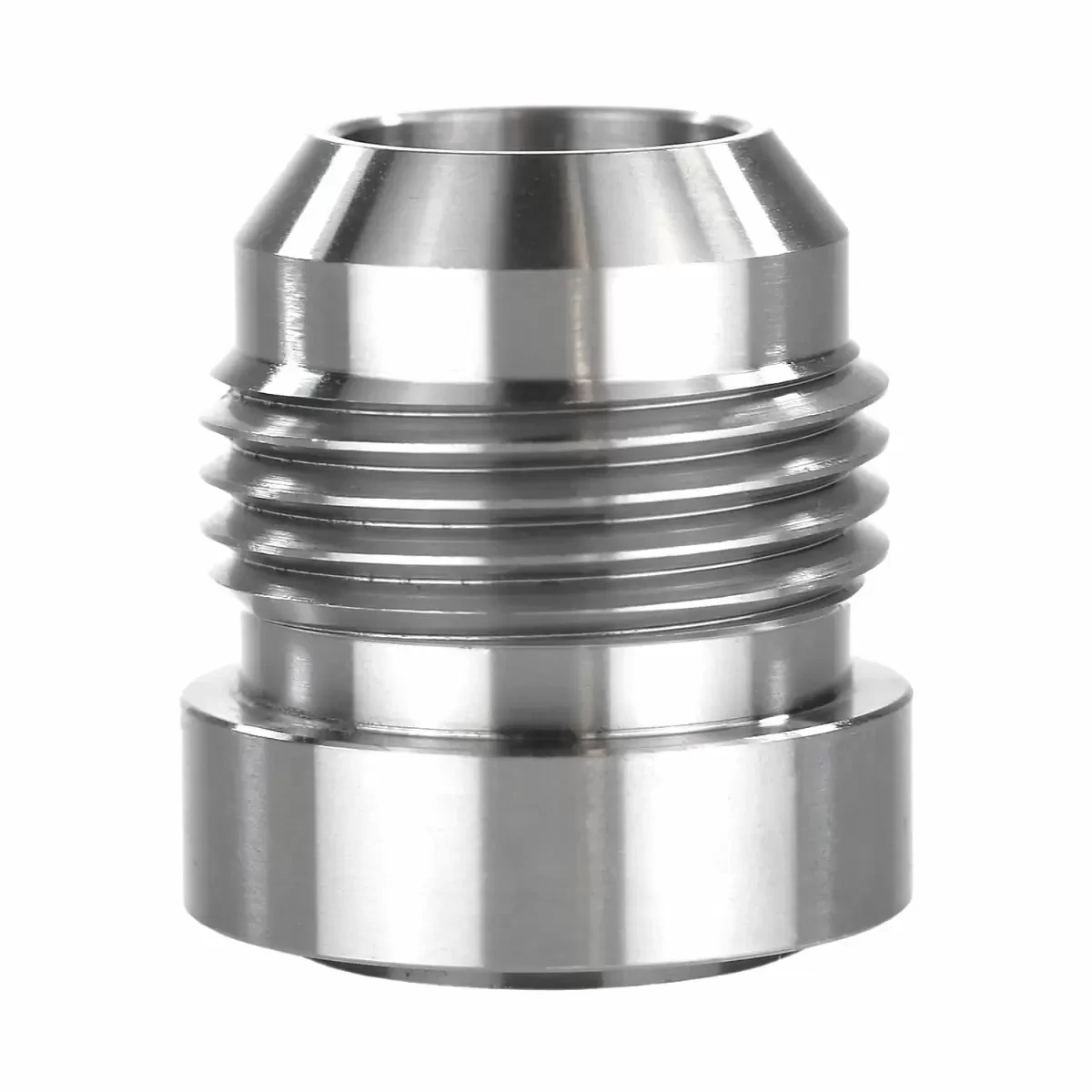 AN10 Male Aluminium Weld On Fitting Round Base
Useful when converting a valve cover or custom can setup to AN10 plumbing.
From £7.49
 Exoracing AN Black Nylon Braided Hose 1.0m
Suitable for oil lines and catch can plumbing when used with the correct swivel hose ends.
From £19.99
 Speedfactory Universal Catch Can Hose And Fitting Kit
A ready made braided AN10 hose and fitting kit for plumbing a catch can system.
From £229.59
How To Install An Oil Catch Can
If you're considering installing an oil catch can in your vehicle, following a series of steps is essential to ensure proper installation. First, take the time to locate a suitable spot in the engine bay.
You'll want to choose a location that allows easy access to the drain plug if your catch has one. Once you've found a suitable spot, use the installation brackets provided with your catch can to mount it securely.
The next step is to connect the intake port to your valve cover. Depending on the type of catch can you have, you'll either use push-type or AN fittings.
If you opt for the AN10 catch can option, you may need to weld an AN fitting to your valve cover or use an adapter if you don't have one.
AN10 is typically the most common size, providing enough diameter to prevent blockages and allow optimal flow.
To learn more about the different types of AN hose, such as rubber and PTFE, watch our video below, or read our ultimate AN fittings guide.
Finally, it's time to attach the outlet port. You can connect it to the intake or leave it open if you're venting to the atmosphere. If you need help determining which option to choose, refer to a diagram for guidance on the most common installation method. With everything securely connected, you're good to go!
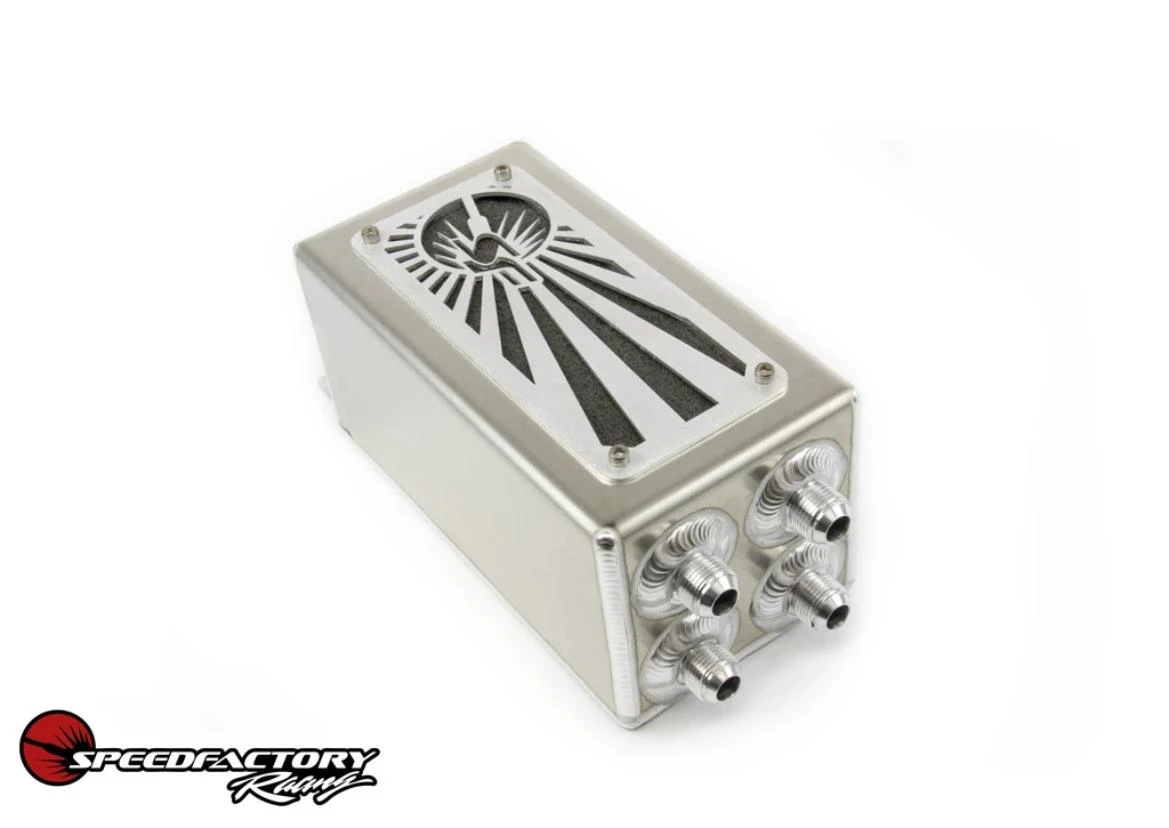 Speedfactory Battery Location Oil Catch Can Rising Sun
Internally baffled AN10 catch can setup designed for heavily modified and forced induction builds.
From £263.03
 Speedfactory Catch Can Battery Location 3 Filters Black
Black edition 3 filter baffled catch can for high power builds needing serious crankcase ventilation.
From £288.66
Oil Catch Can Pros And Cons
Incorporating an oil catch can into your car's setup presents a range of benefits with minimal drawbacks. Beyond the advantages already highlighted, additional perks to be gained from installing one in your vehicle are worth exploring.
While these lists may not cover every possible reason, they provide a solid overview of the main factors influencing your decision to either utilise or stay away from an aftermarket oil catch can setup.
There is a wide variety of ranges and styles, such as the Speedfactory Racing angled catch can.
By examining these lists, you can arrive at an educated conclusion regarding whether or not installing one in your vehicle is the right choice for you.
Oil Catch Can Pros
- Helps to keep the air intake clean
- Generally simple and easy to install
- Increases the percentage of oxygen in the intake
- Traps harmful vapour
- It can improve fuel economy
- Setup can be cheap
- Multiple sizes and variations of catch cans
Oil Catch Can Cons
- The catch can periodically need draining
- You may not have a suitable room in your engine bay
- Old PCV systems may need to be removed
- May need valve covers welding if using AN fittings
Which Oil Catch Can Is Right For You?
Choosing the right oil catch can depends on your car, your setup, and how far you want to take your build. While all catch cans aim to do the same job, removing oil vapour and contaminants from the crankcase system, the way they do it and how they install can vary quite a bit.
If you're running a fairly standard road car or light bolt-on setup, a simple universal baffled catch can is usually the best place to start. These are easy to install, cost-effective, and do a great job of reducing oil vapour entering your intake system. Most will use basic hose connections and can be mounted almost anywhere in the engine bay, making them ideal for beginners.
However, once you start pushing more power, especially on turbocharged or high boost builds, the requirements change.
Higher crankcase pressure means you need better flow and more efficient separation. This is where larger capacity catch cans with proper internal baffling and AN fittings come into play. These setups allow for increased airflow without restriction and are far more reliable under hard driving conditions.
If you're aiming for a clean engine bay or a more refined install, chassis-specific catch can kits are a great option.
These are designed to bolt directly into factory locations such as the battery tray area, making installation much easier and giving a much cleaner overall finish. They also typically come with pre-planned routing, which reduces guesswork and helps avoid common mistakes like poor hose routing or kinks.
Another key factor to consider is whether you want a closed system or a vent-to-atmosphere setup. A closed system routes the filtered air back into the intake, which is better for road cars and keeps everything emissions-friendly.
A vented system, on the other hand, allows pressure to escape freely and is often preferred for race cars or high-horsepower builds, but it may not be suitable for road use depending on your location.
Finally, think about future-proofing your setup. Even if your car is currently mild, it is often worth choosing a slightly higher capacity or better quality catch can now rather than upgrading again later. This is especially true if you plan on adding boost, increasing power, or tracking the car.
In short, if you're just starting out, keep it simple with a universal baffled can. If you're building something more serious, invest in a properly designed, high-flow, multi-port system that can handle the demands of your setup.
Conclusion

It is worth noting that even a budget catch can is better than nothing, and the only challenge that comes with it is figuring out how to mount one under your hood and remembering to empty it periodically.
Investing in an oil catch can be worth considering if you want to keep your engine running smoothly and efficiently.
Hopefully, the information in our article has helped guide you towards making an informed decision about the suitability of an oil catch can setup for your needs.
However, if you still have any lingering doubts or questions regarding any of the points covered in the article, please feel free to contact us or leave a message below.
Our team of experts will be more than happy to assist you in finding the most appropriate and effective solution to meet your requirements.