
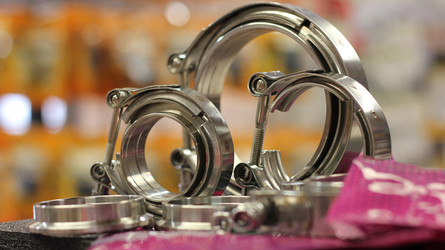
What Is A V-Band Clamp?
Posted by Matthew Marks on 9th May 2025
I'm Matt, the owner of Exoracing, and today we're going to go over what a V-Band clamp is and why you need one for your build.
We have used V-band clamps on nearly every build we have worked on, and they have always been one of the best things we have fitted because they make removing the exhaust simple and easy.
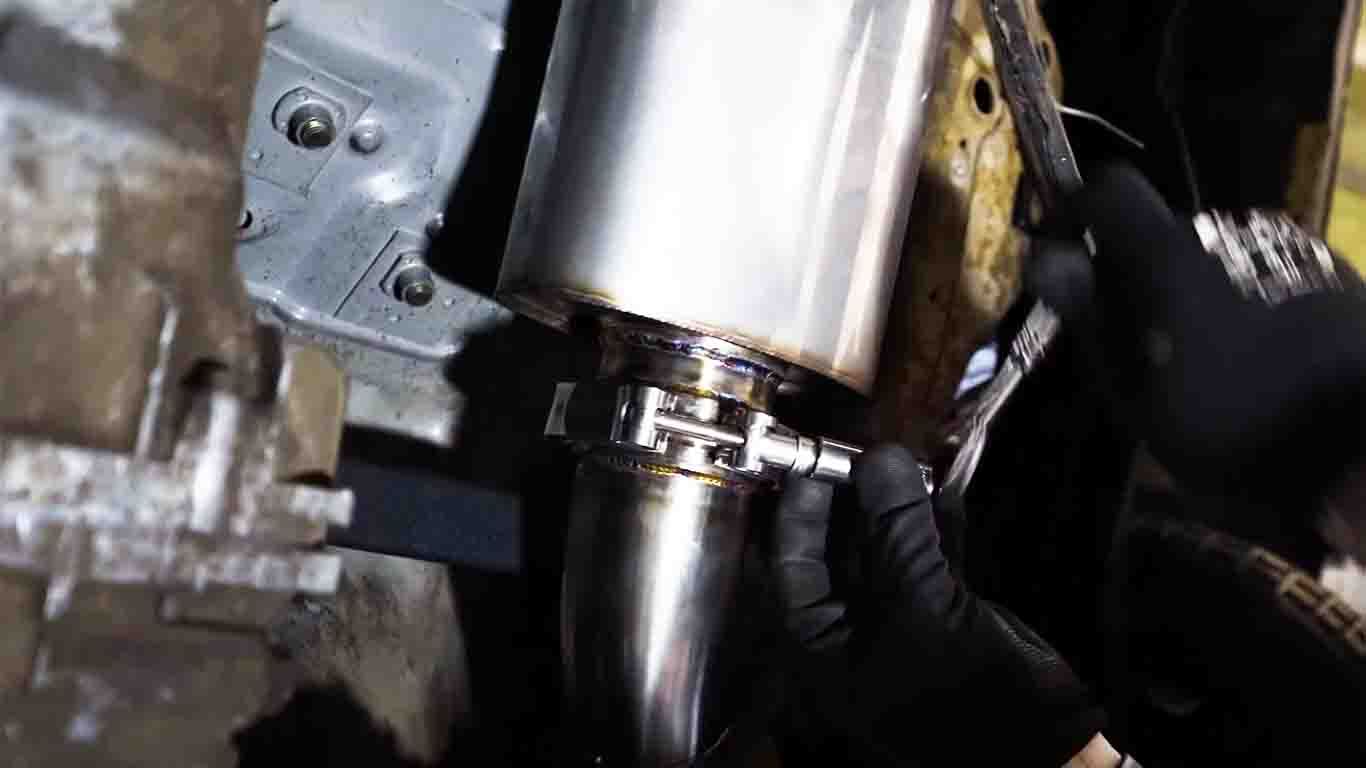
If you watch our video below, you will see that Sam uses our Exoracing V-Band clamps when building our full AWD Civic exhaust, which makes the exhaust easier to work on in the future.
We also now have a guide going over everything in this guide. If you would rather watch it, I will also include that below:
Before we go in-depth into V-Band clamps, we do have multiple sizes on the shelf if you need any for your build. Just head over to our V-Band clamp product listing.
Now, let's explore why you need a V-Band clamp system and what they do.
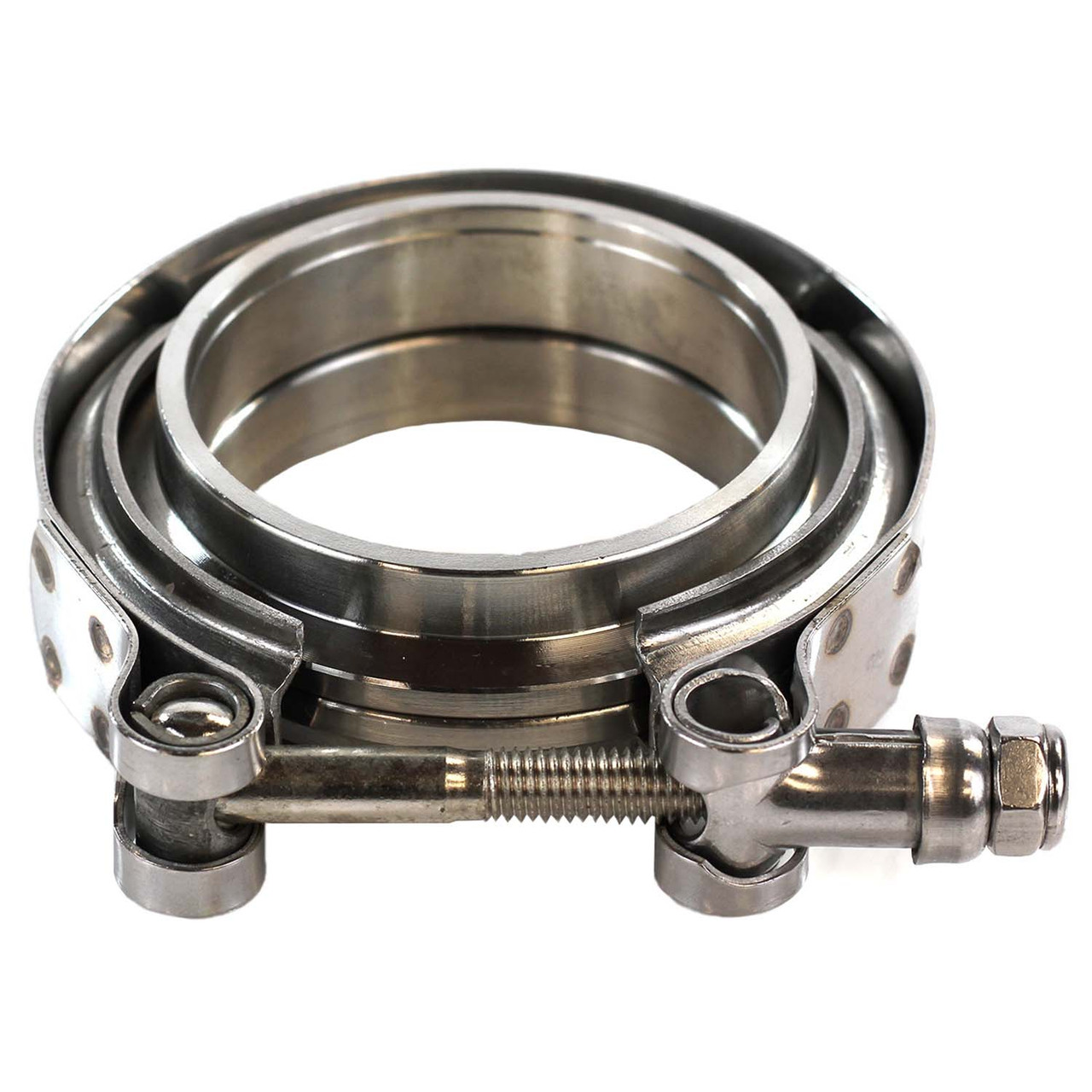 Exoracing Stainless Steel V-Band Clamp With Flanges
Self-aligning stainless V Band setup for strong, leak-free joins on exhaust, turbo, and intake systems.
From £39.99
 Exoracing Polyurethane Exhaust Mounts
Stiffer hanger mounts help control exhaust movement and reduce sag on custom systems.
From £29.99
 Exoracing Performance T3 Turbocharger Gasket
A useful supporting part if your build still uses a traditional T3 flange elsewhere in the system.
From £14.99
Quick Summary
A V-Band clamp gives you a stronger, cleaner, and easier-to-service joint than most traditional exhaust flange setups. They are especially useful on turbo systems, custom exhausts, and any part of the car that may need to come apart regularly in the future.
What Is A V-Band Clamp?
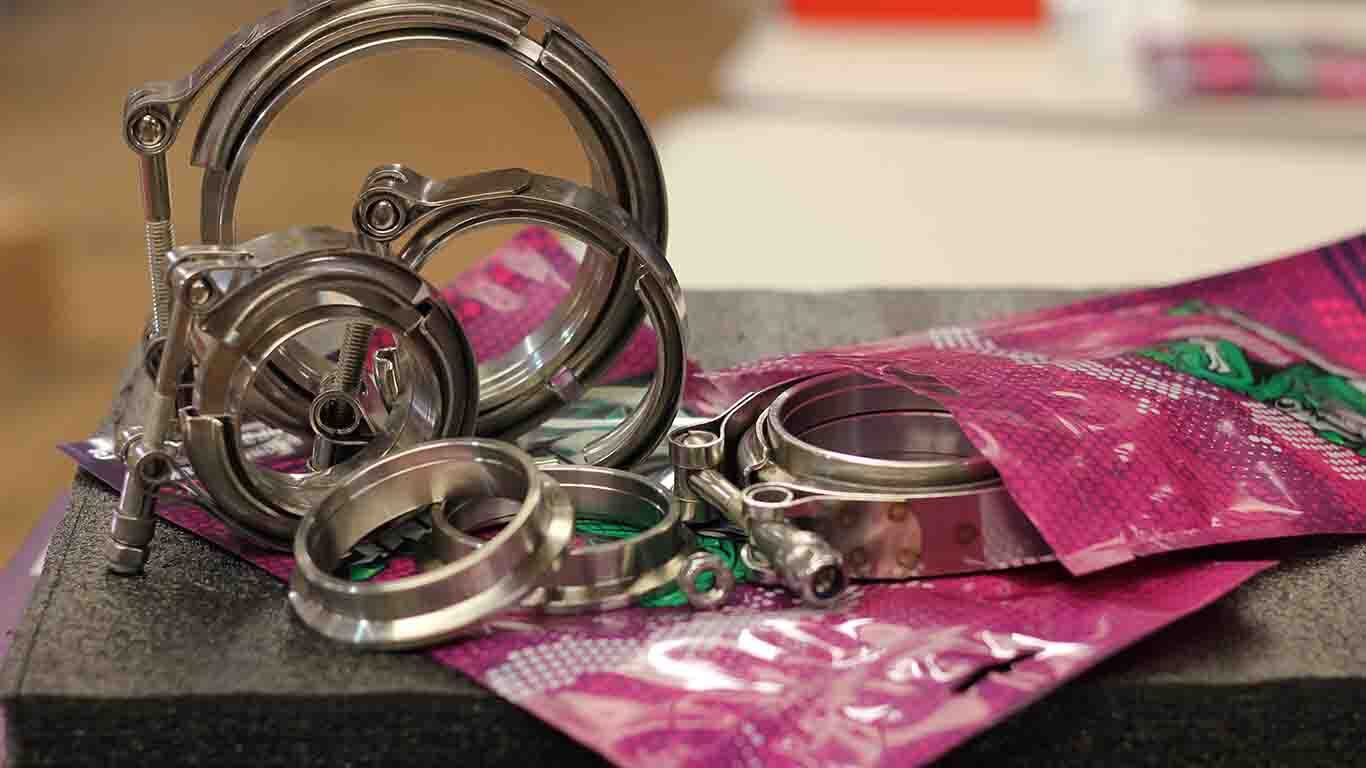
A V-band clamp is a circular stainless-steel band with a V-shaped inner profile that joins two tubes or pipes.
When tightened, the V-groove of the clamp wedges the flanges together, creating a perfect 360° seal without relying on multiple bolts or gaskets.
Removing old, worn bolts and gaskets is why they are becoming so popular, as you no longer need to replace the gaskets or remove snapped bolts every time your exhaust needs to come apart.
The 360-degree design makes V-bands lightweight and incredibly strong, so much so that the V-band has a rich history of use, from street cars to performance drag cars to aerospace.
In practice, V-bands are amazing for their leak-free seal and ease of use in exhaust and intake systems.
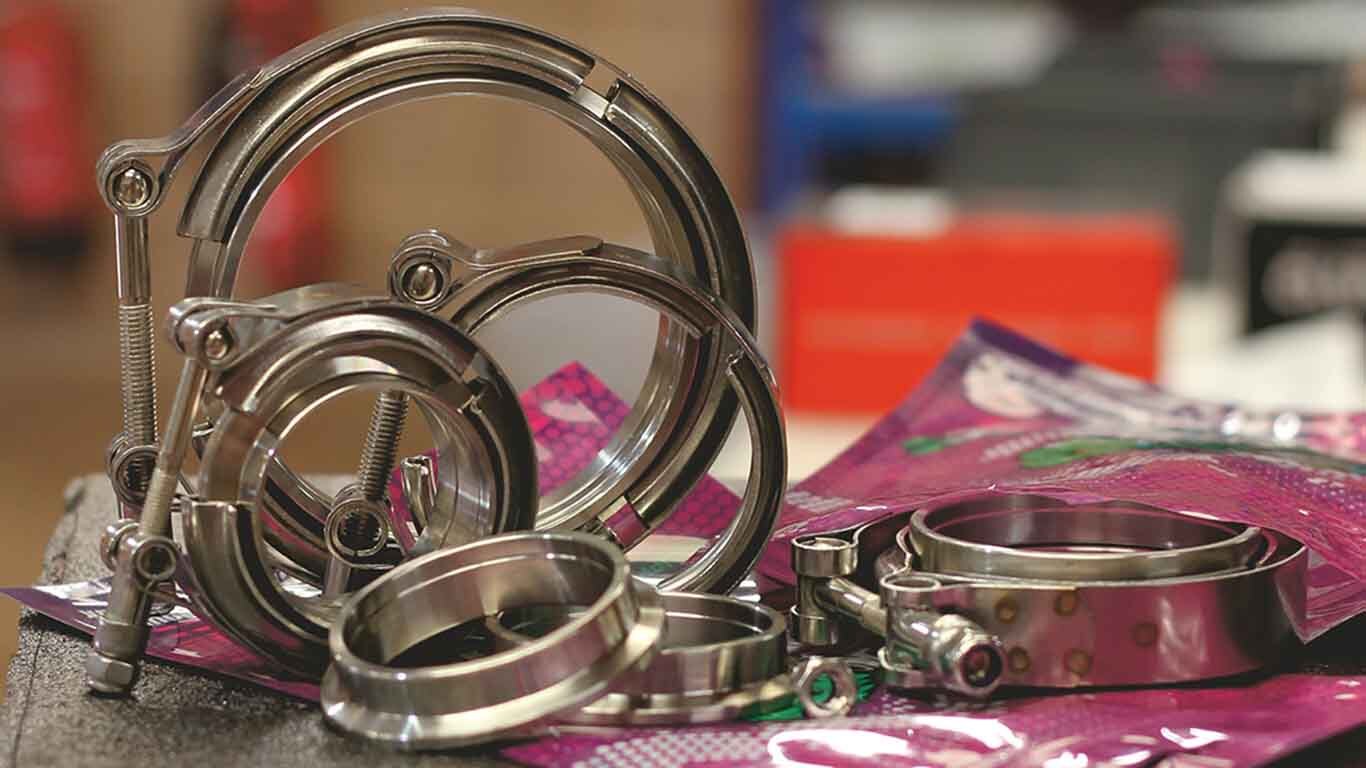
Proper installation of V-band clamps is crucial for their effective Performance, so they will need welding by a professional to ensure they are perfectly seated, as the flanges are welded at the correct angle.
V-Bands act as a positive retention system for exhaust pipes, holding both flanges together with constant pressure from every angle.
The clamp applies an even inward force around the joint as the single bolt is torqued.
Unlike a traditional multi-bolt flange (which presses at the exact bolt points), the V-band's continuous force avoids uneven load, resulting in a tighter, more reliable seal that reduces stress on the bolt as it bites into the flanges.
I'm sure you have all removed an exhaust at some point and seen the exhaust leaks where a gasket has either blown out or a bolt has snapped, showing carbon deposits where the gap is.
In short, a properly installed V-band clamp makes a flange joint leakproof and vibration-resistant – ideal for performance engines and turbo applications.
What Are The Types of V-Band Flanges
V-band systems rely on matching flanges on each tube, and there are two main design styles:
- Male/Female (Beaded) Flanges: One flange has an inner bead or "male" part, and the mating flange has a matching recess ("female"). The male parts fit inside the female flange, so when the clamp compresses, the flanges align perfectly and seal tightly without a gasket. This male-female design is fantastic for its gasket-free seal and repeatable fit. These are the clamps we specifically sell, as they are much harder to get wrong and are self-aligning.
- Symmetrical (Flat) Flanges: Both flanges are identical (flat rings) and typically require a thin copper or graphite gasket. Clamping force from the V-band still provides a 360° seal, but a gasket is usually needed to ensure leak-free Performance since there is no interlocking bead. At Exoracing, we generally avoid this design as it's much harder for the end user. Although the seal would be the same, more parts would be used, making the same result more complicated.
So, How Do V-Band Clamps Work?
When you tighten a V-band clamp, the "V" inner shape bites into the flange edges and pulls them together evenly; the flange sections sit in the clamp's V-profile, so as the nut is tightened, a 360-degree force squeezes the entire diameter of the clamp.
Because the force is even throughout the clamp, there are no weak points in the seal—any misalignment or gap is minimised around the circle.
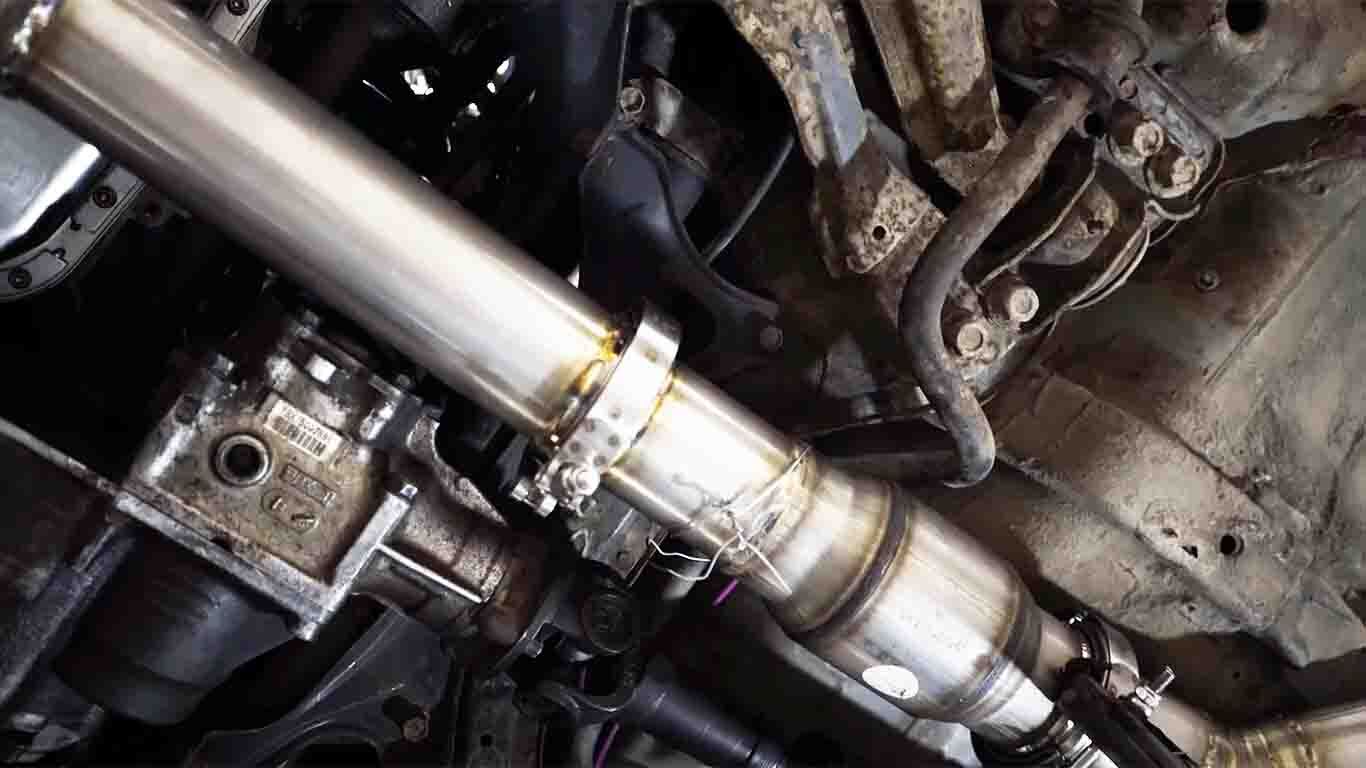
Once seated, the friction between the V-shaped clamp and the flanges helps to share the load and prevents the bolt from taking the brunt of the force, which is the complete opposite in a conventional gasket and flange system that requires bolts.
Because of how the force works, V-band clamps are the perfect option in applications with high pressure, temperature, or vibration.
They hold tight under boost (so they're a "go-to" for turbo housings) and remain sealed even when hot.
On our first turbo build, we used a 5-bolt flange on the downpipe side, and the bolts were always a nightmare to get off, so on the next build, we decided to go with a V-Band on the exhaust side.
Wow, this changed my life, and I have never returned to a gasket and flange again.
Turbo and exhaust manifolds are now being designed to use V-Band clamps to connect the two, allowing you to spin it 360 degrees and have the absolute perfect rotation, whereas using a T3, for example, you only have two options.
We are still using a T3 flange on ours. Still, if we ever decided to go with a custom exhaust manifold, we would go with a V-band manifold and change out our turbo exhaust housing because of every benefit I've already mentioned.
In practice, most people who work on cars regularly find V-bands much faster to release than a multi-bolt flange and more reliable than a loose slip-fit or worm-drive band clamp.
V-Band vs Other Exhaust Joints
V-band clamps are one of several ways to join exhaust sections.
Below is a comparison of V-bands with common alternatives: bolted flanges, slip-fit joints, and worm-drive (band) clamps. For each, I will go through the typical pros and cons of each:
| Connection Type | Pros | Cons |
|---|---|---|
| V-Band Clamp | - 360° uniform seal: Even clamping around the circumference, no gasket needed (for male/female flanges). - Quick release: Single-bolt or lever clamp for fast assembly/disassembly. - Lightweight & compact: Smaller than multi-bolt flanges. - High strength: Broad contact area resists blow-out and vibration. - Reusable: Clamps and flanges last through many cycles. |
- Cost: High-quality V-bands often start around £30 and go up from there. - Flange prep: Requires matching flanges (male/female) welded in place. - Torque sensitive: Must be tightened to spec (not over-tightened) for proper seal. |
| 2- or 3-Bolt Flange | - Traditional & sturdy: Common OEM style, strong mechanical joint. - No specialised clamp needed: Uses bolts and a gasket (if needed). - High-pressure handling: Reliable when bolted correctly. |
- Bulky & heavy: Flange plates and multiple bolts take up space and weight. - Slow to service: Every bolt must be removed to split the joint. - Uneven clamping: Bolts clamp at discrete points, so the gasket/seal depends on individual bolt torque. |
| Slip-fit Joint + Clamp | - Low cost: Simply slide one pipe into another with a band clamp. - Adjustable fit: Allows some axial misalignment. - No special flanges: Easy on simple bent pipes. |
- Poor seal: Prone to leaks as clamps lose tension. - Limited pressure: Not ideal for boost; can slip under load. - Bulk overlap: Joint overlap can add length; clamp cannot compress 360°. |
| Band (Worm/T-Bolt) Clamp | - Very affordable: $5–15 each, widely available. - Simple install: Wraps around any joint or collar. - Reusable: Clamp and bolt can be removed. |
- Low clamping force: Narrow band concentrates force; bolts or screws can vibrate loose. - Leak risk: Can lose clamp tension over time, requiring retightening. - Heat limits: May not hold under extreme vibration or temperature. |
In summary, V-band clamps combine the speed of a clamp with the strength of a bolted flange.
They shine in critical areas, for example, turbo outlets, exhaust centre sections, etc, where a leak or failure would be disastrous.
Multi-bolt flanges remain common in OEM exhausts, but are much slower and more time-consuming to work on.
Slip joints and band clamps are cheap and easy for mild, straight sections, but they can introduce leaks, require more maintenance and still have the same problems as the other products.
Real World Applications, Street, Track, and Turbo Builds
Street Cars
Even a daily-driven street car can benefit from V-bands.
On a custom exhaust, you might put V-bands at the downpipe-to-midpipe junction or removable resonators. This gives a solid, rattle-free seal and makes it easy to swap components (like testing different backboxes) without welding.
For example, a bolt-on cat-back system using V-bands can be fully assembled in minutes, whereas bolts/flanges would take much longer, and you don't always have the space to remove them easily.
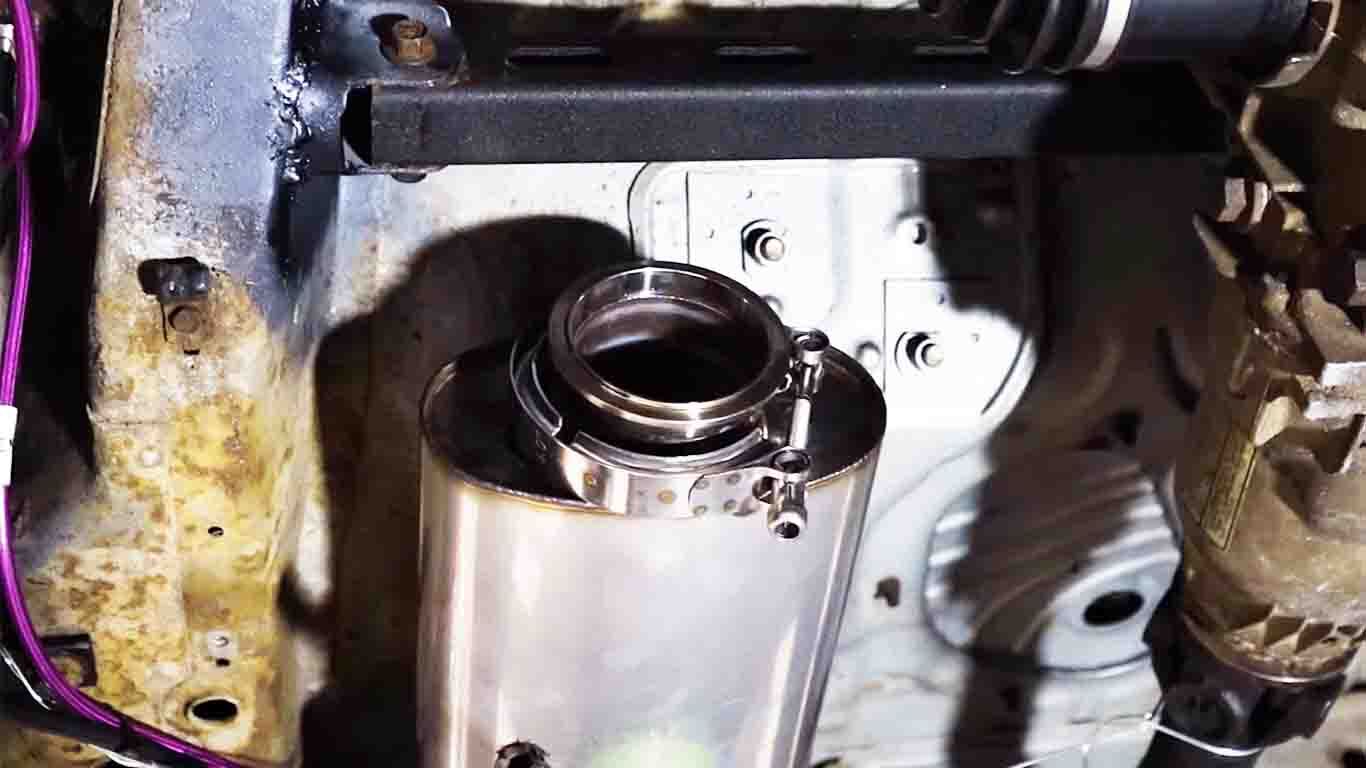
Although street cars aren't under extreme boost levels, V-bands ensure your exhaust stays leak-free through years of heat cycling, and are a great option to bolt flanges.
The only thing I would say here is to make sure that the bolt section of the clamps isn't pointing towards the floor, i.e. the widest part of the clamp, as we have had reports of clamps being broken off by the clamp being too low to the ground and just breaking off.
The best thing to do in terms of installation for a road car would be to spin the clamp as high as possible so it doesn't ground out on things such as speed bumps or debris in the road.
Track and Race Cars
This is where V-bands truly earn their keep and add value. Race or track heavy vehicles need frequent teardowns for inspection between rounds, and every second in the pits counts.
V-bands allow the team to quickly split the exhaust or intake and re-clamp securely without gasket or bolt problems.
In endurance racing or drag racing, a well-sealed joint means no power-robbing leaks and less chance of burning through expensive parts.
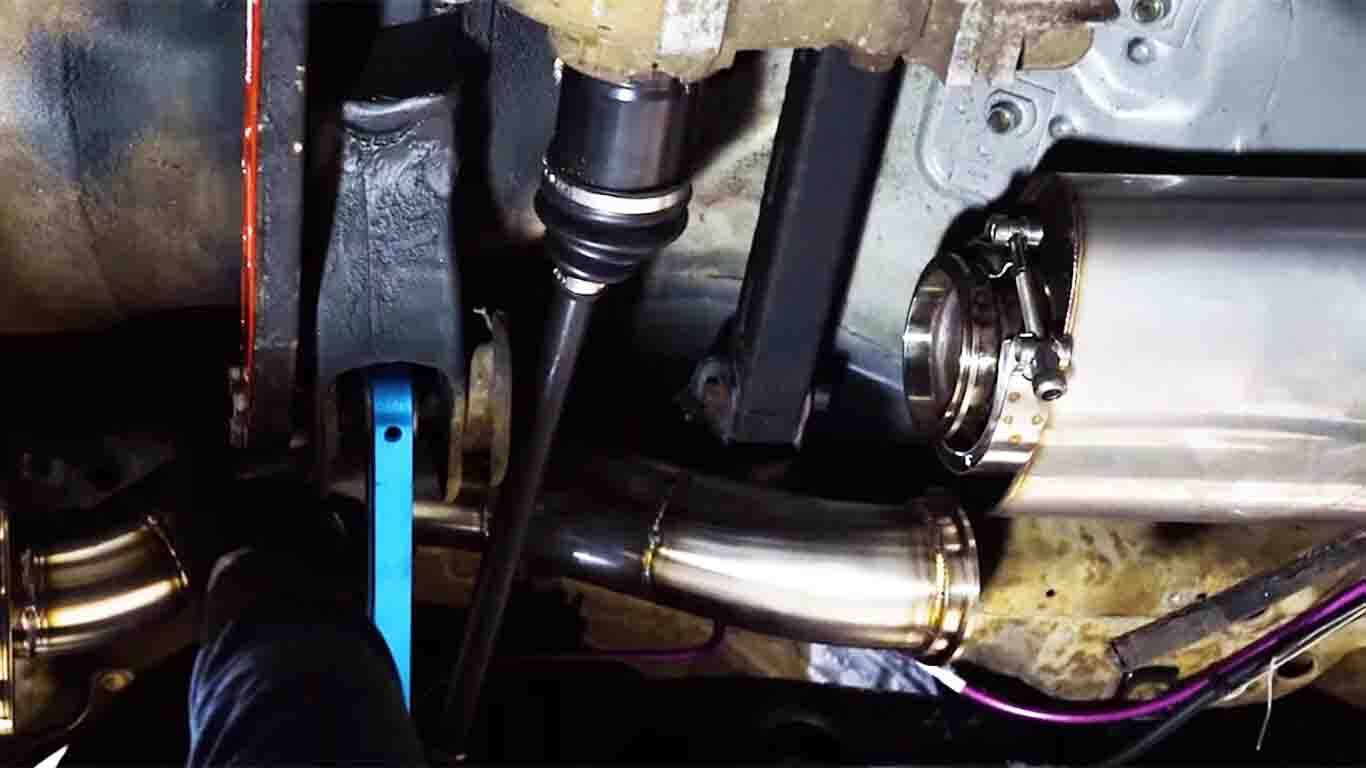
Teams often use quick-release V-band clamps on their cars to make servicing or problem-solving even faster.
Going on the back of quick-release systems, it isn't just v-bands which are essential here, fuelling cars, brake line swaps, etc, are just as important, which is where products such as dry break fittings or fast-fill fuelling jugs come in handy.
Turbocharged Builds
Turbo systems see high pressures and heat, so a reliable seal is paramount to keeping all that extra boosted goodness in the system and not outside.
V-band clamps are widely used on turbo downpipes and wastegate outlets because they excel under boost.
Brands such as Turbosmart now use V-Bands for their wastegates and blow-off valves as they know this is the most reliable system by far, and you'll notice how this is now becoming the norm over old-school 2-bolt style wastegate and BOV systems.
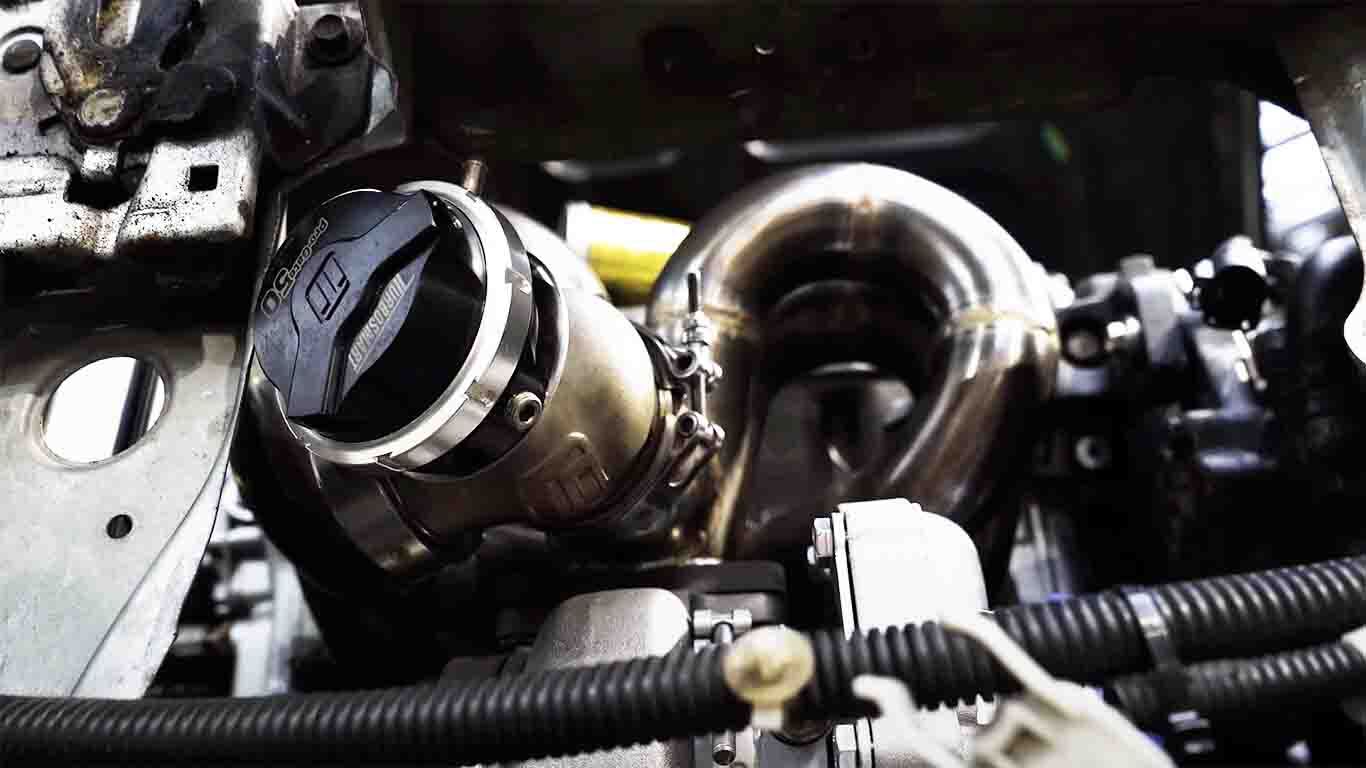
Performance engine builders almost always V-band their turbocharger housings and wastegates, since a slip-fit or flange could leak or blow off under high psi.
In a turbo build, V-bands allow you to remove or rotate the downpipe easily for maintenance or swaps, without cutting and re-welding, and it is much easier to locate the pipe onto the turbo without fiddling around with bolts.
We've all been in a crazy stress position underneath the car trying to get an exhaust with a gasket in the correct place and realising it won't go without loads of force.
I know I've been in this situation, and V-Bands make this 100x easier.
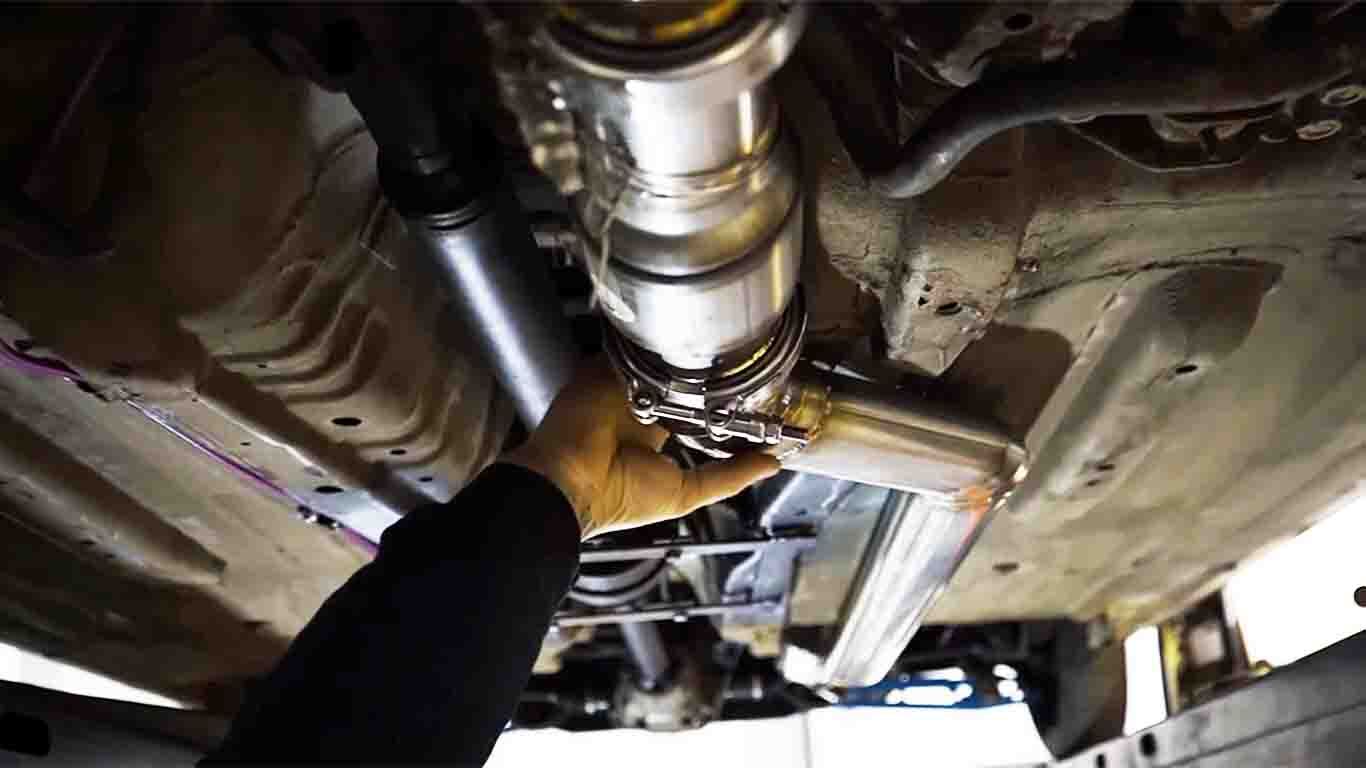
This is another place where the V-band interlocking flanges shine, as they double as locating tabs when reinstalling parts such as turbos, downpipes, and wastegates.
Whether it's a road car, a rally car, or a full drag racing demon, V-band clamps give peace of mind that the exhaust joint won't let go.
Installation and Maintenance Tips
Installing V-band clamps is straightforward but must be done carefully for the best results.
I recommend getting a professional to install them to ensure they do not warp or cause problems. If you are a confident welder, this is how we usually go about installation:
One of the biggest things people miss with V-Bands is not the clamp itself, but where the joint is positioned.
Before welding anything, think about future access. Ask yourself whether you will actually be able to get a spanner on the clamp, whether the exhaust can physically drop away once unclamped, and whether the bolt section is positioned safely away from the ground.
A well-placed V-Band can make the car much easier to work on. A badly placed one can still become awkward, even if the clamp itself is far better than a traditional flange.
- Prepare and Align Flanges: Ensure the two flange faces are clean and precisely aligned. The pipes must be butted fully together and the flanges flush. If using male/female flanges, engage the male bead into the female recess. Do not rely on the clamp to draw misaligned flanges into place – alignment should be correct beforehand. You may break the welds if you force them with the clamp, and they aren't welded straight.
- Lubricate: Apply a thin coat of dry-film lubricant or graphite on the inside of the clamp and flanges. This reduces friction and helps the clamp slide evenly during tightening. Also, anti-seize the clamp's nut or bolt threads. Anti-seize prevents galling (especially on stainless or titanium bolts) and ensures you can remove the clamp years later. The last thing you need is to go through all of this effort to have a snapped bolt in the future. Although our bolts have locking nuts, you are always best to lubricate them.
- Hand-Tighten First: Engage the clamp over the flanges and start the bolt by hand. Due to the locking nuts, you cannot tighten too much, but the clamp should hold in place if you get it finger-tight. Tighten each segment equally on segmented clamps so the clamp seats evenly.
- Torque the Bolt: Most V-bands work by self-aligning using the V-shaped part of the clamp, so all you need to do is torque them to the correct specification.
- Torque Spec: Typical torque specs depend on clamp screw size. For example, most manufacturers list about 5-10 ft·lb, but always check your specific clamp's instructions – the proper torque ensures the flanges seal without over-stressing the clamp. As a rule, do not use excessive force. Over-torquing can distort the clamp, crush the flanges or break the nut.
- Final Check: Once torqued, inspect the joint. There should be no visible gap between flanges, and the clamp should sit evenly (check that all V-segments are engaged). If any torque value still increases after the final tightening, stop and re-seat the clamp (too much torque can fatigue the metal). Following the proper torque/seating procedure prevents clamp stretch and flange cracks.
Common Mistakes to Avoid
- Skipping anti-seize or lubrication (threads can bind or galling).
- Over-torquing the clamp bolt can deform the clamp or flanges.
- Under-torquing (leading to leaks or even a clamp coming loose).
- Poor flange prep/alignment – even a tiny twist or high spot will compromise the seal.
- Using the wrong clamp type: Never use an aluminium V-band in the exhaust if temps exceed 200°C, or a titanium clamp beyond its rating – each material has a safe limit.
For any exhaust work, providing your exhaust is stainless, the Exoracing stainless steel V-Band clamps are excellent.
Exoracing Stainless Steel V-Band Clamp With Flanges
Perfect for downpipes, mid pipes, backboxes, turbo outlets, and removable exhaust sections.
From £39.99
 Turbosmart GenV Replacement V-Band
Shows how V-band style joins are now standard on many modern performance wastegate systems.
From £37.74
Maintenance
After installation, inspect the V-band after the first few heat cycles. It's wise to re-check the torque once the engine has fired up and cooled, to ensure nothing has loosened.
Periodically (every few months or during service), remove the clamp and clean any soot or corrosion from flanges. Reapply a light coat of dry lubricant before reassembly.
A stainless steel V-band clamp can be reused indefinitely with proper care and anti-seize on the bolt.
When Should You Use A V-Band Clamp?
V-Band clamps are at their best anywhere you know a joint may need to come apart in the future, where space is tight, or where leaks would be a massive pain.
That is why they are so popular on downpipes, turbo outlets, wastegate screamer pipes, centre sections, and removable backboxes. In all of these areas, a traditional gasket and bolt flange will work, but it usually takes up more room, takes longer to remove, and becomes more frustrating every time it needs to come apart.
This is the exact reason that we choose to use V-Bands in our own project cars when possible, and would never go back to a flange and gasket setup if we can help it.
If you are building a custom exhaust from scratch, it often makes sense to plan V-Bands into the system from the start rather than treating them as an afterthought.
That way, you can decide exactly where you want the system to split, where access will be easiest, and where future maintenance is most likely.
A good example would be placing one at the downpipe, one before the rear section, and one at any part of the system you may want to remove or change later.
For milder road cars, you do not need to V-Band every single joint, but using them in the critical places can still make ownership much easier.
For track cars and turbo builds, they become far more valuable because the system will usually see more heat, more vibration, and more frequent removal. That is where the extra cost of a proper V-Band setup quickly pays for itself.
Conclusion
For anyone serious about performance exhausts, V-band clamps are a must-have product.
They save assembly time, improve reliability, and give your system a professional look.
Whether you're building a street weapon or a race car, fitting critical joints with V-bands will pay off in durability and ease of maintenance.
Ready to step up your exhaust game? Our selection of stainless steel V-band assemblies lets you customise your build with the perfect parts and is available in the most common sizes for every build.
If you are building a custom exhaust, turbo setup, or anything that will need to come apart in the future, V-Bands are one of the best upgrades you can make.
Use code BLOG5 at checkout if you want to grab the right size for your build and make future maintenance much easier.
If you need any help with choosing the correct parts, please get in touch with us, as we will be more than happy to find you the correct parts.