
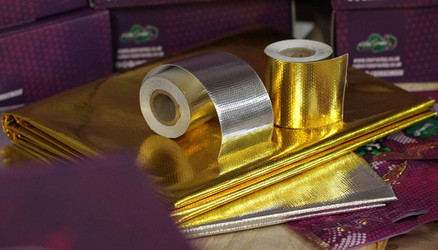
What Is Heat Reflective Tape?
Posted by Matthew Marks on 11th Apr 2025
Hi, I'm Matt, the owner of Exoracing and today, we will cover what heat reflective tape is and why you need it for your build.
You have probably seen rolls of gold and silver heat reflective tape on many performance car builds or websites, and may have wondered what it was, so we will go over everything in this guide.
Heat reflective sheeting and tapes were designed to keep radiant heat away from vital components of the car that are not meant to be exposed to prolonged excessive temperatures.
You may have seen heat reflective tape and sheeting in race cars on cold air intakes, intercooler piping and even in space exploration!
It all works on the same principle of maintaining safe operating temperatures to reduce the temperatures and chances of damage to the components behind it.
Today, we are going to go over multiple parts of this, such as what heat reflective tape is made from, why you need it, and where you can use it. Let's dive in!
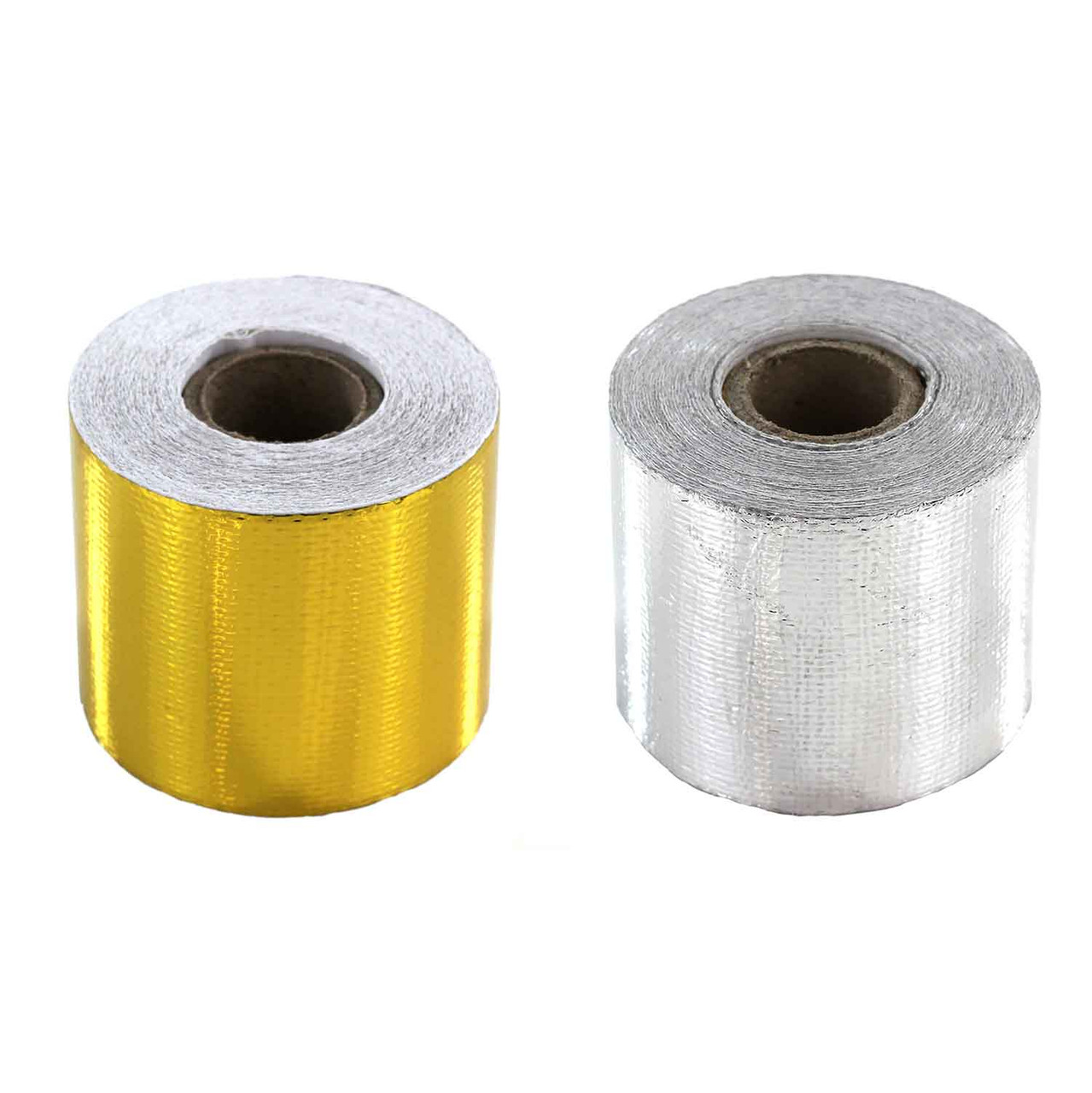 Exoracing Gold and Silver Heat Reflective Tape
Ideal for intake pipes, intercooler pipework, bulkheads, and awkward surfaces near heat.
From £29.99
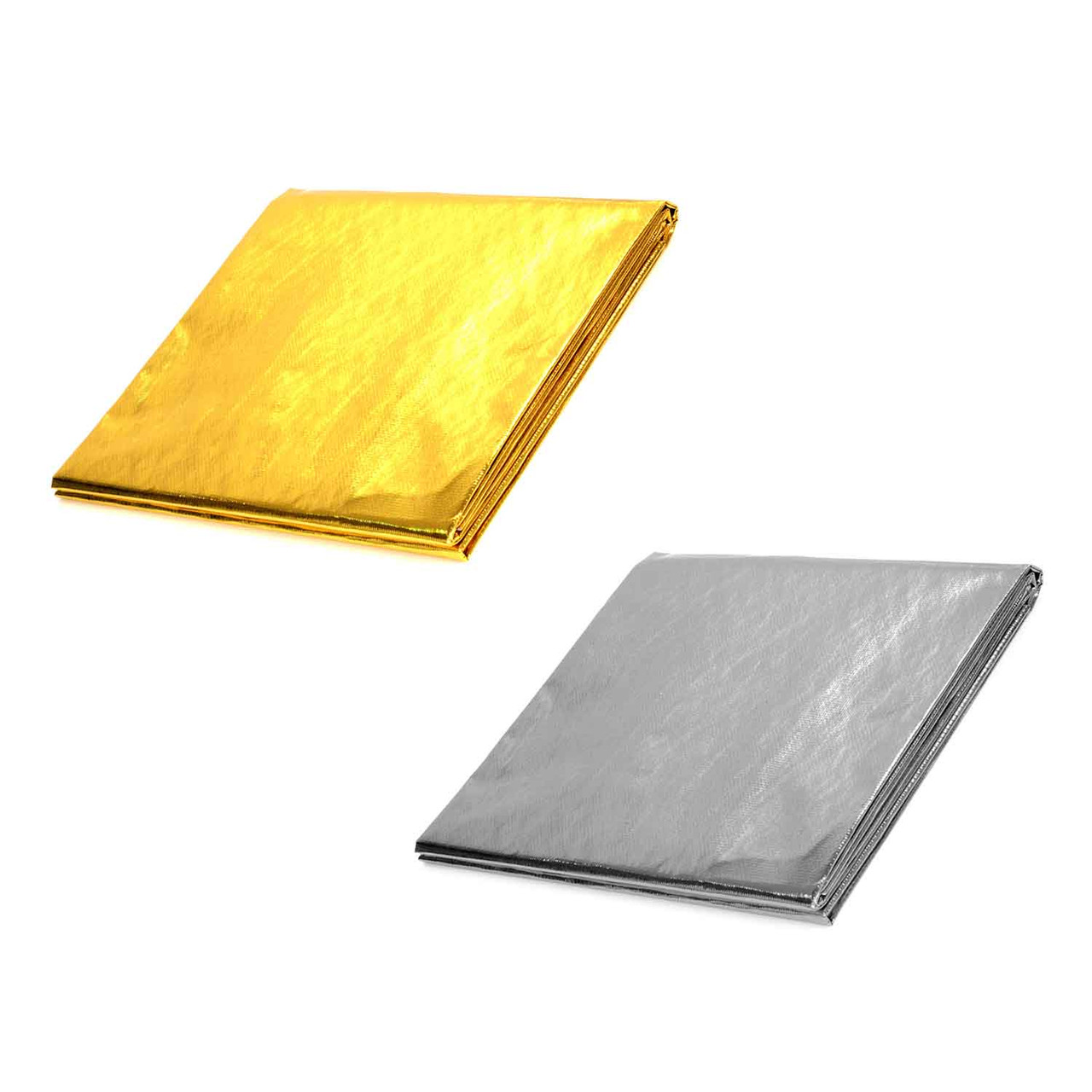 Exoracing Gold and Silver Heat Reflective Sheet 1m x 1.2m
Better for bulkheads, firewalls, air boxes, flat panels, and larger shielding jobs.
From £69.99
Quick Summary
Heat reflective tape is designed to reflect radiant heat away from nearby parts such as intake pipework, bulkheads, wiring, and fuel lines. It is lightweight, easy to install, and one of the simplest ways to reduce heat soak and protect components in a performance engine bay.
What Is Heat-Reflective Tape Made Of?
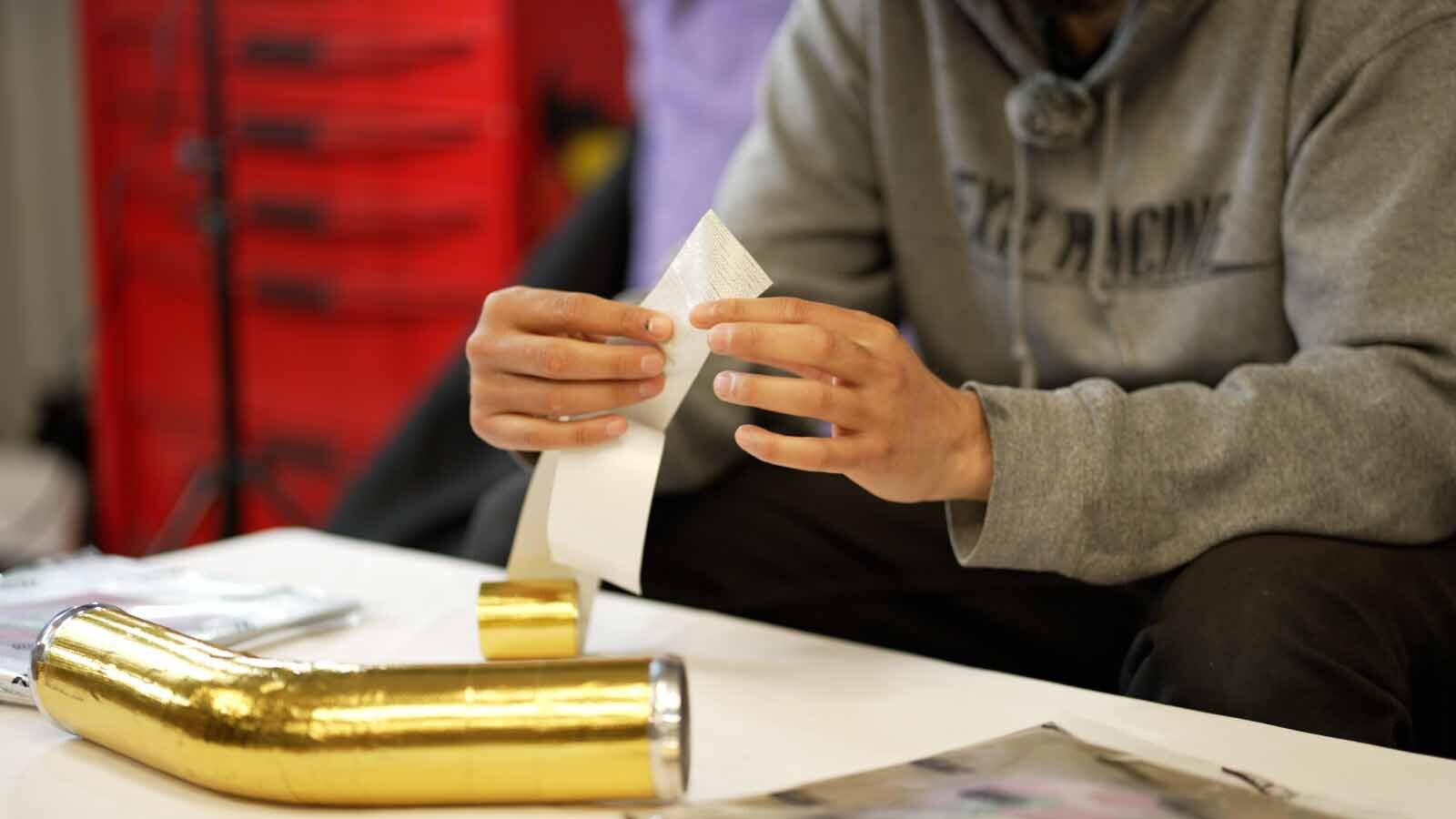
First, we are going to cover what heat-reflective tape is made of. The reflective tape or sheets are made from 3 different materials: the top foil, reinforcement, and adhesive.
The side you can see when it's installed (Gold or Silver) is built up from the woven layers of glass fibre and then covered with highly laminated aluminium foil.
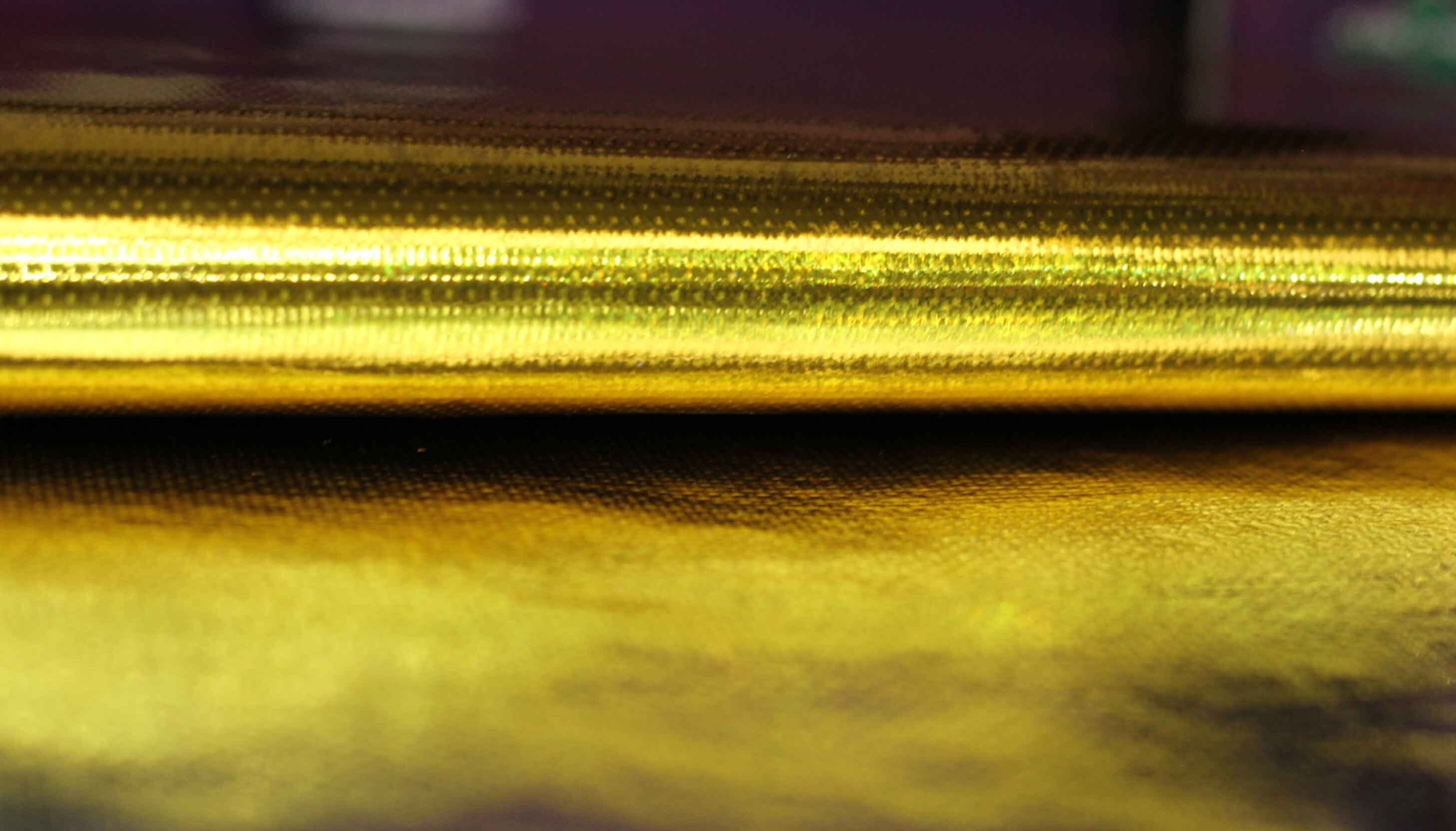
The laminated foil can cope with radiant temperatures of up to 450ºC and a maximum intermittent temperature of up to 1100ºC whilst still maintaining the ability to reflect up to 80-90% of that heat.
All of these combined features make up heat reflective tapes as you know them, so let's move on to the first part, the top layer.
Aluminium Foil
Both gold and silver heat reflective tapes are made from the same type of metallic film, usually an aluminium foil with a laminated top coating.
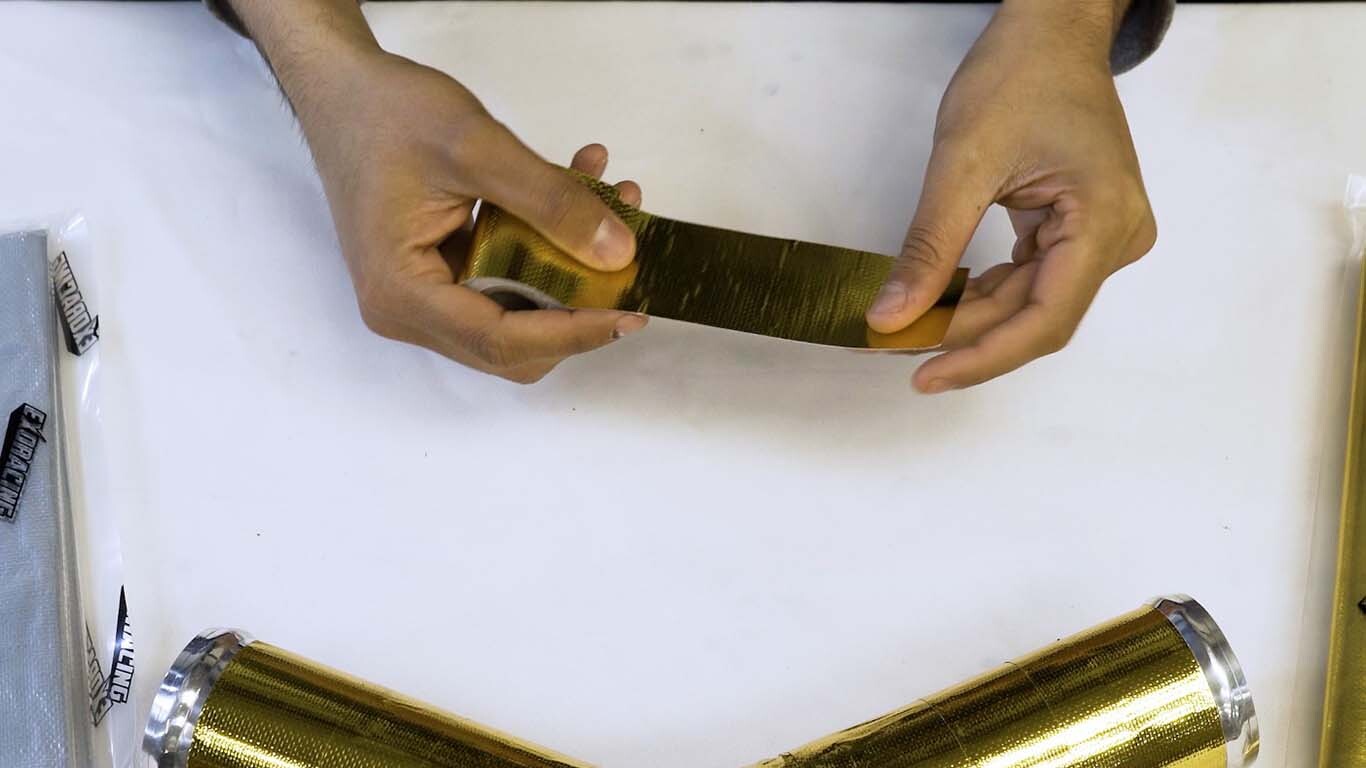
The main difference would be the colour, but gold and silver tapes perform slightly differently in reflecting heat, with gold being able to reflect around 5-10% more radiant heat than silver, but mostly, this is down to personal preference, as, in most applications, that percentage is relatively small.
Fiberglass Reinforcement
Most reflective tapes have a fibreglass/glass cloth backing, making them stronger and more durable.
This strength helps them stay in place without distorting and resisting wear in harsh environments. Fibreglass is also incredibly lightweight and very thin for its strength.
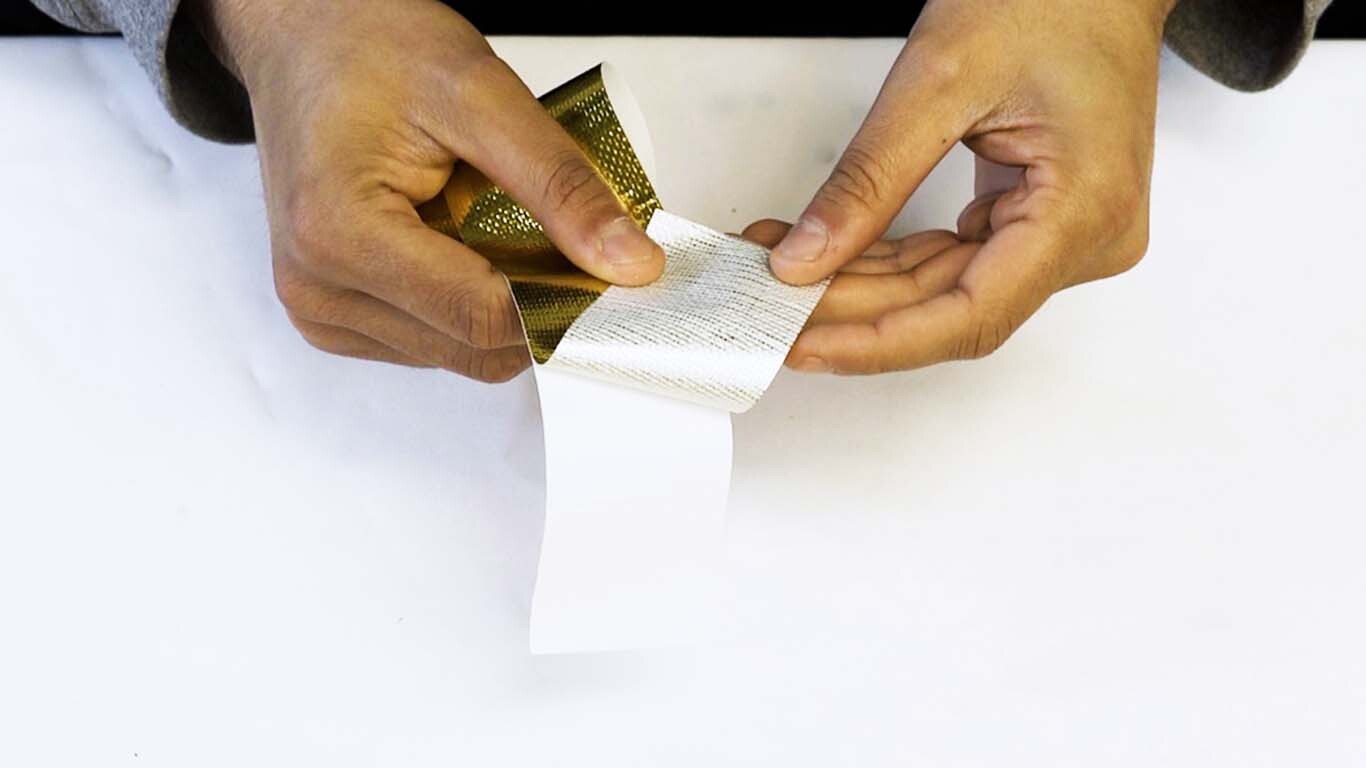
It is essential in race applications where you always try to squeeze the most horsepower out of the engine with the lightest chassis possible.
High-Temperature Adhesive
The last part is the adhesive used in heat reflective tape, which is designed to withstand extreme temperatures, hence why it suits racing applications.
Generally, the biggest problem is getting the reflective tape off, not worrying about how long it will last.
Most high-quality reflective tapes use a silicone-based adhesive that sticks well and doesn't melt or weaken under heat, which is precisely what you want from this.
Why You Need Heat-Reflective Tape
Now that we have covered how it's manufactured, we will dive into why you need heat-reflective tape. If you're already here, you may know why you need it, but we will go into some of the points anyway, in case you aren't sure.
The whole point is for you to understand all the points and benefits of heat reflective tapes before deciding whether to buy or install them on your car.
Heat can cause severe damage to parts in vehicles, machines, and even home systems over time. There are a few reasons why heat-reflective tape is so important, which we'll go into now.
Protects Components from Heat Damage
If parts like fuel lines, wiring, or intake pipes get too hot, they can break, split, become brittle or stop working correctly.
Heat-reflective tape and sheeting help keep them safe by reflecting the radiant heat and keeping them as cool as possible.
For wiring and lines specifically to get the best possible barrier, look at a silicone heat sleeve combined with the tape to get the best possible result. I actually have a story about one of my customers installing electric heaters.
They were worried about the wiring to the heater melting as it's very close, and it has done so in the past, so they ordered reflective sheeting and silicone heat sleeves combined, and even to this day, they have never had a problem with melting the wiring.
The electric heater customer is one good example of how these products help with issues that aren't car-based, but in any application where heat is a problem. Either way, having the reflective tape reduces the heat damage to specific parts or wiring.
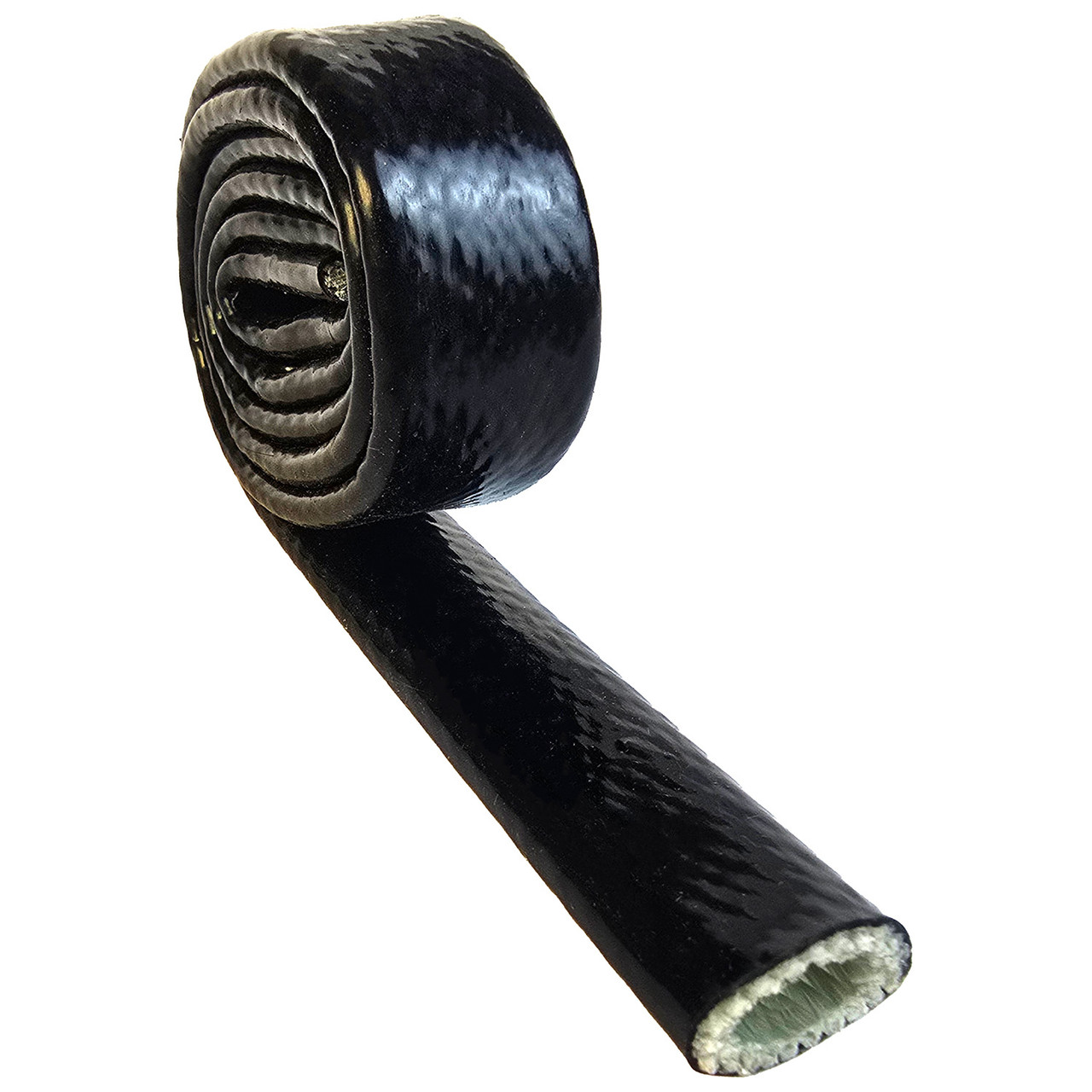 Exoracing Silicone Fibreglass Heat Sleeve 0.5m
Best for wiring, hoses, and fluid lines that sit too close to manifolds, turbos, or heaters.
From £14.99
Exoracing Gold and Silver Heat Reflective Sheet 1m x 1.2m
Great for larger flat surfaces where tape alone is not the most efficient option.
From £69.99
Improving Performance
Next on the list would be the performance improvement. This is the main area where our customers use our reflective tape.
Keeping air intake pipes colder helps an engine become more efficient by reducing the intake air temperatures, creating a more potent bang in the combustion chamber.
The lower the intake temperatures, the more power you can make, hence why drag applications utilise things such as ice tanks to try and super chill the intake temperatures to under ambient.
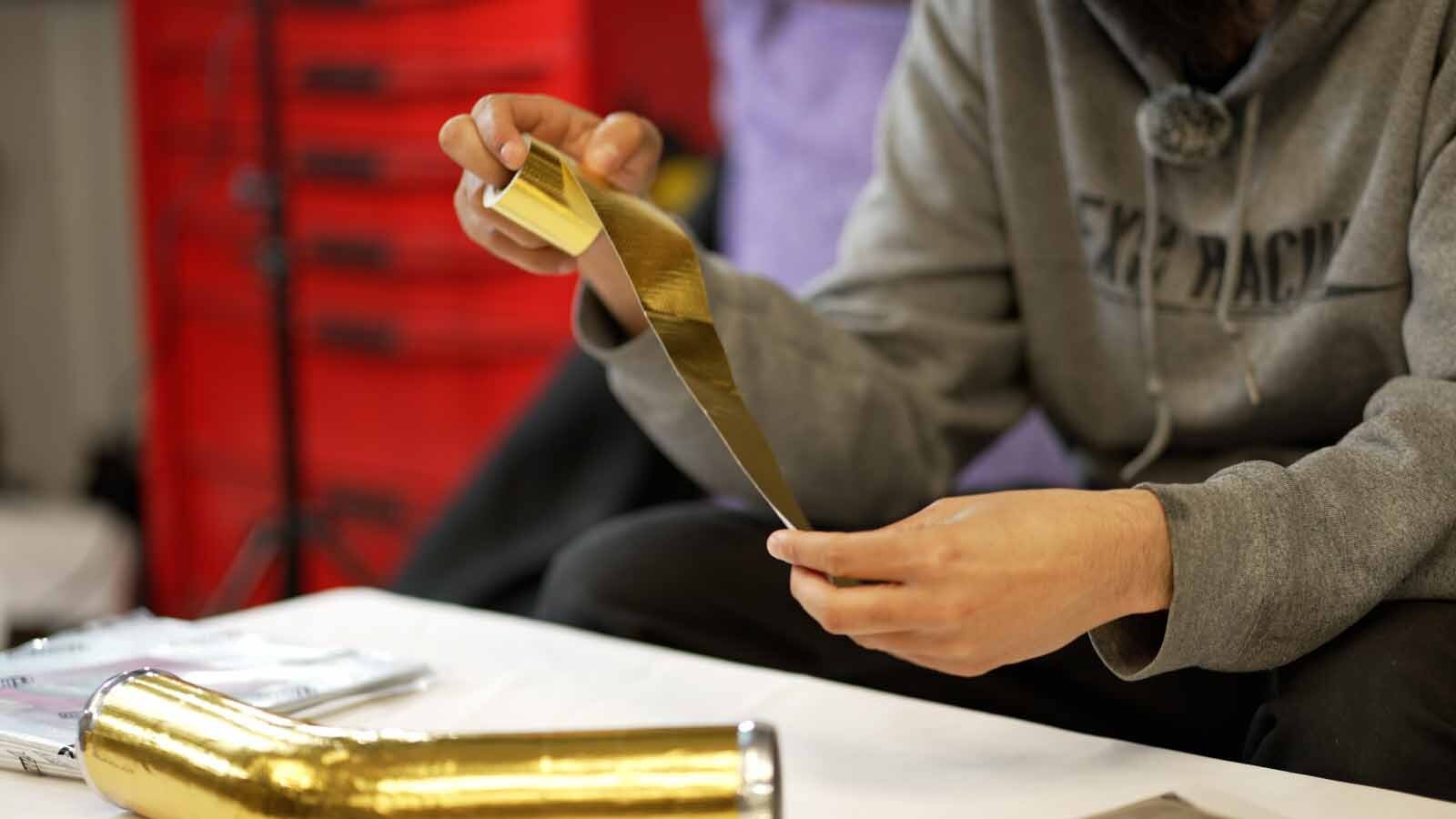
Obviously, this is a very extreme example, but the theory is the same for heat reflective tape, just in a less aggressive manner.
There aren't any situations where using heat-reflective tape is bad; adding a slight bump in performance whilst protecting components is always a positive.
Preventing or Reducing Heat Soak
Next on the benefits list is trying to prevent or reduce heat soak. Heat soak is when hot engine parts make everything around them hotter, which is also why people call some poorly designed intake pipes super heat soakers.
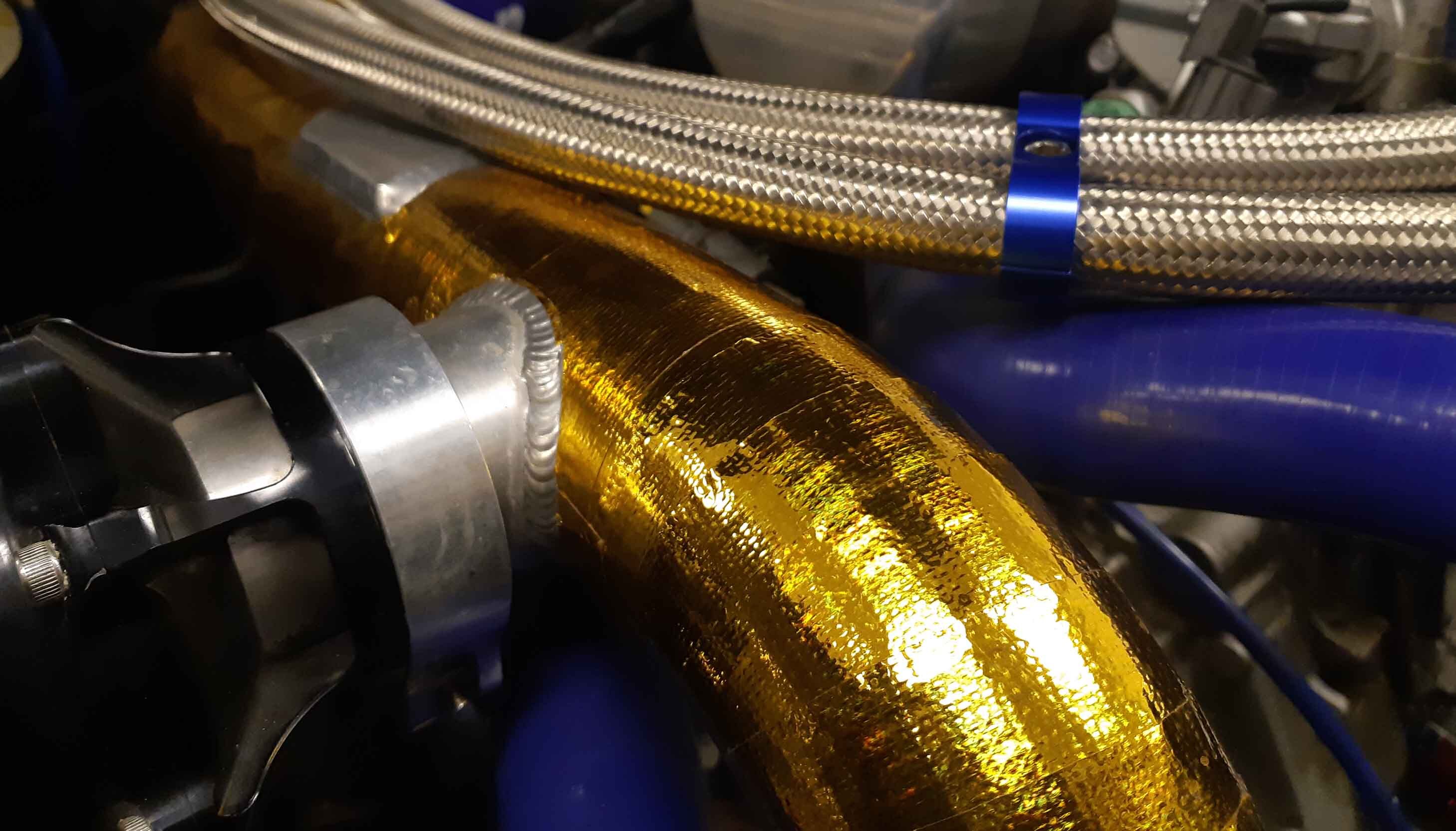
They call it this because they are generally next to something incredibly hot in the engine bay, and they can't remove that heat before the air gets to the intake manifold.
Wrapping components in reflective tape combined with a good intake location is the best thing to do, as it will reduce the amount of heat soak as it's drawing in colder air, and the amount of radiant heat that can soak into the pipe.
Using Heat Reflective Tape on My Turbo AWD Honda Civic
Depending on how long you have followed us, you may or may not know we have an AWD turbo project Civic.
When I added a turbo to my Civic a few years back, the temperatures were always high due to the heat soaking in the engine bay. The turbo created a lot of extra heat, which affected my air intake temperature, fuel lines, and wiring.
We have now upgraded everything to run on a Haltech, so we will do a specific temperature test when the car is running to show how much we can reduce the engine bay and IAT by adding heat management components bit by bit.
Back to the last build, though, we wanted to try and get the temperatures down, so we first used heat reflective tape on all of the intercooler piping, and when we got to the dyno, the IAT was around ambient, which is good news as they weren't massively heat soaking from anywhere in the engine bay.
Obviously, this is a little different to the real-world application as the bonnet was up and had a fan running in front of the car to simulate air whilst driving, but it wasn't the best test, hence why we will be doing this in future.
Gold vs. Silver Heat Reflective Tape
Now, on to the massive point that most customers bring up: is there any difference between the gold and silver heat reflective tape?
Many people think gold heat reflective tape is massively better than silver, but the truth is that gold will only outperform by around 5-10%.
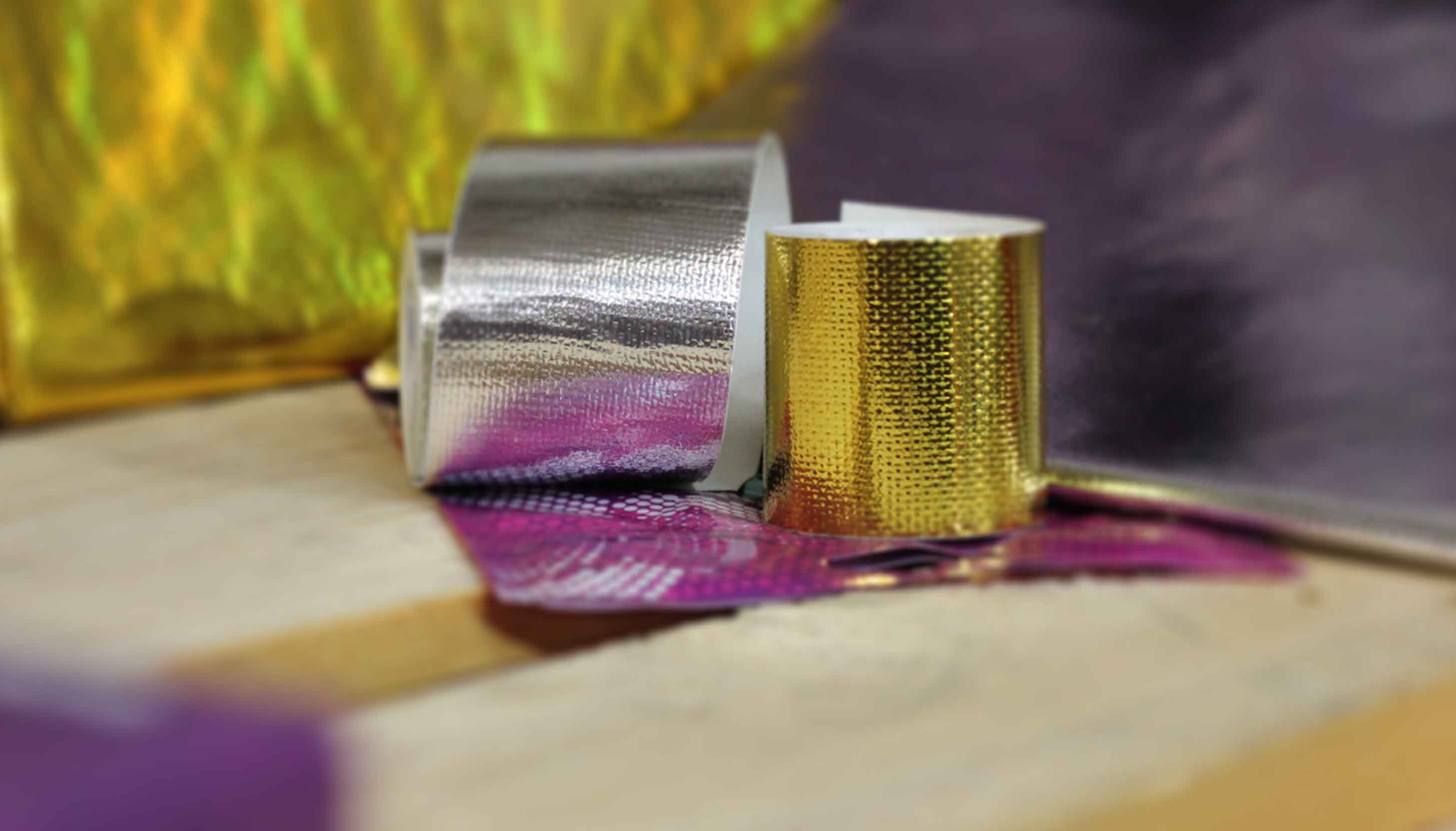
This sounds like a lot, but that percentage is marginal in real-world situations unless you run a 1500bhp drag demon, where the 5-10% will scale much higher than a road application at 200bhp.
So yes, there is a difference, but not enough to go with one over the other massively; the most significant factor is usually which colour suits the engine bay more, as silver is more subtle and gold stands out more.
Where Can You Use Heat-Reflective Tape
We have touched on a few places where we have used reflective tape, but you can use it anywhere you need to reduce radiant heat.
The most common in the automotive world would be on air intake or intercooler piping, intercooler tanks, and bulkheads. These all serve their purpose, such as reducing the intake air temperatures or the amount of heat in the cabin.
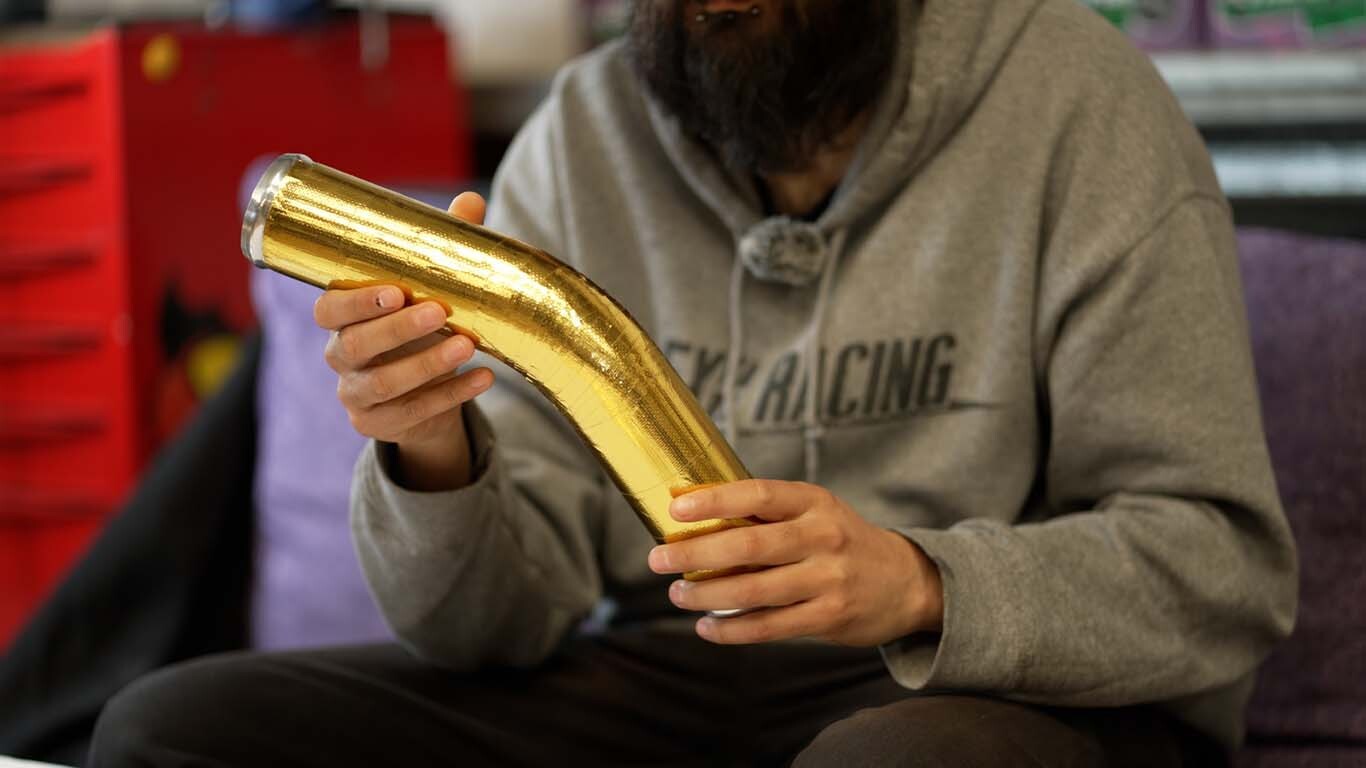
Here are some common uses for automotive and a few other places:
Automotive and Racing
- Wrapping air intake pipes, intercoolers and bulkheads.
- Generally, protecting under-hood components from heat
- Insulating firewalls to reduce cabin heat
Aerospace
- Shielding aircraft parts
- Protecting delicate electronics
Industrial and Home Use
- Covering HVAC systems and exhaust pipes
- Protecting wiring in hot environments
- Heat shielding for machinery
In the real world, most people start with the obvious places, such as intake pipes or bulkheads, but the best results usually come from looking for any part that sits close to a strong heat source and suffers from repeated heat soak.
That could be an air box next to a turbo, a brake master cylinder near a manifold, or wiring that runs too close to an exhaust. Once you start thinking in terms of radiant heat rather than just direct contact, you begin to notice many more places where reflective tape or sheeting can make a real difference.
It is also worth thinking about the long-term effect of heat.
Some parts do not fail immediately, but repeated exposure to high temperatures can make plastics brittle, dry out hoses, and shorten the life of wiring insulation. That is why reflective tape is not just about performance.
It is also about reliability and reducing the chance of future failures.
How To Install Heat-Reflective Tape
I'm not going to go into massive detail in this guide about installing it, as we have a full video on how to do this and a how to Install Heat Reflective Tape blog that goes more in-depth.
If you prefer to watch the video or read the how-to-install heat reflective tape guide, I'll add it here. In the guide, we break down the whole video into easy-to-follow steps so you can have your computer or phone next to you and go bit by bit.
We also include all the tools you need to make this as simple as possible.
Exoracing Gold and Silver Heat Reflective Tape
Perfect for pipework, air boxes, reservoirs, and awkward hot side areas in the bay.
From £29.99
Exoracing Heat Reflective Tape Installation Kit
Makes application cleaner and easier, especially if you want a neater finish with fewer bubbles.
From £11.99
Which Heat Management Product Is Right For You?
Choosing the right product depends on what you are trying to protect and how much surface area you need to cover.
If you are working with curved surfaces such as intercooler piping, intake pipes, or reservoirs, heat reflective tape is usually the best option because it is flexible, easy to wrap around awkward shapes, and quick to install.
If you need to protect a larger flat area, such as a bulkhead, air box, firewall, or a section of bodywork near the exhaust, a heat reflective sheet is usually the better choice. It gives you more coverage in one piece and often creates a tidier finish than trying to overlap multiple strips of tape.
If your main concern is wiring, fuel lines, breather hoses, or other soft components running close to a hot turbo, manifold, or heater, then a silicone fibreglass heat sleeve is often the most effective option. Tape works best on surfaces, while the sleeve works best on the lines and looms themselves.
In many engine bays, the best setup is not just one product on its own. A smart heat management setup often uses reflective tape on pipes and panels, a reflective sheet on larger surfaces, and a heat sleeve on wiring and lines. That combination gives you broader protection and helps reduce the chance of heat soak, damaged wiring, or long-term component failure.
Conclusion
Heat-reflective tape is an easy, lightweight and effective way to protect parts from extreme temperatures. Using it on a car, aircraft, or industrial machine helps keep things cooler and running better.
From my experience working with performance cars, gold and silver tapes are very similar in performance, but gold would slightly beat silver overall. If you want the best performance for your money, go with Gold reflective tape, as it's usually the same price and somewhat more effective.
Using heat-reflective tape is a simple upgrade that can make a big difference, and we recommend it to any customers who need to protect parts or reduce temperatures.
Thank you for reading, and hopefully, this has been incredibly helpful for you. If you still need any further help, please make sure to contact us, as we are happy to try and help you find the perfect heat management solution for you.
If you are trying to protect intake pipes, bulkheads, wiring, or anything else exposed to serious engine bay heat, heat reflective tape is one of the easiest upgrades you can make.
Use code BLOG5 at checkout if you want to grab anything mentioned in this guide and start improving your heat management setup properly.