
Engine Bay Too Hot? 6 Ways To Reduce Heat Fast
Posted by Matthew Marks on 5th Jun 2025
Jump to a section
How To Reduce Engine Bay Temperatures And Prevent Heat Soak
A practical guide to lowering under-bonnet heat, protecting wiring and hoses, reducing intake heat soak and choosing the right heat management parts for your car.
Written by Exoracing, a UK heat management and performance parts specialist helping enthusiasts and workshops since 2018.
Shop Heat Management PartsIf your engine bay feels too hot, the first job is not to throw random shiny tape at everything. You need to work out where the heat is coming from, what it is damaging, and whether you need to contain the heat source, protect a nearby component, improve airflow, or fix a routing problem first.
We see the same pattern again and again on modified cars: turbo housings, manifolds and downpipes radiate heat into wiring, hoses, brake or clutch lines, intake pipework and bonnet areas. The right fix can make the car more reliable. The wrong fix can waste money or hide a problem that should have been repaired.
The simple answer
The best way to reduce engine bay temperatures is to control the hottest parts first: the turbo, exhaust manifold and downpipe. Use a turbo blanket on the turbine housing, exhaust wrap on hot exhaust pipework, heat sleeve on nearby hoses and wiring, reflective tape or sheet on panels and intake parts, and better airflow where hot air is trapped.
If the part is leaking, damaged, touching the exhaust or routed badly, fix that before adding heat protection. Heat management works best when it supports a good layout, not when it covers up a bad one.
For most turbo cars, the first upgrades are usually a turbo blanket, exhaust wrap on the manifold or downpipe, and a heat sleeve on the closest lines.
- Start by identifying the heat source and the part at risk.
- Use turbo blankets and exhaust wrap for source control.
- Use a heat sleeve for wiring, fuel lines, brake lines, clutch lines and hoses.
- Use reflective tape or sheet on panels, airboxes, intake pipes and bulkheads, not directly on exhausts.
- Improve airflow when temperatures climb at idle or after hard driving.
What Causes High Engine Bay Temperature?
Engine bay heat normally comes from three places: exhaust heat, trapped hot air and engine cooling load. The exhaust side is usually the most aggressive source because manifolds, turbine housings and downpipes can sit very close to wiring, hoses, fuel lines, brake lines, clutch components and intake parts.
There are three heat types to understand. Radiant heat travels in line of sight from hot parts, like an invisible heat lamp. Conductive heat moves through parts that touch. Convective heat moves through air or fluid, such as hot air trapped under the bonnet or coolant moving through a radiator.

If you want the deeper explanation of conduction, convection and radiant heat, our engine bay heat transfer guide breaks each type down with examples.
Is It Engine Bay Heat Or Engine Overheating?
Before fitting heat protection, separate the two different problems. A hot engine bay means the area under the bonnet is absorbing heat from the exhaust, turbo, radiator and trapped air. Engine overheating means the coolant temperature is too high, and the cooling system needs diagnosis.
If coolant temperature is climbing, check the cooling system first: coolant level, trapped air, thermostat, radiator, cap, water pump, fan operation and fan direction. A heat wrap, tape or sleeve will not fix a cooling fault.
If coolant temperature is controlled but wiring, hoses, intake parts or the bonnet area are getting too hot, that is where engine bay heat management makes sense.
Quick Choice: What Should You Fit First?
Use this as the starting point before buying anything. The best product depends on the heat source and the vulnerable part.
Contains turbine housing heat at the source and reduces radiant heat into the bay.
Best for long hot exhaust sections where you need to reduce radiant heat from pipework.
Use on wiring, fuel lines, oil lines, brake lines, clutch lines, coolant hoses and vacuum hoses.
Reflects radiant heat away from clean panels and intake surfaces facing the heat source.
Check fan direction, shrouding, coolant system health and how hot air leaves the bay.
1. Control Turbo Heat With A Turbo Blanket
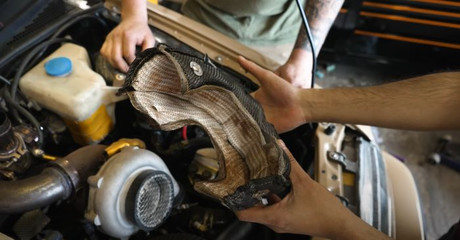
On a turbocharged car, the turbine housing is often the most intense heat source in the engine bay. A turbo blanket wraps around the hot side of the turbo and reduces how much heat radiates into nearby parts.
This is source control: you are dealing with the heat where it is being created. That usually gives a better result than trying to protect every nearby part after the whole bay has already become hot.
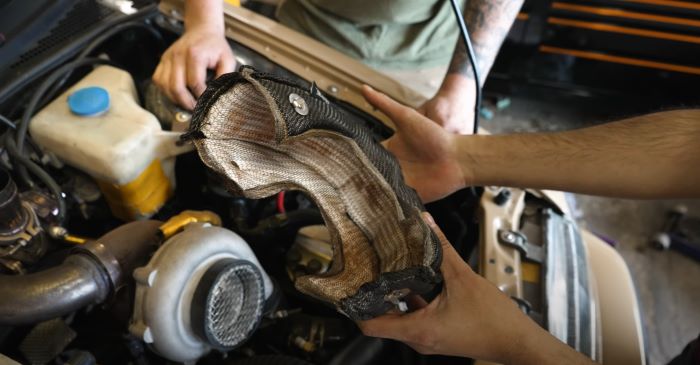
We also have a full before-and-after turbo blanket test on a 550bhp RS4 if you want to see a more specific real-world heat management example.
Watch: Our turbo blanket blowtorch test shows how the insulation layers reduce heat transfer through the blanket.
2. Reduce Manifold And Downpipe Heat With Exhaust Wrap
Exhaust wrap is used on manifolds, headers, downpipes, screamer pipes and other hot exhaust sections. It helps keep heat inside the exhaust pipework, which reduces radiant heat in the engine bay.
From our own installs, the biggest difference comes from wrapping the hottest sections first: turbo manifolds, the first part of the downpipe and pipework close to wiring, hoses, intake parts or the bulkhead.
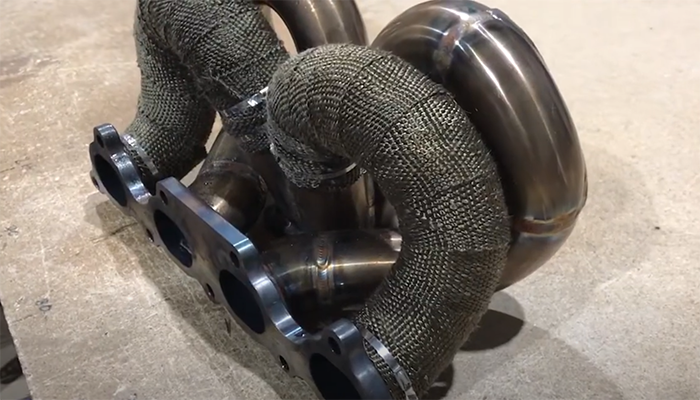
The installation matters. Loose wrap, poor overlap or normal plastic cable ties will reduce the result and can create problems later. Use stainless ties, keep consistent tension and recheck the wrap after the first few heat cycles.
Watch: In our exhaust wrap install video, we show the wrapping, overlap and stainless tie method for a cleaner finish.
3. Protect Wiring, Hoses, and Lines With a Heat Sleeve
The heat sleeve is for the vulnerable part, not the exhaust. Use it on wiring looms, fuel lines, brake lines, clutch lines, oil lines, coolant hoses, vacuum hose and AN hose that must run near hot areas.
This is especially useful where you cannot move the line far enough away from the heat source. The sleeve gives the hose or cable an extra protective layer against radiant and local heat.
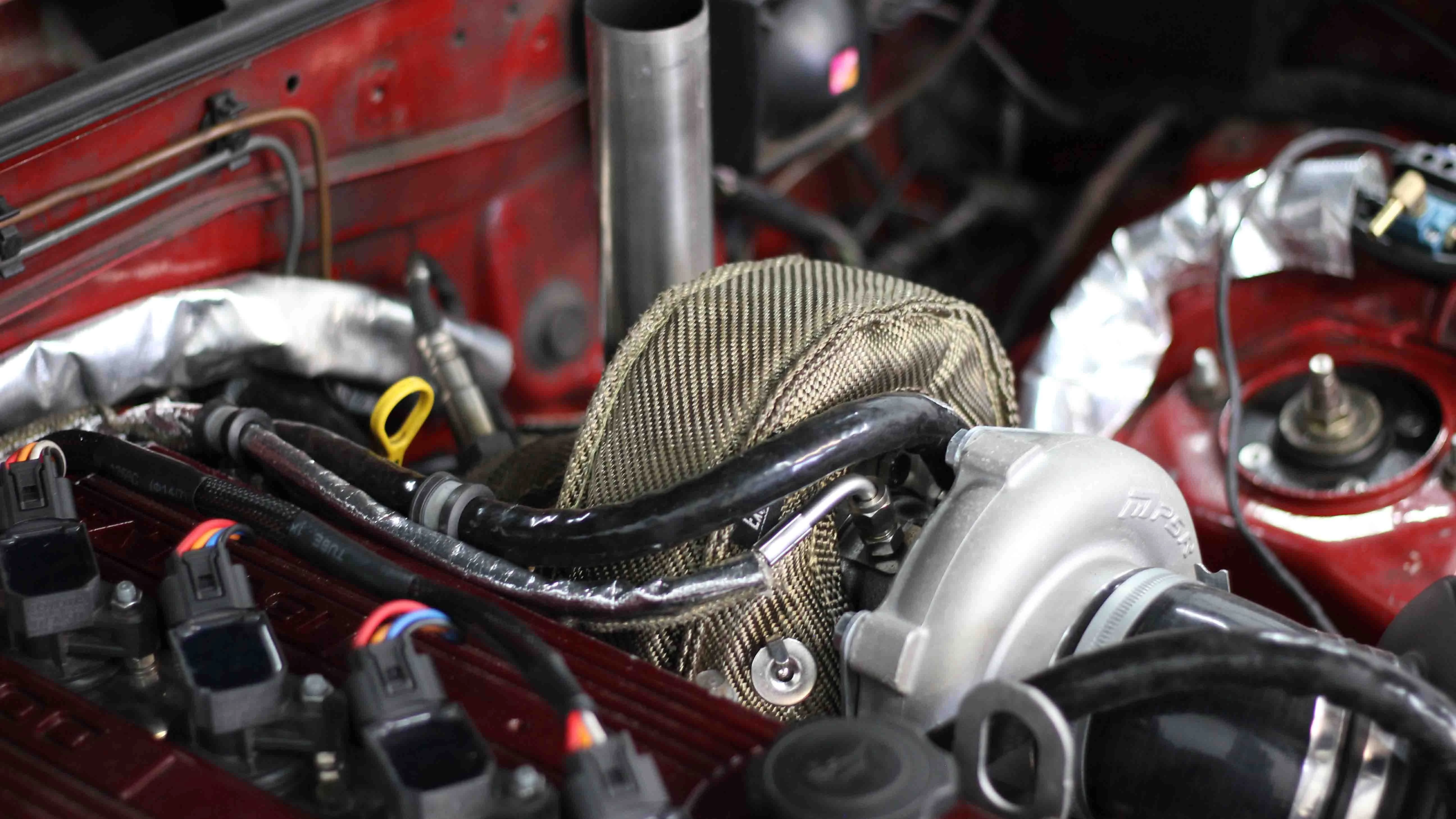
Measure the outside diameter of the hose, cable or line and choose the closest sleeve size up. If the sleeve is too tight, it will be hard to install and may not sit correctly. If it is much too large, it can move around and leave gaps.
4. Reflect Heat Away From Intakes, Panels, and Bulkheads
Reflective heat tape and sheet are designed for surfaces that face radiant heat. Common places include intake pipes, airboxes, bulkheads, transmission tunnels, washer bottles, covers and panels near the exhaust side.
The key is surface preparation. Clean, degrease and dry the surface before fitting the tape. If the surface is oily, dusty, textured, too hot or already damaged, the adhesive may not last.
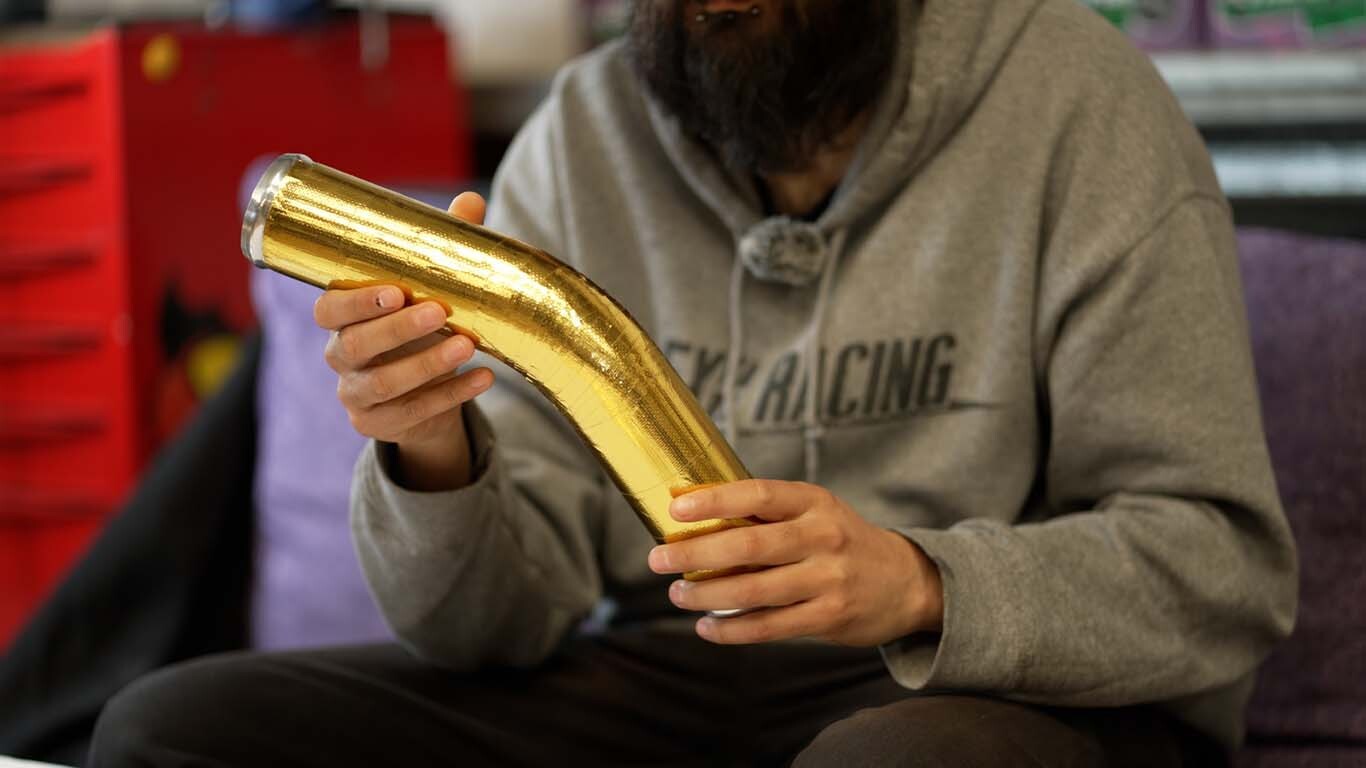
Do not use reflective tape as an exhaust wrap. It is not designed to be fitted directly to manifolds, downpipes or turbine housings. Use it on the part you want to protect, not on the exhaust part creating the heat.
Recommended Heat Management Parts
Once you know the heat source and the part at risk, these are the main product types we would look at first.
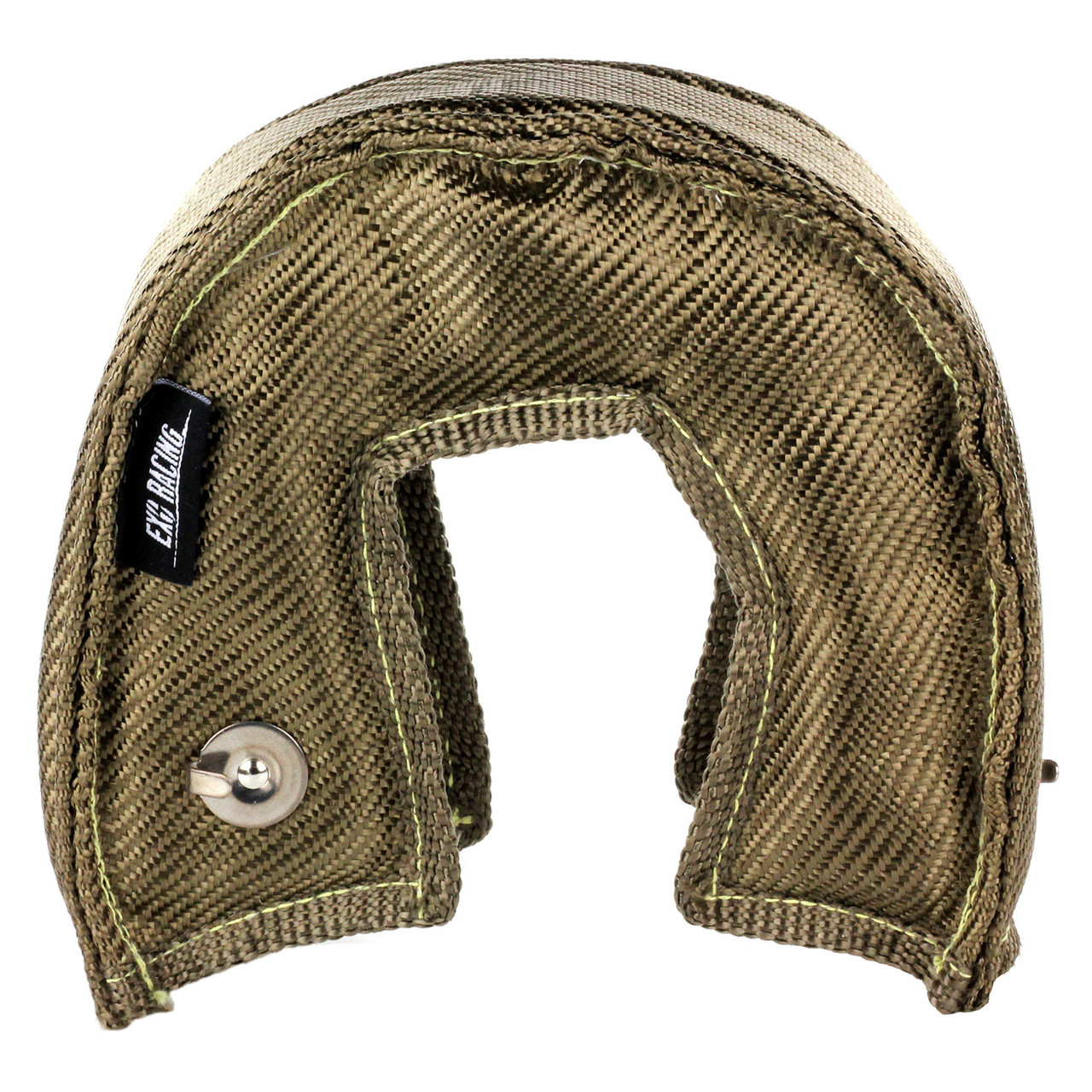 Exoracing Turbo Blanket V3
Contains turbo heat at the turbine housing to protect nearby hoses, wiring and intake parts.
From £119.99
 Exoracing Titanium or Carbon Exhaust Wrap
Helps contain heat from manifolds, downpipes and other hot exhaust pipework.
From £24.99
 Exoracing Silicone Fibreglass High Temperature Heat Sleeve 0.5m
Protects wiring, fuel lines, oil lines, brake lines, clutch lines and hoses from local heat.
From £14.99
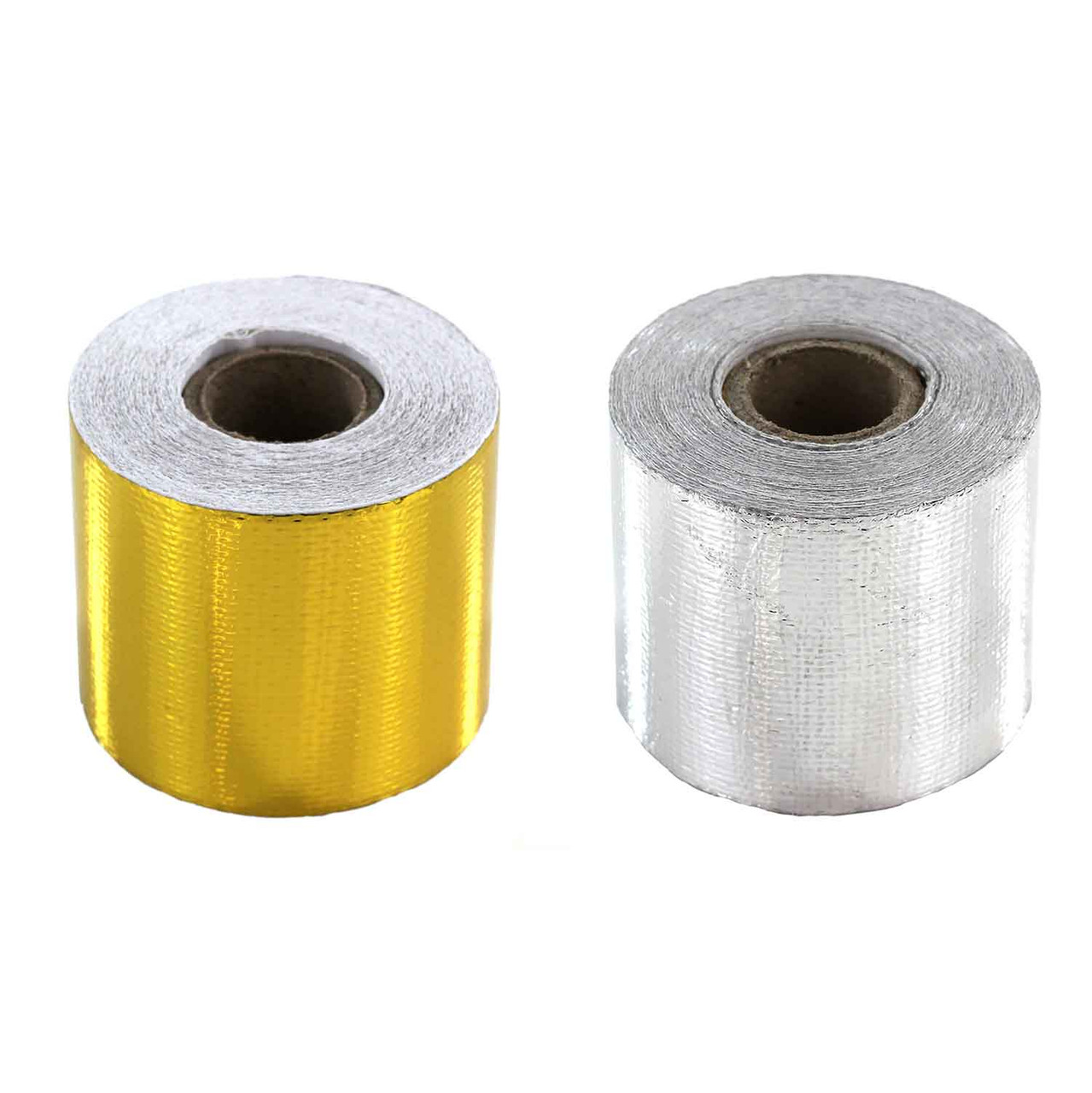 Exoracing Gold and Silver Heat Reflective Tape
Reflects radiant heat away from intake pipes, airboxes, panels and bulkheads.
From £29.99
5. Improve Airflow When Hot Air Gets Trapped
Insulation and shielding reduce how much heat escapes or reaches nearby parts. Airflow removes heat that has already built up. If your coolant or intake temperatures climb in traffic but improve when moving, check airflow through the radiator and out of the engine bay.
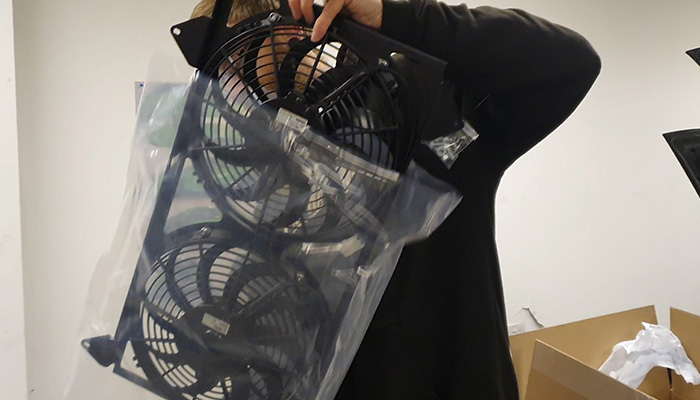
Useful checks include fan direction, fan shroud coverage, radiator condition, coolant bleeding, ducting and whether hot air has a clean way to leave the bay. On track and drift cars, vents and ducting can help, but they should be placed with care so they do not create water ingress or pressure problems.
What Happens If You Ignore Engine Bay Heat?
Engine bay heat problems usually start small. A loom gets a little brittle, a vacuum hose hardens, a clutch line sits too close to a manifold, or an intake pipe keeps soaking up heat after every hard pull.
Left alone, the damage can become more expensive: melted wiring, split hoses, fuel or oil line damage, hot-start issues, rising intake air temperatures, reduced performance consistency and parts failing earlier than they should.
The correction is simple in principle: repair damaged parts, improve routing, add clearance, control the heat source, protect the vulnerable component and recheck everything after heat cycles.
Common Mistakes When Reducing Engine Bay Heat
Protecting the part but ignoring the heat source
If a turbo or manifold is cooking everything around it, start with source control where possible. A turbo blanket or exhaust wrap can reduce the heat escaping in the first place.
Using reflective tape on exhaust pipework
Reflective tape is for surfaces facing heat. It is not an exhaust wrap. Use exhaust wrap on exhaust pipework and reflective tape on intake parts, panels and bulkheads.
Covering damaged parts instead of replacing them
The heat sleeve should protect the good parts from future heat damage. It should not hide cracked hoses, damaged wiring or leaking lines.
Forgetting to recheck after heat cycles
Wrap can settle, tape edges can lift if the surface was not prepared properly, and hoses can move slightly once the car has been driven. Recheck clearances and fix anything that has shifted.
When Heat Protection Is Not The First Fix
Do not use heat protection as a shortcut for poor routing, leaks or damaged parts. If a hose is touching the downpipe, move it. If a turbo oil feed is leaking, repair it. If a manifold is cracked, fix the manifold. If a fan is wired the wrong way, correct the airflow.
Heat management works best once the basics are right. Aim for clearance first, then source control, then protection, then airflow, then rechecking.
Common Concerns Before You Buy Heat Protection
Will exhaust wrap rust my manifold?
Exhaust wrap can hold moisture if it is used on poor material, fitted badly or wrapped too far back into cooler sections of the exhaust. For best results, use it on the hottest sections where heat reduction matters most, and inspect the pipework during maintenance.
Can a turbo blanket catch fire?
A quality turbo blanket is designed for turbine housing heat, but it should not be soaked in oil, fuel, coolant or power steering fluid. Fix leaks before fitting one and make sure it is secured so it cannot touch moving parts.
Will reflective tape fall off?
Reflective tape is only as good as the surface underneath it. Clean, dry, smooth surfaces give the best result. Oily, dusty, textured or overheated surfaces are the usual reason tape lifts early.
Engine Bay Heat Checklist
Look for direct line of sight to wiring, hoses, lines and intake parts.
Heat protection should not replace safe routing.
Reduce the heat escaping before protecting everything around it.
Match the product to the part: sleeve for lines, tape or sheet for surfaces.
Check for movement, lifted tape, loose ties, new contact points and heat marks.
FAQs
How do I prevent engine heat soak?
Prevent heat soak by controlling the hottest parts first, then protecting the parts that absorb heat. On a turbo car, that normally means a turbo blanket, exhaust wrap on hot pipework, heat sleeve on nearby lines and reflective tape on intake or panel surfaces.
How hot does an engine bay get?
Engine bay temperatures vary massively by car, layout, driving style and airflow. The area near a turbo, manifold or downpipe will be far hotter than the general air temperature under the bonnet. That is why local protection matters more than quoting one average engine bay temperature.
Does exhaust wrap reduce engine bay heat?
Yes, when it is used on the correct parts. Exhaust wrap is designed for manifolds, headers, downpipes and hot exhaust sections. It helps reduce radiant heat from pipework, but it should not be used on wiring, hoses or intake pipes.
Will a turbo blanket help lower the engine bay temperature?
A turbo blanket helps reduce heat escaping from the turbine housing, which can lower local engine bay heat around the turbo area. It is most useful on turbocharged cars where nearby hoses, wiring, bonnet areas or intake parts are exposed to radiant heat.
Should I use a heat sleeve or reflective tape on hoses?
For hoses, wiring and lines, a heat sleeve is usually the better choice because it wraps around the part and adds an insulation layer. Reflective tape is better for panels, airboxes, intake pipes and surfaces facing radiant heat.
Why is my engine bay so hot, but the car is not overheating?
The cooling system may be controlling coolant temperature while the exhaust and turbo area are still radiating huge heat into the bay. This is common on performance cars. Check the hot side layout, nearby lines and airflow rather than assuming the radiator is the only issue.
Can one heat management product fix everything?
Sometimes one product fixes a small local problem, but most serious engine bay heat issues need layers. Control the heat source, protect the vulnerable part, improve routing and airflow, then recheck after driving.
Conclusion: Start At The Hottest Part
The best way to reduce engine bay temperatures is to stop guessing and work through the car logically. Find the heat source, find the vulnerable part, fix the routing or damage first, then choose the correct heat management product.
For most turbo and performance builds, the strongest first steps are a turbo blanket, exhaust wrap, heat sleeve and reflective heat tape, used in the right places.
If you are not sure where to start, browse our heat management range or contact us with your car, engine, turbo setup and the part you are trying to protect.
Shop Heat Management PartsAbout The Author
I am Matt, the owner of Exoracing Ltd, a UK-based performance parts brand specialising in heat management and performance parts.
Since 2018, we have helped car enthusiasts and workshops protect wiring, hoses, intake systems and engine bay components from excessive heat using practical product knowledge, real installs and product testing.