
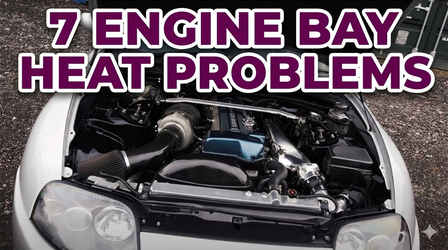
7 Engine Bay Heat Warning Signs and What to Do
Posted by Matthew Marks on 23rd Dec 2025
Jump to a section
Melted plastic, damaged wiring, a burnt hose or a strong smell needs investigation. A hot engine bay alone does not prove a fault, and heat protection is not the first fix for every symptom. Find the affected part and the cause before buying insulation.
On our AWD Civic, damaged loom conduit and a single damaged wire caused a shutdown at a drag-and-drift event. We also burnt the outer nylon braid on breather lines that ran over the manifold before mapping. Those faults needed repair and better routing, not a cover over the damage.
Check the severity first
Stop safely for smoke, a fuel smell, visible leaking fluid on the exhaust, serious electrical trouble or an overheating warning. Switch off when safe and arrange help. Do not reach into a hot bay or keep running the engine to see whether the fault clears. If there is a fire, get everyone away and contact the emergency services.
If coolant reaches the red, a temperature warning appears or steam is visible, follow the vehicle handbook. Do not open a hot coolant cap. That is a cooling-system fault to diagnose separately from local exhaust heat.
1. Plastic becomes brittle, cracked or distorted
Inspect clips, connectors, covers and reservoirs near the hot side once the car is cold. Discolouration alone does not prove the cause. Look for a clear heat path, contact marks, an exhaust leak, missing factory shielding or a part that has moved. Age, chemicals and electrical resistance can also damage plastic.
Replace a damaged functional part. Check its mounting and the heat source before fitting the replacement. Restore suitable factory shielding where needed. A heat shield with an air gap can help separate a healthy part from a hot surface; reflective material needs a compatible substrate and exposure.
2. Wiring becomes hard, glossy, split or exposed
On our Civic, changing to a properly built loom with better routing and protection followed the electrical failure. For another car, a melted section may come from radiant heat, hot-pipe contact, a poor connection or an electrical overload. A burnt connector is not automatically an exhaust problem.
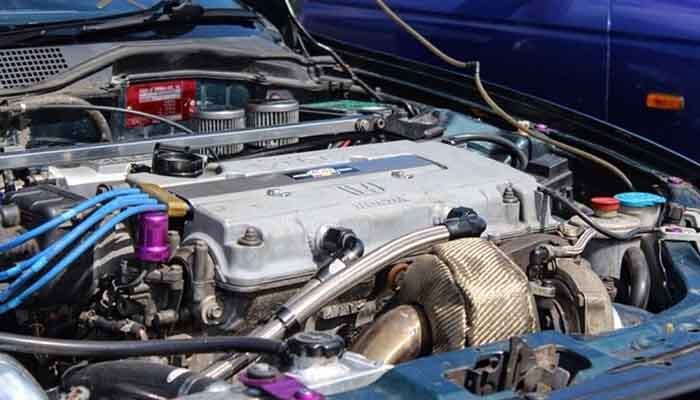
Watch: Why we changed the loom on our modified Civic
If the player is blocked, watch the video on YouTube.
Do not repeatedly replace a fuse, fit a larger fuse or hide exposed conductors inside sleeve. An auto electrician should check the circuit, connectors and extent of damage, then repair it to the correct standard. Protect the healthy repaired route afterwards. Our melting wiring loom guide covers that order.
3. Hoses or joiners fail early
Look for a split, bulge, hard patch, rub mark or leak when cold. Heat is one cause, but pressure, incorrect material, overtight clamps, poor support and fluid incompatibility can produce similar failures. A repeated failure in the same place needs diagnosis.
We helped a drift MX-5 customer with a damaged wastegate hose by replacing it and adding sleeve. That does not make sleeve a universal cure for boost-control faults. If a control hose fails or boost becomes abnormal, stop hard use and have the system checked.
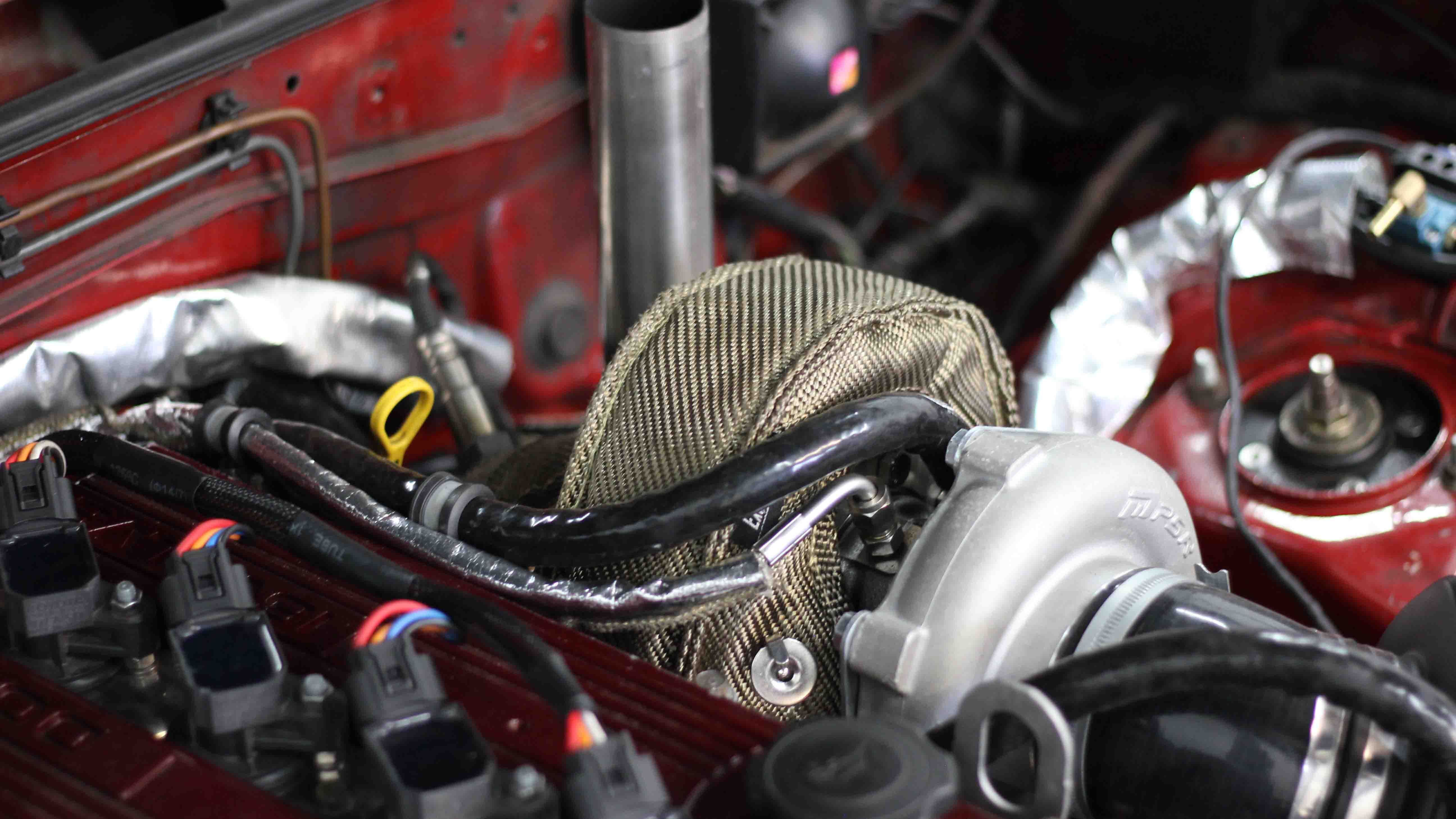
Replace the damaged hose, choose material suited to its fluid and pressure, correct the route and confirm its movement. If heat exposure remains, measure for suitable sleeve. Our sleeve sizing chart explains outside diameter and fitting clearance.
4. Paint or panels discolour or blister
Compare the damaged area with the turbo, manifold or downpipe position. A hot spot opposite the exhaust suggests a heat path, but paint preparation and chemical exposure may also be involved. Check for exhaust leaks and the condition of the original shields.
Correct the cause before refinishing. A suitable mounted shield may be needed for a panel close to exhaust heat. Reflective tape or sheet can help on compatible surfaces facing radiant heat, but cannot repair burnt paint or guarantee that the panel will stay within its limit.
5. You smell hot plastic or rubber
Our Civic breather-line incident is why we check routing before adding insulation. We replaced the damaged hose, rerouted it and protected it with silicone heat sleeve. A smell alone cannot identify which part is failing.
When cold, inspect loose loom sections, hoses, clips and debris around the exhaust. Check for oil or coolant leaks too. Fresh fluid, melted material, exposed wiring or a smell that returns needs repair. Do not treat unknown smoke as normal new-wrap curing.
6. Response falls after traffic or a short stop
Heat soak means parts absorb heat over time. Intake air temperature may rise after idling or a hot restart, but poor response can also come from fuel, ignition, sensor or cooling faults. Use fault codes and temperature logs rather than diagnosing by feel alone.
Compare intake temperature, coolant data and operating conditions. A tuner can check whether temperature corrections are affecting timing and whether the sensor is reading sensibly. Do not disable protective ECU corrections to make the symptom disappear.
If radiant heat reaches the intake, check placement, shielding and airflow. Blanket fitment applies only to a compatible turbine housing; wrap must suit the exhaust. Tape protects a suitable intake surface, not an overheating engine. See our six ways to manage engine bay heat for product roles.
7. The nearest exhaust-side parts keep failing
Repeated damage near a manifold, turbo or downpipe deserves a wider inspection. Check engine mounts, movement, support clips, exhaust leaks, missing shields and wiring routes. If a shield is present but ineffective, inspect its mounting, air gap and coverage rather than assuming it solves the problem.
Use vehicle and component instructions for clearance. There is no single safe distance for all hoses, materials and temperatures. Route and secure parts correctly, repair damage and use protection only where a residual heat risk remains.
Pick the fix after the inspection
Before the next drive, check fixings, service access and engine movement. After use, let the car cool fully and inspect again for movement, rubbing, leaks, lifting adhesive or fresh damage. A new product is not a substitute for confirming the fault is resolved.
Send us clear photos of the heat source, the part at risk and its full route if you need help choosing protection. For coolant faults, use our traffic-overheating diagnosis guide and get workshop help when needed.
Shop Heat Management PartsAbout Exoracing
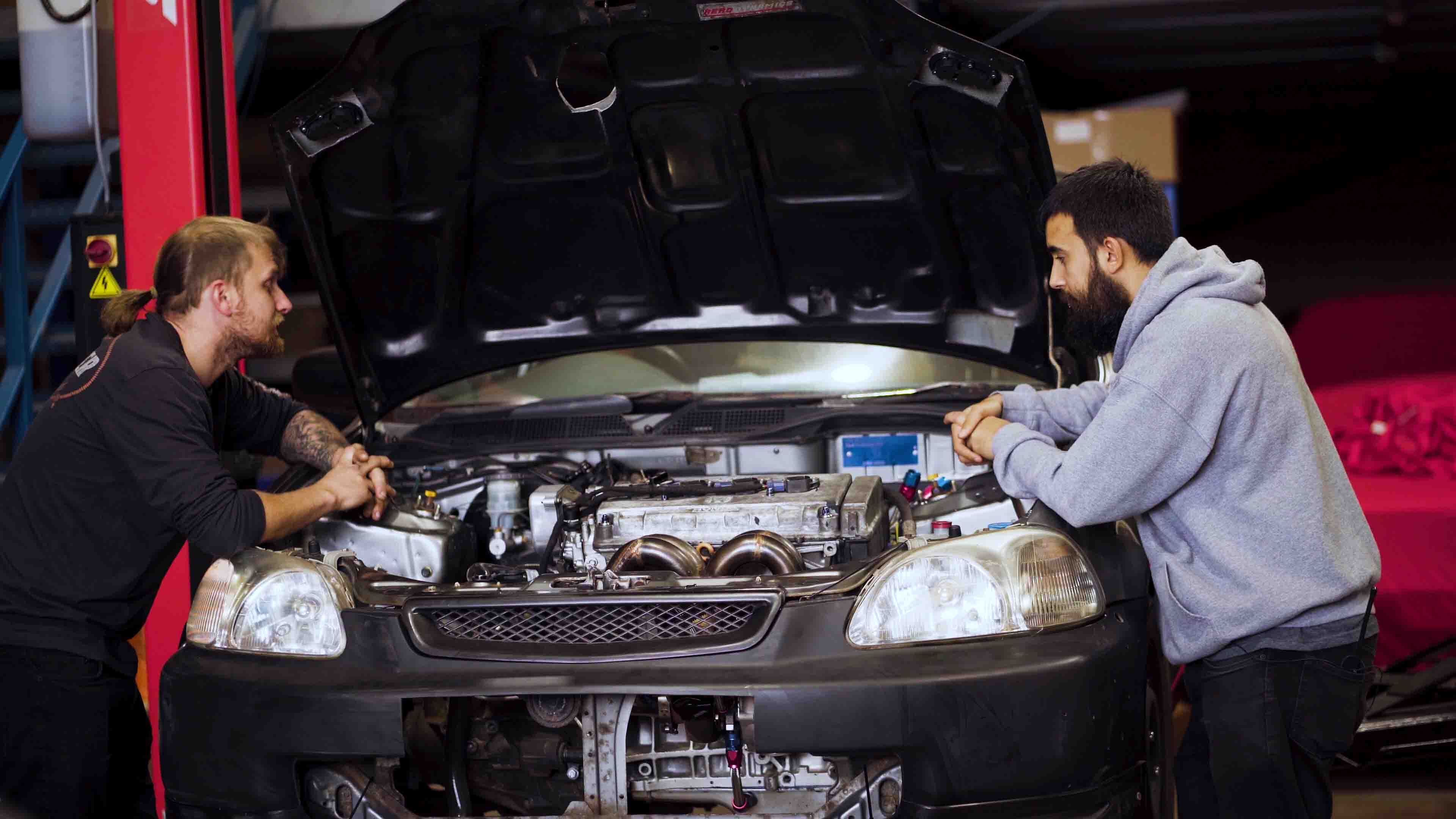
Matt runs Exoracing, a UK business specialising in heat management and performance parts. Since 2018, we have helped enthusiasts and workshops choose parts using practical product knowledge, installations and testing.