Brake Fluid Explained: Types, Boiling Points & When to Change It
Posted by Matthew Marks on 1st Aug 2024
Brake Fluid Explained: DOT 4, DOT 5.1, RBF 660 and Heat Protection
Brake fluid is easy to ignore until the pedal goes soft. This guide explains which brake fluid to use, why boiling point matters and how heat from exhausts, turbos and engine bays can make a good braking setup feel dangerous.
We learned this the hard way on our AWD turbo Civic when poor fluid, undersized brakes and engine bay heat boiled the brake fluid on its first proper test drive.
Shop Brake FluidBrake fluid transfers force from your brake pedal to the callipers, but its real weakness is heat. When the fluid boils, vapour forms inside the hydraulic system, the pedal can go soft and braking performance can disappear quickly.
From our own AWD Civic experience and the performance cars we supply parts for, the mistake is often the same: people upgrade pads, power or track use, but leave old road fluid and exposed brake lines to handle far more heat than they were meant to.
The simple answer
For most normal road cars, a good DOT 4 brake fluid is enough if it matches the manufacturer's specification and is changed regularly.
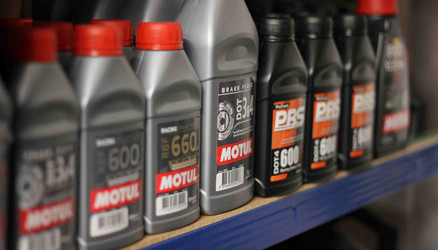
For fast road, track days, upgraded pads or any car that has already suffered a soft pedal from heat, use a higher boiling point DOT 4 racing fluid such as Motul RBF 600 or Motul RBF 660.
If brake lines run close to a manifold, turbo or downpipe, upgrade the fluid and manage the heat around the lines. Better fluid helps, but it does not fix poor routing or direct radiant heat on its own.
- Brake fluid transfers hydraulic pressure from the pedal to the brakes.
- Heat and moisture are the two biggest reasons brake fluid loses performance.
- Boiled brake fluid usually causes a soft, long or sinking pedal.
- Motul RBF 660 has a 328°C dry boiling point and 204°C wet boiling point, making it suitable for high-heat use.
- If brake lines are close to exhaust heat, protect the lines and control the heat source where possible.
Quick Decision: Which Brake Fluid Should You Use?
Use the car's manual as the baseline. Then choose based on how much heat the braking system actually sees.
A sensible service fluid when the car is used normally, and the manufacturer allows DOT 4.
More heat margin for harder driving, upgraded pads and repeated braking.
RBF 660 is the safer starting point if the car has already boiled normal fluid.
Follow the manufacturer's requirements. Do not confuse DOT 5.1 with silicone DOT 5.
 Motul RBF 660 Factory Line 500ml
High boiling point DOT 4 racing fluid for track, fast road and cars that have already boiled normal fluid.
From £22.99
 Motul RBF 600 Factory Line 500ml
Performance DOT 4 racing fluid for fast road and occasional track use where standard fluid is not enough.
From £19.99
What Brake Fluid Does
Brake fluid is a hydraulic fluid. When you press the brake pedal, pressure travels through the fluid to the callipers, which clamp the brake pads against the discs.
The problem is that brake fluid has to work in a hot environment. Hard braking creates heat at the pads and discs. Modified cars can also add engine bay heat from manifolds, downpipes and turbochargers near the brake lines.
When brake fluid absorbs water over time, its boiling point drops. That is why an old bottle of fluid, or old fluid in the car, can fail much sooner than the numbers on the bottle suggest.
Dry vs Wet Boiling Point
Brake fluid boiling point is usually shown in two ways:
Dry boiling point is the boiling point of fresh, unused fluid. Wet boiling point is the boiling point after the fluid has absorbed moisture, usually measured with around 3.7% water content.
For real cars, wet boiling point matters a lot because brake fluid naturally absorbs moisture over time. That is why regular fluid changes matter even if the car has not done many miles.
Older or basic road applications where specified.
Most road and performance cars where DOT 4 is specified.
Modern systems where DOT 5.1 or low viscosity behaviour is specified.
Track, fast road and high heat builds needing more boiling point margin.
DOT 3, DOT 4, DOT 5 and DOT 5.1 Explained
DOT 3 brake fluid
DOT 3 is usually found in older or basic road applications. It has lower minimum boiling points than DOT 4 and is not the fluid we would choose for a hard-driven performance car unless the vehicle specifically requires it.
DOT 4 brake fluid
DOT 4 is the common choice for many road and performance cars. Standard DOT 4 is fine for normal use, but racing DOT 4 fluids such as Motul RBF 660 brake fluid go well beyond the minimum boiling point requirement.
DOT 5 brake fluid
DOT 5 is silicone based and must not be treated as an upgrade for normal DOT 3, DOT 4 or DOT 5.1 systems. It is not compatible with most conventional brake fluid setups, so only use it if the braking system is designed for it.
DOT 5.1 brake fluid
DOT 5.1 is glycol based like DOT 3 and DOT 4, but it has different viscosity behaviour and higher minimum boiling points. If your vehicle specifies DOT 5.1, use a suitable DOT 5.1 fluid such as Motul DOT 5.1 brake and clutch fluid.
How Heat Makes Brake Fluid Fail
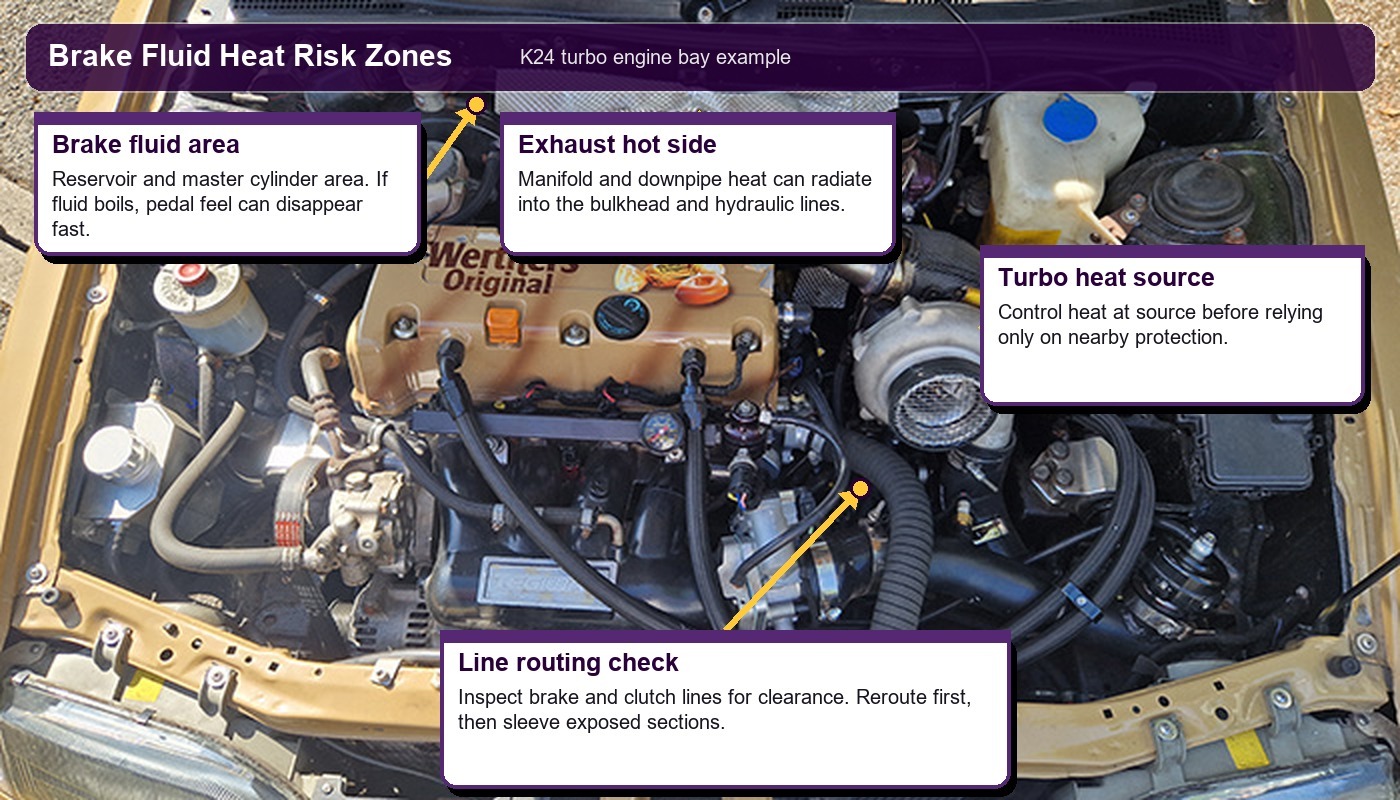
Brake fluid is heated in two main ways. The first is braking heat from the pads, discs and callipers. The second is surrounding heat from the engine bay, especially if brake lines run near a manifold, turbo or downpipe.
On many K-swapped Civics and compact turbo builds, the exhaust side of the engine bay can sit close to brake lines, clutch lines, proportioning valves and reservoirs. We see this kind of layout become a problem when the car is driven hard and the lines are left unprotected.
The correct order is simple: identify the heat source, check the line routing, control exhaust or turbo heat where possible, then protect the vulnerable line with the right product.
If you are deciding between heat products, our heat shield vs exhaust wrap vs heat tape guide explains which product fits each heat problem. For line protection, the silicone fibreglass heat sleeve installation guide is the best next step. If the exhaust itself is the heat source, use the exhaust wrap calculator before ordering wrap.
A Heat sleeve protects vulnerable lines, but poor routing should be corrected first, along with containing the heat at the manifold using something such as an exhaust wrap.
Use the right turbo blanket or exhaust wrap where suitable before relying only on nearby component protection.
Reflective products work on surfaces facing radiant heat, not as exhaust wrap.
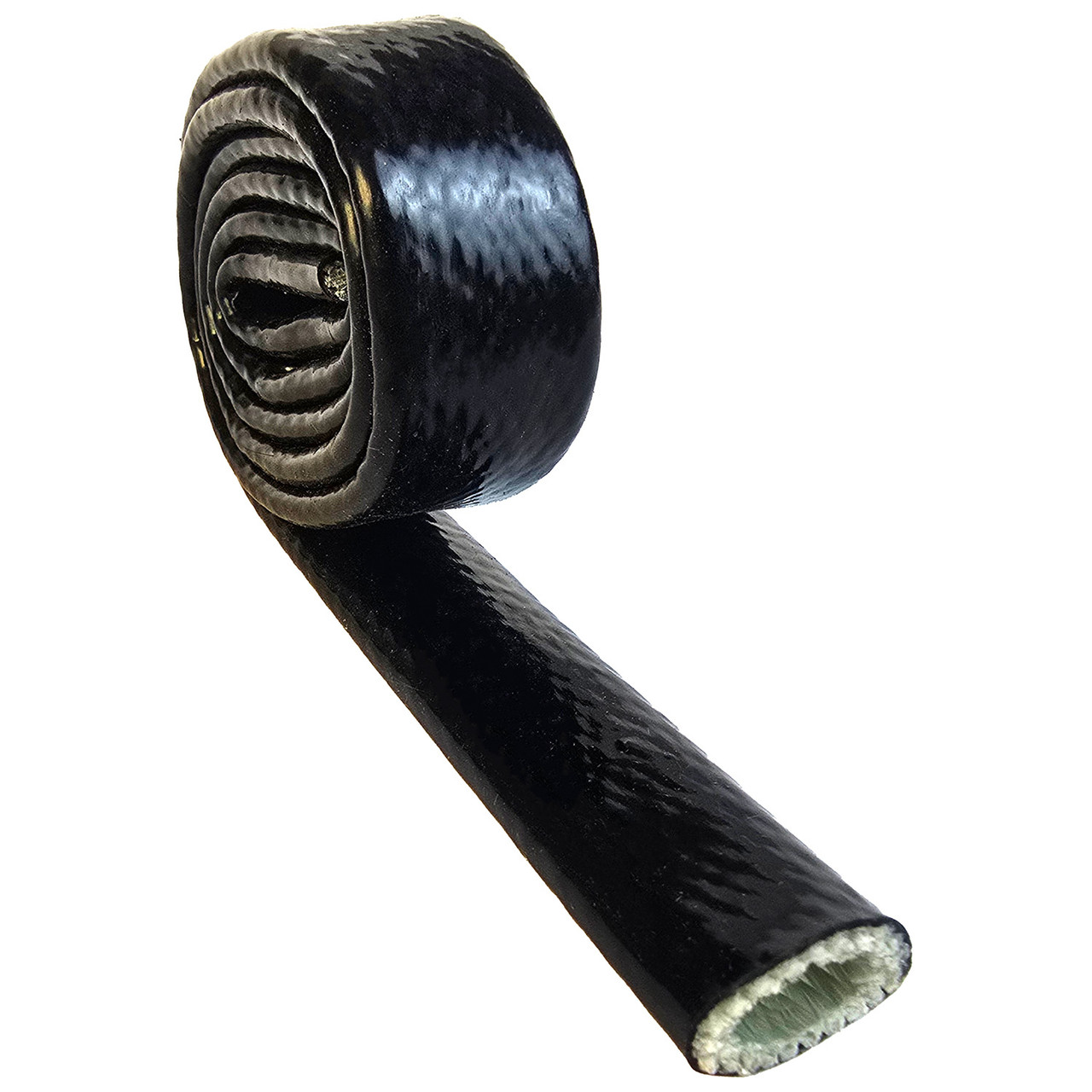 Exoracing Silicone Fibreglass High Temperature Heat Sleeve 0.5m
Direct protection for brake lines, clutch lines, fuel lines, hoses and wiring close to exhaust heat.
From £14.99
 Exoracing Titanium or Carbon Exhaust Wrap
Source control for manifolds, downpipes and hot exhaust pipework near brake components.
From £24.99
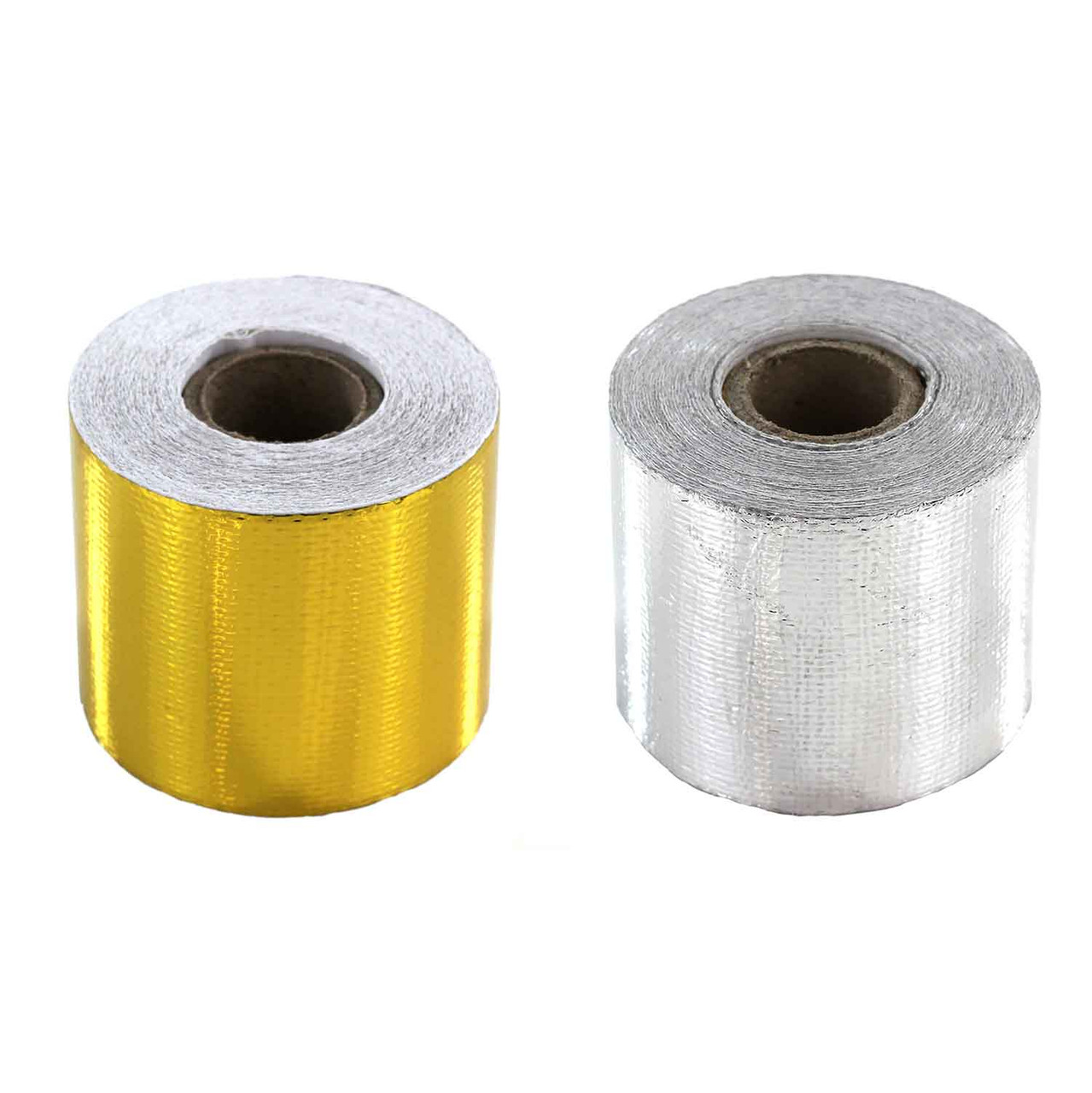 Exoracing Gold and Silver Heat Reflective Tape
Reflective protection for panels, reservoirs and surfaces facing radiant heat.
From £29.99
What Happens If Brake Fluid Boils?
When brake fluid boils, vapour bubbles form in the braking system. Vapour compresses when you press the pedal, so the pedal can suddenly feel soft, long or sink further than normal.
This is different from pad fade. Pad fade usually means the pedal still feels firm but the car does not slow down properly. Boiled fluid usually gives a soft pedal because the hydraulic system can no longer transfer pressure properly.
On our AWD Civic, the warning was immediate. The pedal went soft under hard braking, braking performance dropped and we had to stop driving until the system cooled. That is why we treat brake fluid choice and heat protection as safety items, not cosmetic upgrades.
Signs Your Brake Fluid Needs Changing
Bleed the system, inspect for leaks and consider a full fluid change.
This can indicate a leak, air, failed component or serious hydraulic issue.
Colour is not a perfect moisture test, but dirty fluid is a strong service warning.
Upgrade fluid, check brake cooling and inspect line routing near heat sources.
How To Check Brake Fluid
You can do a basic visual check at home, but treat it as a quick inspection rather than a full brake system diagnosis.
- Park the car on level ground and let it cool.
- Find the brake fluid reservoir in the engine bay.
- Check the level against the minimum and maximum marks.
- Check the colour. Fresh fluid is usually clear to light amber, while old fluid can look darker.
- Inspect around the reservoir, master cylinder, callipers and lines for leaks.
- If the pedal feels wrong, the car has more than likely boiled the brake fluid, or if the service history is unknown, flush the fluid rather than just topping it up.
Common Mistakes That Cause Brake Fluid Problems
Better brake pads can create more heat, so the fluid needs enough boiling point margin.
Brake lines close to exhaust heat may need rerouting, source control or heat sleeve.
Do not mix DOT 5 silicone fluid with conventional glycol-based systems.
Old fluid absorbs moisture. Topping up does not restore the boiling point of the whole system.
Common Concerns
Is Motul RBF 660 overkill for road use?
For gentle daily driving, it may be more than you need. For fast road, track days, upgraded pads or any car that has already boiled fluid, RBF 660 is a sensible upgrade because it gives more heat margin.
Will better brake fluid fix brake fade?
It depends on the type of fade. If the pedal is soft, fluid is a likely issue. If the pedal stays firm but the car stops poorly, the pads, discs, cooling or tyre grip may be the bigger problem.
Can heat sleeve melt on brake lines?
Heat sleeve is for protecting lines, hoses and wiring from nearby heat. It should not be used as exhaust wrap and should not be fitted over leaking, damaged or contaminated parts. If the line is too close to the exhaust, improve the routing first.
Brake Fluid Maintenance Checklist
- Check the brake fluid level regularly and investigate any sudden drop.
- Change fluid every 1 to 2 years for normal use, or more often for track and hard use.
- Use the fluid type specified by the manufacturer unless you have a clear reason to upgrade within compatible specifications.
- If the pedal goes soft when hot, flush the fluid and inspect heat exposure around the lines.
- If lines run near exhaust heat, consider heat sleeve, exhaust wrap, reflective tape or rerouting depending on the problem.
- Never ignore a sinking pedal, fluid leak or unexplained fluid loss.
Recommended Products
If you are servicing a normal road car, use the correct specification and keep the fluid fresh. If the car is used hard or has already boiled fluid, start with a higher boiling point racing DOT 4 fluid and then inspect the heat exposure around the brake lines.
Motul RBF 660 Factory Line 500ml
The fluid upgrade we would choose first for hard use, track days and boiled fluid problems.
From £22.99
 Motul DOT 5.1 Brake Fluid 500ml
A suitable option for vehicles that specifically require DOT 5.1 brake and clutch fluid.
From £14.99
Brake Fluid FAQs
How often should brake fluid be changed?
For normal road use, 1 to 2 years is a sensible guide unless the manufacturer says otherwise. Track cars, hard-driven cars and cars that have suffered fade may need more frequent changes.
Is DOT 5.1 the same as DOT 5?
No. DOT 5.1 is glycol based like DOT 3 and DOT 4. DOT 5 is silicone based and should only be used in systems designed for it.
Can engine bay heat boil brake fluid?
Yes, especially if brake lines run close to manifolds, turbos or downpipes. Braking heat is still the main load, but radiant engine bay heat can reduce the margin.
Should I upgrade brake fluid or brake pads first?
If the pedal goes soft, fluid is a priority. If the pedal stays firm but the car does not slow properly, pads and discs may be the bigger issue. For track use, pads and fluid should be matched together.
Can I mix different brake fluids?
Do not mix fluid types unless the manufacturer confirms compatibility. Never mix silicone DOT 5 with normal glycol-based brake fluid systems.
Do braided brake lines stop fluid boiling?
Braided lines can improve pedal feel, but they do not replace good fluid, correct routing or heat protection. If the line is exposed to exhaust heat, the heat problem still needs fixing.
Conclusion: Fluid First, Heat Control Next
If your car is used gently, fresh correct-spec fluid is usually enough. If it is driven hard, used on track or has already shown a soft pedal when hot, move to a higher boiling point fluid such as Motul RBF 660.
Then inspect the parts around the brake system. If brake lines, clutch lines or reservoirs sit near exhaust heat, look at silicone heat sleeve, exhaust wrap or reflective heat tape depending on whether you need line protection, source control or surface protection. You can also browse the full heat management range if the car needs more than brake fluid alone.
The safest setup is not just the most expensive fluid. It is the correct fluid, fresh service, good bleeding, sensible routing and heat management that matches the car.
Shop Brake FluidAbout the Author
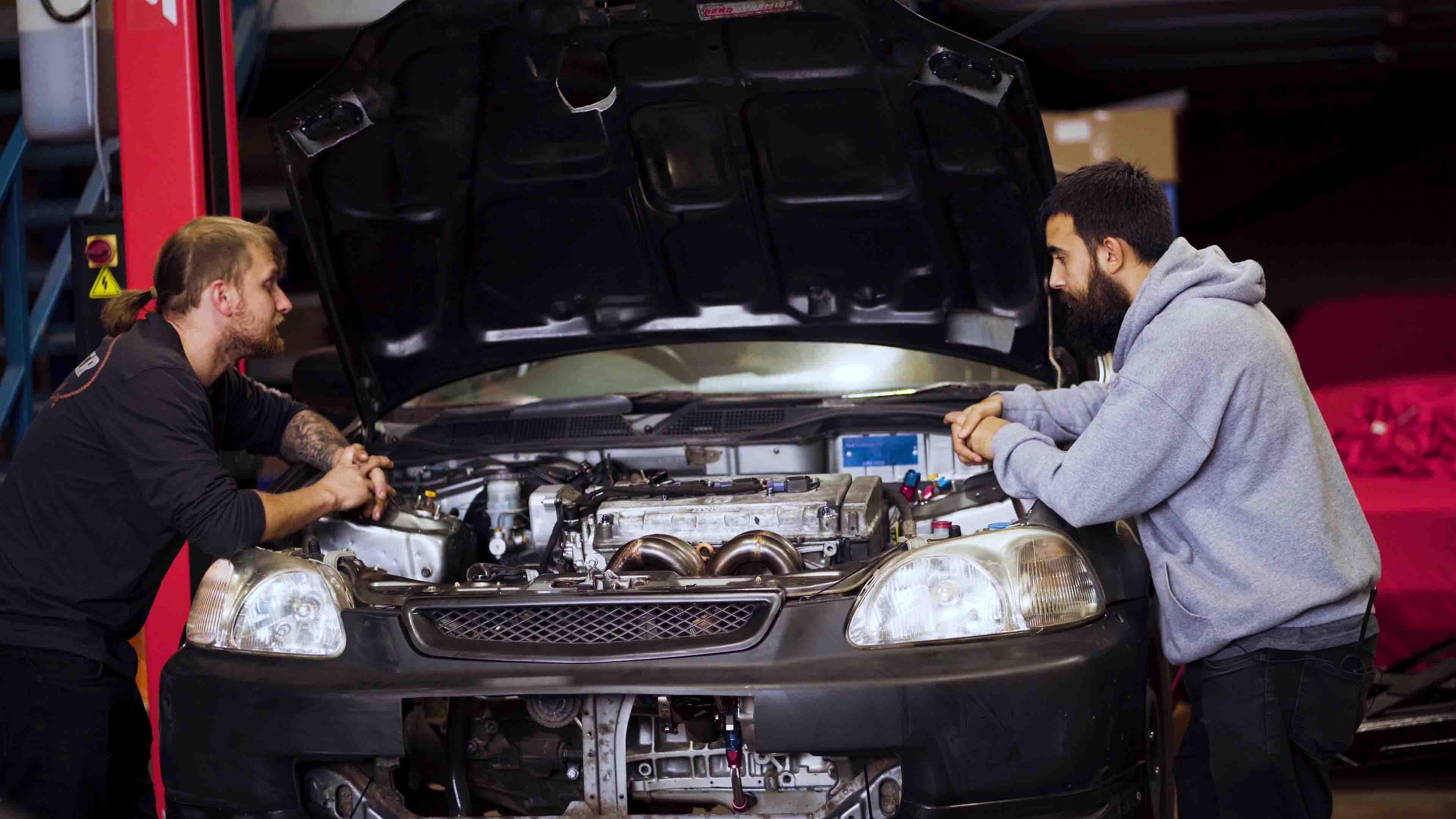
Exoracing is a UK-based performance parts and heat management specialist helping enthusiasts and workshops since 2018.
Our advice comes from product testing, customer builds, our own cars and the practical problems we see when modified cars are driven hard.