
Do Turbo Blankets Work? Blowtorch Test With Thermal Data
Posted by Matthew Marks on 31st Dec 2025
Do Turbo Blankets Work? Blowtorch Test With Thermal Data
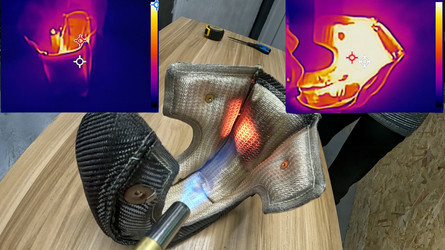
We put an Exoracing turbo blanket under direct propane flame, logged the outside surface temperature with a thermal camera, then inspected the blanket to see what survived.
Tested by Exoracing, a UK heat management and performance parts specialist helping road, track and high-power turbo builds since 2018.
Shop Turbo BlanketsA turbo blanket is meant to do one main job: keep more heat inside the turbine housing so less radiant heat spreads into the engine bay. That sounds simple, but plenty of people still ask whether turbo blankets actually work, whether they are safe, and whether the temperature reduction is real or just marketing.
We wanted to answer that with a test you can see. We used an Exoracing Turbo Blanket V3, a propane blowtorch and a thermal imaging camera to measure how the outside of the blanket behaved during direct flame exposure.
This article shows the method, the temperature readings, the material inspection and the limitations of the test, so you can decide whether a turbo blanket makes sense for your own engine bay.
The simple answer
Yes, turbo blankets work when they are correctly sized, fitted to a clean turbo and used for the right job. They reduce radiant heat from the turbine housing and slow heat transfer into the engine bay.
In our blowtorch test, the thermal camera reached its 580°C maximum on the flame-facing side, while the outside surface was 45.5°C at the same point in the first run. That is a measured temperature difference of 534.5°C, or a minimum calculated reduction of 92.15% from the camera-limited hot-side reading.
The test was not perfect, so we do not treat it as a universal real-car percentage. What it does prove clearly is that the blanket acted as a serious thermal barrier and did not ignite or fall apart under extreme localised heat.
The hot side reached the thermal camera limit, so the true peak may have been higher.
The engine-bay-facing side stayed far cooler than the flame-facing side.
Calculated from the 580°C camera-limited hot side and 45.5°C outside reading.
A minimum calculated reduction, not a universal claim for every car.
The outside surface remained relatively low after sustained flame exposure.
This test proves the thermal barrier effect, but not an exact maximum hot-side temperature.
- We tested the Exoracing Turbo Blanket V3 with direct propane flame and thermal camera readings.
- The first run showed at least a 534.5°C difference between the hot side camera limit and the outside surface.
- The outside surface reached 62.3°C after three minutes in the logged outside-temperature run.
- The stainless steel mesh was locally damaged, but the blanket did not catch fire, and the outer weave did not visibly fail.
- A turbo blanket is useful for turbo heat source control, but it is not a shortcut for fixing oil leaks, poor routing or damaged nearby parts.
Watch: Our turbo blanket blowtorch test shows the direct flame exposure, thermal camera readings and post-test inspection.
Why Turbo Heat Becomes A Problem
The hot side of a turbocharger sits in the exhaust stream, so it sees far higher temperatures than most parts in the engine bay. Once the turbine housing heats up, it radiates heat into anything nearby: wiring, coolant hoses, oil lines, brake lines, intake pipework, bonnet paint, reservoirs and plastic covers.
That is why source control matters. If you reduce the heat leaving the turbo housing, the rest of the engine bay has less radiant heat to absorb. From our own testing and support questions, the most common mistake is trying to protect one nearby part while ignoring the main heat source right next to it.
A turbo blanket will not fix every heat issue on its own, but it is often the first product to consider when the turbo housing is the main source of heat.
Control heat at the source before protecting nearby parts.
Wrap the hot pipework, especially the first section after the turbo.
Repair damaged parts and add clearance before covering them.
Apply to clean surfaces facing radiant heat, not to exhaust parts.
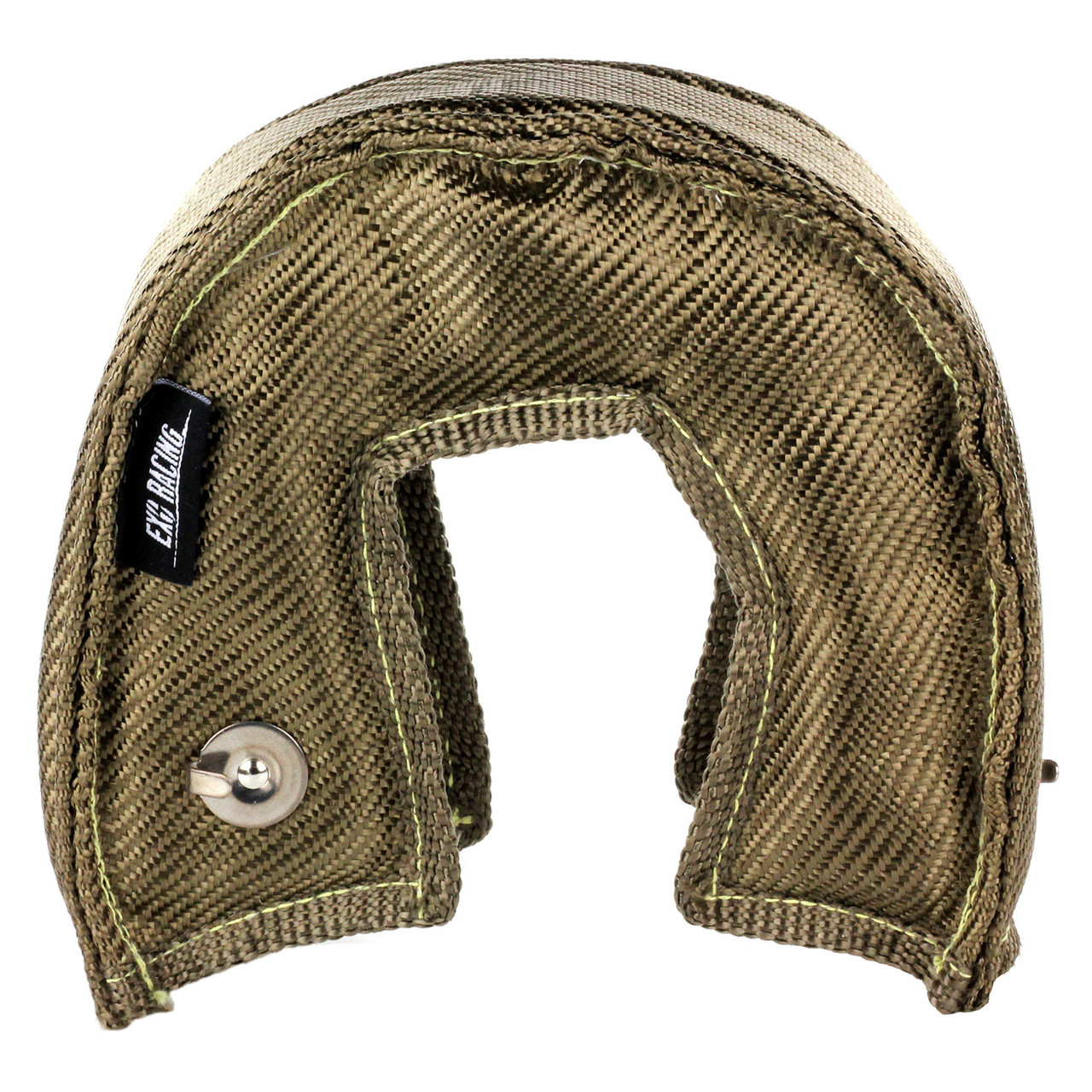 Exoracing Turbo Blanket V3
Contains turbine housing heat to reduce radiant heat around the turbo.
From £119.99
 Exoracing Titanium or Carbon Exhaust Wrap
Reduces radiant heat from manifolds, downpipes and hot exhaust pipework.
From £24.99
What The Turbo Blanket Is Made From
A turbo blanket only works if the layers do different jobs. The insulation slows heat transfer, while the inner mesh, outer weave and stitching keep the blanket stable enough to survive real engine bay use.
Stainless steel wire mesh
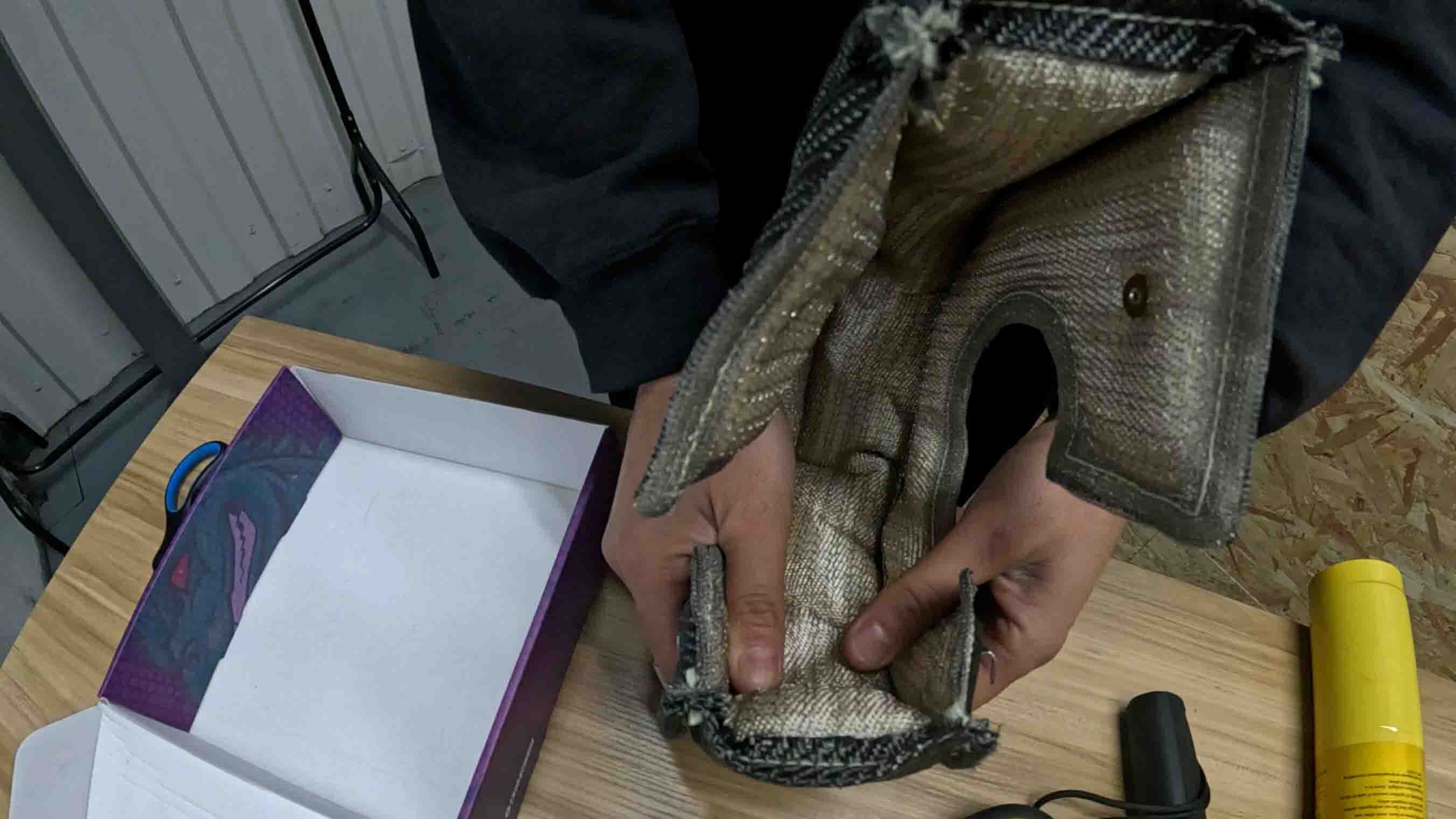
The turbo-facing side uses stainless steel wire mesh. This gives the blanket structure, protects the insulation from abrasion and helps the inner face survive contact with a very hot turbine housing.
Silica insulation wool core
The silica insulation wool is the main thermal barrier. Its job is to slow heat transfer from the hot inner face to the outside surface facing the engine bay.
High-temperature exterior weave and stitching
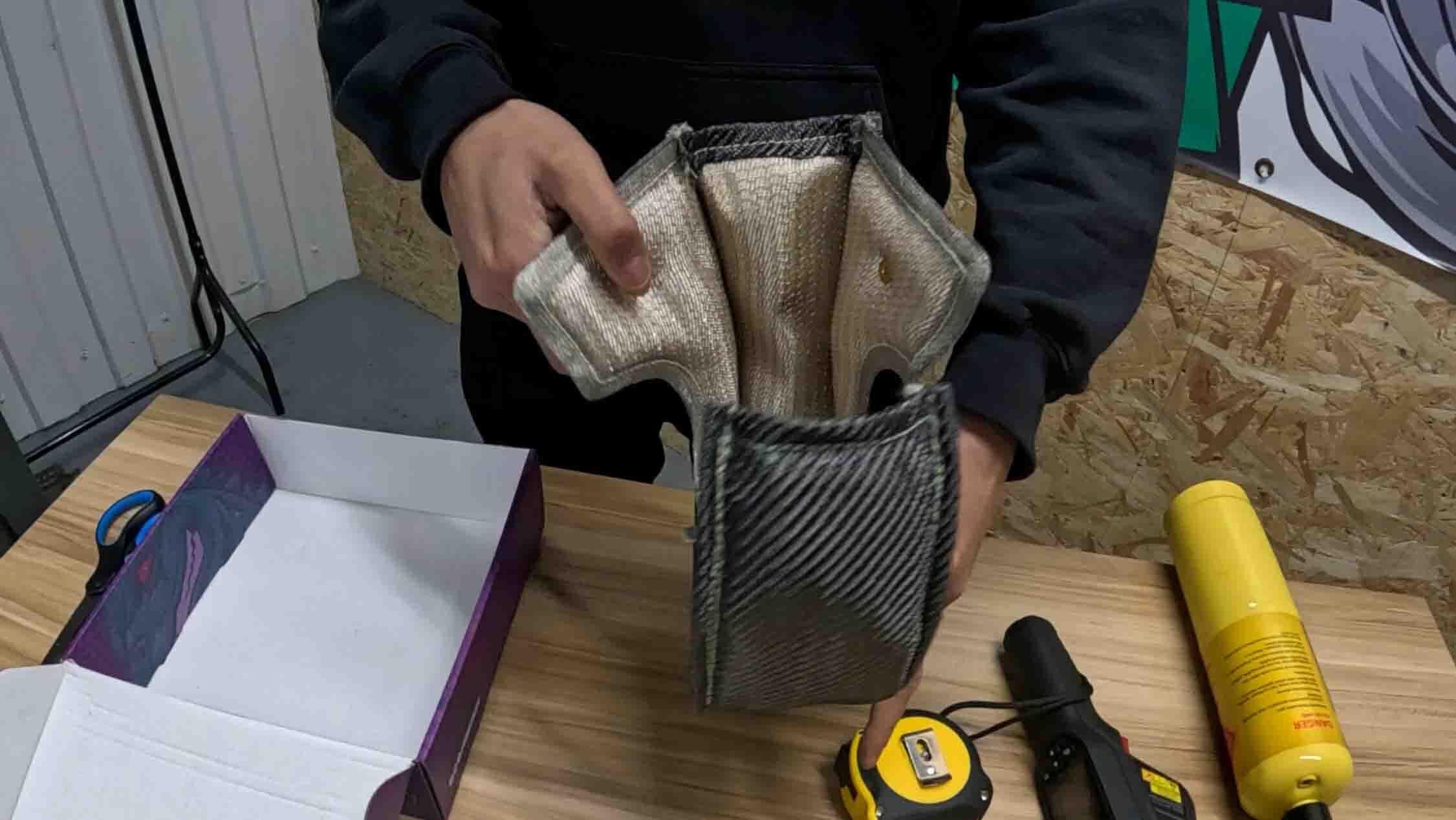
The outer weave gives the blanket its finish and helps it survive vibration, heat cycles and handling. The high-temperature stitching keeps the layers together so the blanket does not split apart after repeated use.

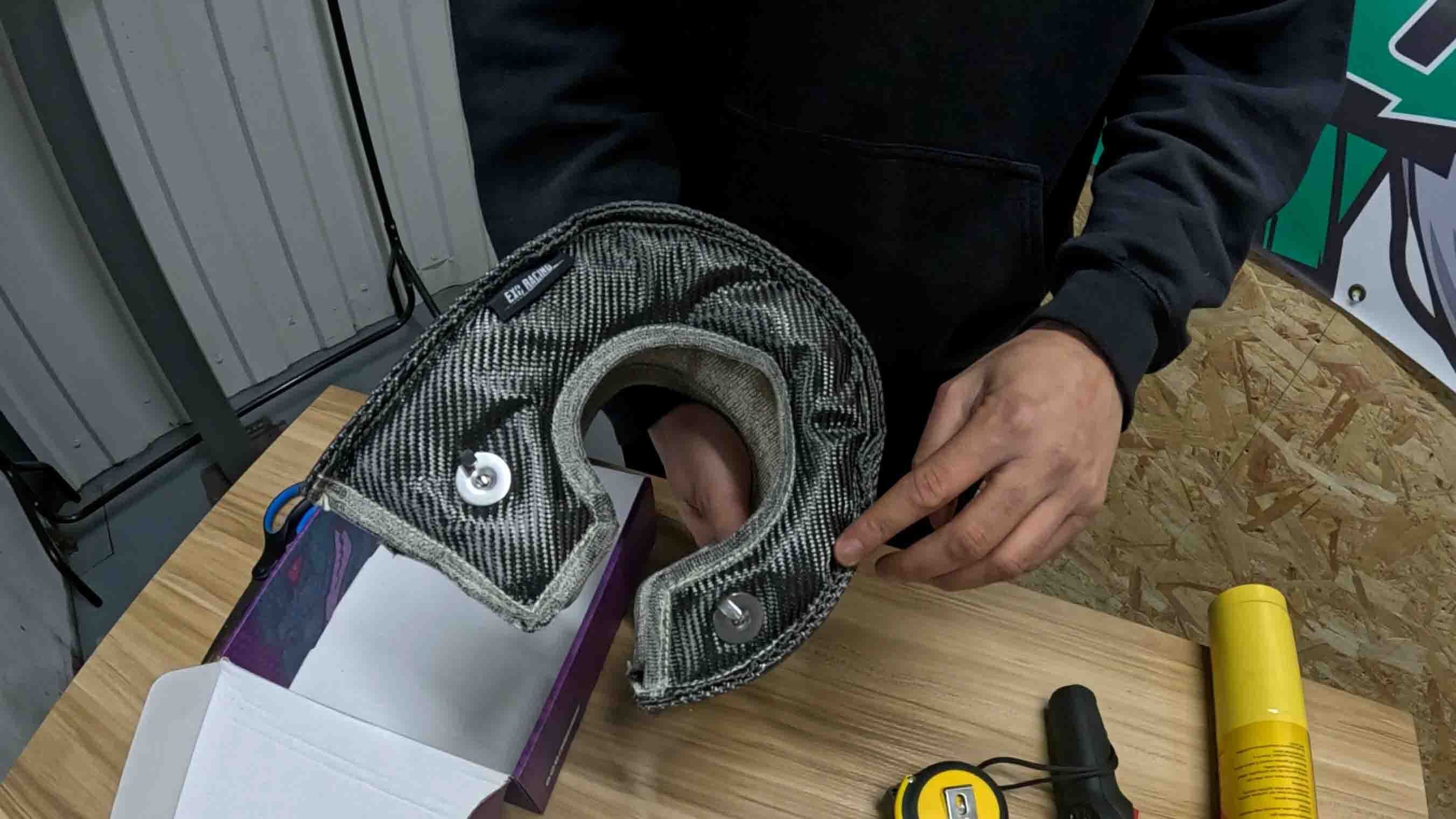
Turbo blanket temperature rating
The Exoracing Turbo Blanket V3 product specification lists a working temperature of 1200°C / 2100°F. That rating matters because a turbo blanket sits directly around the turbine housing, where temperatures can be far higher than the rest of the engine bay.
Temperature rating is not the only thing to look at, though. A blanket also needs the right shape, enough insulation density, a durable inner face and stitching that does not break down after repeated heat cycles. A material can look good on paper but still be poor in use if the fitment is loose, the insulation is thin, or the edges fail.
That is why we test the complete blanket rather than only talking about raw material ratings. On a real car, the blanket has to deal with heat, vibration, awkward access, repeated removal and refitting, and the tight packaging common on turbo builds.
Our Blowtorch Test Method
We used a bench test because it makes the heat source easy to see and the outside temperature easy to measure. A real turbo spreads heat around the turbine housing, while a blowtorch creates a more localised, aggressive hotspot, so this is best viewed as an abuse test rather than a perfect real-car simulation.
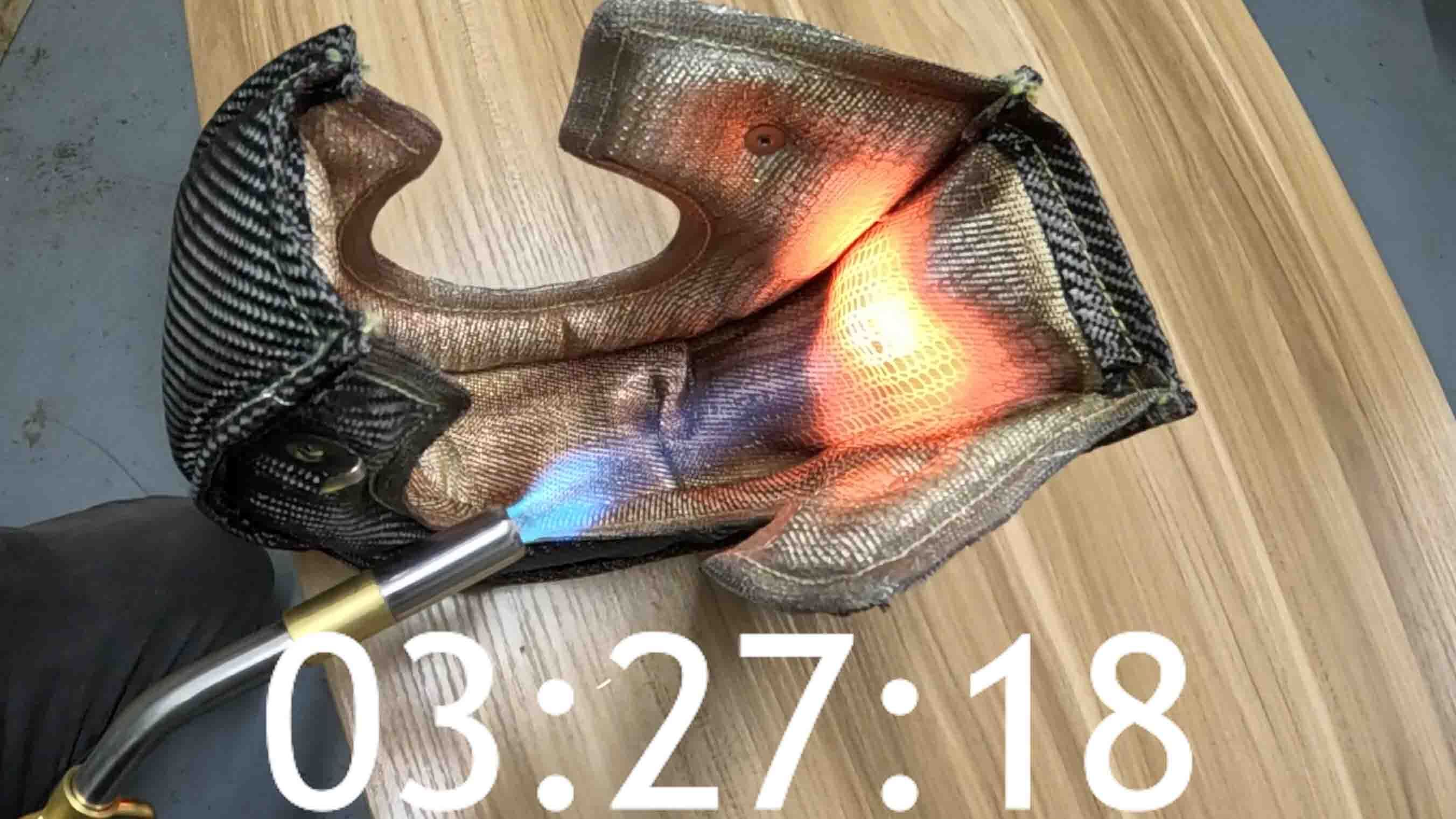
Test equipment
- 1 x Exoracing Turbo Blanket V3
- 1 x propane blowtorch
- 1 x thermal imaging camera
- 1 x phone timer
What we controlled
- The same blanket and the same thermal camera were used throughout.
- The camera measured the outer face of the blanket, the side that would face the engine bay.
- Readings were logged at fixed time intervals to show how the cold side changed over time.
- The test was completed in one session to reduce ambient changes.
How hot is a propane blowtorch compared with a turbo?
A propane blowtorch can produce very high flame temperatures, often quoted up to around 1900°C under ideal conditions. That does not mean the blanket surface sees 1900°C evenly during the test, because distance, flame shape, airflow and contact area all change the actual heat entering the material.
A turbocharger is different. The heat is generated by exhaust gas passing through the turbine housing, so the housing heats over a broader area rather than being hit by one sharp flame point. On hard-used turbo cars, exhaust gas temperatures can be extremely high, but the real engine bay result depends on load, fuel, mapping, turbo size, driving style, airflow and how long the car stays on boost.
That makes the blowtorch useful as an extreme material test, not a perfect copy of a road or track session. If a blanket can resist direct flame and keep the outside surface dramatically cooler in this setup, it gives a strong indication that the layers are doing their job. The real-car proof still comes from fitting it to a turbo and checking nearby component temperatures, which is why our RS4 test is a useful companion article.
Good for abuse testing materials, but harsher in one small area than the normal turbo heat spread.
More representative of real radiant engine bay heat, especially during sustained boost.
Vehicle speed, fans and packaging all change how quickly surrounding parts heat soak.
Turbo Blanket Temperature Test Results
Our original plan was to measure the hot side and cold side across the full test. In practice, the thermal camera hit its 580°C maximum almost immediately on the flame-facing side, and the blowtorch setup caused some flame stability issues. Rather than pretend the test was perfect, we separated the useful findings from the limitations.
The strongest measured comparison from the first run was at 1 minute 15 seconds: the hot side had reached the camera's 580°C maximum, while the outside surface was 45.5°C. Because the hot side may have been hotter than the camera could display, the 92.15% reduction is a minimum calculation based on the camera limit, not an exact maximum result.

The real hot-side surface may have been higher because the camera capped out.
The engine-bay-facing side stayed far cooler than the flame-facing side.
Calculated from the camera-limited 580°C hot-side reading and 45.5°C cold-side reading.
Outside surface temperature over three minutes
Because the hot side exceeded the camera range, we focused the longer logged run on the outside surface temperature. This shows what the engine-bay-facing side did over time while the blanket was under sustained direct flame exposure.
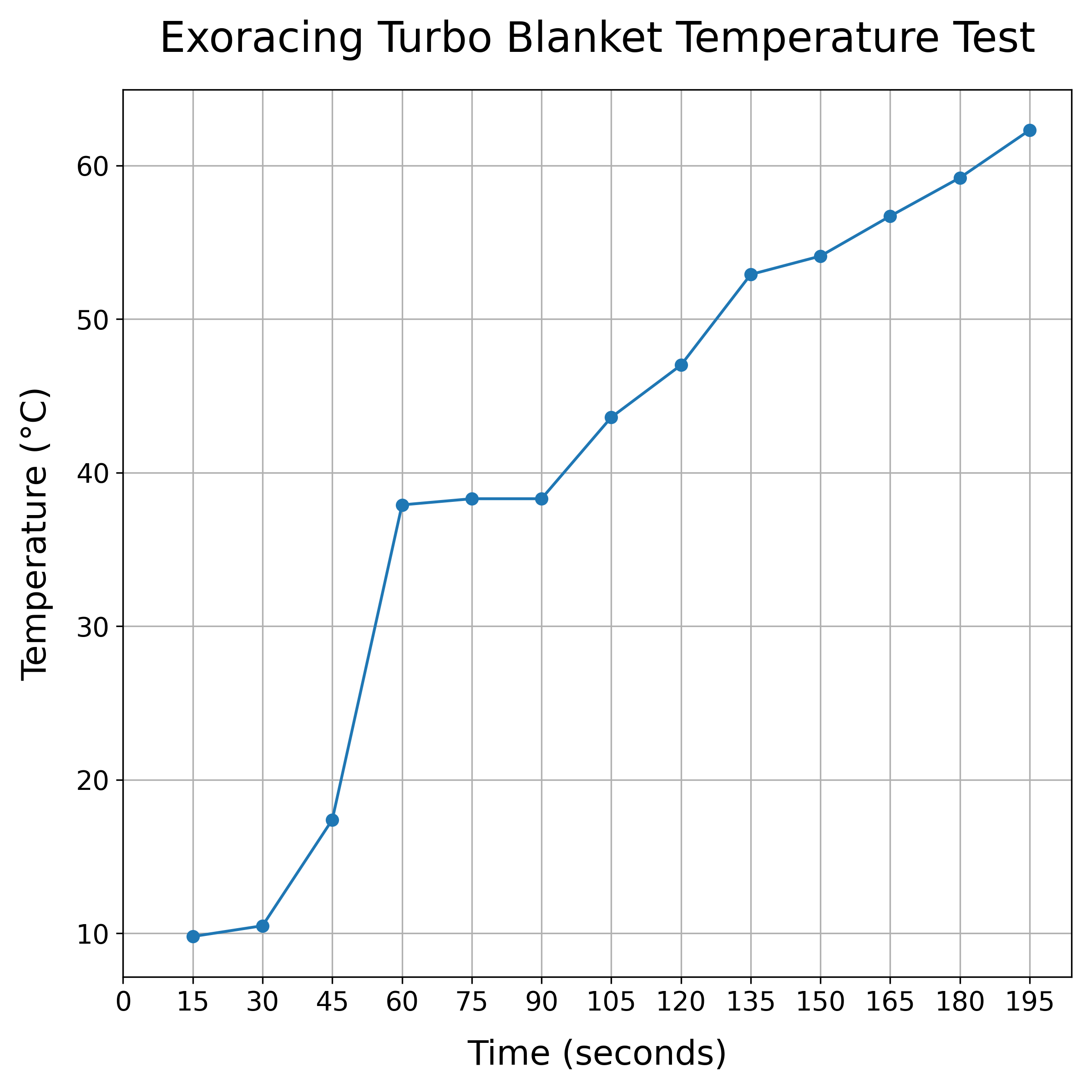
The temperature spike in the middle of the graph came from the flame position changing during the test. Scott moved closer while correcting the torch issue, then moved back again. That is exactly why we are careful with the wording: the test is strong proof of heat-blocking behaviour, but it is not a laboratory-certified temperature rating.
What this test can and cannot prove
This test can prove that the blanket created a large temperature difference across its layers under direct heat, that the outside surface stayed much cooler than the flame-facing side, and that the blanket did not ignite or collapse during our test. Those are the important practical findings.
It cannot be proven that every car will see the same percentage reduction, because every engine bay is different. Turbo size, exhaust gas temperature, manifold layout, downpipe position, airflow, bonnet venting, heat shield layout and the distance to nearby parts all change the result.
It also cannot give an exact hot-side peak temperature because our thermal camera is capped at 580°C. That is why we describe the 92.15% figure as a minimum calculated reduction from the camera-limited reading, not an exact universal claim.
The outside surface readings are useful because they were within the camera range.
We know it reached at least 580°C, but the true peak may have been higher.
Use the test to understand the thermal barrier effect, not to predict an exact result on every build.
What Happened To The Blanket After The Test?
Temperature reduction is only useful if the blanket survives. After the flame test, we checked the stitching, outer weave, mesh and insulation for obvious failure.
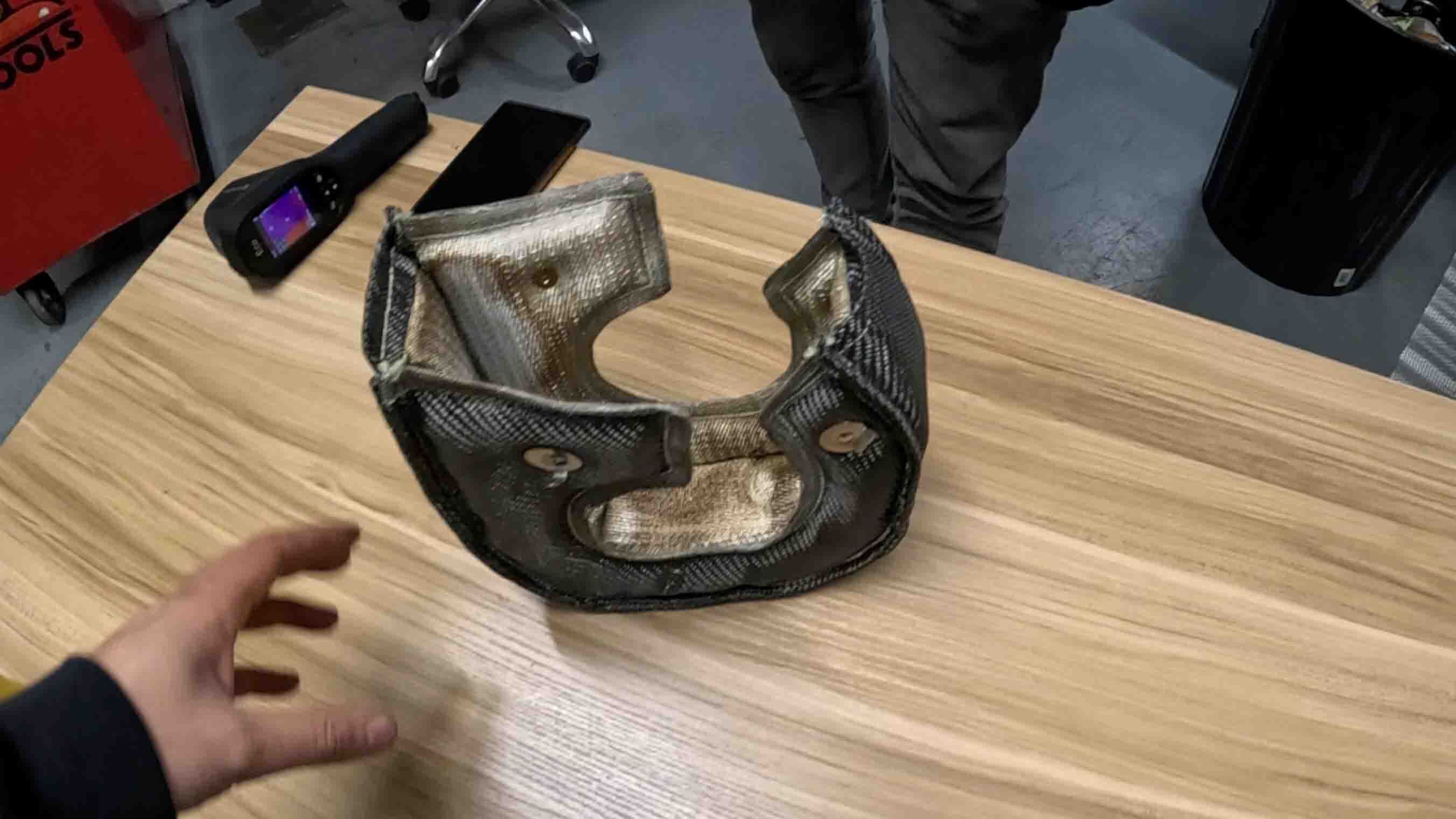
The harshest visible damage was on the stainless steel mesh, where one localised area melted. Stainless steel typically melts around the 1400°C region, depending on grade, so this indicates the inner face saw extreme local heat. That is more aggressive than most normal engine bay use and more concentrated than the heat spread around a turbo housing.
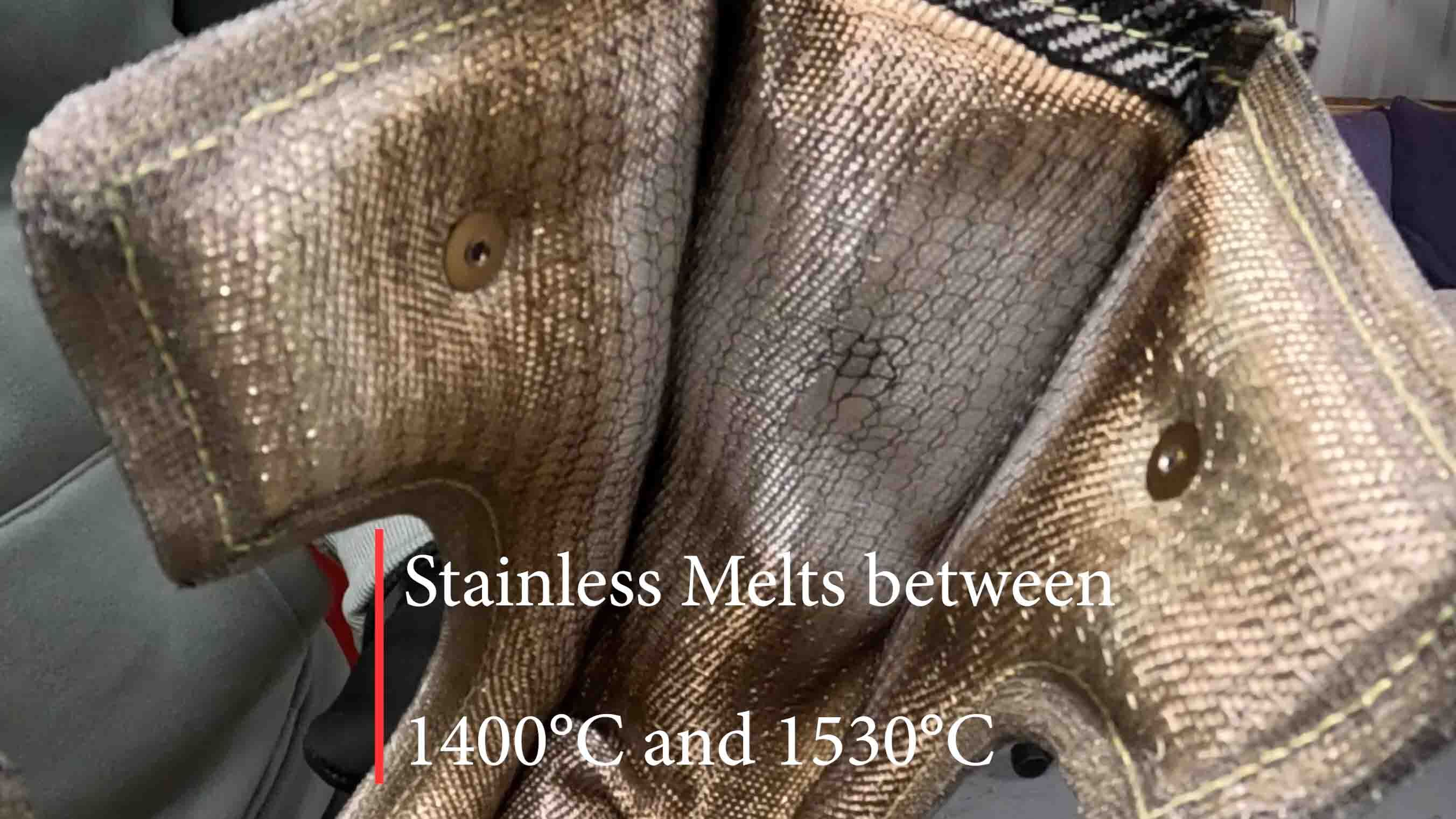
The important part is what did not happen. The blanket did not ignite, the outer face did not visibly burn through, and the outside weave still looked clean after the test. The silica insulation also remained structurally intact in the inspected area.

The outside surface staying cool enough for the very scientific beard check was funny, but the serious point is simple: the outer face remained far cooler than the flame-facing side.

Watch: Our older material test gives extra context on how the exterior material behaves under direct heat exposure.
What This Means For A Real Engine Bay
A blowtorch is not the same as a turbocharger. On a car, heat is spread around the turbine housing, airflow changes with speed and fan operation, and temperatures rise and fall with throttle use. That means you should not copy the exact bench-test temperatures and expect the same numbers on every car.
What you can take from the test is the principle: a properly built turbo blanket creates a thermal barrier between the hot turbine housing and the engine bay. That helps reduce radiant heat reaching parts around the turbo.
This is especially useful on tight turbo setups, track cars, drift cars, high-power builds and modern engine bays where hoses, wiring and intake pipework sit close to the hot side. Our before-and-after turbo blanket test on a 550bhp RS4 is a useful next read because it shows a real-car engine bay test rather than a bench flame test.
Turbo blanket pros and cons
Most of the debate around turbo blankets comes from treating them as either perfect or pointless. The more useful answer is that they are excellent for the right problem, but they still need sensible installation and a healthy engine bay.
This page focuses on our blowtorch and thermal camera test data. If you want the broader buying decision, our guide to whether turbo blankets are worth it covers benefits, myths and when they make sense in more detail.
That means nearby parts have less radiant heat to absorb.
Especially where wiring, hoses, intake pipework or bodywork sit close to the turbo.
Oil contamination, broken wiring and poor routing need fixing first.
A poor fit can leave hot areas exposed or interfere with nearby components.
When You Should And Should Not Use A Turbo Blanket
A turbo blanket is the right choice when the turbine housing is the main heat source and nearby parts are suffering from radiant heat. It is not the right first fix if the car has leaks, poor routing, damaged wiring or a blanket that does not fit the turbo properly.
Add heat sleeve if the vulnerable part is still close to the hot side.
Do not fit a blanket over contamination or fluid residue.
A loose blanket can move, and a small one may leave the housing exposed.
A turbo blanket is for turbo turbine housings, not manifolds or downpipes.
 Exoracing Silicone Fibreglass High Temperature Heat Sleeve 0.5m
Protects hoses, wiring and lines that sit near turbo or exhaust heat.
From £14.99
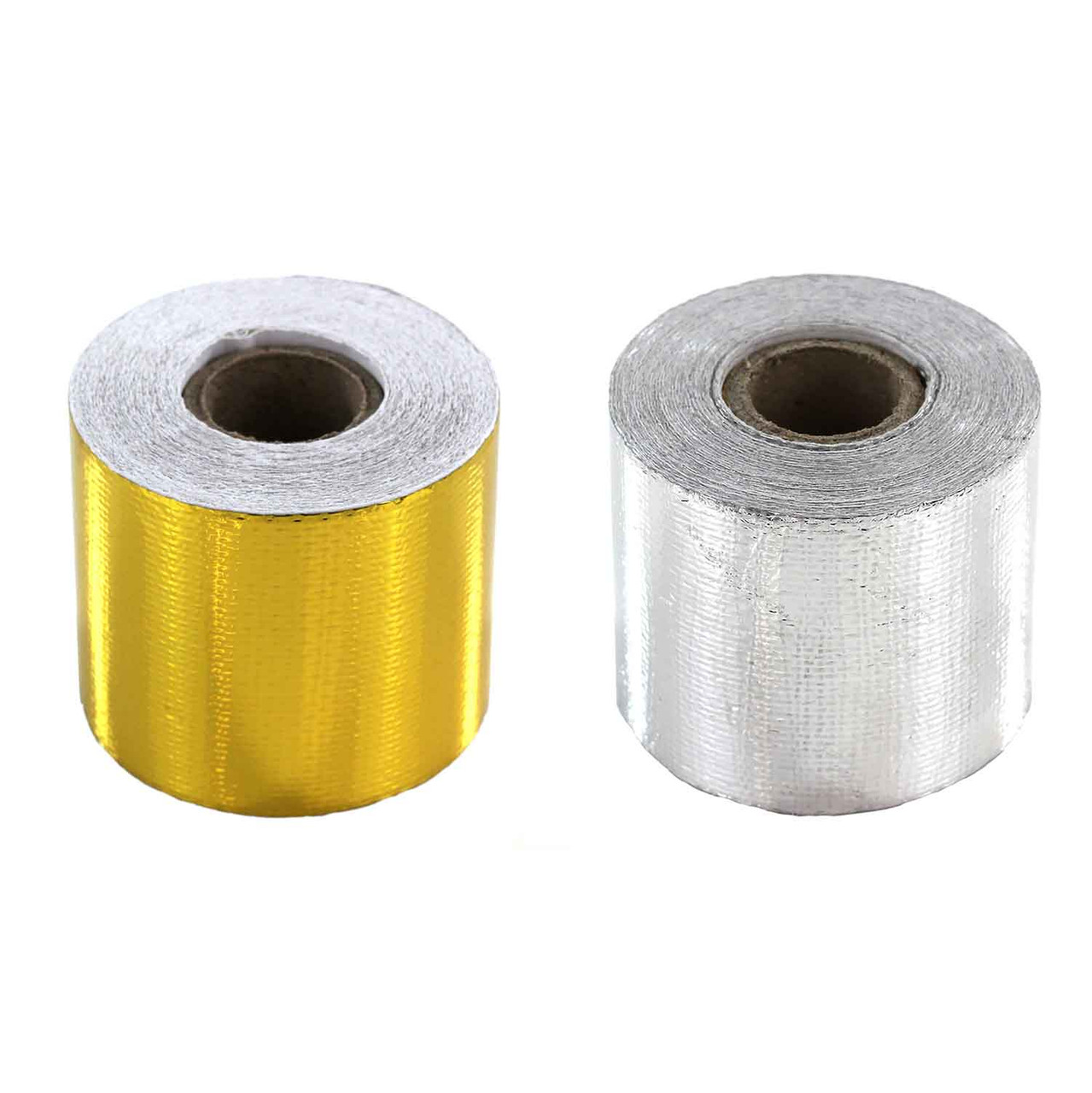 Exoracing Gold and Silver Heat Reflective Tape
Reflects radiant heat away from panels, intake parts and clean surfaces.
From £29.99
Common Turbo Blanket Mistakes
Fitting over leaks or contamination
A turbo blanket should be fitted to a clean, healthy setup. Oil, fuel, power steering fluid or coolant residue near the hot side should be fixed and cleaned before heat protection is installed.
Using the wrong product for the heat source
A turbo blanket is for the turbine housing. Use exhaust wrap for manifolds and downpipes, and use a heat sleeve for vulnerable hoses, wiring and lines.
Ignoring clearance and moving parts
A blanket should not interfere with actuator arms, linkages, compressor-side parts or anything that needs to move. If access is tight, use our turbo blanket installation guide before fitting.
Expecting one product to solve every heat issue
Turbo heat, downpipe heat, wiring protection and intake heat soak are related but not identical. The best setup often uses source control first, then component protection where needed. Our guide to protecting a turbo setup explains that wider approach.
Common Concerns About Turbo Blankets
Can a turbo blanket catch fire?
A clean, correctly fitted turbo blanket should not catch fire in normal use. The risk increases when the blanket is contaminated with oil, fuel or other flammable fluids, which is why leak checks matter before installation.
Will a turbo blanket damage the turbo?
A turbo blanket keeps more heat in the turbine housing and reduces radiant heat around the engine bay. The turbo still needs a correct oil supply, coolant flow where applicable, shutdown habits and a healthy setup. Do not use a blanket to hide an existing turbo problem.
Are turbo blankets only for race cars?
No. Race and track cars often see the biggest heat loads, but road cars can still suffer from heat soak, especially modified turbo cars with tight engine bays. A daily driver can benefit if the turbo sits close to heat-sensitive parts.
FAQ
Do turbo blankets work?
Yes. A turbo blanket helps contain heat around the turbine housing and reduce radiant heat reaching the engine bay. Our blowtorch test showed a large temperature difference between the flame-facing side and the outside surface.
How hot did the turbo blanket get in the blowtorch test?
The hot side exceeded the thermal camera's 580°C maximum during the first run. In the outside-temperature run, the engine-bay-facing surface reached 62.3°C after three minutes.
Does a blowtorch simulate a turbocharger accurately?
It is useful for material abuse testing, but it is not a perfect real-car simulation. A blowtorch creates a concentrated flame point, while a turbo spreads heat around the turbine housing and is affected by airflow, load and driving conditions.
What is the temperature rating of the Exoracing Turbo Blanket V3?
The Exoracing Turbo Blanket V3 product specification lists a working temperature of 1200°C / 2100°F. Choose the correct T25, T3 or T4 size and fit it only to a clean turbo setup.
Can I use an exhaust wrap instead of a turbo blanket?
Use a turbo blanket on the turbine housing. Use exhaust wrap on manifolds, downpipes and exhaust pipework. They solve different parts of the same heat management problem and can be used together where suitable.
Should I fit a heat sleeve as well as a turbo blanket?
Fit the heat sleeve when hoses, wiring or lines are still close to the turbo or downpipe after source control. Check routing, clearance and condition first, then protect the vulnerable part.
Are turbo blankets good or bad?
Turbo blankets are good when they are clean, correctly fitted and used to control turbine housing heat. They become a bad idea if they are fitted over leaks, used on the wrong part, installed in the wrong size or treated as a fix for an unhealthy turbo setup.
Is a turbo blanket worth it for a road car?
It can be worth it if your turbo sits near wiring, hoses, intake pipework, paint or other heat-sensitive components. It is most useful when heat soak or tight packaging is a real issue, not when the car has no turbo heat problem to solve.
Conclusion: Do Turbo Blankets Work?
Yes, turbo blankets work when they are used correctly. Our blowtorch and thermal camera test showed a clear thermal barrier effect, with the outside face staying far cooler than the flame-facing side, even under a harsh direct heat test.
The honest conclusion is that the exact percentage is limited by the test equipment, because the thermal camera is capped at 580°C. Even with that limitation, the minimum measured difference was 534.5°C at one point, and the outside surface reached only 62.3°C after three minutes in the logged run.
If your turbocharger is the main heat source, start with a correctly sized turbo blanket. If the downpipe, manifold, wiring, hoses or panels are also exposed, build the rest of the heat management setup around the actual heat source and vulnerable components.
Control turbo heat before it damages nearby parts
Shop the exact heat management parts mentioned in this guide, including turbo blankets, exhaust wrap, heat sleeve and reflective tape.
Shop Heat Management PartsRelated Reading
- Are turbo blankets worth it?
- How to install a turbo blanket
- Before and after turbo blanket test on a 550bhp RS4
- 3 essential upgrades to protect your turbo setup
About the Author
I’m Matt, the owner of Exoracing Ltd, a UK-based performance parts brand specialising in heat management parts and performance upgrades.
Since 2018, we have helped enthusiasts and workshops reduce engine bay heat with practical products, test content and advice based on real modified cars. If you need help choosing the right heat protection for your turbo setup, message us on Instagram @exoracinguk or use the contact options on our website.