Exhaust Wrap Smoking After Install: Is It Normal?
Posted by Matthew Marks on 17th Jun 2026
Jump to a section
Exhaust Wrap Smoking After Install: Normal, Dangerous or Oil Contaminated?
A little light smoke during the first heat cycles can be normal. Thick, persistent or oily smoke needs immediate investigation.
Use this guide to decide whether to monitor the wrap, inspect it when cold, or switch the engine off immediately.
Seeing exhaust wrap smoking after installation can be alarming, especially when it sits close to wiring, hoses, fuel lines or painted surfaces. The important point is that not every type of smoke means the same thing.
When we install exhaust wrap on our own turbo builds, we wet it so it pulls tight and sits neatly around the pipework. That moisture, along with small amounts of manufacturing residue, can produce light smoke during the first heat cycles. However, smoke caused by leaking oil, fuel or coolant is not a normal curing process and must not be ignored.
This troubleshooting guide explains how to identify the difference, what to check safely and when the wrap should be removed or replaced.
The simple answer
Light white or grey smoke that reduces during the first few heat cycles is usually moisture or residue curing out of the new exhaust wrap.
Heavy, persistent, oily-smelling or sweet-smelling smoke is not normal. Switch the engine off, let everything cool completely and inspect for oil, fuel or coolant leaks before running the car again.
If you can see flames, smell fuel or cannot identify the source, stop immediately and do not drive the car.
- A small amount of first-cycle smoke can be normal, particularly if the wrap was installed wet.
- Normal curing smoke should reduce rather than become heavier with every heat cycle.
- Oil, fuel or coolant contamination must be treated as a leak problem, not a wrap problem.
- Never inspect, touch or remove exhaust wrap while the exhaust is hot.
- Contaminated or damaged wrap should normally be replaced after the leak is repaired.
Exhaust Wrap Smoke Diagnosis: What Should You Do?
Use the smoke, smell, timing and behaviour together. Colour alone is not enough to prove what is causing the problem.
Monitor it outdoors or in a well-ventilated area. Stop if the smoke becomes heavier, smells oily or does not reduce.
Switch off, allow the exhaust to cool and find the leak. Repair it before removing and replacing the contaminated wrap.
Switch off immediately. Do not restart or drive the car until the fuel system and affected wrap have been inspected and repaired.
Stop and inspect when cold. Repair the cooling system leak and replace the wrap that remains contaminated or damaged.
Do not assume the wrap is curing again. Check for a fresh leak, trapped road contamination, loose wrap or contact with another component.
Why New Exhaust Wrap Smokes During Its First Heat Cycles
New exhaust wrap is commonly fitted damp because water makes the material more flexible and easier to pull tightly around bends. When the exhaust warms up, that retained moisture turns to steam and escapes through the wrap.
Small amounts of manufacturing residue may also cure during the first heat cycles. The result can look like light smoke and may have a noticeable hot-material smell. This should reduce as the wrap dries and cures.
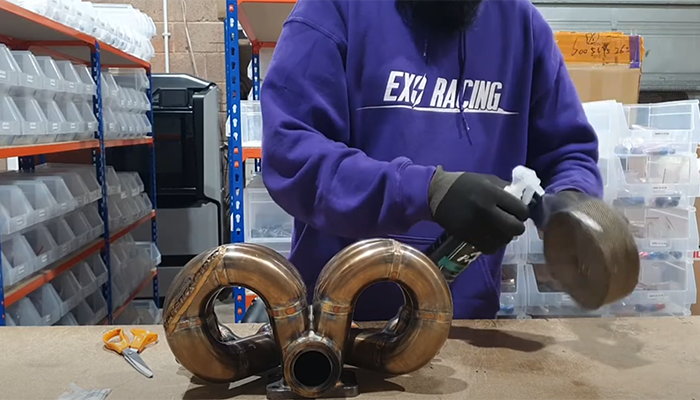
In our exhaust wrap installation guide, we show how wetting and tightening the wrap helps produce a cleaner installation. That process is one reason light first-cycle smoke can be expected.
The key difference is behaviour: normal curing smoke should gradually reduce. Smoke from contamination may persist, return later or become worse as more fluid reaches the hot wrap.
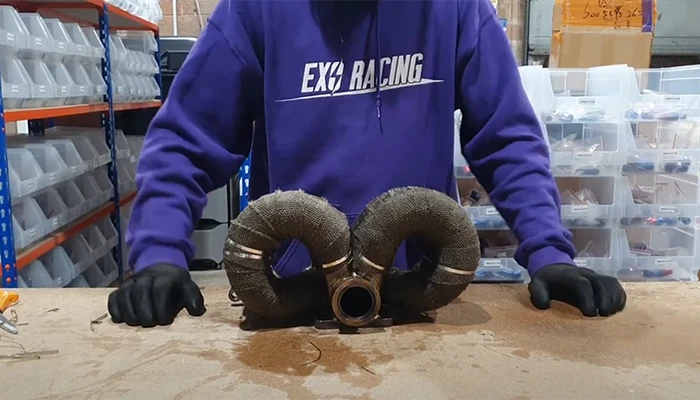
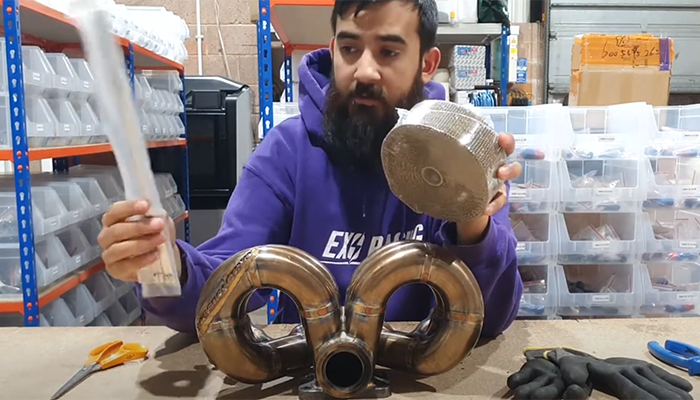
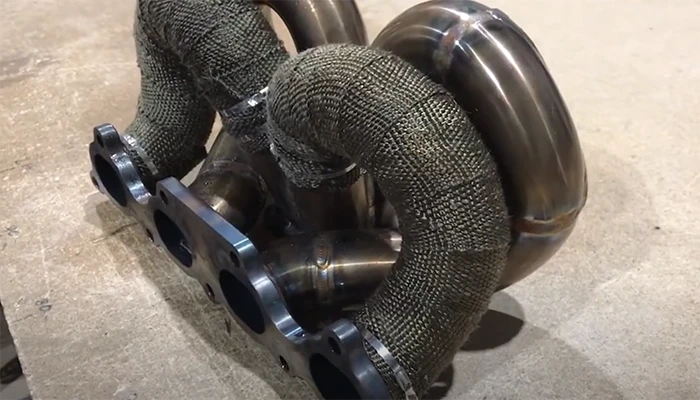
Watch: In our exhaust wrap video, we show the installation method and the type of wrapped manifold that should be checked carefully during its first heat cycles.
When Exhaust Wrap Smoke Is Dangerous
Exhaust wrap sits directly against very hot manifolds, headers and downpipes. Its job is to contain heat at the source, but that also means leaked fluid can soak into the wrap and remain close to hot metal.
Oil-contaminated exhaust wrap
Oil may reach the wrap from a leaking rocker-cover gasket, turbo oil line, oil return, filter housing or another component above the exhaust. Once absorbed, it can smoke every time the exhaust becomes hot and may create a fire risk.
Do not try to solve this by letting the oil burn away. Repair the leak first. Once everything is cold, remove the contaminated wrap and inspect the pipework beneath it before fitting fresh material.
Fuel contamination
A fuel smell near smoking exhaust wrap is an immediate stop condition. Switch the engine off, move away from the car and do not restart it. Fuel lines, fittings and injectors must be checked before the vehicle is run again.
Coolant contamination
Coolant can produce steam-like smoke and a sweet smell when it reaches hot exhaust pipework. It is less likely to ignite than fuel, but the leak can still cause overheating, hose failure or loss of coolant. Stop and repair the leak before continuing.
Safe Inspection Checklist
Never touch, unwrap or closely inspect the exhaust wrap while the exhaust is hot. Use this process after switching the engine off.
- Let the exhaust cool completely. Manifolds and downpipes can stay hot long after the engine stops.
- Check above and around the wrapped section. Look for leaking gaskets, lines, fittings, hoses and reservoirs.
- Inspect the wrap. Look for wet areas, oily staining, burnt patches, loose sections, frayed edges or missing ties.
- Check vulnerable components. Make sure wiring, fuel lines, brake lines and hoses are not touching the exhaust or wrap.
- Repair the cause before the symptom. Fix leaks, routing or clearance before installing new protection.
- Recheck after the next controlled heat cycle. Run the car outdoors or in a properly ventilated area and keep suitable fire-safety equipment nearby.
Should You Clean or Replace Contaminated Exhaust Wrap?
If the wrap has absorbed oil, fuel or coolant, replacement is normally the sensible option. Cleaning the outside does not guarantee that fluid has been removed from the layers against the exhaust.
Remove it only when the system is completely cold. Inspect the manifold, downpipe or pipe beneath for cracks, corrosion, leaks and damage. Repair the original fault, clean and dry the pipework properly, then fit a new wrap with secure stainless steel ties.
For the full fitting process, overlap guidance and securing method, use our step-by-step exhaust wrap installation guide. Our exhaust wrap calculator can help estimate how much replacement material you need.
 Exoracing Titanium or Carbon Exhaust Wrap
Replacement source-control wrap for manifolds, downpipes and hot exhaust pipework after the original fault is repaired.
From £24.99
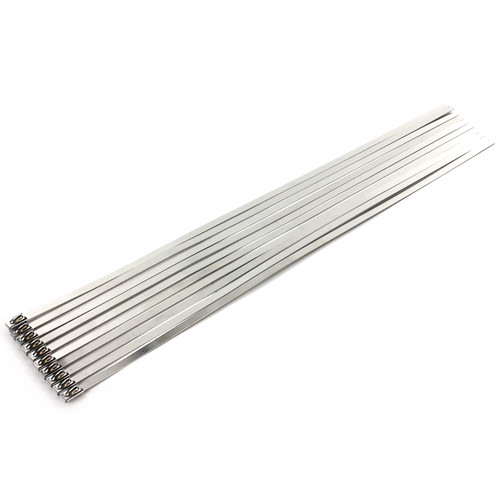 10 x Exoracing Stainless Steel Cable Ties
Secure fresh exhaust wrap on high-temperature pipework after inspection and repair.
From £9.99
Common Mistakes That Make Smoking Worse
Assuming every first-cycle smoke cloud is harmless
A new wrap may smoke, but a strong oil or fuel smell changes the diagnosis. Stop and inspect rather than relying on the age of the wrap.
Fitting a wrap over an existing leak
Exhaust wrap is heat management, not a way to hide a leaking gasket, line or fitting. Repair leaks before installation.
Running the engine in an enclosed space
First heat cycles can create smoke and fumes. Carry them out outdoors or in a professionally ventilated workshop, never in a closed garage.
Replacing the exhaust wrap without fixing the routing
If a hose, wire or fluid line is too close to the exhaust, improve clearance and routing first. Then control the heat source and protect vulnerable parts where needed.
What Happens If You Ignore Smoking Exhaust Wrap?
Ignoring unexplained smoke can allow a small leak to become a serious fault. An oil-soaked wrap can continue smoking and may ignite. A fuel leak can cause a rapid fire. A coolant leak can leave the engine without enough coolant, while a loose or damaged wrap can expose nearby wiring and hoses to more radiant heat.
Even if the smoke does not lead to a fire, repeatedly heating contaminated wrap can make fault-finding harder and damage the material. The safest correction is always to identify the source, repair it and replace compromised protection.
Frequently Asked Questions
Is it normal for the exhaust wrap to smoke after installation?
A small amount of light smoke during the first few heat cycles can be normal as moisture and residue cure out. It should reduce rather than become heavier or return later.
How long should new exhaust wrap smoke?
There is no exact time that applies to every installation. The important sign is that light smoke steadily reduces across the initial heat cycles. Persistent or worsening smoke needs inspection.
Can oil-soaked exhaust wrap catch fire?
Yes, oil-contaminated wrap around very hot exhaust pipework can create a fire risk. Switch off, repair the leak and replace the contaminated wrap before running the vehicle again.
Can I clean oil out of the exhaust wrap?
Replacement is normally safer because surface cleaning may not remove fluid absorbed deep inside the wrap. Repair the leak and inspect the exhaust beneath before fitting a fresh wrap.
Why did my exhaust wrap start smoking again later?
Smoke returning after clean heat cycles usually indicates a new issue, such as a leak, road contamination, loose wrap or contact with another component. Treat it as a fault and inspect it when cold.
Should I drive if my exhaust wrap is smoking?
Do not drive if the smoke is heavy, persistent, smells like oil or fuel, or its source is unknown. Switch off and inspect after the exhaust cools completely.
Should the exhaust wrap be fitted wet or dry?
We wrap the exhaust with a spray bottle during installation because it becomes easier to pull tight and form around bends. Follow the instructions for your specific wrap and expect retained moisture to create some steam during the initial heat cycle.
Final Decision: Monitor It or Switch Off?
Light smoke that appears during the first heat cycles and steadily reduces is usually part of the curing process. Monitor it carefully in a ventilated area and recheck the installation after everything cools.
If the smoke is heavy, persistent, returns later, smells oily or is accompanied by a fuel or coolant smell, switch the engine off. Repair the leak or routing problem first, then replace contaminated or damaged wrap.
Exhaust wrap should control manifold and downpipe heat, not hide a fault. For fresh material and securing ties after the repair, browse our heat management range.
Shop Exhaust WrapExoracing is a UK-based heat management and performance parts specialist. Since 2018, Matt and the Exoracing team have helped enthusiasts and workshops choose, fit and troubleshoot heat protection for turbo, exhaust, wiring and engine-bay applications.