

5 Common Track Day Heat Problems for Beginners
Posted by Matthew Marks on 16th Mar 2026

Today, we're going to cover 5 common track day heat problems for beginners and how to fix them.
Track driving puts your car under far more stress than normal road use. Higher revs, longer sessions, and very little cooldown time all contribute to rapid heat buildup, especially in the engine bay.
I’m Matt, the owner of Exoracing. Since 2018, we’ve helped thousands of car enthusiasts prepare their cars for high-performance driving, track days, and extended sessions where heat becomes a significant issue.
From turbo road Civics to full hardcore track and race builds, we see the same issues again and again.
By the end of this guide, you’ll understand where the majority of track day heat comes from, which parts are most at risk, and how to prepare your car properly to avoid melted wiring, boiling fluids, and weekend-ending failures.
We’ll walk through a simple, step-by-step heat management plan that focuses on protection and reliability, addressing the 5 most common issues we see and how to prevent them before they become problems.
This guide is brought to you by Exoracing, UK specialists in heat management and performance parts.
- First-time track drivers often struggle with engine bay heat, brake fade, tyre pressure rise, and cabin heat soak.
- Most failures come from radiant heat damaging hoses, wiring, sensors, and fluid lines under the bonnet.
- Brakes and tyres can overheat in a few laps if you do not manage fluid, pads, and pressures.
- Simple checks between sessions prevent most track day problems.
Why track driving creates more heat

I'm sure you have seen some of the craziest videos of time attack cars zooming around the track with 1000bhp, where you can see the brake discs glowing red.
Well, in a track car, you may not be at this extreme level, but you will almost always encounter similar problems to those cars.
On track, the engine bay and components get far hotter than it ever does on the road.
This is because the car spends more time at higher revs, the exhaust stays hotter for longer, and there is less time for everything to cool down between sessions.
That extra heat does not just stay in the engine. It spreads into everything nearby. This is where the most annoying and expensive problems start.
We have seen it time and time again where track cars have had to call it a day too early, due to cooking brake fluid or melting wiring (like our own Civic), and this guide aims to point you in the right direction to fix the problems before they rear their ugly head.
Common beginner pain points include:
- Plastic covers, wiring insulation and clips are going soft, brittle, or warping
- Electrical plugs are cracking when you unplug them
- Rubber hoses stiffening, splitting, or leaking
- brake fluid boiling and experiencing brake fade
- The ECU is pulling timing and, in turn, power because of heat
The tricky part is that you might not notice damage straight away. A connector can look fine but fail later when it cools down, gets moved, or gets heat cycled again.
We will cover every point here and more to show you the most common problems that occur with track cars, and why you are better off fixing them before they ever become a problem in the first place.
1. Exhaust and turbo heat cooking nearby parts
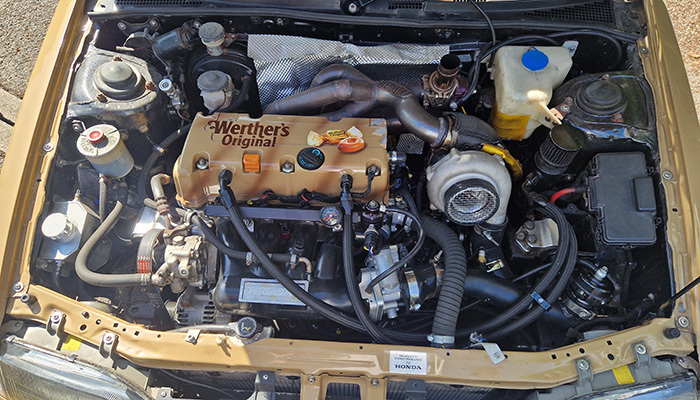
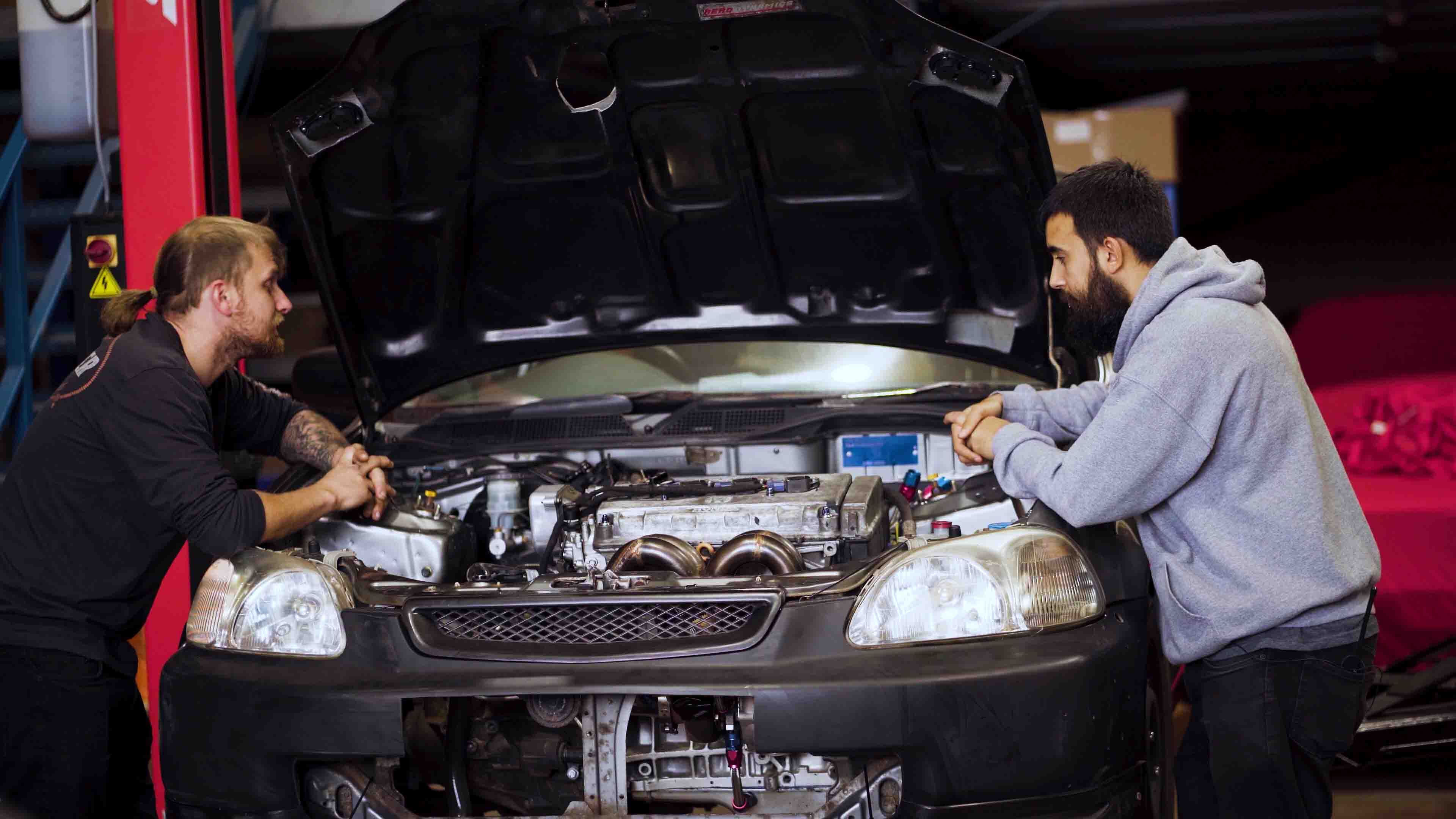
The hottest areas under the bonnet are usually the exhaust manifold, turbo, and downpipe.
These parts give off a huge amount of radiant heat. Radiant heat is like standing near a bonfire. Even if you are not touching it, it still burns.
If you're reading this, I'm sure you already know this, as even in a mild spec road car, you can still feel immense heat from these parts when you open the bonnet, even just going to the shop and back.
The reason they are the hottest parts are because they are directly connected to the combustion chamber, and this is where all of the exhaust gas escapes from the cylinder.
Although the exhaust manifold, turbo housing and downpipes are designed to hold in the heat, as the majority of them are manufactured from steel, this heat then radiates crazy amounts of heat into the engine bay.
If anything is close to the exhaust manifold or exhaust housing, you will end up cooking and melting these parts, so the quicker we can get this fixed, the better.
We have had an issue very recently with our AWD turbo Civic, where we had a breather line directly over the manifold (which we should have relocated and known better), but it ended up melting the hose.
By either rerouting, putting a barrier in place, or heat wrapping the line, this would have fixed the problem straight away.
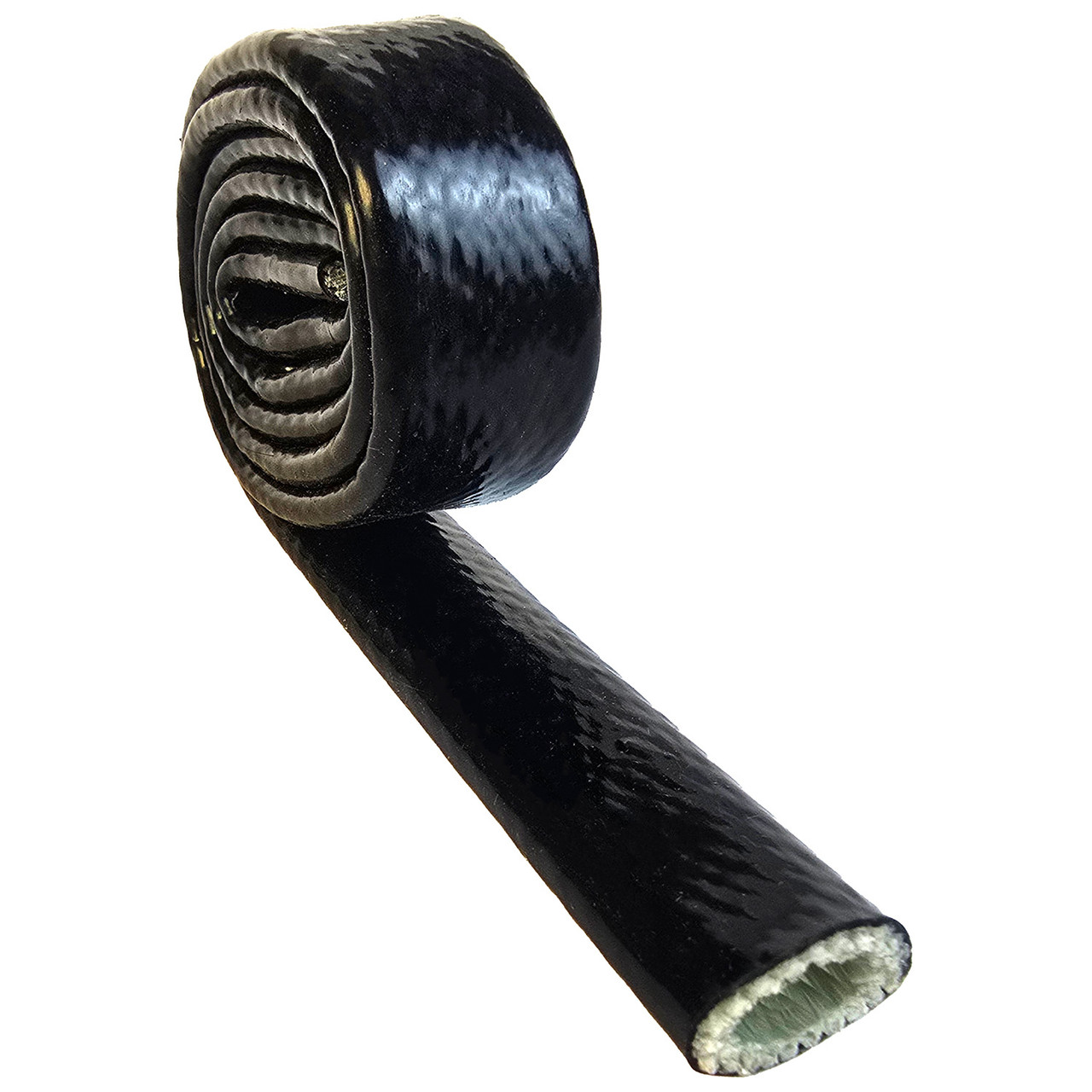
It might be worth watching our silicone heat sleeve video that we filmed a few weeks back, where we took a propane torch to wiring, before and after using our silicone high temperature heat sleeve.
We have another article where we covered the three types of heat transfer, and if you are interested in how to spot them and fix each one, read our convection, conduction and radiant heat guide.
We had a customer with a drift Mazda MX-5 within the last few weeks who actually needed some silicone heat sleeve and replacement silicone vacuum line, as his wastegate lines had started to melt due to heat.
This was actually when the car was on the dyno, so on an actual drift day, he would have easily melted the wastegate lines, and at a minimum, it would have had a vacuum leak, and worst case, could have made crazy boost and caused a massive issue.
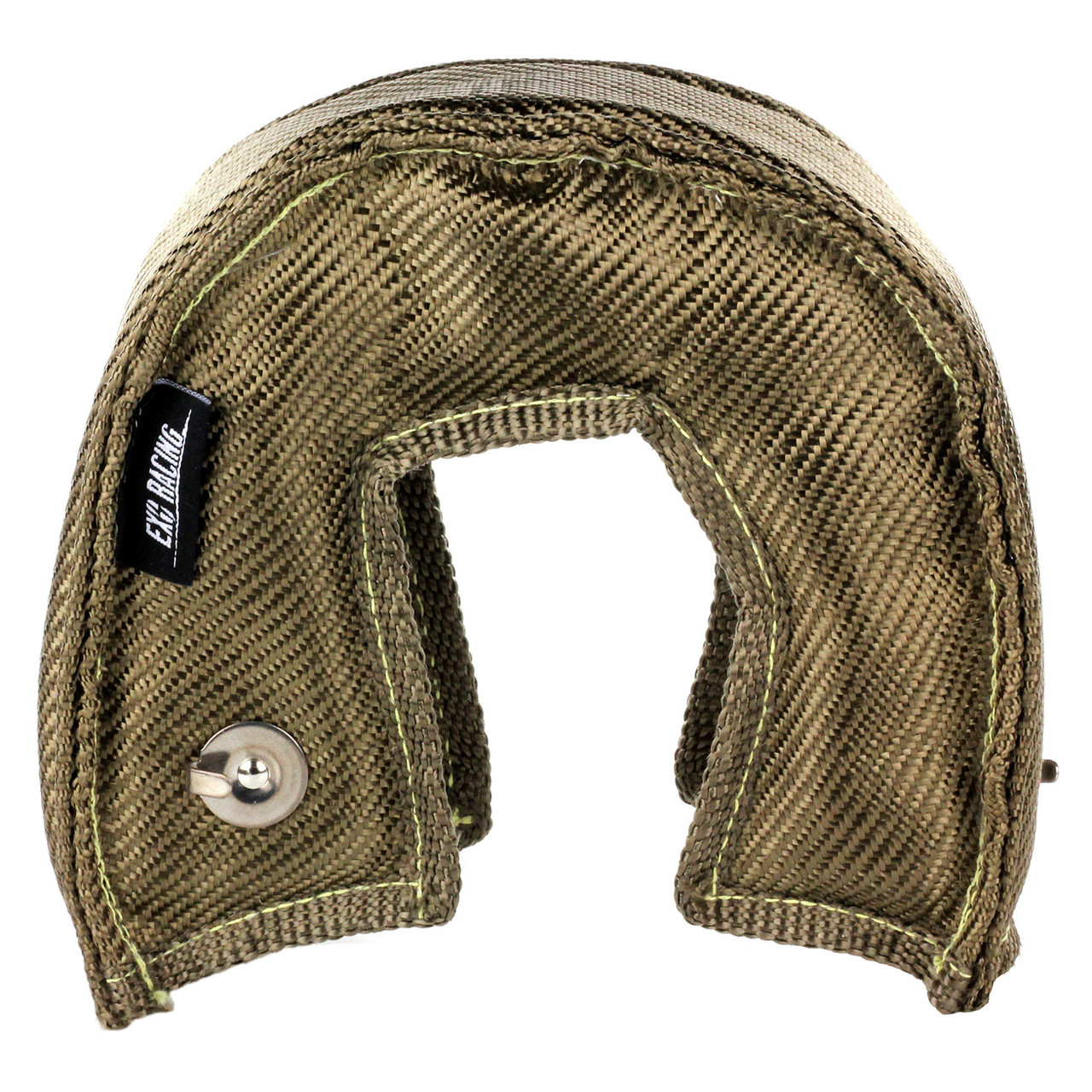
Whilst we were sorting the other problems out, he also decided to go with one of our Exoracing V3 turbo blankets to further reduce the heat soak into the engine bay.
Luckily, we caught it in time and got the issue sorted, but this is the exact reason to take precautions on manifold/turbo/wastegate heat.
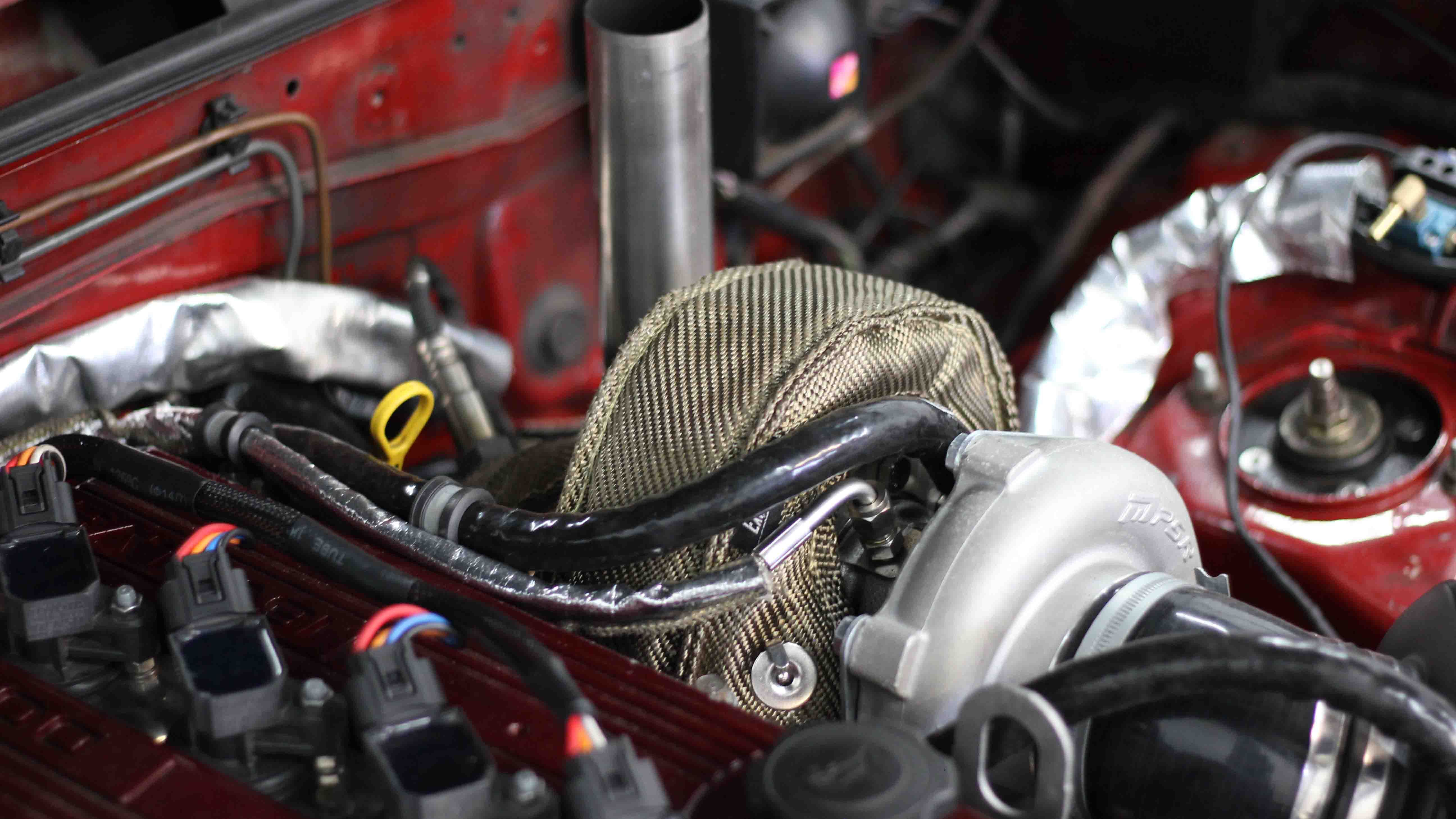
How to fix turbo and exhaust heat
There are a few very simple and easy things you can do to prevent exhaust and turbo heat from ruining your day:
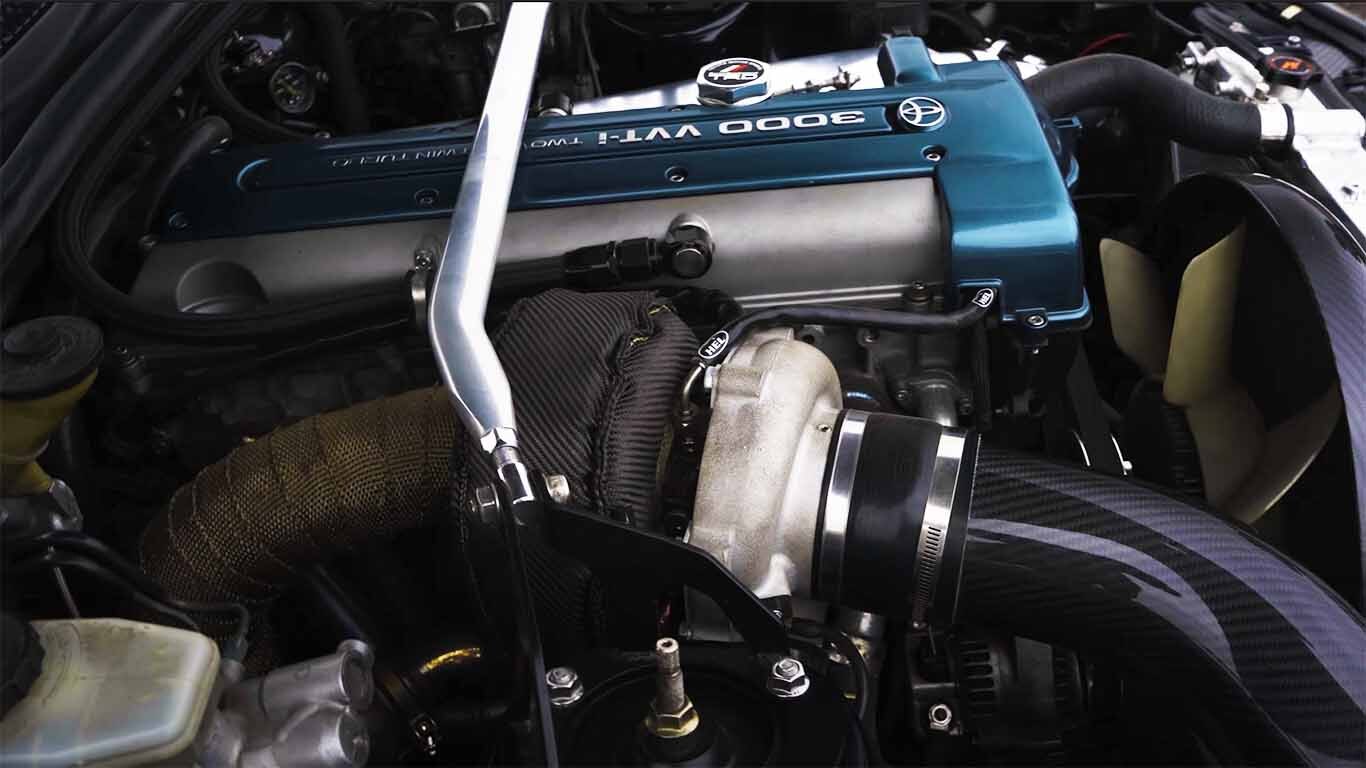
- Install an exhaust wrap on your manifold and downpipe, and a turbo blanket on the exhaust housing of the turbocharger. This is by far the hottest part of the engine bay, and will radiate the most heat out, so by tackling the hottest parts first, you are reducing the biggest problem area.
- Create a barrier between the exhaust manifold / turbo and the part you are trying to keep cool. A very good product to use here would be an aluminium heat shield barrier. Because it is aluminium, it will dissipate heat much faster than stainless steel, and if you leave a small gap, you will also have convection on your side to help reduce heat.
- Next on the list would be insulating the heat to try to reflect the heat or to protect a specific part, such as wiring. A good method here is to use a silicone heat sleeve, as they are rated to around 1200°C, so they usually do the best job here if the part is close to the heat source. If you are a bit further away, you can use a reflective velcro heat sleeve or a sewn heat sleeve, depending on whether the part you're protecting is removable or not.
- The last method on the list would be to try to improve airflow. This works great in combination with the other parts, as the colder and faster the airflow in the engine bay, the more likely you are to move away the generated heat faster. You can either help with higher flow fans, such as SPAL Automotive, or try to direct airflow with air ducts or specific bumper channels to direct air.


2. Brake overheating and brake fade
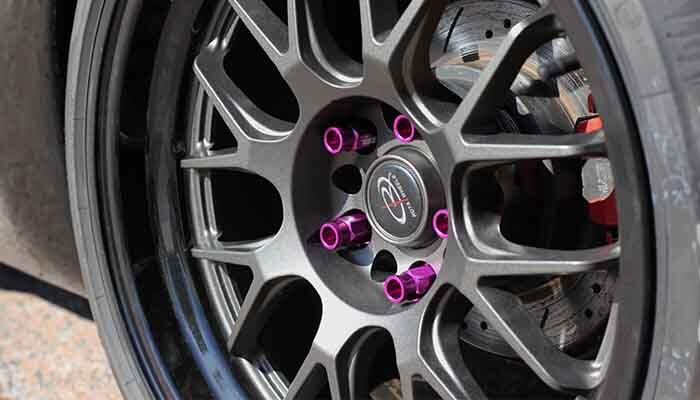
Brakes get extremely hot on track as you are trying to get in and out of the corner as quickly as possible, so you tend to use the brakes much harder than on the road.
Even if your engine bay temperatures look fine, your braking system can be quietly cooking itself, so it would be the next important part to talk about on this list.
Brakes are one of the most important safety factors, and also very important for lap times, so they are always on our list as a top priority.
Having a performance brake setup is more than just not fading the brakes, you can also brake much harder and get them hotter before they start to cause problems.
The most common beginner heat complaint is brake fade. This can happen in two main ways.
Brake Pad fade
Brake pad fade is when the pads overheat and lose the bite that you expect.
The brake pedal can feel normal, but the car just does not slow down as it should, and this is usually a very simple fix and normally down to brake pad coefficient, which we will talk about shortly.
If you want to go in-depth into brake pads and what coefficients mean, make sure to read our ultimate brake pads guide.
Boiling Brake Fluid
Boiling brake fluid is exactly how it sounds; it is when the brake fluid gets too hot and starts to boil! This puts gas bubbles in the system, and the pedal goes soft or spongy.
This can be scary if you have never felt it before, as with either of these points, you can almost lose the brakes entirely until they cool down.
To see exactly what it feels like when you lose your brakes, watch our AWD Civic dyno video, where, when we test drove the car afterwards, the brake pads just weren't up for the job, and show exactly why the brake pad coefficient and performance brake fluid matter.
You can even see the terror in my face when Phil says we have no brakes (haha!).
How to fix brakes overheating and fading
There are a few things you can do to fix braking problems, and they are all pretty simple and easy to sort.
I'll go through and list each one so you can just jump to the relevant part for you!
Brake Discs and Pads
The first thing on the list would be to look at uprated brake discs and pads. This isn't just about the size of the brakes (although that does quite often help), but the more important part is the pad and disc material.
We could talk all day about brake pad coefficients, but the main thing here would be to work out what style of pad you need. For example, you would want a less aggressive brake pad if you drive it to the track day, as you want the biting point to also be good when the brakes are cold.
If it is solely a track machine, the more aggressive the pad, the better, as when they are hot, you will get the highest braking performance possible.
It would be worth going through our ultimate brake pads guide, where we go into brake pads in depth and how to choose the best one for your setup.
A good brand here for brake pads would be PBS brakes, as currently they are one of the best coefficient pads for the money on the market.
The same thing applies when it comes to brake discs; you will want to ensure the discs are made from a good material and are vented to increase airflow into and out of the disc. The extra airflow will cool the discs and try to reduce the brake pads, discs and fluid from overheating.
Choosing a style of brake disc without a blank face is also good for performance, although it makes less of a difference than the brake pads, so if you have to choose one, the pads are always the most important.
The last point when it comes to braking is the size of the brakes. Multiple kits on the market will increase the calliper piston surface area and increase the number of pistons, such as a 4-pot versus a single-pot piston setup.
This will allow the brake pad to clamp on multiple points and generally increase the surface area of pressure, which will also help your braking.
This might not be directly tied to the heat management side, but it is definitely worth mentioning in this context.
Again, a good brake disc brand would be PBS brakes due to the disc material, vents, and longevity of the discs
Brake Lines and Brake Fluid
Brake lines and fluid are incredibly important when it comes to track days and the heat management side. We have written a full guide on brake fluid, but as a very short takeaway, the most important part would be the boiling point of the fluid.
You want a brake fluid that has a higher boiling point on track, as you brake harder and for longer than on the road. With a higher boiling point fluid, you can brake harder without boiling the fluid.
This also ties to the brake lines, as by uprating the lines you can run a much more aggressive brake fluid and still gain the benefits of having a solid brake pedal feel. We always recommend changing the fluid and lines at the same time for performance stainless steel brake lines, such as Hel Performance.
The last part to note is that if you have any exhaust part, such as a manifold close to a brake line, silicone heat sleeve it. Although most of the heat would come through the braking system, the last thing you want is to lose your brakes due to a melted brake hose or add extra heat, which you can easily prevent.
We would always recommend Motul brake fluid here as it has a very high boiling point, and we have lots of experience with the brand over the years without any issues.
All of these parts combined will ensure your brakes are in tip-top condition and more than enough for your first track day!


3. Tyre heat and tyre pressure spikes
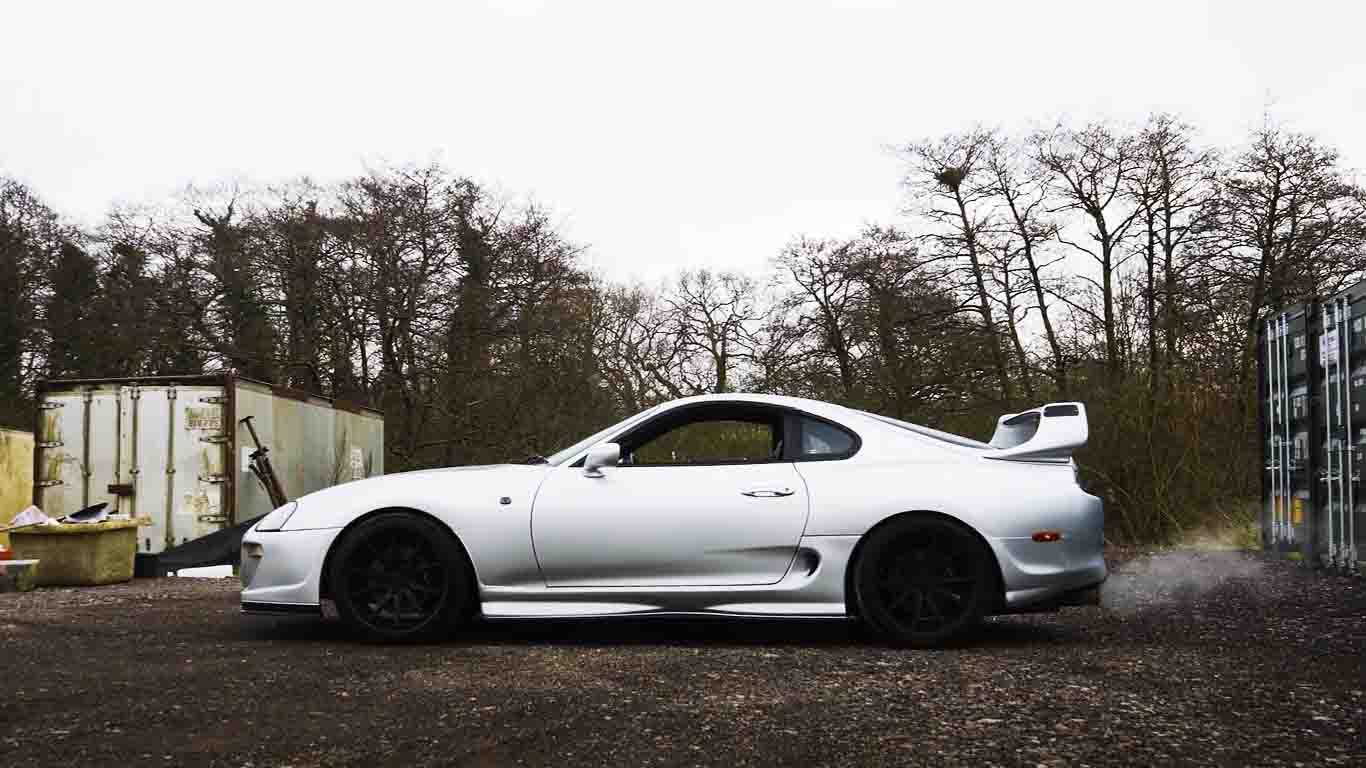
Tyres heat up quickly on the track because they are constantly tested at the limit. As they heat up, the pressure goes up.
Beginners often set tyre pressures at the start of the day and forget about them as the excitement happens throughout the day.
Then the tyres get over-inflated, lose grip, and feel greasy. You will notice that as they get slightly over-inflated, the grip will slowly start dropping off, and you may notice sliding that wasn't there at the beginning of the session.
There are a few things you can do to fix this. First, you are going to want to go with a performance track day tyre for the most amount of grip possible. This gives you the ability to corner harder without going off track and will reduce your lap times.
Next, you want to create the habit of checking the tyre pressures before and after the session, and adjust them based on hot readings, not just cold.
This will ensure that even when the tyres are hot, you are getting the maximum performance from them.
Luckily, this section is free to apply to your day; the only thing you will need is a good tyre pressure monitor, and if you're really fancy and have the money, go with a TPMS system.
This is a valve that will sit inside the tyre and connect data to a screen to show you what your pressures are doing on the fly.
Haltech even now do a Tyre pressure monitoring system that transfers data over the CAN line, so if you are running a Haltech IC-7 digital dash, for example, you can show the data in front of you as you are driving along with the other sensors. Pretty cool!
This has been the smallest section of the guide, but the main takeaways are:
- Check your tyre pressures often
- Check the tread wear often
- If you have the money to do it, install a TPMS, which will show you this info on the fly.


4. Cooling system stress and creeping engine bay temperatures
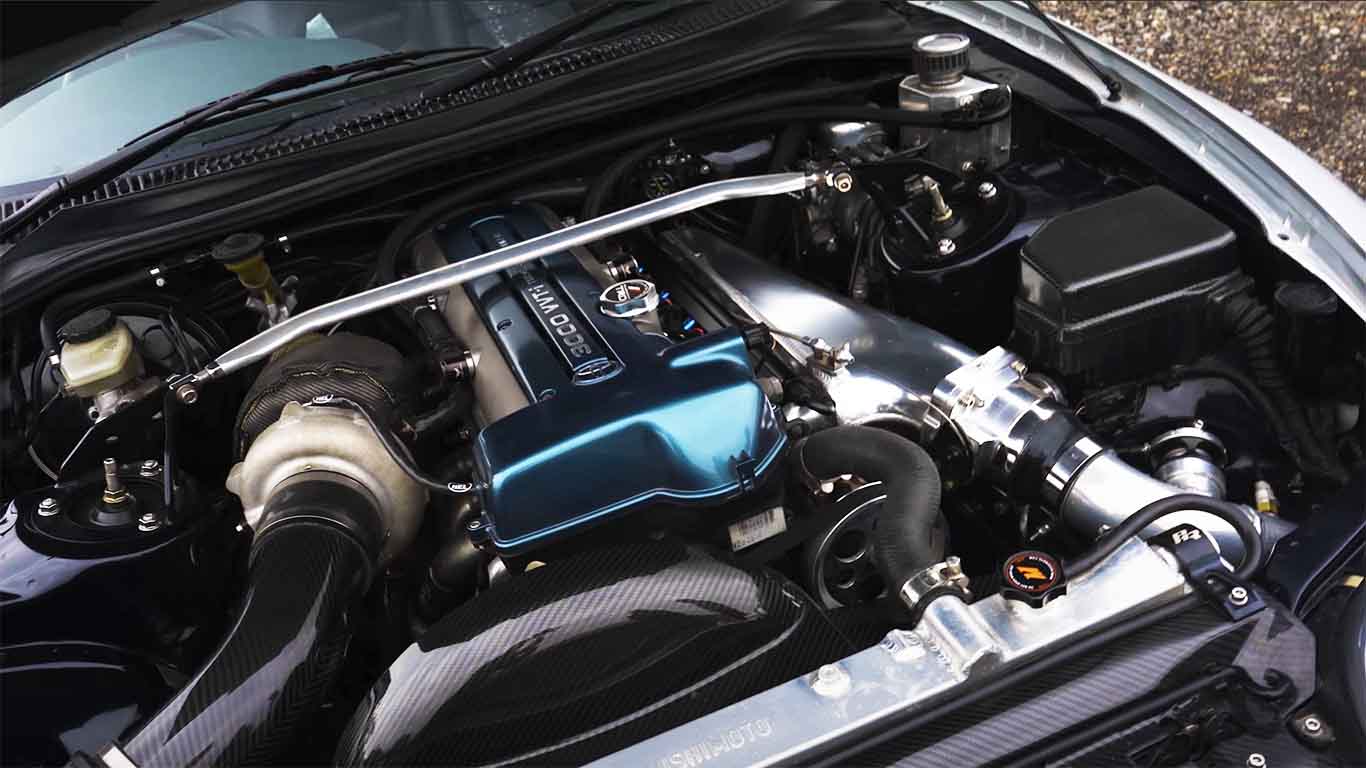
On track, coolant temps can creep up because the engine is working harder for longer. If your cooling system has any weakness, the track will find it.
There are many ways to fix this, but first, we need to understand heat transfer in an engine bay, as this usually points you toward the correct solution. The three types of heat transfer are:
- Conduction
- Convection
- Radiant
I'm not going to go into too much detail here, but if you would like a full breakdown of each type, we have written an article on the differences between the three types of heat transfer.
The main takeaways from the three types are that radiant heat is like the sun, where you can feel it. Conduction is like a spoon in hot water, where you can feel the heat increasing in time through the spoon, and convection is hot air moving like a portable fan.
To fix all of these problems, there are multiple methods, but the easiest way to achieve this is to insulate some heat at the source, add barriers to stop the heat from moving to sensitive areas, and increase cold airflow to move hot air away.
There are some common pain points which you can pretty quickly find and fix, such as coolant temperatures rising, constantly smelling of coolant, coolant loss after hard sessions and intake air temperatures creeping up the more the intake pipes get heat-soaked over time.
Luckily, they are all a simple fix.
How to fix coolant and temperature problems
- Find the largest heat source and do everything in your power to keep it away from the coolant system and intake. For example, a turbo blanket to insulate a turbo, an exhaust wrap and an aluminium heat barrier to shield a manifold and heat reflective tapes on intake pipes all help. By using every method you can to stop heat, you will see a significant drop in temperatures and longer-lasting engine bay components.
- Add as much directed airflow as possible, such as high-flow SPAL Automotive fans, to try to move the hot air away from components before it becomes a problem. Another good method here is to shroud the radiator or add cooling ducts to force cold air to the places to want to reduce the temperatures.
- Make sure you have quality coolant in the system to the manufacturer's specification (or better), as the more diluted the mixture, the lower the boiling point will become. Whilst we are here, it's also worth noting that the correct coolant usually has a lower freezing point as well, and with a high-pressure radiator cap, you can ensure the system is working its best.
- If you have cracked radiator hoses, upgrade them to silicone hoses, which degrade less over time, have a greater chemical resistance, and will keep you on track longer.
- Upgrade to a high-performance aluminium radiator as they usually have a thicker core than standard, which can increase the volume of coolant to dissipate heat, and have a larger surface area to help with temperatures. Although saying that, sometimes the issue is not the radiator. It can be trapped air, a tired cap, old coolant, or poor airflow.
5. Cabin heat soak and driver comfort
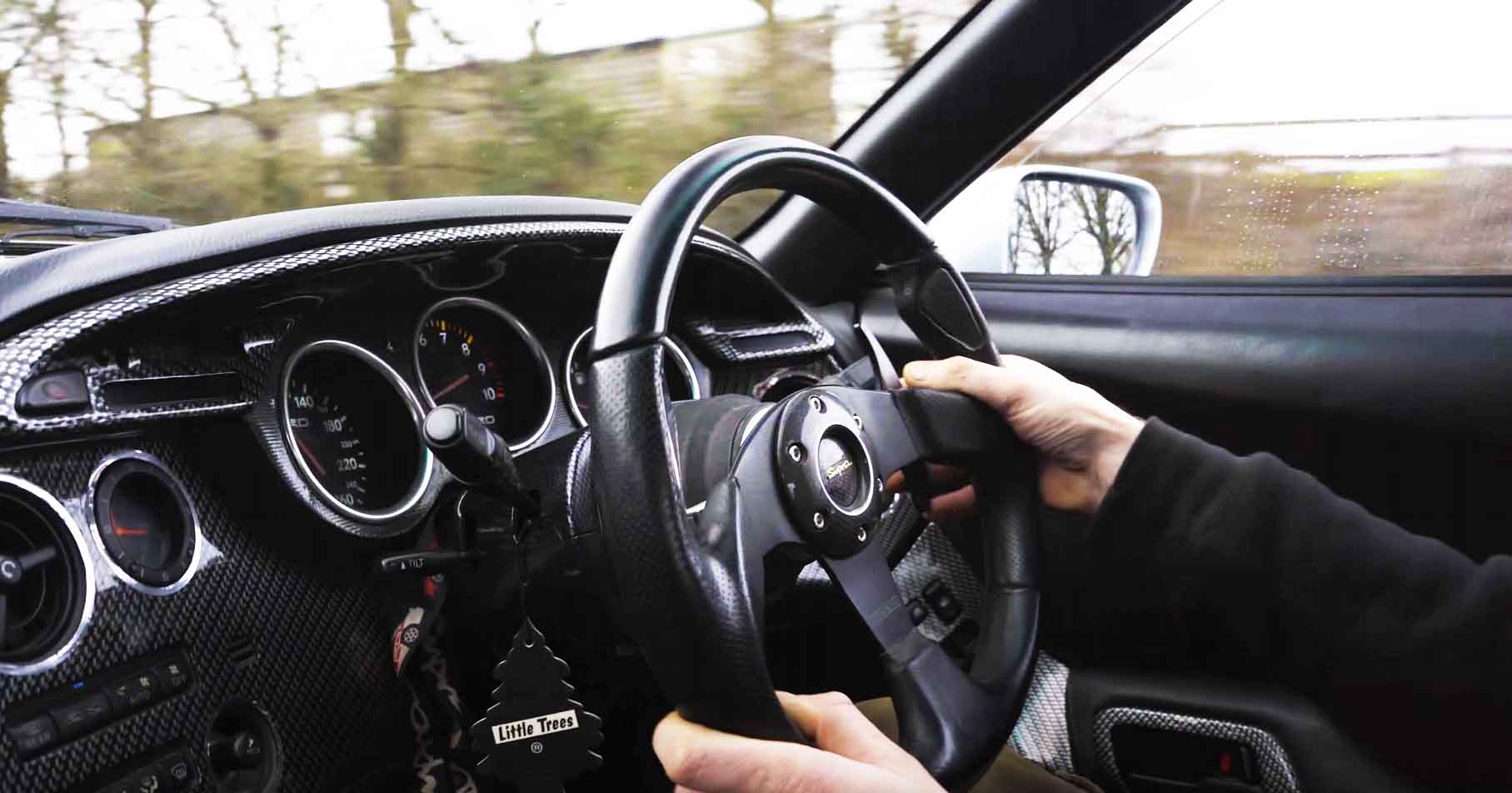
Cabin heat is a real issue on track, especially on warm days. The tunnel, firewall, and bulkhead can soak up heat and then dump it into the cockpit. If you have no air con or limited airflow, it can feel brutal.
If you own an RWD car, this can make the tunnel incredibly hot due to having the gearbox right under the tunnel. We actually experienced this in Kym's MX5, where, after a 20-minute run, you could feel the heat through the tunnel, even with jeans on.
Being a drift car, it had no carpet (as most of them don't), so you can imagine how hot it can get.
You can always have a similar issue with the bulkhead, where the crazy engine temperatures can work their way through the firewall. We actually interviewed multiple competitive drivers to ask about their experiences with their own race cars and the problems they encountered.
Interestingly, some of them told us they were melting shoes due to insane temperatures coming from the firewall. It sounds crazy, but there wasn't only one person saying it!
The problem isn't always just the heat itself; the hotter it becomes in the cabin, the more drained you can feel after a session, or it can create a foggy visor or glasses due to sweat. You always want to be as alert as possible, ESPECIALLY on a performance track day, so the more we can reduce the in-cabin temperatures, the better.
You want the highest focus, best reaction times and safety at all times, so we'll break it down now for you.
How to reduce cabin temperatures
- Like we have mentioned many times in this article, try to trap heat at the source and use barriers and shielding to reduce the amount of heat soaking into the cabin.
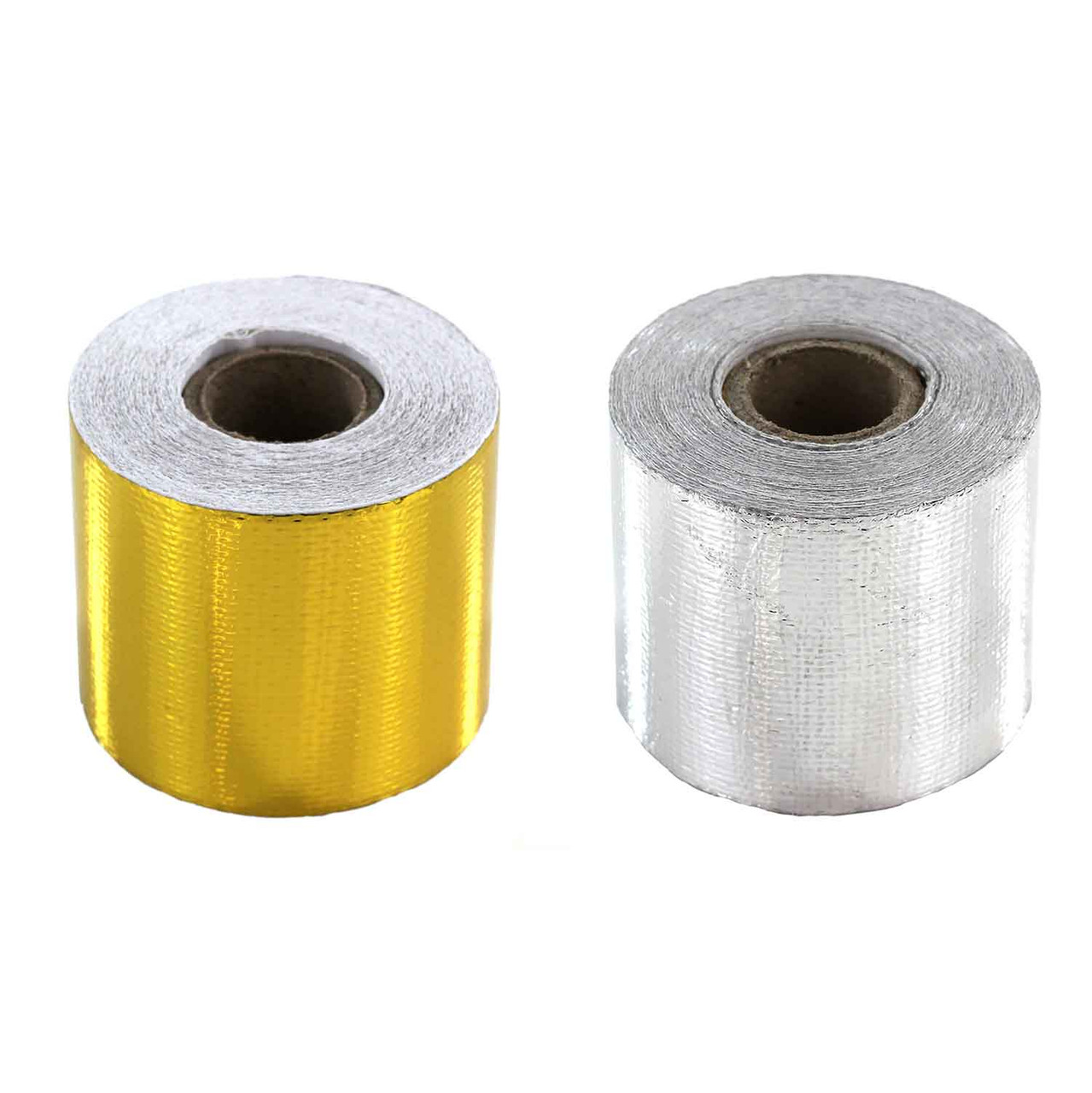
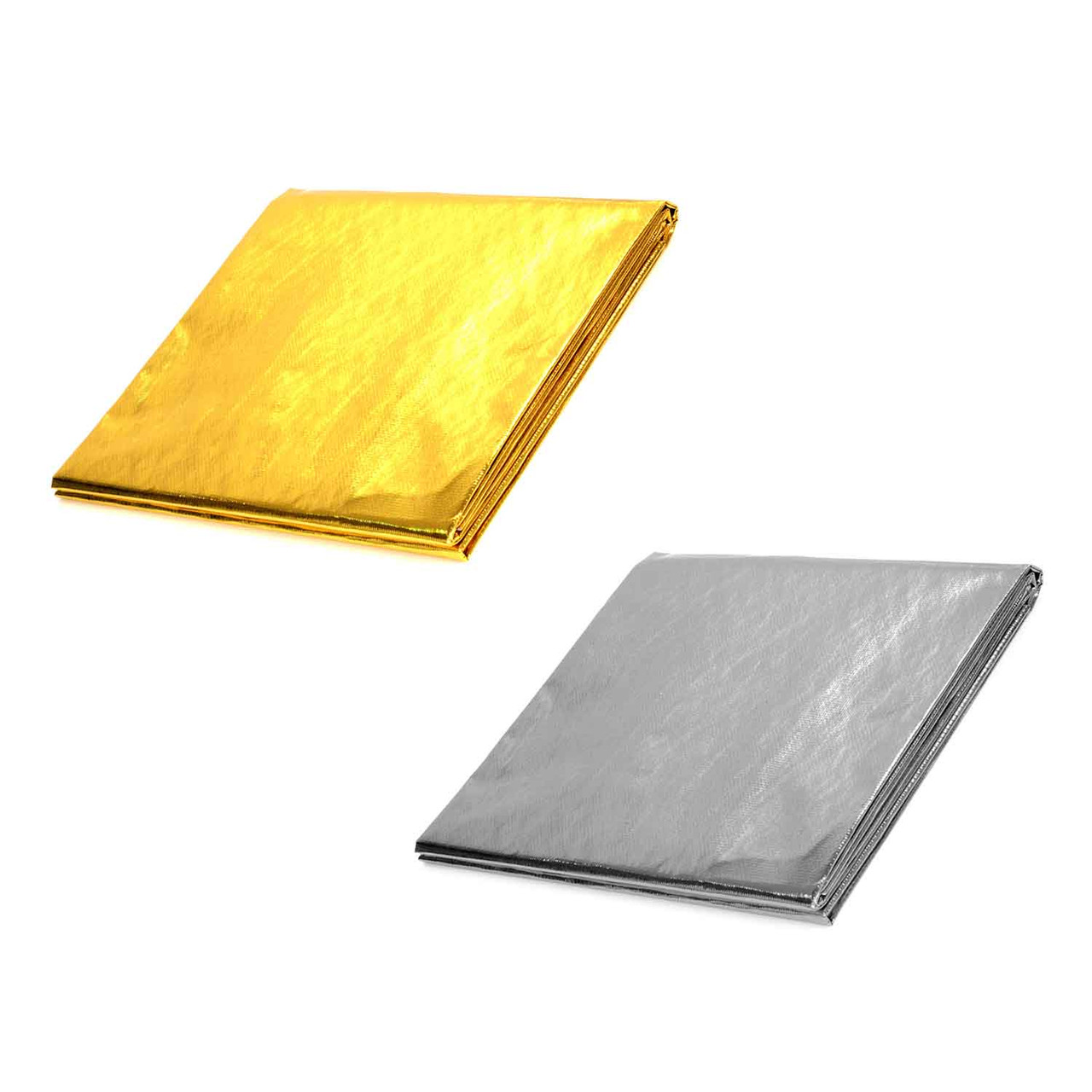
- You will notice that on many competition cars, they use heat reflective tape on the bulkhead. This is specifically to try to reduce the temperatures in the cabin to reduce every effect above.
- The next thing worth looking into is a physical blockade, such as an embossed aluminium heat shield. This works by having a physical gap between the heat and firewall, and is very common in motorsport to add that extra layer of protection.
Post-session checks
Heat damage often shows after a session, not during it. A quick check in the pits can stop a small issue from ending your day.
Obviously, prevention is always the best path forward, as you can stop this all from happening before it occurs, but always check these things post-session to ensure you have the best possible day.
Things to look for:
- Burnt smells, especially plastic or wiring smells
- Discolouration on hoses or wiring near hot parts
- Any new leaks or wet patches
- The brake pedal feel changing compared to the first session
- Tyres looking shiny, greasy, or heavily worn on edges
If something feels off, do not ignore it. Back off, cool the car, and check the basics before you go again.
There are a few parts that beginners often overlook, so make sure to take these points into account.
- Cool down. Take the end of each session slower to let brakes, tyres, and temps settle before you stop
- Handbrake: Do not yank the handbrake on with hot brakes; let things cool first
- Fluid health: Old brake fluid and tired coolant will show weakness on track
- Pressure checks Tyre pressure changes every session, not once per day
- Bonnet management in the pits, letting hot air escape, can help reduce heat soak
- Driver cooling water, shade, and breaks are part of staying safe and consistent throughout the day
Conclusion
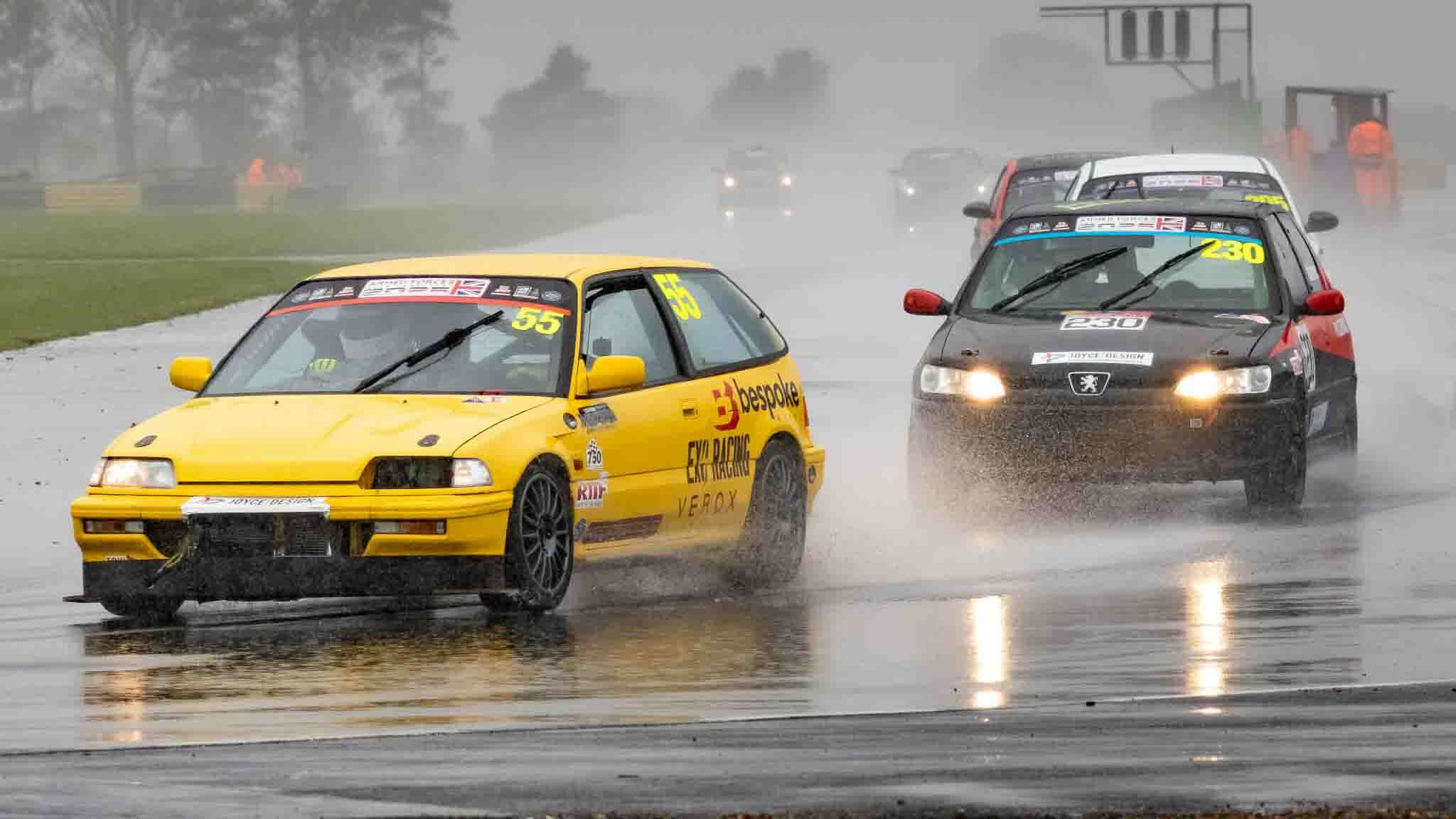
First-time track day heat problems are usually not mysterious, and they happen to everyone.
They are simple things getting too hot for too long.
The biggest pain points are almost always the same. Radiant heat under the bonnet, cooking wiring and hoses, brakes overheating and fading, tyre pressures climbing too high, coolant temps creeping up, and the cabin becoming too hot to stay sharp.
If you build the habit of checking key areas between sessions and managing heat early, you avoid most track day failures and enjoy the day properly.
Reduce heat. Protect reliability. Enjoy more laps. You will have many great track days!
If you need any help with the problems here, or just want to make a plan for your first track day, hit the link below or give us a call. We are here to help any way we can, and love to hear about all of your builds!
Shop the Exoracing Heat Management Range
About the Author
I’m Matt, the owner of Exoracing Ltd, a UK-based performance parts brand specialising in heat management and performance parts.
Since 2018, we’ve helped thousands of car enthusiasts and workshops reduce engine bay heat using proven, experience-led solutions from our own builds and customer cars.
Got questions about your setup?
Message us on Instagram @exoracinguk or use the contact button at the top to get in touch with us for a perfect solution for your car.