
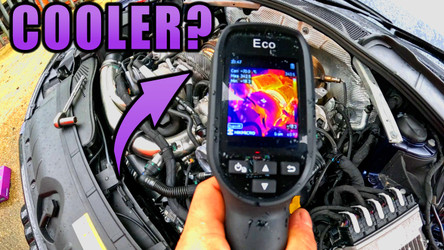
Audi RS4 Turbo Blanket Test: Before & After Temps
Posted by Matthew Marks on 12th Feb 2026
Before and After Turbo Blanket Test on a 550bhp Audi RS4
We fitted turbo blankets to Alex's 2022 Audi RS4 from HPWorx and measured the differences in engine bay temperature, turbo-area surface temperature, and intake air temperature.
Tested by Exoracing, a UK heat management specialist helping modified car owners and workshops control under-bonnet heat since 2018.
Shop Exoracing Turbo BlanketsA tuned turbo car can feel strong on the first pull and then start to feel flat once the engine bay heat builds. That was the issue with Alex's 550bhp Audi RS4. After hard use, the bay felt like an oven, and the intake air temperatures were creeping into the high 40s.
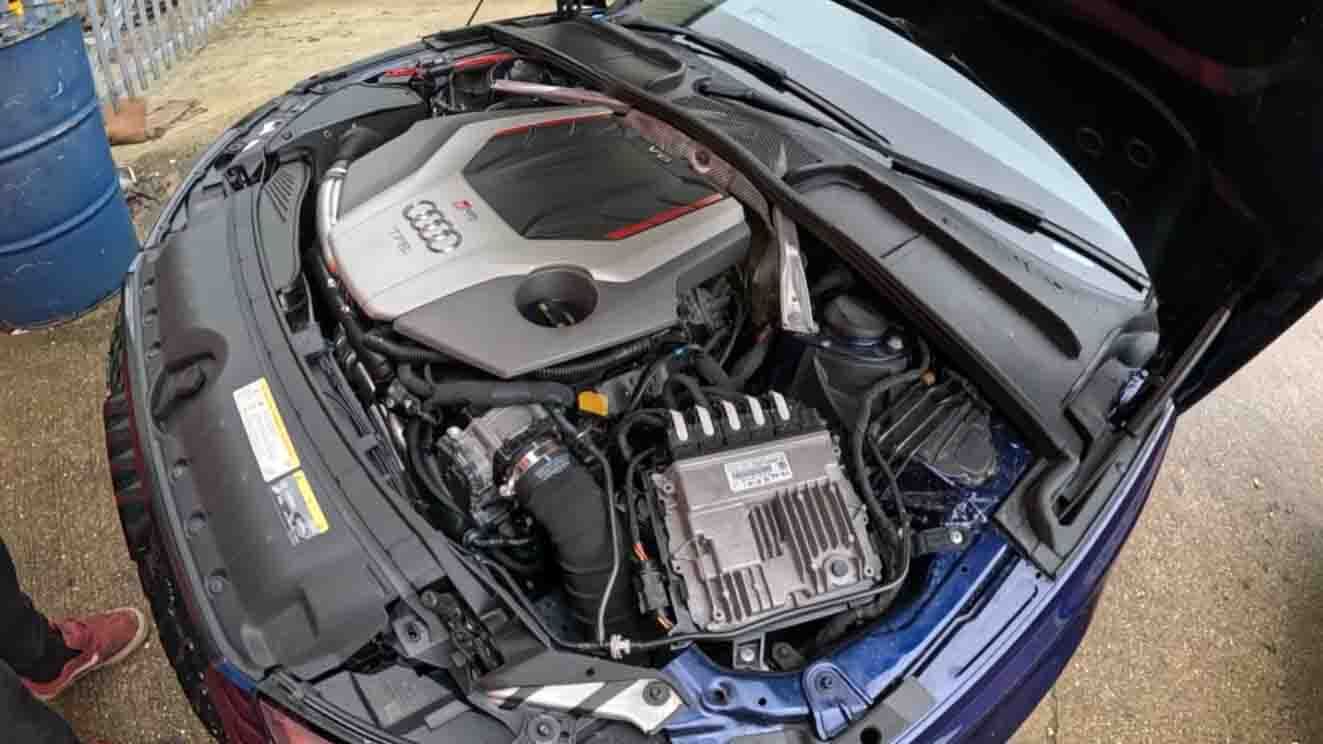
The RS4's 2.9-litre twin-turbo V6 uses a hot-V layout, so both turbochargers sit tightly in the centre of the engine. That packaging is great for response, but it concentrates a huge amount of radiant heat under the bonnet.
We wanted to answer the useful question: what actually changes when you fit a turbo blanket to a real, high-powered road car?
Watch: In our RS4 test video, we show the car, the turbo blanket install, the thermal camera checks and the before-and-after heat results this article is based on.
The simple answer
On this 550bhp Audi RS4, fitting two Exoracing turbo blankets reduced the measured turbo-area surface temperature from 117.8°C to 70.0°C, a 47.8°C drop at the measured point.
The plastic engine cover dropped from 45.1°C to 25.5°C, and the aluminium shield above the turbo area dropped from 26.4°C to 10.5°C.
Alex's intake air temperature logs also showed an average drop of about 7°C, with the biggest reduction close to 10°C during the test.
- The RS4's twin turbos sit in a tight hot-V layout, which concentrates heat under the bonnet.
- A turbo blanket controls heat at the source by reducing radiant heat from the turbine housing.
- Our measured turbo-area surface reading dropped by 47.8°C after fitting the blankets.
- The test also showed lower plastic cover, aluminium shield and intake air temperatures.
- A blanket is not a universal fix; check oil leaks, clearance, actuator movement and nearby wiring before fitting one.
Why This RS4 Was a Good Turbo Blanket Test
This was not an easy, open-engine-bay test. The RS4's turbochargers are packed under factory heat shielding with limited airflow around the hot side. That matters because a turbo blanket has to work in a tight, heat-soaked area rather than in perfect conditions.
The main heat source was the turbine housing. The vulnerable parts were the plastic engine cover, aluminium shield, bonnet area, nearby hoses, wiring and intake components. That is exactly the kind of source-control problem a turbo blanket is designed for.
It is also a useful example for anyone searching for an Audi turbo blanket or turbo heat shield. Modern Audi turbo engine bays are often compact, so the right product choice and the fitting checks matter more than simply buying the biggest-looking blanket.
Baseline Heat Levels Without a Turbo Blanket
Before fitting the blankets, we took the RS4 for a similar hard drive, brought it back, opened the bonnet and measured the same key points. The aim was not to create a laboratory claim for every car. It was to get a fair before-and-after comparison on this specific RS4.
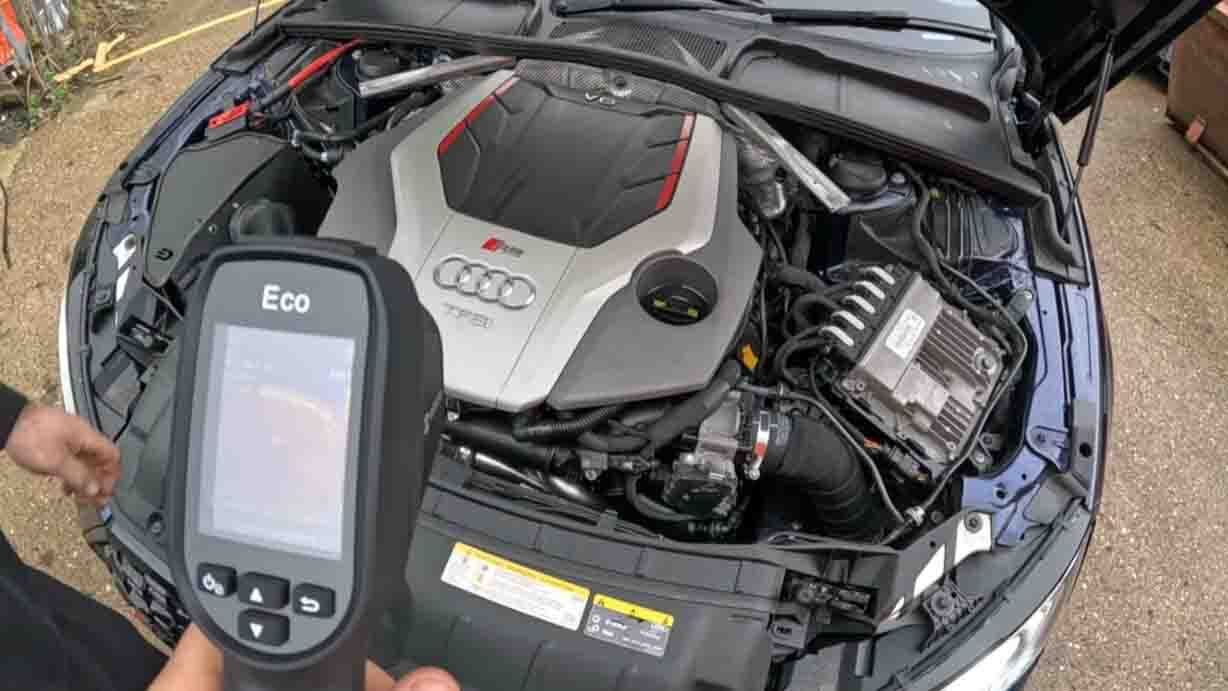
A clear sign that heat was soaking upwards into parts you would normally expect to touch safely.
The factory shielding was helping, but heat was still reaching the upper engine bay area.
The hottest measured point is the main source of radiant heat to nearby components.
What a Turbo Blanket Does
A turbo blanket wraps around the turbine housing, which is the exhaust side of the turbocharger. Its job is to reduce how much radiant heat escapes from that hot metal housing into the engine bay.
This is source control. You are not trying to cover every hose, wire and plastic part after the bay is already hot. You are reducing the heat escaping from the part creating the problem.
The Exoracing Turbo Blanket V3 is available in T25, T3 and T4 sizes and has a 1200°C working temperature rating. If you are unsure which size you need, use our turbo blanket size guide before ordering.
Watch: Our blowtorch test shows how the turbo blanket construction handles direct heat and why temperature rating matters before you fit one near a turbine housing.
What to Check Before Fitting One
A turbo blanket is not the first fix for every hot engine bay. Before fitting one, check the area around the turbo properly.
Do not fit a blanket over contamination. Clean, dry hardware is essential.
A blanket must not jam or rub on actuator arms, linkages or wastegate hardware.
Heat sleeve protects good parts; it should not hide split hose, brittle wiring or unsafe routing.
Do not choose only by flange name. Measure the turbo hot side and choose the closest correct blanket size.
Parts Used on the RS4 Test
For the RS4 test, the main upgrade was the turbo blanket. If you are solving a wider heat issue, match each product to the heat source and the vulnerable part, rather than fitting everything at random.
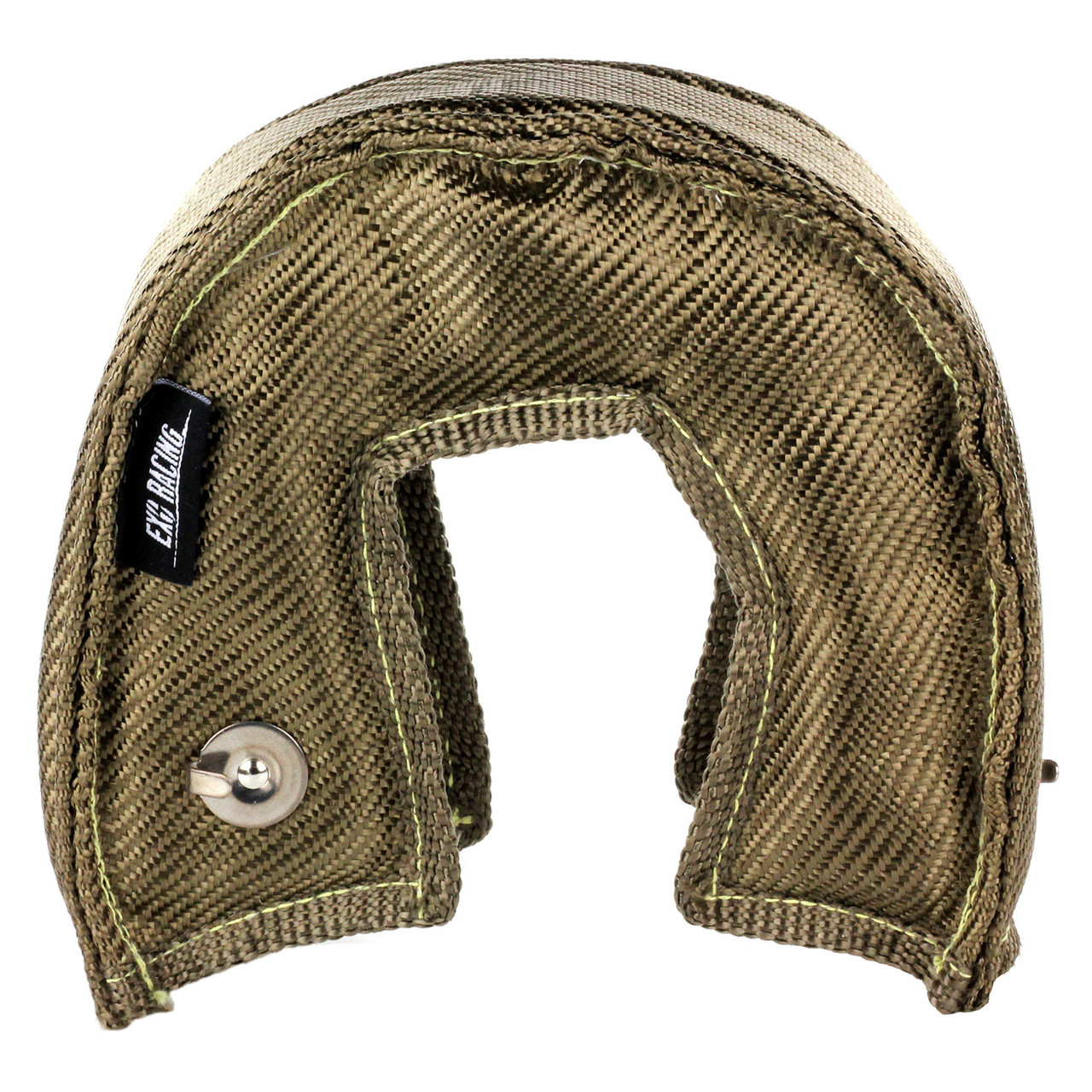 Exoracing Turbo Blanket V3
Contains turbine housing heat at the source to reduce radiant heat around the turbo.
From £119.99
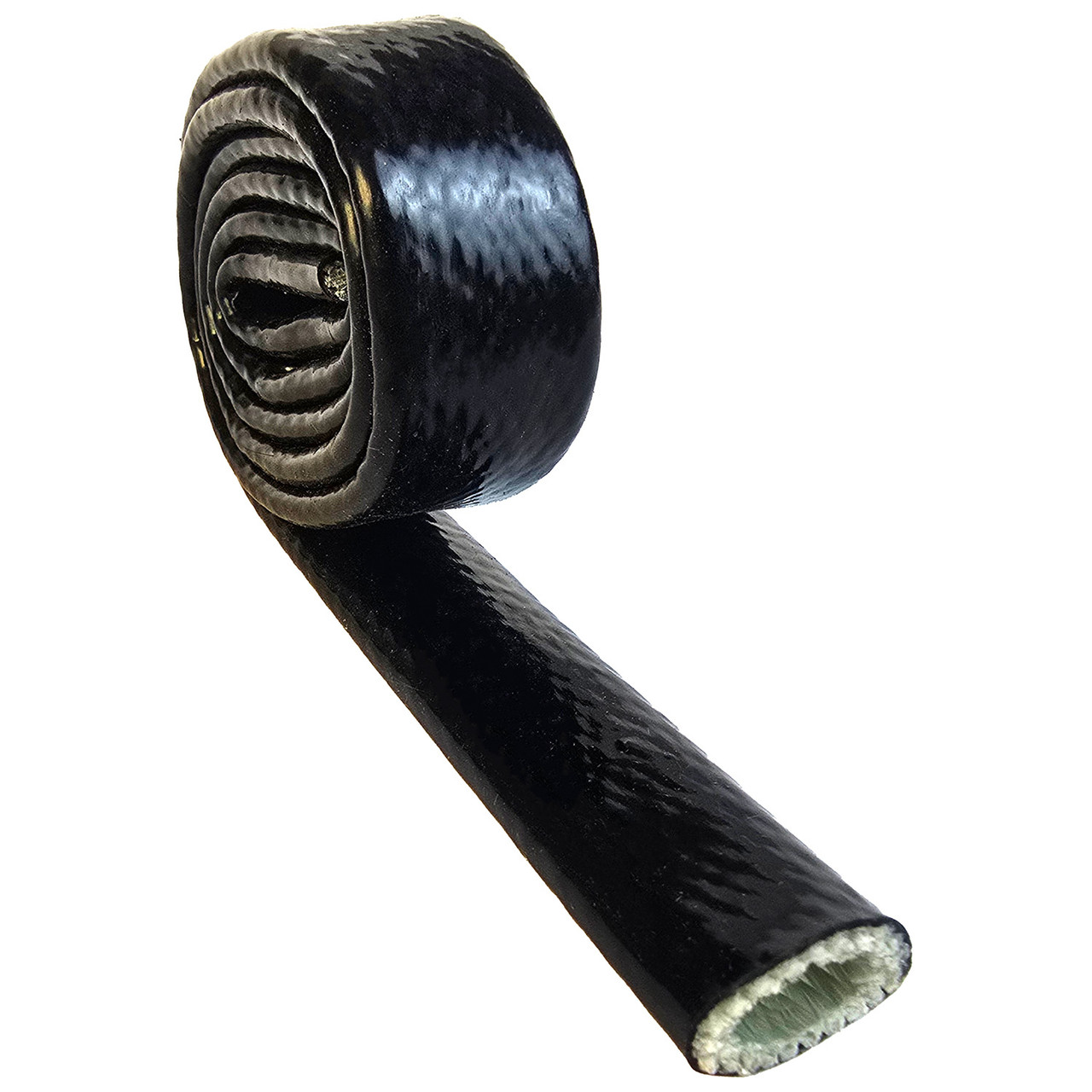 Exoracing Silicone Fibreglass Heat Sleeve
Protects hoses, wiring and lines that sit near turbo or exhaust heat.
From £14.99
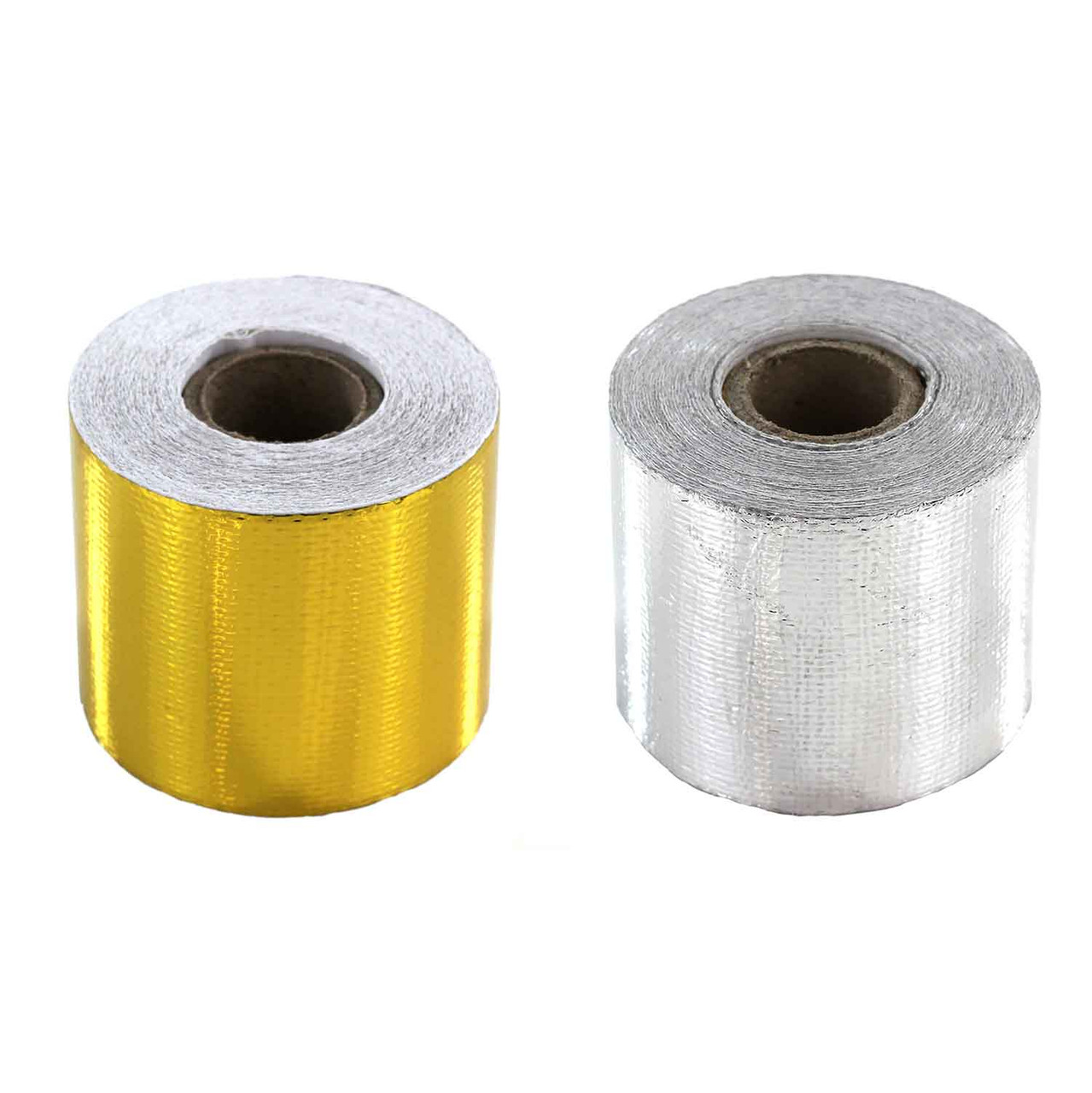 Exoracing Gold and Silver Heat Reflective Tape
Reflects radiant heat away from clean panels, intake parts and airbox surfaces.
From £29.99
Installing the Turbo Blankets on the RS4
We fitted two turbo blankets, one for each turbocharger. The engine had to be cold before we started. This is not optional: a hot turbine housing can burn you badly, and a cold install makes it much easier to seat the blanket properly.
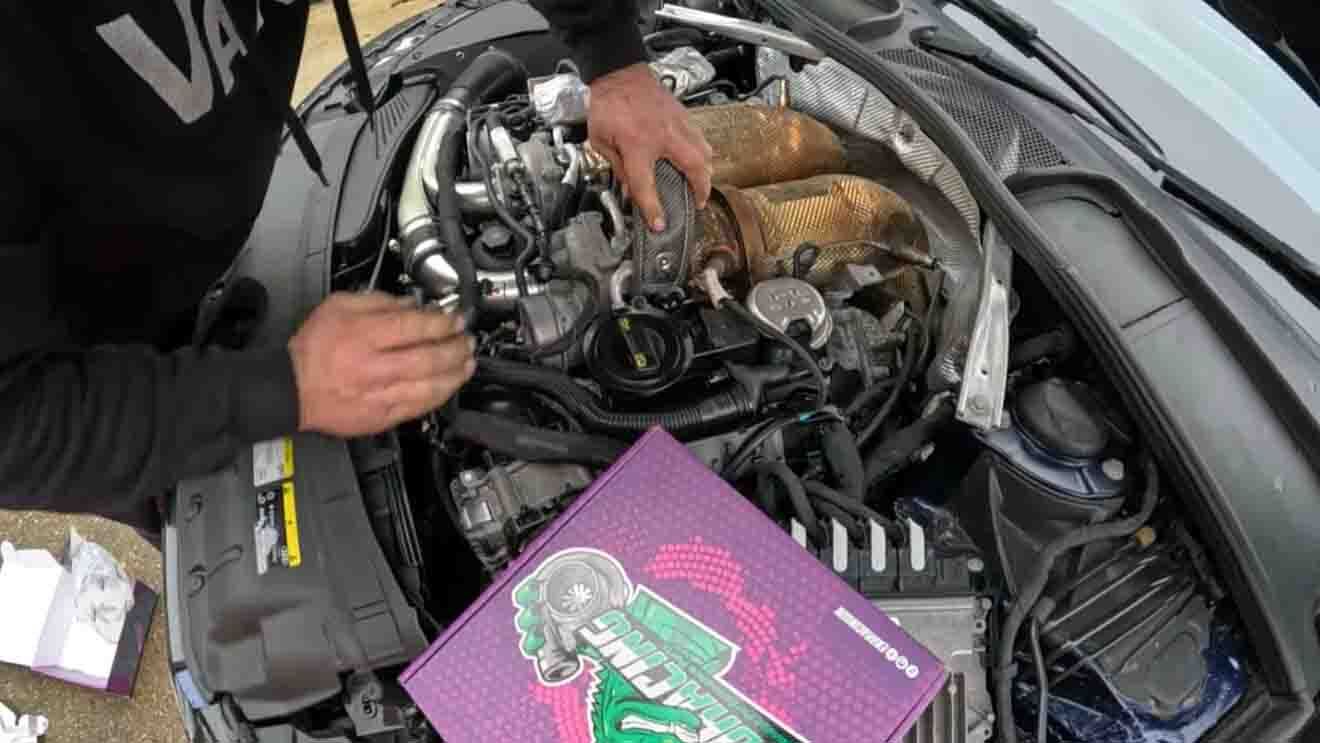
The basic process was to remove the upper covers for access, position each blanket around the turbine housing, keep the actuator and lines clear, and then secure the springs. On the RS4, this is fiddly because access is tight, so patience matters more than force.
After fitting, we checked that the blankets were not touching anything they should not touch, that the springs were secure and that there was no obvious contact with wiring, hoses or moving parts such as the actuator arms.
Before vs After Results
After fitting the blankets, we repeated the hard drive and measured the same areas. The difference was obvious before we even looked at the numbers because less radiant heat hit us when the bonnet opened.
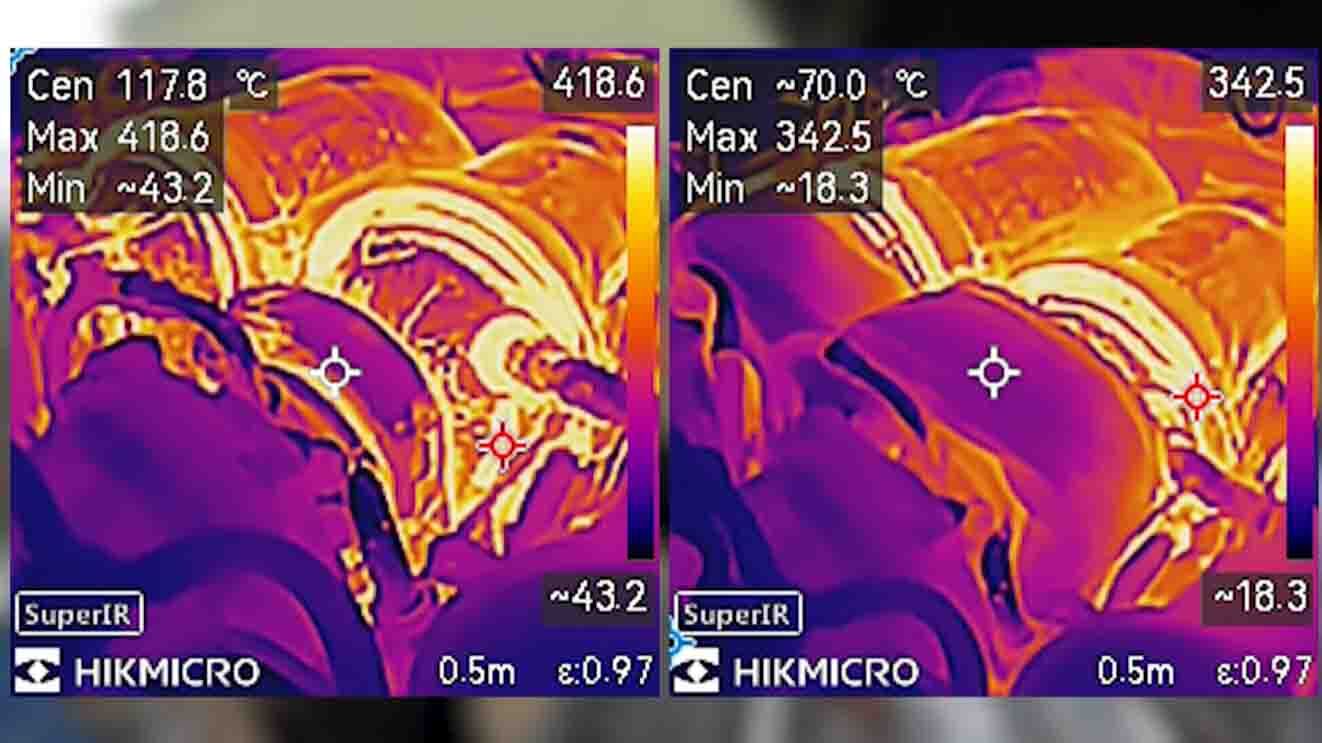
A 19.6°C drop, showing less heat soaking upwards into the top of the engine bay.
A 15.9°C drop at the measured point above the turbo area.
A 47.8°C drop, showing how much heat the blanket kept from radiating outwards.
Alex's logs showed a lower intake temperature throughout the rev range, with the biggest drop close to 10°C.
The key point is not that every car will see the same figures. The key point is that controlling the turbo heat source reduced measured temperatures in several connected areas on the same car, under similar test conditions.

What the Results Mean in Real Use
Lower engine bay temperature helps because heat damage is usually cumulative. Wiring insulation hardens, plastic covers become brittle, rubber hoses age faster, and intake parts absorb heat after repeated hard runs.
A turbo blanket will not fix a weak intercooler, blocked cooling system or poor intake design. It tackles one specific problem: radiant heat escaping from the turbine housing. On this RS4, that was the right first place to start.
For a full setup, you can combine source control with component protection. Use exhaust wrap on manifolds or downpipes, heat sleeve on hoses and wiring, and reflective tape on clean panels or intake surfaces facing radiant heat. For a wider product comparison, use our heat shield vs exhaust wrap vs heat tape guide.
Made-to-Measure Turbo Blanket or Off-the-Shelf?
A made-to-measure turbo blanket can make sense for unusual turbo housings, motorsport packaging or a setup where the actuator, V-band, manifold, or downpipe position makes a standard blanket sit badly.
Most common T25, T3 and T4 framed turbos do not need a custom blanket if the standard size sits correctly around the turbine housing and does not interfere with moving parts. The important part is not whether the blanket is custom; it is whether it covers the hot side properly and fits safely.
If your turbo is not a standard shape, measure the turbine housing, check the actuator position and compare against the sizing chart before buying. If the blanket cannot be secured without fouling the actuator or touching unsafe parts, stop and choose a better fit.
Common Mistakes With Turbo Blankets
Fitting over oil or coolant contamination
Fix leaks before fitting a blanket. Contaminated heat products can degrade, smell, smoke or create a risk that should have been avoided during inspection.
Using a blanket to hide poor routing
If a hose or wire is too close to the turbo, reroute it where possible. Then protect it. Heat protection is not a shortcut for unsafe clearance.
Choosing by car model only
Do not assume every Audi, Honda, Subaru or Nissan turbo needs the same blanket. The blanket fits the turbo turbine housing, not the badge on the boot.
Expecting one product to solve every heat issue
A turbo blanket controls turbo heat. It does not replace exhaust wrap on a downpipe, heat sleeve on a line, reflective tape on a panel or proper cooling system diagnosis.
When a Turbo Blanket Is Not the First Fix
Do not start with a turbo blanket if the engine is overheating through the coolant system. That is a different diagnosis. Check coolant level, trapped air, radiator condition, thermostat, water pump, cap, fan direction and shrouding first.
Also, pause if the turbo area has leaks, damaged oil lines, brittle wiring, cracked hoses or poor clearance. Repair, clean and reroute first, then add heat protection.
If your main problem is heat from a downpipe or manifold rather than the turbo housing, Exoracing exhaust wrap is normally the better product for that part of the system.
Turbo Blanket Pros and Cons
This helps protect nearby parts and reduce engine bay heat soak.
Other heat sources still need the correct product or routing fix.
Especially where wiring, hoses, bonnet insulation, airboxes or intake parts sit close to turbo heat.
FAQs
Do turbo blankets really reduce engine bay temperature?
They can, when the turbo housing is a major heat source. In our RS4 test, the turbo-area surface reading dropped from 117.8°C to 70.0°C, and the surrounding measured areas also ran cooler.
What turbo blanket temperature rating should I look for?
Choose a blanket designed for turbine housing heat, not a generic fabric cover. The Exoracing Turbo Blanket V3 has a 1200°C working temperature rating and is built for repeated turbo heat cycles.
Can I use a turbo blanket on an Audi RS4?
Yes, if the blanket can be fitted safely around the turbine housings without fouling moving parts or contacting unsafe areas. The RS4 hot-V layout is tight, so clearance checks matter.
Do I need a made-to-measure turbo blanket?
Not always. Many common turbo frames can use a correctly sized off-the-shelf blanket. A made-to-measure blanket is more useful for unusual housing or packaging where a standard blanket cannot sit safely.
Can a turbo blanket catch fire?
A quality blanket is designed for high turbo heat, but contamination changes the risk. Do not fit one over oil, coolant, fuel residue or leaking parts. Repair and clean the area first.
Will a turbo blanket lower the intake air temperature?
It can help if the turbo heat is soaking the intake system. On this RS4, Alex's logs showed about a 7°C average intake air temperature drop, but results depend on the car, airflow, intercooler setup and test conditions.
Should I fit a heat sleeve as well as a turbo blanket?
Use both if you have two problems: a hot turbo housing and vulnerable hoses, lines or wiring nearby. The blanket controls the source; the heat sleeve protects the part at risk.
Conclusion: What We Would Change First
On a tight turbo engine bay like the RS4, start by controlling the biggest heat source. In this test, fitting turbo blankets gave the clearest measurable improvement: lower turbo-area surface temperature, cooler upper engine bay parts, and lower logged intake air temperature.
If your turbo car suffers from heat soak, hot intake parts, brittle wiring, or hoses near the turbo, a correctly fitted turbo blanket is a strong first step. If the downpipe, manifold, wiring or panels are also part of the problem, build the rest of the setup with the right supporting heat management products rather than expecting one part to solve everything.
Start with the Exoracing Turbo Blanket V3 if the turbo housing is your main heat source, or browse the full Exoracing heat management range if you need to protect multiple areas.
Shop Heat Management PartsAbout the Author
I’m Matt, the owner of Exoracing Ltd, a UK-based performance parts brand specialising in automotive heat management and performance upgrades.
Since 2018, we have helped thousands of enthusiasts and workshops reduce engine bay temperatures with practical product advice, real testing and parts we use on our own builds and customer cars.
If you need help choosing the right heat protection for your setup, message us on Instagram @exoracinguk or use the contact options on our website.