
Fuel Line Too Close to Exhaust? What to Use
Posted by Matthew Marks on 28th May 2026
Jump to a section
Fuel Line Too Close to Exhaust? Minimum Clearance, Safety Checks and What to Use
If your fuel line runs near a manifold, downpipe, turbo, catalytic converter or exhaust tunnel, the right answer is not just to wrap something around it and hope for the best. You need to check the routing, clearance, heat source and line condition first.
We supply heat sleeves, reflective barriers, and exhaust wrap for modified road, track, drift and turbo cars, and fuel-line routing is one of the heat-management jobs where a careful safety-first approach matters most.
Shop Heat Management PartsA fuel line too close to exhaust heat should be treated as a safety and reliability problem, not just a tidy-up job. Fuel hose, PTFE hose, rubber hose, braided AN line, and metal hard line can all suffer if routed too close to a hot manifold, downpipe, turbo, screamer pipe, or catalytic converter.
In this guide, we will show you how to assess risk, what to check before fitting heat protection, when to reroute the line, when to use a heat sleeve, when to add a heat shield, and when an exhaust wrap makes sense as source control.
The simple answer
If a fuel line is close to the exhaust, the safest first fix is to reroute it away from the heat source and create as much of an air gap as possible.
If rerouting is not practical, protect the fuel line with a suitable heat sleeve and, where possible, add a physical heat shield or reflective barrier between the exhaust and the line.
Do not use a heat sleeve to hide a leaking, cracked, rubbing or damaged fuel line, and do not allow the sleeve or line to touch the exhaust directly.
- Reroute the fuel line first if you can. Heat protection is not a substitute for unsafe routing.
- Use silicone fibreglass heat sleeve for fuel lines, AN hose, wiring and other lines close to radiant heat.
- Use a Velcro heat sleeve when the line is already fitted, and you cannot slide a normal sleeve over the fittings.
- Use a reflective sheet or a heat shield when you need a barrier between exhaust heat and the line.
- Use an exhaust wrap on the exhaust source, not on the fuel line itself.
How Close Is Too Close for a Fuel Line Near Exhaust?
There is no single safe distance that works for every car because exhaust temperature, airflow, fuel line material, fuel pressure, shielding and duty cycle all change the risk. A track car with a glowing turbo manifold is not the same as a standard road car with a shielded exhaust tunnel.
As a rule of thumb, treat any fuel line near exhaust heat as a risk if it is close enough that you cannot comfortably inspect it, sleeve it, shield it and keep it away from direct contact. If the line is close to a manifold, turbo, downpipe or catalytic converter, you should be thinking about routing and shielding before the car is driven hard.
Some regulations use specific clearance figures for fuel lines near exhaust systems, but modified cars often need a more conservative approach because packaging is tighter and temperatures can be higher than standard.
Use the largest practical air gap, then add protection where heat exposure still exists.
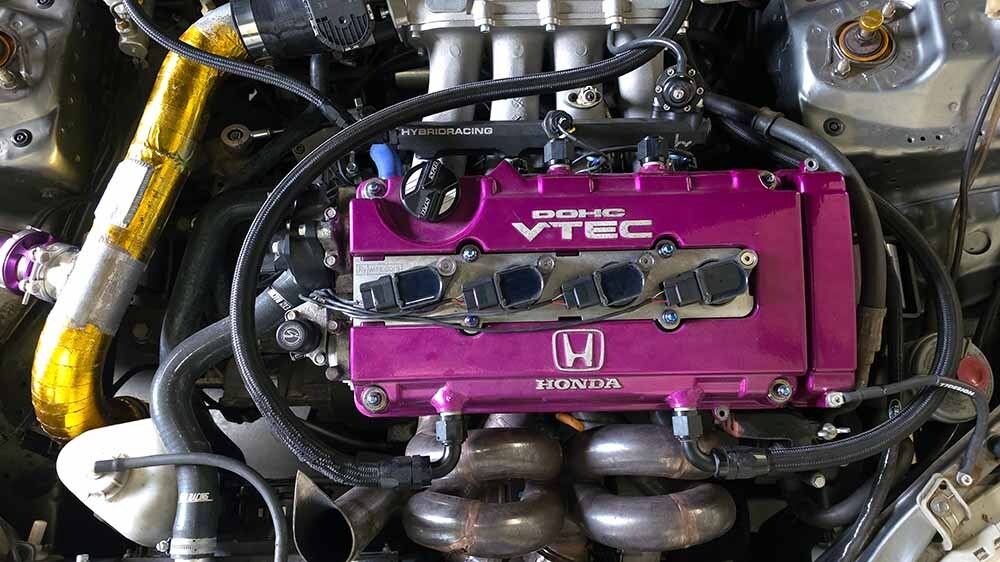
On a tightly packaged modified engine bay, fuel-line clearance is not just a single measurement. Trace the full route and check where the hose could move after heat cycles, vibration and engine movement.
Move the line, inspect for heat damage, replace it if damaged and add protection only after the route is safe.
Create more air gap, sleeve the line and consider source control such as exhaust wrap or a turbo blanket where relevant.
A reflective sheet or properly mounted heat shield can protect the line or nearby panel from radiant heat.
Velcro heat sleeve can be fitted without disconnecting the line, but only after the line is confirmed safe, leak-free and within a safe distance for the temperature rating.
Check These Before You Fit Heat Protection
Before buying a sleeve or reflective barrier, inspect the actual fuel line. We often see people focus on the shiny protection product while missing the real problem: the line is already rubbing, poorly supported, too tight around a bend, routed through a sharp bulkhead hole, or sitting where the exhaust can move into it.
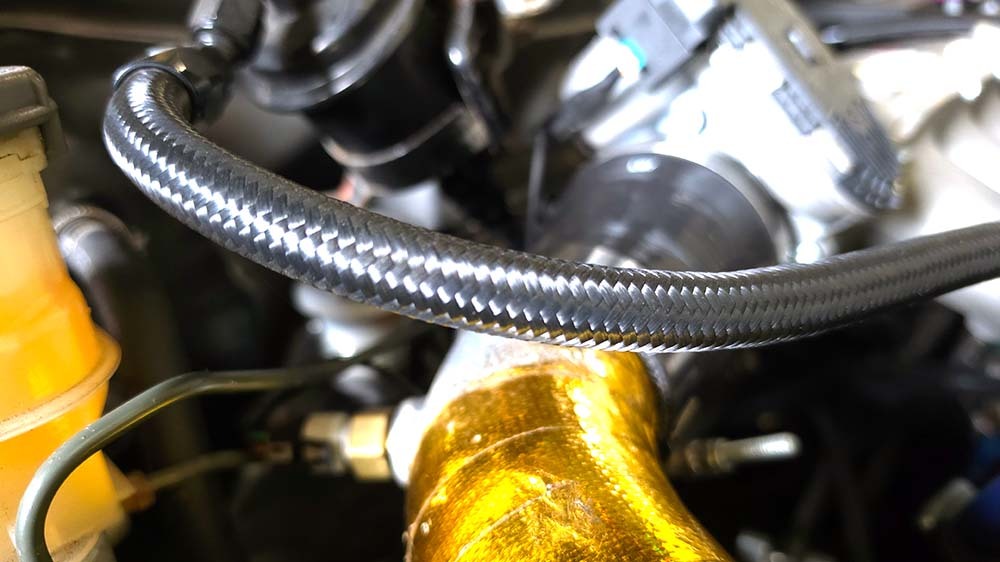
Braided hose still needs proper routing, support and clearance. Check the hose body, fittings, bends and any point where the line passes near hot metal or sharp edges.
1. Inspect the hose or line condition
Look for cracking, soft spots, swelling, flattened sections, fuel smell, seepage, abrasion marks, melted outer covering, discolouration or damaged fittings. If any of those are present, replace or repair the fuel line before fitting heat protection.
2. Check movement, not just static clearance
Engines move on the mounts, exhausts move as they heat cycle, and flexible lines can shift under vibration. A line that looks clear when the car is cold in the workshop may sit much closer after a hard drive.
3. Check support points and sharp edges
Fuel lines need proper support. If a line can sag towards the exhaust, rub on a bracket or pass through a panel without a grommet, a heat sleeve will not fix the route. We actually had a previous customer issue where a fuel line through a bulkhead rubbed through because it had no grommet.
This was very easily avoidable by just running a rubber grommet or, at the bare minimum, protective sleeving, but we would always recommend running both in this specific case.
That kind of mechanical damage needs correcting before heat protection is added.
4. Identify the heat source
A turbo housing, manifold, downpipe, exhaust tunnel and catalytic converter all create heat differently. If the line is being hit by radiant heat, a sleeve or reflective barrier can help. If the line is touching hot metal, you must move it.
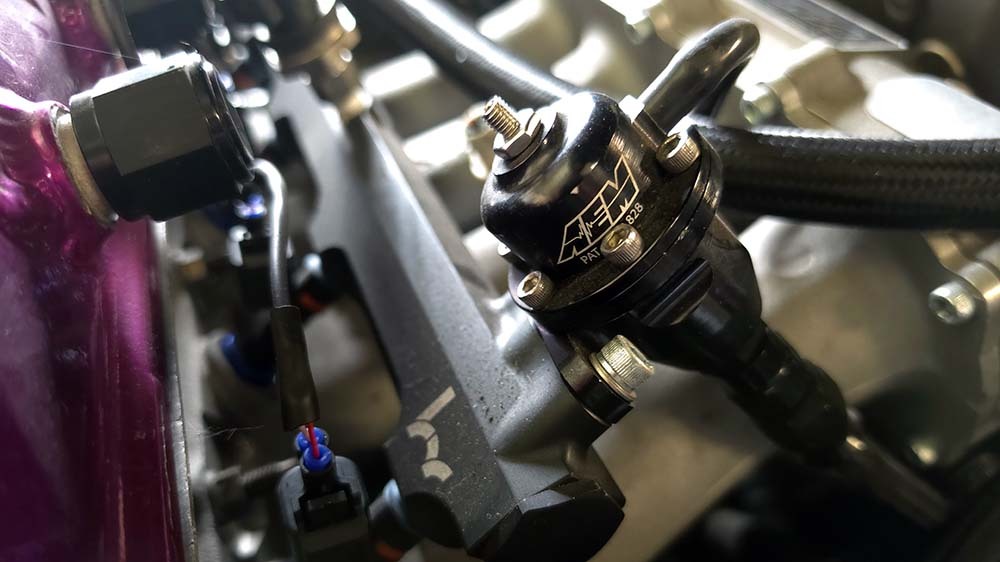
Do not only check the hose section nearest the rail. Follow the feed, return, regulator and fitting positions, then look at what exhaust heat source is nearest to each part of the route.
What Should You Use on a Fuel Line Near The Exhaust?
Choose the product based on the heat source and the vulnerable part. The heat source is usually a manifold, downpipe, turbo, exhaust pipe, screamer pipe or catalytic converter.
Use when the fuel line can be disconnected, or the sleeve can pass over the fittings.
Use when the line is already fitted, and you cannot slide a sleeve over the hose ends or AN fittings.
Use when the line or panel needs shielding from radiant heat across a wider area.
Use on manifolds, downpipes and hot exhaust sections. Do not wrap the fuel line with exhaust wrap.
If you are not sure which heat-management product fits the job, our heat shield vs exhaust wrap vs heat tape vs heat sleeve guide explains the wider product choice logic.
 Exoracing Silicone Fibreglass High Temperature Heat Sleeve 0.5m
Direct protection for fuel lines, AN hose, brake lines, oil lines, coolant hoses and wiring near heat.
From £14.99
 Exoracing Gold and Silver Velcro Heat Sleeve 0.5m
Retrofit heat protection for fuel lines, hoses and wiring that cannot be disconnected easily.
From £14.99
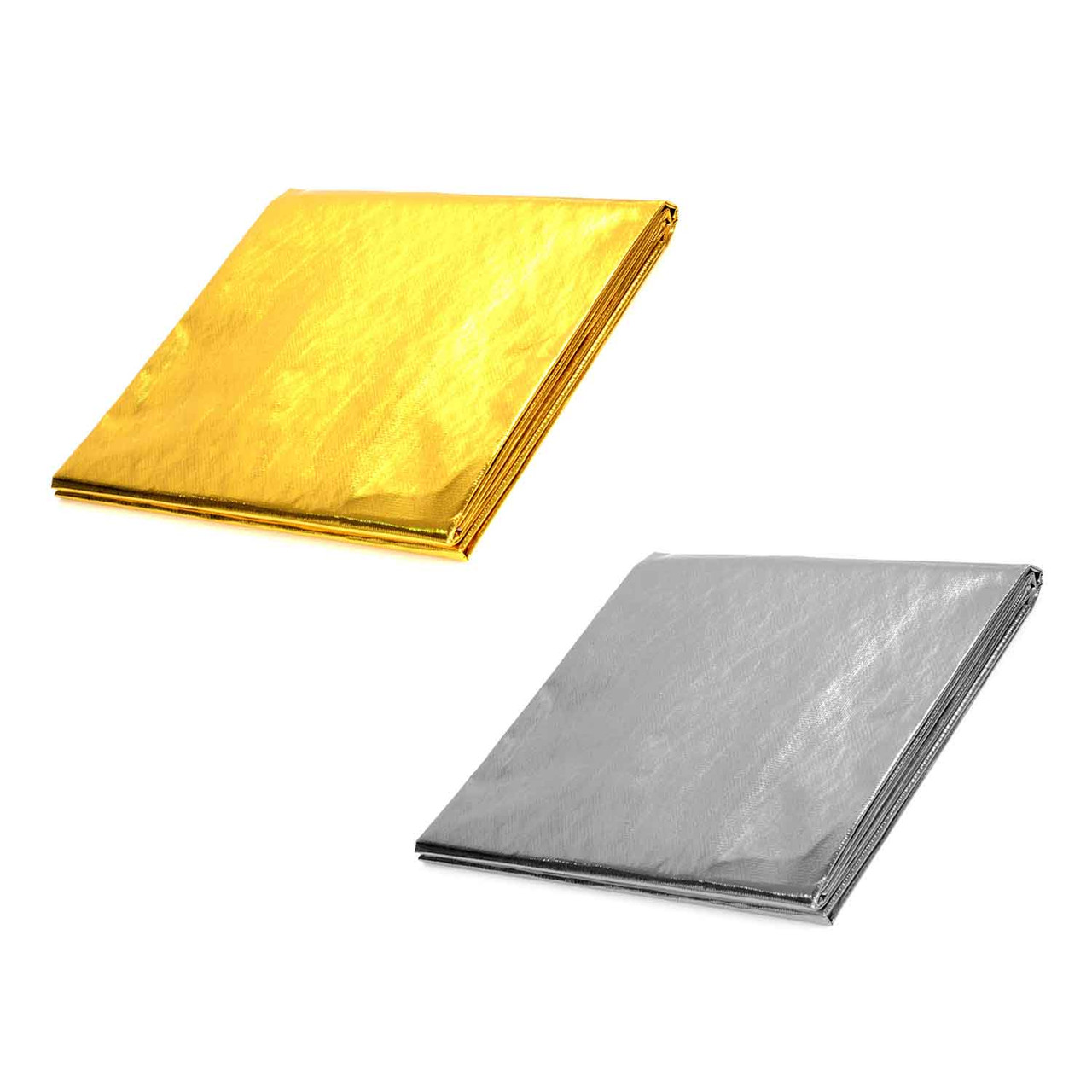 Exoracing Gold and Silver Heat Reflective Sheet 1m x 1.2m
Cut-to-shape reflective barrier for panels, bulkheads, floor areas and shields near exhaust heat.
From £69.99
How to Size a Heat Sleeve for a Fuel Line
Measure the outside diameter of the fuel hose, AN line, hard line covering, or wiring bundle you want to protect, then choose the closest sleeve inner diameter above that measurement. Do not choose sleeve size from the fuel line's nominal bore size alone.
For example, a hose described as 8mm, 10mm or AN6 may have a larger outside diameter once the wall thickness and outer braid are included. If the route is tight, the hose has bulky fittings, or the sleeve needs to pass over an assembled fitting, size up or use a Velcro sleeve.
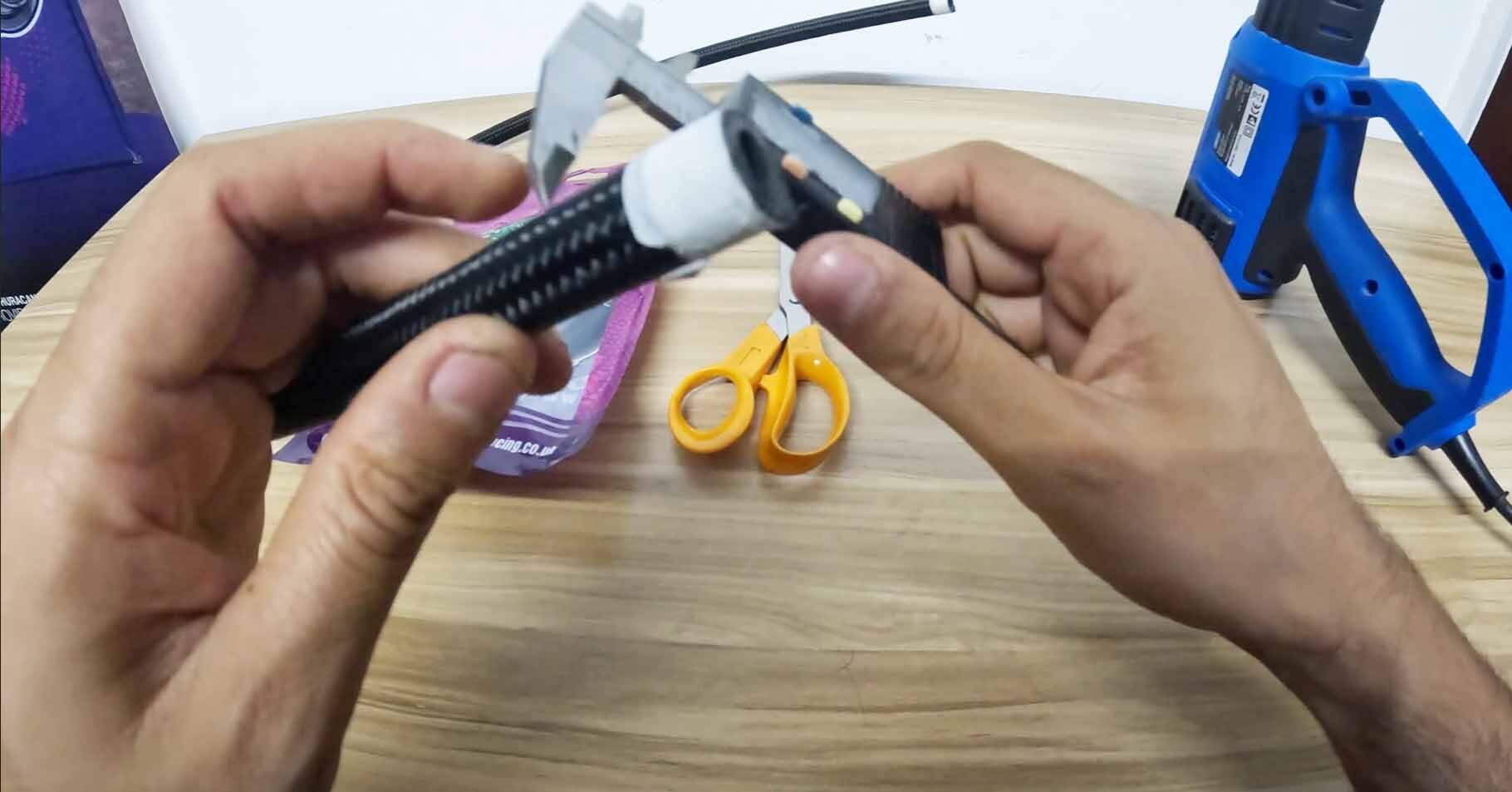
For more detailed sizing examples across AN lines, wiring and hose sizes, use our heat sleeve size chart before ordering.
Watch: In our silicone heat sleeve install video, we show how to measure, cut, slide and finish the sleeve on hoses and lines before the car goes through heat cycles.
Should You Wrap the Exhaust Instead?
Sometimes the best way to protect the fuel line is to reduce the heat coming from the exhaust. This is source control. If the fuel line is close to a hot downpipe, manifold or screamer pipe, exhaust wrap can reduce radiant heat from that pipework before it reaches the line.
That does not mean you should use exhaust wrap on the fuel line itself. The exhaust wrap belongs on the exhaust pipework. Heat sleeve belongs on hoses, lines and wiring. If the fuel line is still exposed after the exhaust is wrapped, use a sleeve or a barrier as well.
 Exoracing Titanium or Carbon Exhaust Wrap
Source control for manifolds, downpipes and hot exhaust pipework near fuel lines and wiring.
From £24.99
 10 x Exoracing Stainless Steel Cable Ties
High-temperature securing for exhaust wrap, heat sleeve and engine bay line protection.
From £9.99
If you plan to wrap the exhaust source, our exhaust wrap installation guide covers overlap, stainless tie placement and first heat-cycle checks.
What Happens If You Ignore It?
Ignoring a fuel line near the exhaust heat can lead to more than poor running. The line can become brittle, soften, rub through, seep, smell of fuel, or suffer heat soak that contributes to hot-start and vapour-related problems. On a modified car, those risks are made worse by tighter packaging and higher exhaust temperatures.
The expensive mistake is assuming that a sleeve fixes everything. A sleeve over a damaged fuel line can hide a fault. A sleeve on a line touching the exhaust can still be exposed to too much heat. A reflective barrier stuck to a dirty or oily panel can lift. Good heat protection starts with a safe route and a sound line.
The risk usually builds in stages
Fuel-line heat problems do not always start with a dramatic failure. They often begin with a route that looks acceptable when the car is cold, then gets worse once the engine moves on its mounts, the exhaust expands, the hose softens, or a clip lets the line sag. That is why a fuel line can pass a quick visual check in the garage but still become a problem after a hard road drive, dyno run, track session or long hot idle.
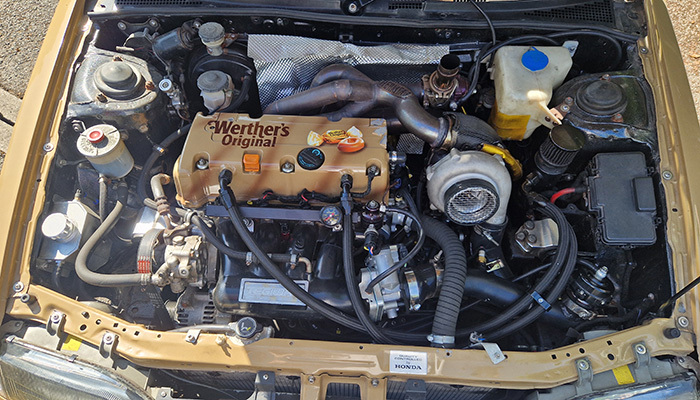
Turbo conversions and engine swaps often put hot exhaust parts, fuel components and wiring into a much tighter space than the original car was designed for. That is where a small routing mistake can become expensive quickly.
A fire-risk fault can damage wiring, paint, hoses, engine bay plastics, underbody parts and the car itself. It can also put the driver, passengers and anyone nearby at risk.
Why does it become expensive quickly?
A small routing mistake is usually cheap to prevent while the car is being built. It becomes expensive when it is found after the car is mapped, tracked, daily driven, or fully assembled. At that point, you may be paying for diagnostic time, fuel hose, fittings, clips, heat protection, access labour, replacement wiring, damaged paint or another trip to the workshop.
There is also the hidden cost of confidence. Once a car has had a fuel smell, hot-start issue or visible heat damage, the owner often has to inspect everything nearby: wiring loom, brake lines, coolant hoses, washer bottle, bulkhead material, underbody coatings and any plastic clips. Preventing the heat problem at the routing stage is far easier than rebuilding trust in the car after something has gone wrong.
Common Mistakes With Fuel Line Heat Protection
Using a heat sleeve as a repair
The heat sleeve protects a good line. It does not repair a fuel leak, split hose, damaged braid or poor fitting. Fix the line first. If the hose has already been cooked, hardened, swollen or rubbed, replacing it is usually the sensible move before any sleeve goes on.
Letting the sleeve touch the exhaust
The sleeve is there for protecting a line from nearby heat, not for sitting against a manifold or downpipe. If there is direct contact, reroute the line. Direct contact can also wear through the outer surface of the sleeve, so you can end up with a hidden abrasion problem as well as a heat problem.
Using reflective tape on the fuel hose
Reflective tape and sheet are best for panels, surfaces and shields. For the fuel line itself, use a heat sleeve. A tape wrapped directly around a flexible fuel hose can lift, trap dirt, hide damage and make later inspection harder.
We've seen this time and time again, and not only does it not look great, but reflective tape isn't designed to wrap around hoses.
Forgetting to secure the line
If the line can move, it can sag towards the exhaust or rub through. Use proper mounts, P-clips, brackets or suitable fixings so the route stays controlled. A loose line can pass an inspection one day and become unsafe after vibration, heat cycling or engine movement.
When Not to Use a Heat Sleeve First
Do not make a heat sleeve your first fix if the fuel line is leaking, damaged, touching the exhaust, unsupported, rubbing on a sharp edge, routed through an unprotected panel, or close to moving parts. Those problems need repair, rerouting, or proper mounting first.
Use a heat sleeve after the route is safe. The right order is simple: inspect, repair, reroute, support, shield, sleeve, then recheck after heat cycles.
Fuel Line Heat Protection Checklist
- Find the exact heat source: manifold, turbo, downpipe, catalytic converter, screamer pipe or tunnel.
- Check the fuel line for leaks, cracking, swelling, rubbing, smell or heat damage.
- Reroute the line if it is touching, almost touching or likely to move towards the exhaust.
- Add proper support so the line cannot sag, vibrate or rub through.
- Use a heat sleeve on the line and a reflective sheet or a shield where a barrier is needed.
- Recheck after the first heat cycle and again after hard road, track or dyno use.
Frequently Asked Questions
Can a fuel line run near an exhaust?
It can, but it should have the maximum practical clearance, proper support and suitable protection where heat exposure remains. If it is touching the exhaust or very close to a high heat source, reroute it before adding the sleeve.
What is the best heat protection for a fuel line?
For the fuel line itself, use a suitable heat sleeve. For surrounding panels or barriers, use a heat reflective sheet or a proper heat shield. If the exhaust pipework is the main heat source, an exhaust wrap can help reduce radiant heat from the source.
Can the heat sleeve touch the exhaust?
No. Treat direct contact as a routing problem. The heat sleeve is designed to protect lines from nearby heat, not to sit against hot exhaust metal. Move the line or add a properly spaced shield.
Should I use a silicone heat sleeve or a Velcro heat sleeve?
Use a silicone fibreglass heat sleeve when you can slide the sleeve over the fuel line or fittings. Use a Velcro heat sleeve when the line is already installed and disconnecting it is not practical.
Just be very aware that both of these products have different temperature ratings; the silicone heat sleeve can get much hotter than the velcro heat sleeve.
Will a heat sleeve stop vapour lock?
It can help reduce heat exposure to the fuel line, but vapour lock and hot-start problems can have several causes. Check routing, fuel pressure, fuel system layout, pump position, return setup and heat source before blaming one part.
Can I wrap a fuel line with exhaust wrap?
No. Exhaust wrap is for exhaust pipework. For fuel lines, hoses and wiring, use a heat sleeve. If you want to reduce the heat coming from the exhaust, wrap the exhaust source instead.
Do braided AN fuel lines still need heat protection?
They may do so if they run near a manifold, turbo, downpipe or other strong heat source. Braided outer material does not automatically make a line safe from radiant exhaust heat. Inspect the route and protect the line where needed.
Final Recommendation
If your fuel line is too close to the exhaust, start with safety: inspect it, repair or replace anything damaged, reroute it where possible and secure it properly. Once the route is safe, use a heat sleeve on the fuel line and add a heat shield or reflective barrier if the line is still exposed to radiant heat.
For most modified cars, the best setup is a combination of air gap, secure routing, silicone fibreglass heat sleeve or Velcro heat sleeve, and source control on the exhaust where needed.
Shop Fuel Line Heat Protection PartsAbout the Author
Exoracing is a UK-based performance parts and heat management specialist.
Since 2018, we have helped enthusiasts, workshops and motorsport customers choose practical solutions for turbo heat, exhaust heat, wiring protection, hose protection, reflective barriers and engine bay heat management.