
How To Choose a Honda K-Series Fuel Rail
Posted by Matthew Marks on 2nd Aug 2024
Choosing a K-Series fuel rail can feel confusing at first because most of them look similar, yet the details can change how easy the install is and how well the rail suits your setup.
Some rails are better if you want a simple, clean road car build, some are better if you want centre feed tucked lines, and some are clearly aimed at very high horsepower drag or turbo applications.
In this guide, we will compare the most common K-Series fuel rails we deal with, explain what the important specs actually mean, and help you narrow the options down to the one that best suits your engine bay, fuel system, and power goals.
We will cover colour options, bore size, fittings, centre feed ports, compatibility, and the situations where each rail makes the most sense.
- Most K-Series fuel rails are chosen for fitment, port layout, styling, and future fuel system plans
- If you are staying with lower power, the rail choice is often more about features and appearance than outright flow
- If you are building a higher-horsepower turbo car, return system compatibility and line routing matter much more
- Centre feed ports are useful if you want a cleaner tucked engine bay layout
- Heat around fuel lines and nearby components is worth thinking about on harder-driven or turbo builds
What Is A Fuel Rail?
A fuel rail is a hollow, usually metal tube that distributes fuel to the injectors on combustion engines.
In the specific Honda K-Series example, you will have a feed line from the factory, which brings the fuel up to the rail. The fuel pump drives this line, and the pressure is controlled via the fuel pressure regulator in the tank.
The fuel is then evenly distributed across the rail to ensure the injectors never run out of fuel and have the correct supply.
In simple terms, the rail is there to make sure each injector has a stable fuel supply available whenever the ECU commands it.
That is why fuel rail design starts to matter more once power levels, injector size, and fuel demand all increase. On a basic road car, the factory setup is usually fine. On a higher horsepower build, the rest of the fuel system quickly becomes more important.
If you are planning the full setup rather than just the rail, our EP3 fuel return system guide is the best next read because it walks through the extra parts you need once the stock system stops being enough.
You'll find that most fuel rails are symmetrical to ensure they can evenly distribute fuel to the injectors.
Upgrading your fuel rail in a K-Series application is one of the most common modifications, and we'll explain why in the next section.
Why Should I Buy An Aftermarket Fuel Rail?
There is one massive advantage to going with an aftermarket fuel rail.
The OEM Honda Civic EP3 or Honda Integra DC5 fuel system is returnless, which means there is only one feed line going to the fuel and no return.
This is fine for OEM power, but as soon as you reach around the 300-400bhp mark, you must install a fuel return system.
This is the real turning point for most people.
You are not usually buying an aftermarket fuel rail because it magically adds power on its own. You are buying it because the rest of the fuel system needs to become more flexible, easier to route, and better suited to bigger injectors, aftermarket lines, and a proper return setup.
As you cannot achieve this with the stock fuel rail, you must look at aftermarket options for a feed and return port.
 Acuity Fuel Rail Satin For Honda K-Series K20A K20Z
A strong all-round choice if you want a premium finish, centre feed option, and a rail that also helps clean up the engine bay.
From £188.87
 Speedfactory Mega Flow Fuel Rail Billet AN10 K-Series
Massive bore rail for serious power levels where future flow capacity matters more than keeping things subtle.
From £212.87
 Hybrid Racing Fuel Line Kit Tucked For Honda Civic Integra DC5 EP3
Perfect if you want to make use of a centre feed rail and keep the engine bay looking much cleaner.
From £127.00
Other important points include the cleaner look, better fitting options, and easier line routing that many aftermarket fuel rails offer compared with an older OEM setup.
It is also worth thinking about heat here. On turbocharged K-Series builds, fuel lines, fittings, and nearby hoses can end up routed much closer to manifolds, downpipes, and other hot engine bay parts than Honda ever intended.
A cleaner aftermarket fuel setup is great, but protecting nearby lines from radiant heat is what helps keep the whole system reliable long term.
If you are going for more than 300-400bhp, we have an entire guide to walk you through building an EP3 fuel return system.
Photo: Instagram @david_goldstraw
Best K-Series Fuel Rail Brands
Now, we move on to all of the K-Series fuel rail brands. This is a hefty list with 7 different options. Still, they all offer something unique, such as a specific colour, bore size, or port.
Before jumping into the brand list, it helps to think about fuel rails in three simple groups.
First are the rails chosen mainly for style and tidy engine bay details. Second are the rails chosen for features like centre feed ports, fittings, and easy line routing.
Third are the rails chosen because the car is heading into serious horsepower, where bore size and future capacity become more relevant.
There is something for everyone here, and you can almost guarantee most of the aftermarket fuel rails installed in the UK will include most of these brands.
I will review everything we currently know about each and add product links if you want to learn more about or purchase a specific rail.
The list is in no particular order, but it may be worth reading through each one to see the style and design elements before going to the comparison table at the end.
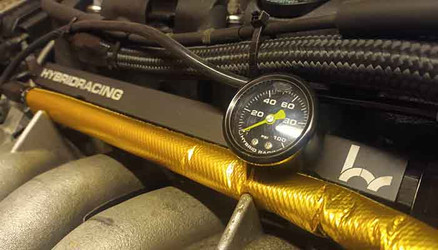
Hybrid Racing K-Series Fuel Rail
First on the list would be the most popular K20 fuel rail brand we sell, Hybrid Racing.
Hybrid Racing has been manufacturing some of the best K-Series parts on the market since 2001, such as their world-famous short shifters and gear knobs.
There are 2 colour options for the fuel rails here: their famous dust red or dust black, which has a beautiful satin finish.
Every Hybrid Racing fuel rail has a 1/8"NPT port for gauges or pressure sensors, a large ORB08 bore, and threads on either side to quickly adapt to any fuel line size.
If that is your thing, Hybrid Racing also offers tucked fuel lines, which hide the feed line through the central port.
| Bore Size | 0.5" / 12.7mm |
| Fittings Included | Yes |
| Colour Options | Dust Black, Dust red |
| Centre Feed Port Included | Yes |
| E85 Compatible | N/A |
| Material | 6061 Aluminium |
| Port Type | ORB08 |
| 1/8"NPT Port | Yes |
Skunk2 K-Series Fuel Rail
Next on the list is the Skunk2 composite K-Series fuel rail.
This fuel rail list is for compatibility with OEM intake manifolds, but Skunk2 also makes a specific fuel rail for the Ultra Race series of manifolds, so it would be worth going with that if you're combining with one of their manifolds.
The Skunk2 fuel rail features a 0.625" central bore, larger than the Hybrid Racing fuel rail.
Being manufactured from a carbon composite, it is 33% lighter and 60% stronger than aluminium, making it a good contender for this list.
The downside is that due to the material it is made from, it's only available in black. However, due to their design, they are also compatible with the factory fuel system, which makes this rail very versatile.
| Bore Size | 0.625" / 15.87mm |
| Fittings Included | No |
| Colour Options | Black |
| Centre Feed Port Included | No |
| E85 Compatible | Yes |
| Material | Carbon Composite |
| Port Type | ORB08 |
| 1/8"NPT Port |
Yes |
Speedfactory Racing K-Series Fuel Rail
Next on the list is the Speedfactory Racing fuel rail, which differs significantly from the others.
Although it is machined from 6061 aluminium like the others, the design is different. It has a massive internal bore of 0.806" / 20.47mm, the biggest I know of right now.
Speedfactory says that their fuel rail can do 2000+ horsepower, the highest of any K-Series fuel rail on the market!
If you have a full-drag weapon or just like the styling, this is the perfect fuel rail!
The fact that this rail can be used with any fuel is a bonus for street or race cars, and the included ORB10 to AN06 adapters make for an easy installation with the most common fuel line sizing.
| Bore Size | 0.806" / 20.47mm |
| Fittings Included | Yes |
| Colour Options | Black |
| Centre Feed Port Included | Yes |
| E85 Compatible | Yes |
| Material | 6061 Aluminium |
| Port Type | ORB10 |
| 1/8"NPT Port |
Yes |
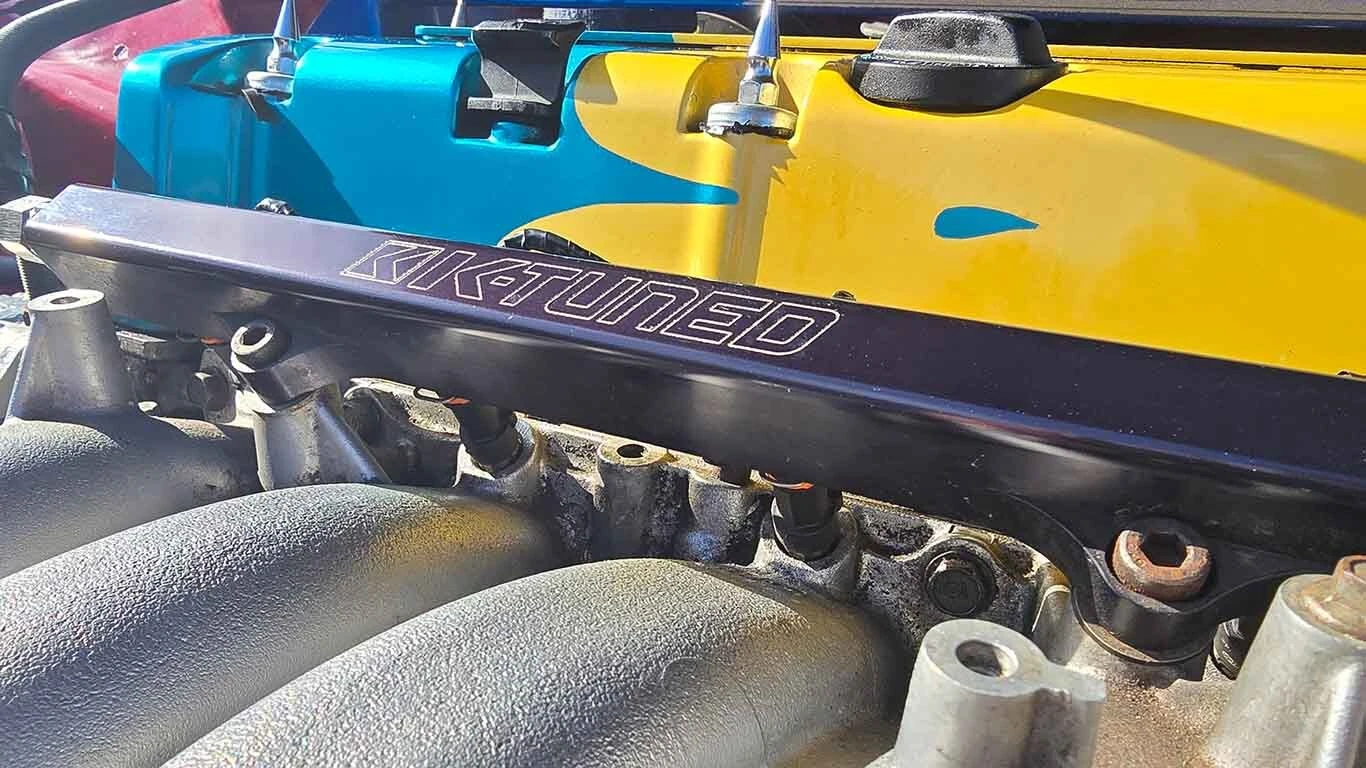
K-Tuned K-Series Fuel Rail
K-Tuned is also a massively popular Honda brand that has been around for years. Its K-tuned fuel rail is very common to see on any build worldwide.
They offer most of the benefits of the other manufacturers, but with the most extensive colour range, which makes them a great option.
The K-Tuned fuel rail is available in black, gold, silver, blue or red to match nearly every style of engine bay.
K-Tuned also redesigned these fuel rails to be more compatible with some of the newer Civics and Rotrex supercharger applications where space became an issue.
Regarding centre bore size, they offer their fuel rails with a 0.70" / 17.9mm, which is the middle of the road compared to the rest on this list. They claim it can handle up to 1000+WHP.
| Bore Size | 0.70" / 17.9mm |
| Fittings Included | Yes |
| Colour Options | Black, Gold, Silver, Blue, Red |
| Centre Feed Port Included | Yes |
| E85 Compatible | N/A |
| Material | 6061 Aluminium |
| Port Type | ORB08 |
| 1/8"NPT Port |
No |
Acuity K-Series Fuel Rail
Acuity is known for always doing something different; its fuel rails are a perfect example.
Although the bore is in line with the rest, what makes them stand out are the colour finishes they have chosen.
They offer black, red, teal, and purple K-Series fuel rails, and they are the only company I know of that provides teal and purple.
If you're going with a teal or purple theme, this is 100% the option.
They always have sleek designs and beautiful satin finishes, and these rails are no different; see for yourself below!
| Bore Size | 0.59" / 15mm |
| Fittings Included | No |
| Colour Options | Black, Red, Teal, Purple |
| Centre Feed Port Included | Yes |
| E85 Compatible | N/A |
| Material | 6061 Aluminium |
| Port Type | ORB08 |
| 1/8"NPT Port |
Yes |
Radium K-Series Fuel Rail
Radium is next on the list and is best known for its fuel cell and swirl pot setups.
They now also manufacture a line of fuel rails, specifically for the Honda K-Series.
You can always tell a Radium product from a mile away because of its distinct laser etching and design elements, and its Radium fuel rail is no different!
They have a 0.69" internal bore, one of the largest on the list. They are also E85 safe and will fit OEM and aftermarket injectors.
| Bore Size | 0.69" / 17.53mm |
| Fittings Included | No |
| Colour Options | Black |
| Centre Feed Port Included | Yes |
| E85 Compatible | Yes |
| Material | 6063 Aluminium |
| Port Type | ORB08 |
| 1/8"NPT Port |
No |
Nuke Performance K-Series Fuel Rail
Nuke Performance is a Swedish fuelling specialist that manufactures some of the world's best fuel cell and swirl pot setups.
We've dealt with their products for several years, and the quality is outstanding, just like the Nuke Performance fuel rail.
We filmed a full step-by-step swirl pot guide in case you need any help building your setup!
They make a wide range, including a specific option for the Honda K-Series. In classic Nuke style, it has a gel plaque in Swedish colours!
Like many other rails on this list, they offer an OEM fit and E85 compatibility, but they uniquely use a 3/8"NPT thread at the end of the rail.
| Bore Size | 0.56" / 14.3mm |
| Fittings Included | No |
| Colour Options | Black |
| Centre Feed Port Included | No |
| E85 Compatible | Yes |
| Material | 6082 Aluminium |
| Port Type | 3/8"NPT |
| 1/8"NPT Port |
No |
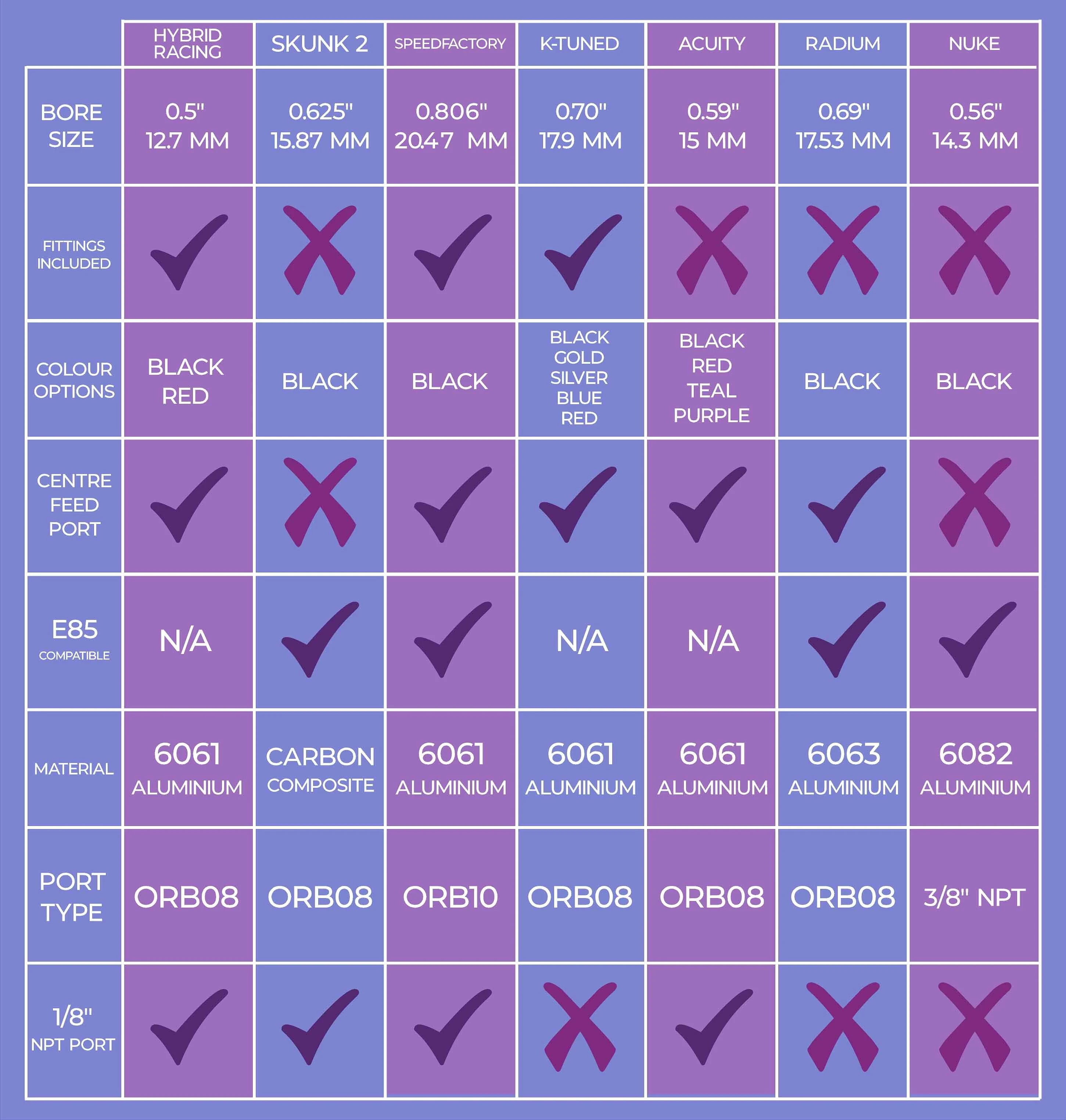
Honda K-Series Fuel Rail Comparison Table
Now that we've reviewed the fuel rails, it's time to merge them into a single, simple table.
From here, you can easily decide which one is right for you.
While comparing fuel rails for this article, I was shocked to discover that bore sizes differ so much between manufacturers and that there isn't a standard size. However, many of them hover around the same point.
Also, as you can see below, most manufacturers use the same or similar aluminium grade, apart from Skunk2, which has broken the mould and used a carbon composite for their design.
How Do I Choose Which K-Series Fuel Rail To Buy?
There are a few factors here that will help to determine which fuel rail you should buy.
The easiest way to choose is to start with the job the rail needs to do, not just the colour.
Ask yourself whether you need a simple upgrade for a cleaner engine bay, whether you are building a return style system with custom lines, whether you want a centre feed tucked setup, and whether the car is likely to grow into a much bigger horsepower build later on.
If the car is moving into a full return style setup, our EP3 fuel return system guide is the most useful next step because it shows what else you need around the rail itself.
First, look at all the design choices. There is a wide range of design elements here that you might like the look of.
Secondly, the colour choices generally play a big part in your decision. Black is the most popular choice because it works with almost any engine bay style.
Still, if you want to go for something different, something such as the Acuity teal fuel rail would be the best option.
Next, although it only applies once the higher horsepower bracket (over 800bhp), the bore size may be something to consider.
For example, if you were running a 1500bhp drag build, the Speedfactory fuel rail would be the best option, as it is the only rail rated for over this.
For the vast majority of cars, this will not be the deciding factor.
Most readers of this guide are far more likely to care about line routing, gauge ports, fittings, finish quality, and whether the rail works with the injectors and fuel system they already have.
Bore size becomes a much bigger conversation once the build moves into serious drag or very big boost territory.
Other than the points above, the choice is mainly about what you like.
There is not one single best option for everyone. The right rail depends on your power goal, your fuel system plan, your line routing, and the look you want in the engine bay.
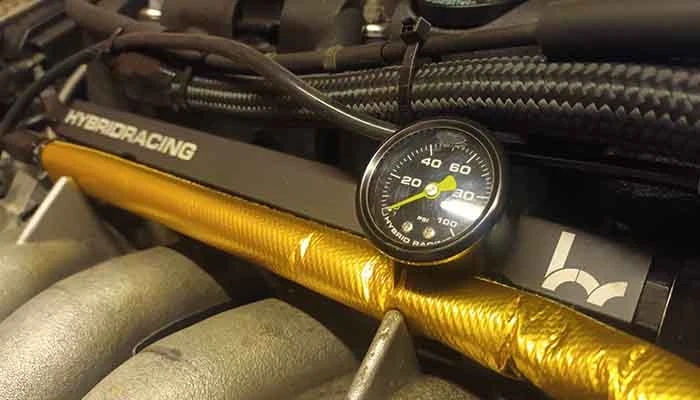
Photo: Instagram @flawless_culture
Frequently Asked Questions
This section is especially useful if you are already close to buying and just need a final answer on things like return systems, bore size, gauges, or whether an aftermarket rail is actually necessary for your power goal.
If there is anything else you want to add or know, please message us below or on our contact form, and we can help.
When should I upgrade my OEM K-Series fuel rail?
If you were looking to go with a turbocharged setup and run more than around the 400-500bhp mark, you would need to upgrade the fuel system to a return-style one.
The fuel rail wouldn't be the restriction here, as it is generally known to hold a maximum of 500-600bhp.
Upgrading the entire fuel system to a return style would be the turning point, as you would have to go with an aftermarket K-Series fuel rail regardless.
That is why most people do not upgrade the rail in isolation. Once power climbs high enough, the rail, lines, regulator, injectors, and overall fuel system plan all need to work together. The rail is usually just one piece of the bigger change.
Does fuel rail bore size make a difference?
Unless you were going over 1000bhp, which fuel rail you choose should be fine in terms of power.
Even the smallest bore on the list, the Hybrid Racing fuel rail at 0.5" / 12.7mm, is still bigger than the factory bore size and should be able to flow up to 1000bhp without a problem.
The only difference in bore size that would matter here is to dampen pressure pulses from the larger injectors on the market.
How do I go about adding a fuel return system?
You need multiple parts when creating a DIY fuel return system, but we've written an article to guide you through this process and include all the required parts.
This includes every fitting you need, with a rough cost estimation and links to buy everything.
Check out our how to build an ep3 fuel return system guide here.
It is worth planning the routing carefully as well, especially on turbocharged cars.
Once aftermarket lines and fittings are added, you need to think about how close those lines run to manifolds, downpipes, and other hot side parts, because heat can reduce long-term reliability if you leave vulnerable areas exposed.
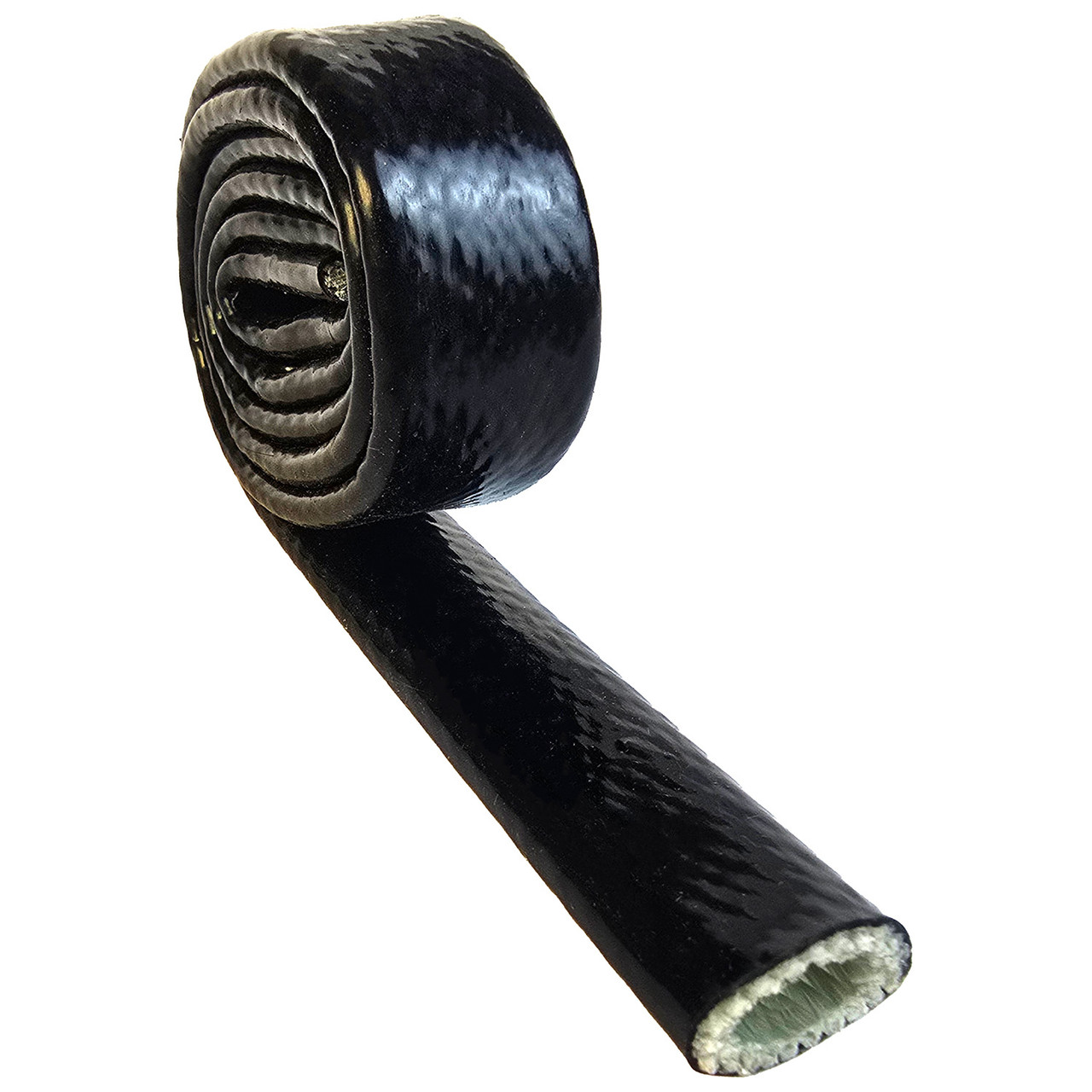 Exoracing Silicone Fibreglass High Temperature Heat Sleeve 0.5m
Ideal for shielding fuel lines, hoses, and wiring if they run close to manifolds, downpipes, or turbo heat.
From £14.99
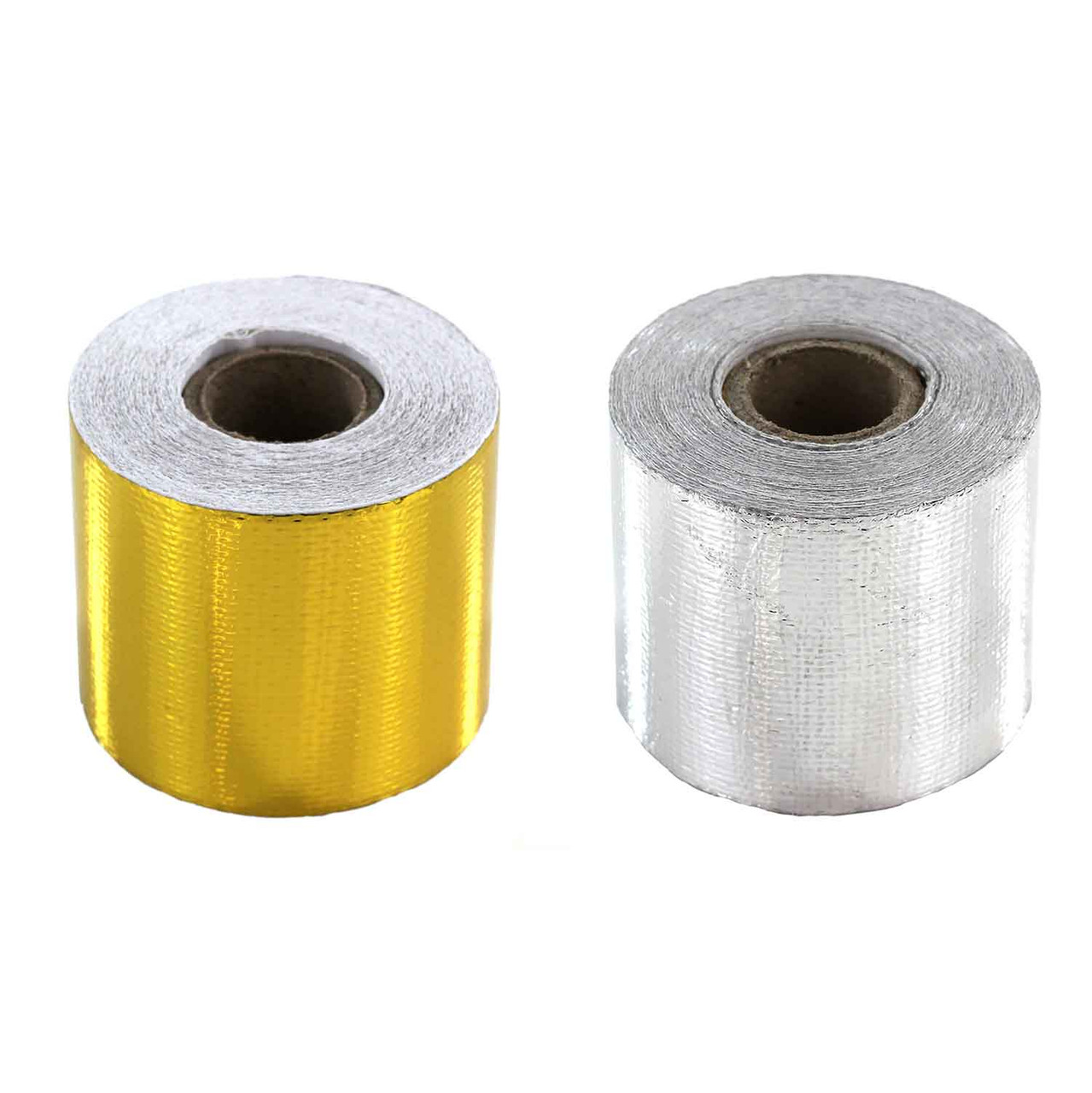 Exoracing Gold and Silver Heat Reflective Tape
Useful for bulkheads, nearby surfaces, and local hot spots where you want to reflect radiant heat away from the fuel system.
From £29.99
Is a centre feed port necessary?
The short answer is no. The main advantage of using the centre port is that you can tuck your feed line and have a neater, tucked engine bay.
There is an argument that it helps to evenly disburse fuel and keep the rail fed, but I have found no evidence.
Should I install a fuel pressure gauge?
Fuel pressure gauges are convenient tools for tuning or fault-finding in the fuel system.
If you are having fuel issues and the fuel pressure gauge is showing lower than expected, then you know there is an issue somewhere in the system.
Also, being able to tell what fuel pressure you are set to is very handy when trying to get the most out of your engine.
I would advise against fitting it directly to your fuel rail, even though most manufacturers offer a 1/8"Npt port on the fuel rail. The vibrations can kill the fuel pressure gauge once you go with more rigid engine mounts than stock.
Always fit them to a fuel pressure regulator mounted on the bulkhead or somewhere not directly connected to the engine mounts.
This also helps from a reliability point of view because the less vibration and direct heat the gauge sees, the better chance it has of lasting. A clean layout is great, but serviceability and long-term durability matter more.
If you want to understand that side of the engine bay better, our guide to automotive heat management explains why protecting lines, hoses, and nearby parts becomes more important as builds get hotter and more powerful.
Does a fuel rail add more power?
No, an aftermarket K-Series fuel rail will not add more power, but when paired with a fuel return system, it will allow you to run more than 450-500bhp.
Will my OEM injectors fit an aftermarket fuel rail?
Yes, every fuel rail on this list will allow you to use your OEM injectors, and many of them, such as the Nuke Performance fuel rail, allow for the use of specific OEM retaining clips.
Is installing an aftermarket fuel rail a straight swap?
The only rail on this list that would directly fit the OEM system is the Skunk2 composite fuel rail. For every other rail, you must swap out fittings or adapters to fit the OEM system.
As mentioned a few times, most people will only upgrade when needed, and a fuel return system using AN lines and fittings solves the fitment issues here.
Do I need to replace my fuel lines when upgrading the rail?
Not always, but it depends on the rail and the system you are building.
Some fuel rails work more easily with certain fittings, adapters, or centre feed line kits, while others make more sense as part of a full return style setup. That is why it is best to think about the whole system rather than the rail on its own.

Conclusion
So there we have it: a clear side-by-side look at the most common K-Series fuel rails and the features that actually matter when choosing between them.
For most builds, the decision will come down to styling, fittings, line routing, and whether you are planning to stay simple or move into a full return style fuel system. Only the highest-horsepower builds really need to get deep into bore size and maximum flow potential.
If you are not sure which rail best suits your setup, get in touch with us, and we will help point you in the right direction.
If you are planning your next upgrade, you can use our blog reader discount code below for 5% off across the Exoracing website.
BLOG5
And if you want to learn anything else about the EP3, or regarding fuel systems, then check out some of our other previous articles below: