
Benefits Of Using a Lightweight Flywheel
Posted by Matthew Marks on 2nd Aug 2024
Jump to a section
A lightweight flywheel is one of those upgrades that can make a car feel more eager everywhere, even though it does not actually add engine horsepower.
By reducing rotating mass, the engine can gain and lose revs faster, which can make the car feel sharper on gear changes and more responsive when you get back on the throttle.
That said, it is not automatically the right choice for every build. A lightweight flywheel can make a performance car feel more alive, but it can also make daily driving less forgiving, especially when pulling away, reversing slowly, or driving on hills.
In this guide, we will explain what a flywheel does, what changes when you go lighter, the real pros and cons, and when it is worth upgrading.
We will also cover an often-overlooked point: once you start driving harder, engine bay heat and clutch area heat become more important for reliability, too.
What Is a Flywheel?
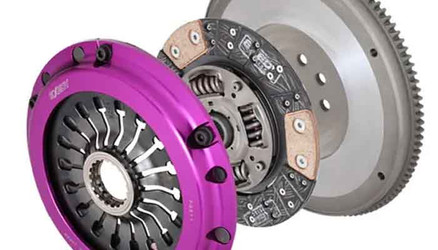
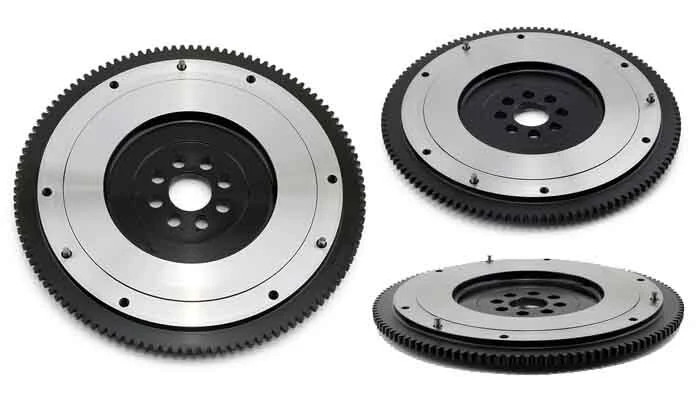
A flywheel is a metal disc, usually manufactured from steel or aluminium, which bolts to the end of the crank on the inside of the gearbox bell housing.
On the other side of the flywheel is the clutch friction plate, which engages and disengages when the clutch pedal is depressed.
In aftermarket applications, the most common material is generally 4140 chromoly steel, as it's solid and lightweight compared to some of the mass-manufactured, heavier steel options.
The flywheel's outer section has teeth that engage with the starter motor, bolted to the outside of the gearbox housing.
The flywheel has a few jobs; the first is to ensure the engine can keep running with rotational inertia when you let off the accelerator.
The second is to balance the engine as they are weighted explicitly for the crankshaft and allow the use of an electric starter motor, which engages with the outer ring of the flywheel to start the engine.
The last job is to transfer the power from the engine to the wheels through the transmission via the clutch friction plate.
What Is a Lightweight Flywheel?
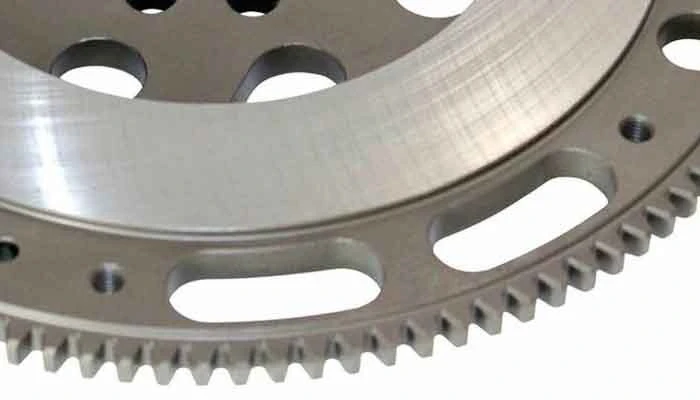
A lightened flywheel is, as it sounds, a lighter-designed version of the stock flywheel.
Stock factory flywheels have been designed for road use and are heavy to ensure smooth running and drivability of the engine. A heavier flywheel will create more rotational inertia, making the engine smoother. Still, the engine will react more slowly to RPM changes.
The opposite of this happens when you install a lightweight flywheel. The lighter the flywheel, the faster the engine can increase and drop revs, dramatically benefiting performance engines.
If you are planning a full drivetrain upgrade rather than just a flywheel on its own, our ultimate Honda K-Series clutch guide walks through how clutch choice and flywheel choice work together.
In simple terms, a lighter flywheel stores less energy between combustion events.
That is why the engine feels freer and more eager to rev, but it is also why the car can feel easier to stall and a little less smooth at low speed.
For a fast road, track or race car, that tradeoff is often worth it. For a totally standard daily driver, comfort and smoothness may matter more than response.
A lightweight flywheel makes the most sense on a modified car built for fast road, track or race use.
The engine can gain and lose RPM more quickly, which helps the car feel sharper on gear changes and lets you get back into the powerband faster.
This is especially noticeable on naturally aspirated cars that rely on keeping the engine in the sweet spot, but turbo cars can benefit too because faster rev changes can help the whole drivetrain feel more responsive.
On harder-driven builds, it is also worth remembering that more aggressive clutch and exhaust setups usually mean more under-bonnet heat, so protecting nearby lines and wiring becomes a good reliability upgrade at the same time.
There is a downside here, which we will cover in the next section.
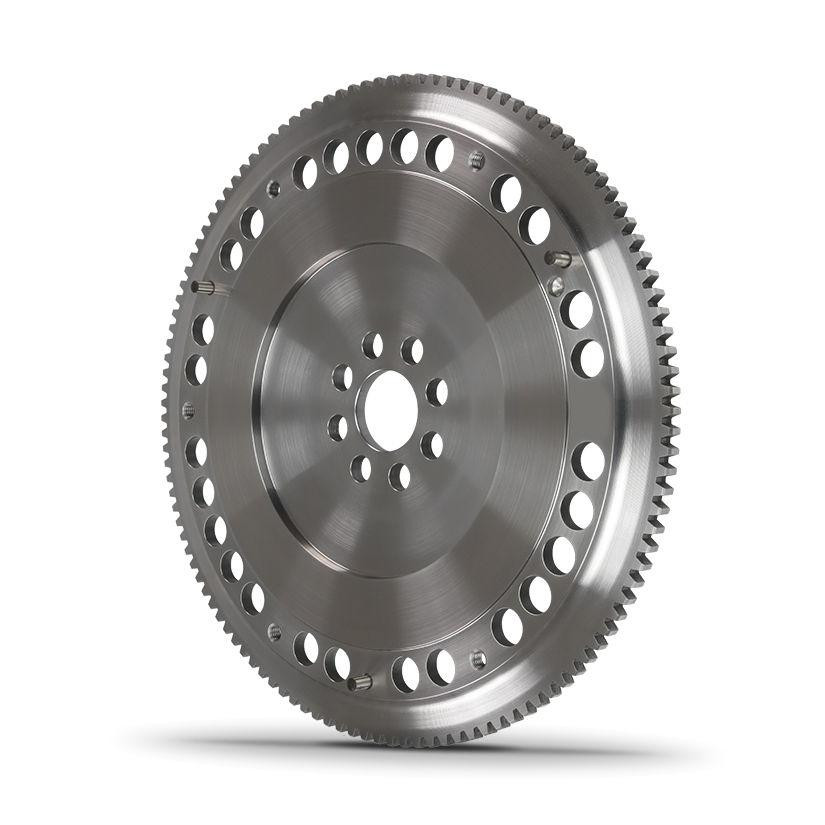 RPC Lightweight Chromoly Flywheel For Honda Civic EP3 FN2 K20 DC5 6 Speed 3.2kg
Very light 3.2kg option for sharper revs, quicker response and a more aggressive feel.
From £267.49
 Competition Clutch Flywheel For Honda Civic Integra EP3 DC5 K-Series
Available in lightweight or ultra-lightweight versions, so it is easier to match your road or track setup.
From £298.17
Pros and Cons of a Lightweight Flywheel
There are multiple Pros and cons of using a lightweight flywheel, which, like most car modifications, mainly depends on the use of your car and overall goals.
There are huge upsides if you use the car for fast road, track or race use. Still, it is always worth looking at everything to ensure you're making the correct decision to install one.
Below are the pros and cons of lightweight flywheels, so you can decide whether it's worth investing in.
Pros of a Lightweight Flywheel
- Decreases rotational mass
- Allows engine RPM to change quickly
- Faster gear changes
- Increases acceleration
Cons of a Lightweight Flywheel
- Less drivable on the road than a heavier flywheel
- Are generally more expensive than stock
- The engine vibrates more at lower speeds
- You need more revs to pull away from a stop
The biggest mistake people make here is treating a lightweight flywheel as either always good or always bad.
In reality, it depends on how you use the car. A weekend car, track car, drag car, or fast road build will usually suit a lighter flywheel much better than a commuter that spends most of its life in traffic.
The more performance-focused the build becomes, the quicker engine response starts to outweigh the reduction in low-speed smoothness.
The main thing to take away from this list is that you can use it in any application you wish. Still, lightweight flywheels are more suited towards aggressive driving than a standard daily driver.
If you are still unsure whether a lighter setup will suit your road car, our guide to the best Honda K-Series clutch for daily driving is a useful next read because it explains where comfort starts to matter more than outright aggression.
- Best for fast road, track and race cars
- Improves response rather than adding engine horsepower
- Can make low-speed driving less forgiving
- Works best when matched to your clutch, gearbox and driving style
I've used a lightweight flywheel on the road for many years. Although it doesn't feel as nice for daily use as a heavier flywheel, it has its advantages once the engine runs.
The biggest issue I found when using a lightweight flywheel on my road car was trying to pull away on a hill, as you have to rev the car much more than before. (FYI, your neighbours will not be happy at 4 am)
Does a Lightweight Flywheel Increase Horsepower?
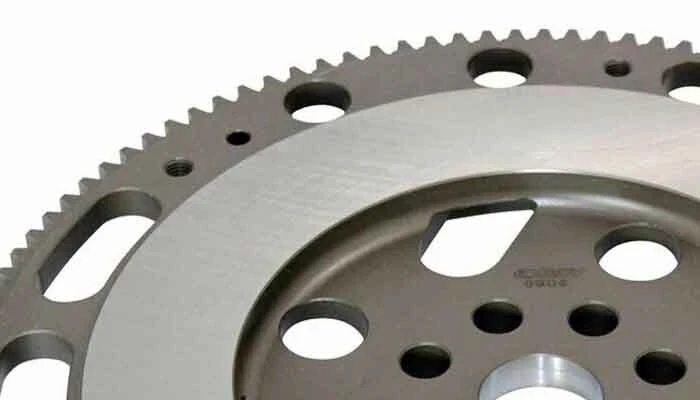
No, a lightweight flywheel does not create extra horsepower at the engine in the same way a turbo upgrade, remap, or intake change might.
What it does do is reduce rotational inertia.
That means the engine needs less effort to speed up and slow down the flywheel, so more of the power you already have can be felt as a sharper response and improved acceleration. That is why people often describe the car as feeling faster, even though the engine itself is not making more power.
So the honest answer is this: it does not increase crank horsepower, but it can improve how quickly the drivetrain responds and how effectively the car uses its power.
If you want to improve the way the whole drivetrain feels rather than just the flywheel alone, our Honda Civic EP3 gearbox and transmission upgrades guide covers other changes that make a big difference to response and reliability.
Is a Lightweight Flywheel Worth It?
Whether a lightweight flywheel is worth it comes down to what you use the car for, but in most cases, yes.
The benefits here generally outweigh the downsides; in terms of performance, you are nearly always better off going with a lighter option.
In fact, once you go with a more aggressive clutch, some manufacturers suggest pairing it with a specific lightened flywheel to maximise performance from both products.
Once a build becomes more performance-focused, it is also worth understanding automotive heat management, because the extra heat around the exhaust side can start to affect nearby clutch lines, wiring, and intake components.
Also, if your current flywheel has had it, and you are going for performance, it's a no-brainer!
The only time I suggest it is a bad idea is if your car is totally stock, you purely use it for daily driving and want the easiest, most comfortable experience possible.
It is also worth thinking beyond the flywheel itself.
Once a car moves towards harder driving, stronger clutches, higher RPM use, turbo conversions or repeated track abuse, heat management starts to matter more too.
Exhaust manifolds, downpipes and turbo housings can radiate huge amounts of heat into nearby clutch lines, wiring, hoses and intake parts. A sharper drivetrain setup is great, but protecting the surrounding components is what helps keep the car reliable when you actually use that extra response.
If your car is moving away from stock and towards repeated hard use, our guide on reducing engine bay temperatures explains the simplest ways to keep performance consistent and protect surrounding parts from heat soak.
 Exoracing Titanium or Carbon Exhaust Wrap
Helps keep manifold and downpipe heat in the exhaust instead of cooking nearby lines, looms and intake parts.
From £24.99
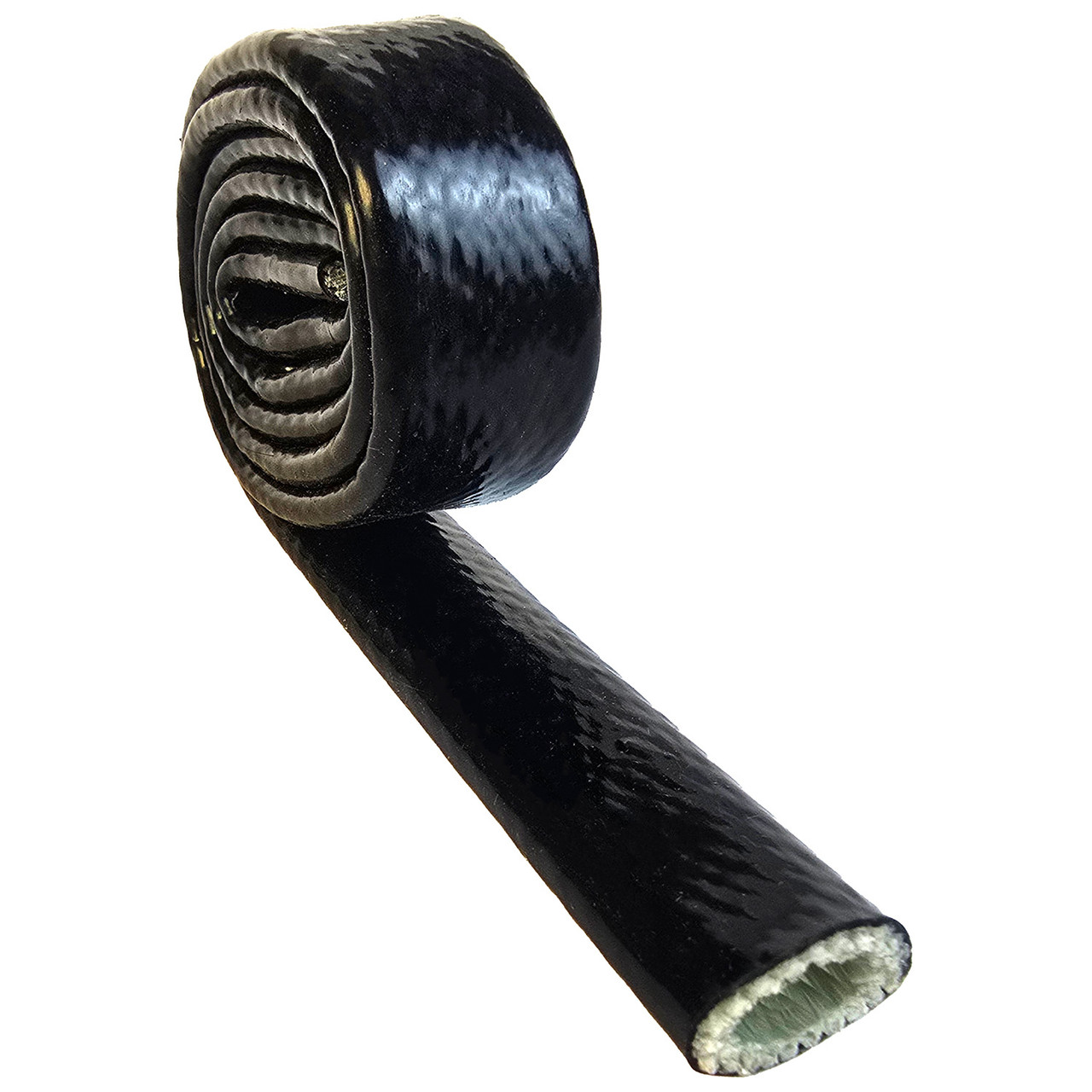 Exoracing Silicone Fibreglass High Temperature Heat Sleeve 0.5m
Ideal for clutch lines, wiring and hoses routed near manifolds, turbo parts or hot bulkheads.
From £14.99
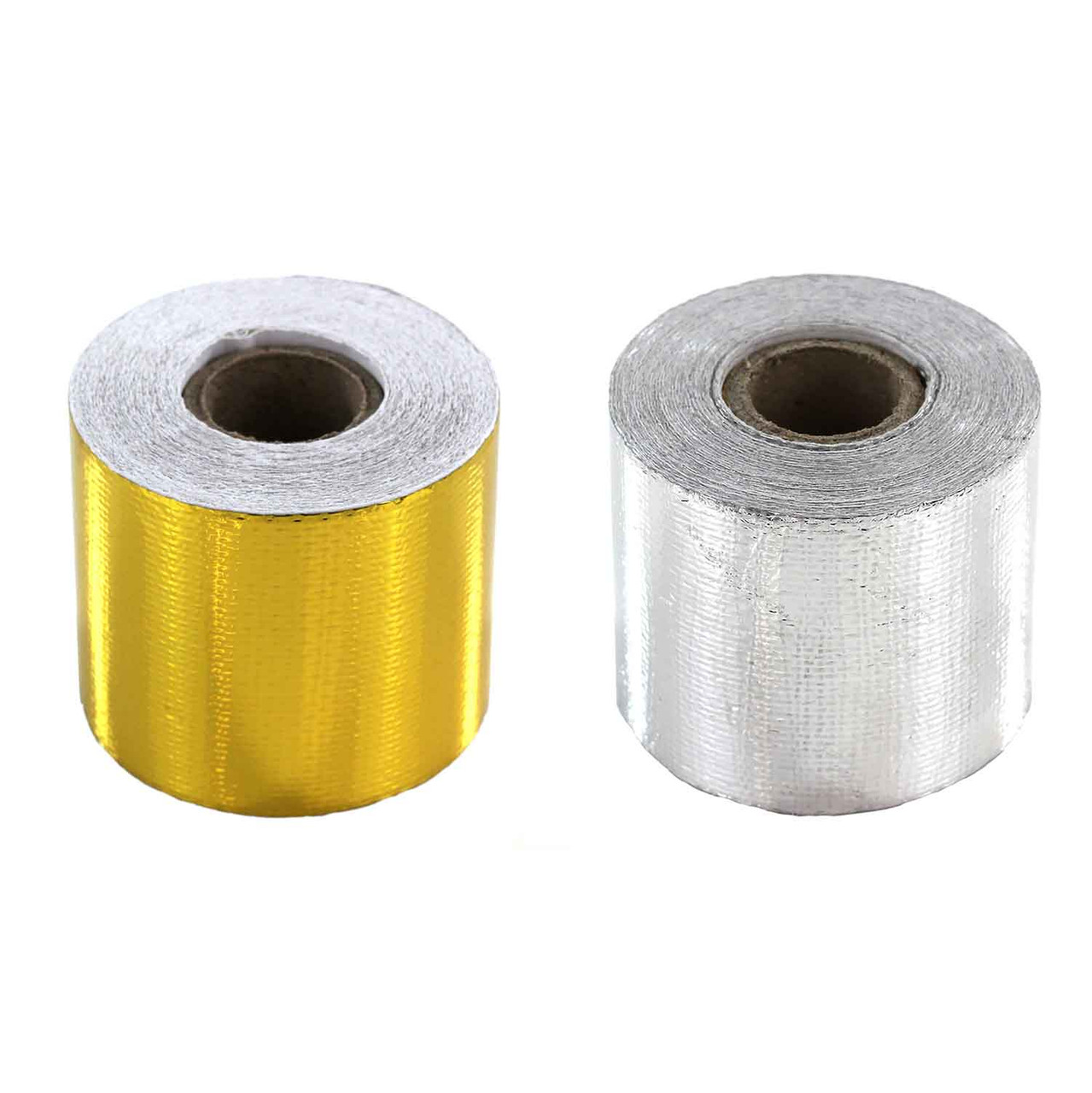 Exoracing Gold and Silver Heat Reflective Tape
Useful for shielding bulkheads, intake pipes and nearby areas from radiant heat soak.
From £29.99
 Exoracing 10pc Heat Shrink Tags 3:1
Keeps sleeving tidy, stops frayed ends and gives hoses or looms a cleaner finished look.
From £10.99
Lightweight Flywheel Brands
There are loads of flywheel manufacturers on the market, and each has its own design and unique weight when it comes to flywheels.
We generally stick to a few manufacturers here, specifically selling Japanese performance parts. Still, other brands exist, depending on which car you own.
The most popular lightweight flywheel brands we use are:
Each one has its own advantages and disadvantages depending on which engine you have. For this example, we'll use the Honda K-Series to compare weights:
- Fidanza K-Series lightweight flywheel: 3.6kg
- Competition Clutch K-Series lightweight flywheel: 5.28kg
- Competition Clutch K-Series Ultra lightweight flywheel: 3.99kg
- RPC K-Series lightweight flywheel: 3.2kg
- Exedy K-Series lightweight flywheel: 4.3kg
A useful way to think about this is that the lightest option is not always the best option.
If your car is mainly for weekend fun, track days or aggressive driving, a very light flywheel can feel brilliant.
If you still do plenty of daily driving, stop-start traffic or hill starts, a slightly heavier lightweight flywheel can often be the smarter middle ground because it still improves response without making the car feel quite as abrupt.
As you can see from the list above, each manufacturer chooses their unique weight, which is good for you as you can narrow the options down more easily.
Suppose you have used a 3.2kg beforehand and think it's too light for your application. In that case, you have a few options for going heavier but still lighter than OEM.
Lightweight Flywheel FAQ
Will a lightweight flywheel make my car faster?
It can make the car feel faster because the engine responds more quickly, but it does not directly add power at the crank.
Is a lightweight flywheel bad for daily driving?
Not necessarily, but it usually makes the car less forgiving at low speeds. Hill starts, stop-start traffic and pulling away smoothly often need a bit more revs.
We have driven a stock and lightweight flywheel daily, and although it does feel much better on a higher horsepower car, at slow speeds, it does become annoying with the revs dropping faster at higher RPMS.
Should I change the clutch at the same time?
In many cases, yes. If the gearbox is already out, it makes sense to inspect or replace the clutch and release bearing at the same time, so you do not pay for the same labour twice later on.
Always make sure to inspect the clutch to make sure it isn't massively worn whilst you're doing it, to save time and money, having to replace it later down the line
Does flywheel weight matter more on NA or turbo cars?
Both can benefit, but naturally aspirated cars often show the response change very clearly. Turbo cars can still benefit, especially on gear changes and in how lively the drivetrain feels.
We've always felt that with anything above 300-400 bhp, there is a significant gain in the driving experience by going with a lighter flywheel than stock, and most aftermarket clutch manufacturers recommend the correct flywheel to match the stage of clutch.
Do performance cars also need heat management upgrades?
Often yes. Once you increase performance and drive harder, radiant heat from the exhaust side can start damaging hoses, wiring, clutch lines and intake parts, so protecting those areas is a smart reliability move.
Heat management is always important on every build, but more so when you are going for the higher power levels. The exhaust manifold/turbocharger increases temperatures, and this soaks into everything else, reducing performance if it isn't handled correctly.
Conclusion
A lightweight flywheel is one of the best upgrades for improving how responsive a performance car feels, but it is only worth doing when it matches the way you actually use the car.
For fast road, track, and race builds, the benefits are usually very easy to feel. For a pure daily comfort, a sharper response may matter more than.
If you are planning your next upgrade, you can use our blog reader discount code below for 5% off across the Exoracing website.
BLOG5
Alternatively, if you are looking to go more in-depth into the performance world, then check out these related articles: