

Car Overheats in Traffic but Not at Speed? Fixes
Posted by Matthew Marks on 5th Aug 2026
Jump to a section
Car Overheats in Traffic but Not at Speed? Causes and Fixes
Does your car get hot in traffic, then cool down when you move? Start by checking the fan and airflow, then inspect the rest of the cooling system before buying parts.
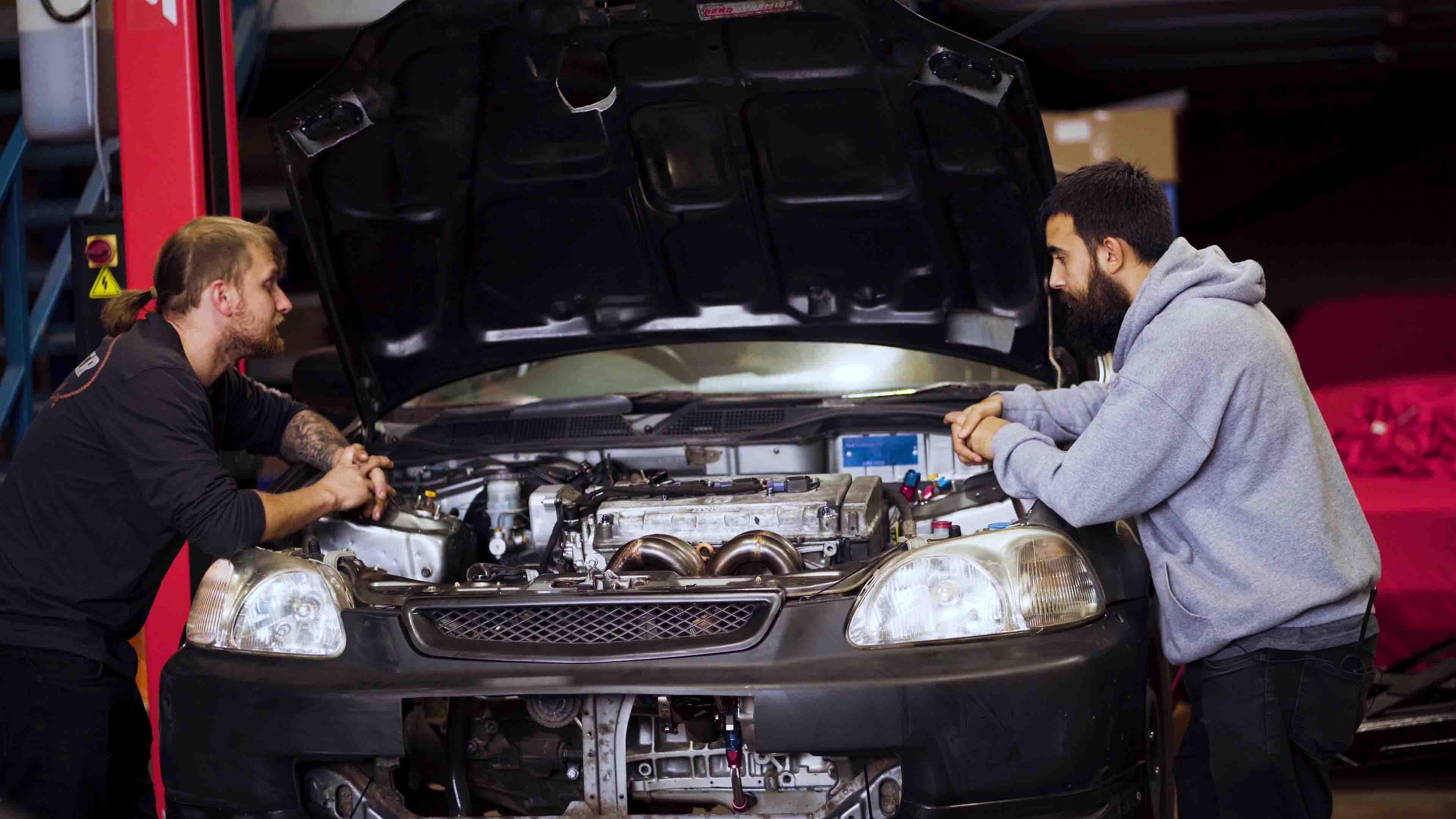
This guide uses our own 450–500 whp AWD turbo Civic to show how we separate an airflow problem from other cooling faults.
This pattern gives you a useful clue: road speed pushes air through the radiator, but that natural airflow drops when the car stops.
At idle, the electric fan must move the air, while its direction, shroud and radiator seals control where that air travels.
The fan is a sensible first check, but low coolant, trapped air, a restricted radiator, a faulty thermostat, a weak water pump or a false temperature reading can create similar symptoms.
The simple answer
First, confirm that the radiator fan turns on, spins the right way and pulls air through the radiator core.
Next, check the coolant level, look for leaks and review any recent cooling-system work that may have left air trapped inside.
If a healthy modified car lacks airflow at low speed, a correctly sized pull fan and a well-fitted shroud may be the right upgrade.
- Stop in a safe place if the gauge enters the red or you see steam or coolant.
- Switch the engine off rather than driving farther to test the fault.
- Never open the radiator or coolant cap while the engine is hot.
- Let the engine cool before you check the coolant level or look for leaks.
- Follow your vehicle handbook because the correct recovery steps can vary by car.
First, check what is getting hot
People often use overheating and heat soak to mean the same thing, but you must separate the following three situations before changing parts.
The dash, a trusted gauge or ECU data shows a steady rise. Check the cooling system.
The car may feel less steady while coolant stays safe. See our engine heat soak guide.
The sensor, earth, wire or gauge may be wrong. Compare it with trusted data for your car.
A temperature number only helps when you know what the sensor measures and the normal operating range for that vehicle, so do not trust one unknown gauge or engine-bay reading.
Why traffic can show an airflow fault
At road speed, air enters the front of the car and may pass through the air-conditioning condenser and intercooler before reaching the radiator; in traffic, the fan must move this air.
A fan that starts late, turns slowly or spins the wrong way may move too little air, while large gaps or a poor shroud can let air bypass the radiator.
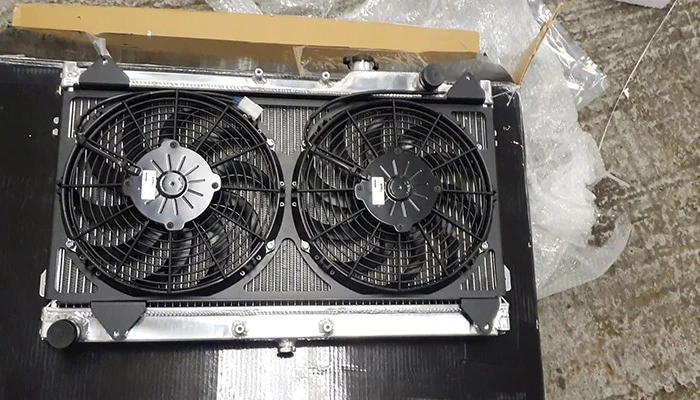
A shroud helps the fan use more of the radiator, but it cannot fix a failed fan or blocked core; read what a fan shroud does for more detail.
Technical detail: airflow, pressure and fan voltage
A radiator needs airflow through its fins to transfer heat from the coolant into the outside air, and the pressure difference between the front and rear of the cooling stack helps drive that flow.
At idle, the fan must create this pressure difference against the resistance of the condenser, intercooler and radiator, which is why a free-air CFM figure cannot show the airflow through the installed stack. For reference, CFM means cubic feet of air per minute.
Fan voltage also matters because a weak earth, small cable, poor connector or tired relay can cause voltage drop under load; the fan may still spin, yet run too slowly to cool the car. A competent person can measure voltage at the running fan and compare it with battery voltage and the fan maker's specifications.
Why modified cars may run hotter at idle
A turbo and manifold add a strong heat source, while an intercooler, condenser, engine swap, small radiator or tight engine bay can make the airflow path more restrictive.
These changes do not always cause overheating, but they reduce the spare cooling capacity available when the car stops.
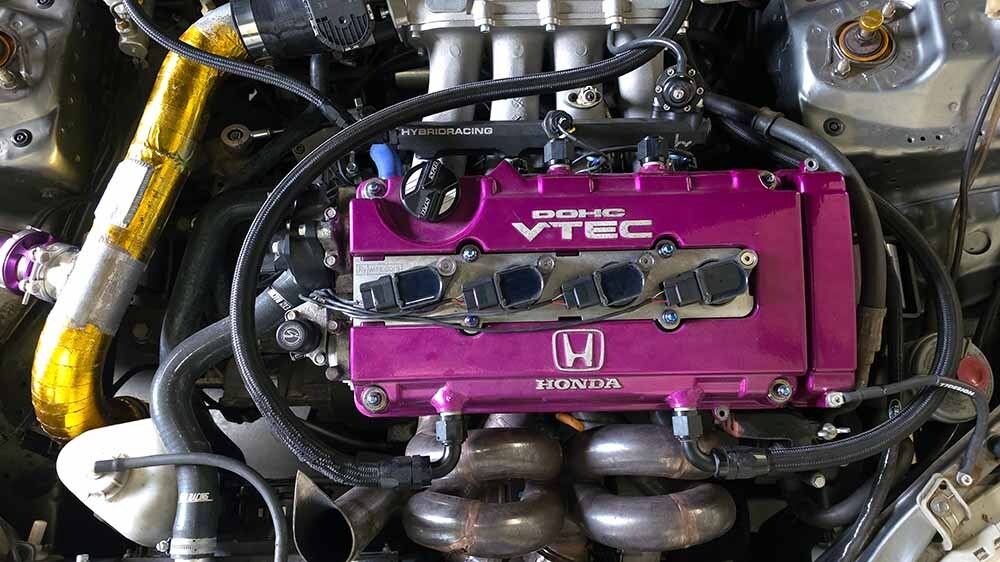
Our AWD Civic has a front of engine bay mounted turbo and large intake pipes, which left less room for cool air at low speed; our guide to engine-bay heat transfer explains the main types of heat.
What happened to our 450–500 whp AWD turbo Civic
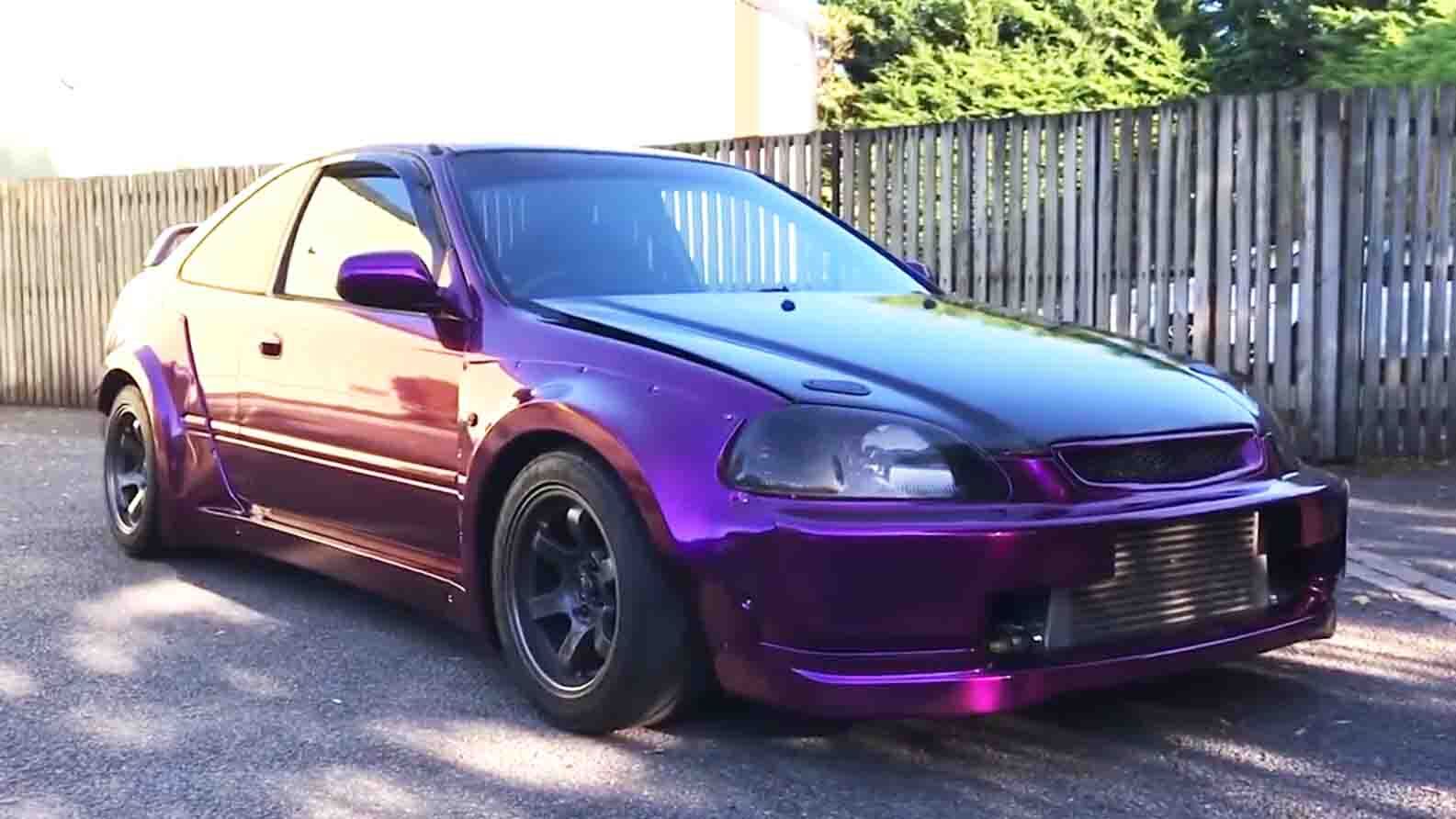
Our 450–500 whp AWD turbo B-series Civic used to overheat in traffic, with its turbo manifold mounted at the front of the engine bay.
Because the factory fan was the only cooling part we had not changed, we fitted an alloy half radiator with a T7Design fan shroud and SPAL pull fan.
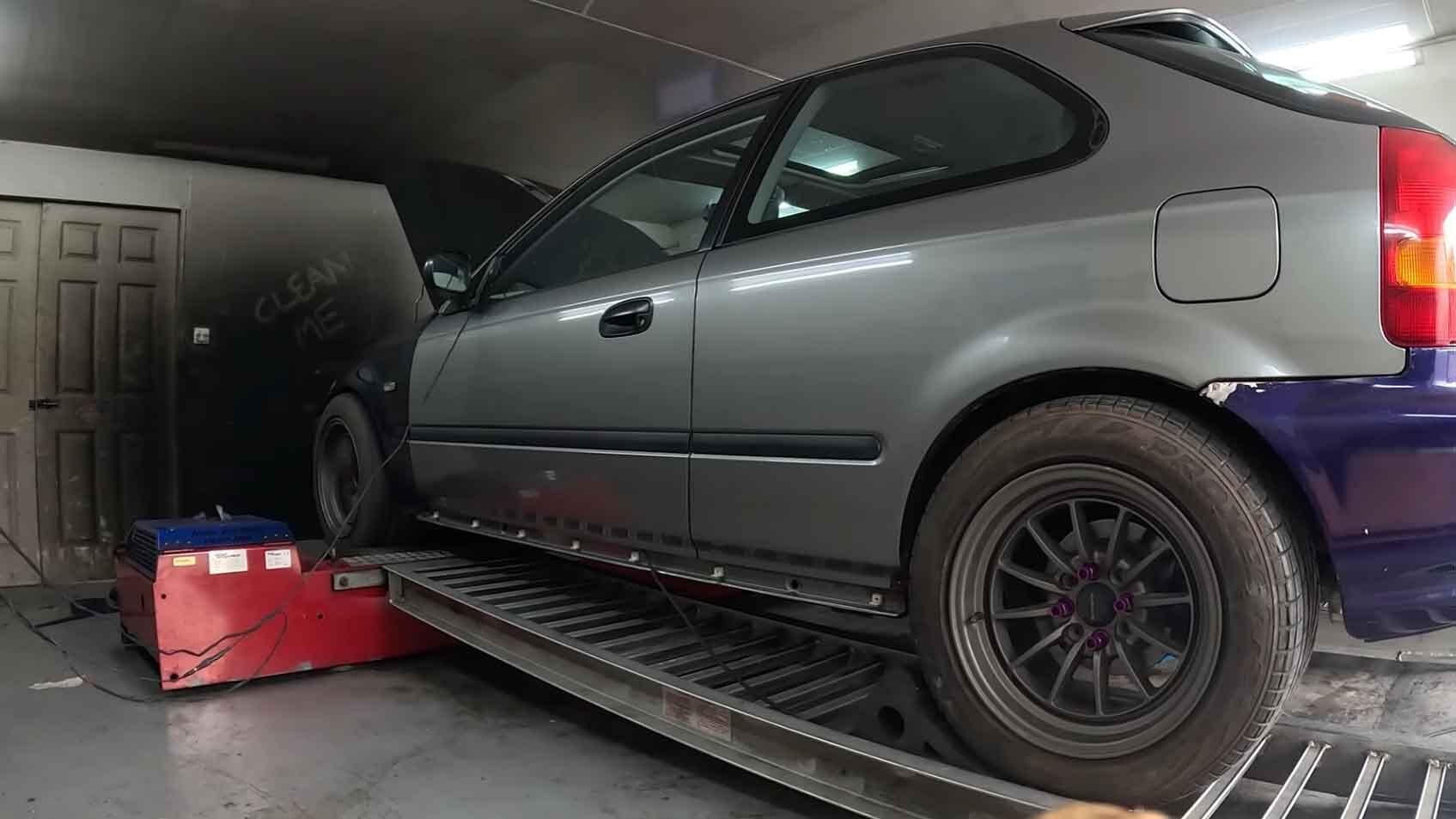
The car did not overheat after this work, but we did not measure airflow and changed the radiator, fan and shroud together; therefore, we cannot claim that the fan alone fixed it.
Customer example: a 1996 Mazda MX-5 fan wiring fault
A customer reported the same pattern on a 1996 Mazda MX-5 1.6: the car stayed cool while moving, but the fan failed to start in traffic, and the temperature rose.
The customer first suspected the fan switch, although their checks instead pointed to a wiring fault because the motor worked but its normal control circuit did not start it.
This case shows why the command signal, fuse, relay, power feed, earth and connectors all need checking.
Check the cooling system in this order
1. Check the sign without taking a risk
Note when the temperature rises, whether the fan starts and whether road speed brings the reading down. Compare the dash with trusted ECU coolant data where possible, but never drive into the red merely to collect more evidence.
2. Check coolant and leaks when cold
Follow the vehicle handbook when checking the cold coolant level, then look for wet marks or dried stains around hoses, the radiator, expansion tank, thermostat housing and water pump. Coolant that keeps disappearing indicates a fault that needs diagnosis, not repeated topping up.
3. Check fan speed and direction
Confirm that every required fan starts at the correct command, not only when the air conditioning runs, and inspect the fuse, relay, connector, earth and power feed. Poor wiring or a weak motor can leave the blades turning too slowly to provide useful airflow.
Check the airflow direction while keeping hands, clothing and loose test material clear, because an electric fan may start without warning.
4. Check the path for air
Inspect the condenser, intercooler and radiator for debris or damaged fins, then check the shroud and seals for gaps that let hot air recirculate around the core. New pipework, panels or a front-mounted intercooler must not create an easier route around the radiator.
5. Think about recent work
If the fault began after a hose, radiator, thermostat or coolant change, repeat the correct vehicle-specific fill and bleed process because trapped air can reduce circulation.
6. Know when to use a garage
When the fan and coolant checks pass, the pressure cap, thermostat, radiator condition and water-pump circulation may require vehicle-specific tests, especially if the car also overheats at road speed.
Repeated coolant loss, hard hoses from cold or bubbles that return may justify professional pressure testing and a coolant check for combustion gases.
Check when it starts, how fast it runs and which way the air moves.
Check coolant flow, the radiator, thermostat and pump.
Check the new parts and use the right bleed method.
Look at the wire and earth. Compare the gauge with trusted data.
A larger fan will not fix a leak or an engine fault.
When a stronger fan and shroud are right
Consider an upgrade only after confirming that the system is full, leak-free, correctly bled and mechanically healthy, including the radiator, thermostat and water pump.
The fan must suit the radiator core, available depth and intended push-or-pull position, while its cable, relay and fuse must safely handle the specified current draw.
Do not choose from the CFM figure alone because fan depth, blade design, shroud coverage, sealing and resistance through the full cooling stack all affect real performance. Use our guide to radiator fan size, CFM and push or pull layouts.
Watch: See a fan shroud fitted to our Mazda MX-5.
If the player does not work, watch the fan shroud video on YouTube.
An option for a 1992–2000 Honda Civic
This fan and shroud kit is made for 1992–2000 Honda Civic models and formed part of the solution on our car. It does not include a radiator, so confirm radiator compatibility, engine-bay clearance and electrical load before ordering.
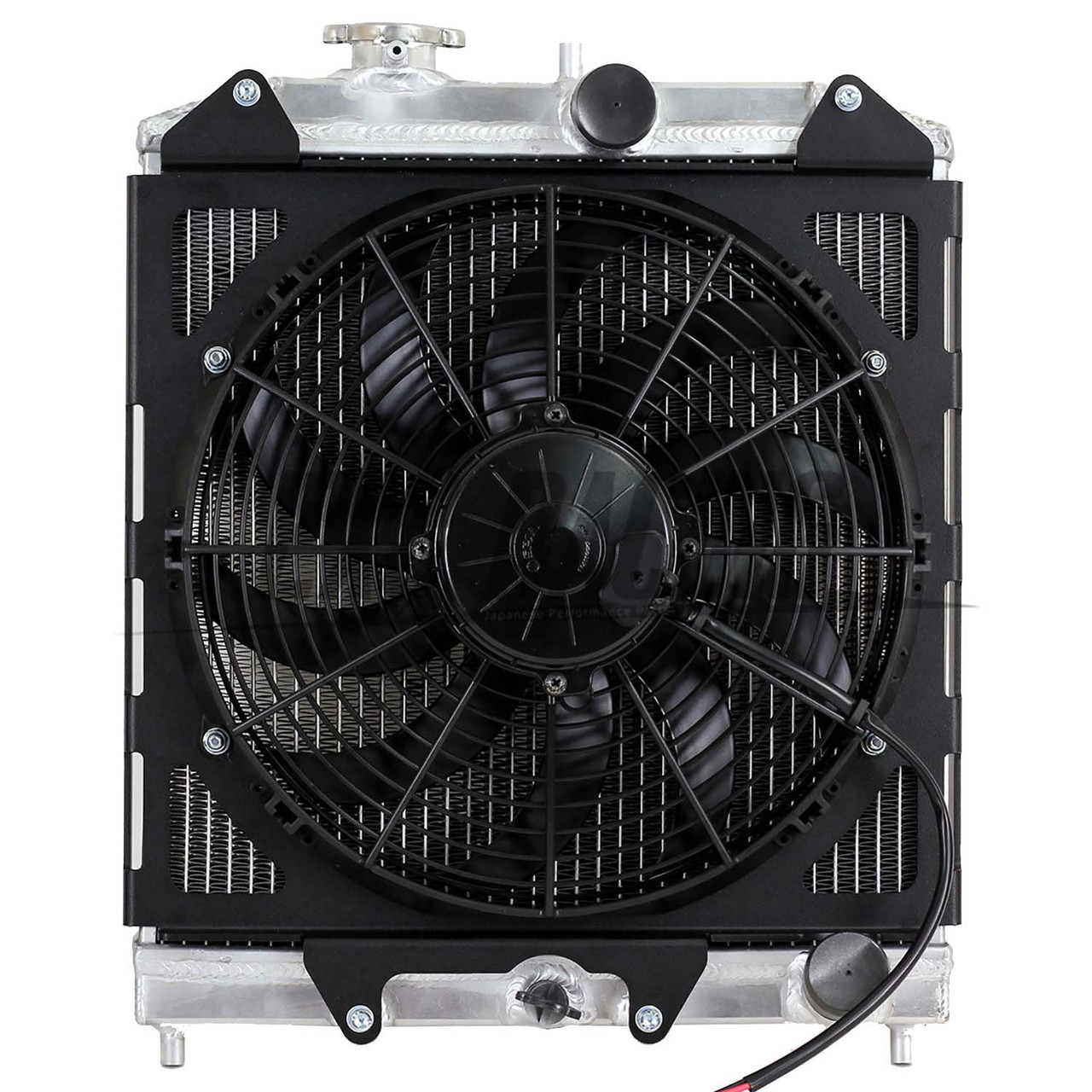 Radiator Fan Shroud 1330Cfm Spal For Honda Civic 92-00
A SPAL pull fan and alloy shroud kit for more airflow at low speed.
From £273.60
For other cars, browse SPAL car fans only after checking the required size, airflow direction, mounting position and electrical load.
When not to buy a fan first
A new fan cannot repair low coolant, trapped air, a blown fuse, damaged wiring, a stuck thermostat, a weak pump, a blocked core, unexplained coolant loss or a failed head gasket.
Heat wrap and shields may reduce local heat near the turbo or exhaust, but they cannot repair a coolant-system fault; use our engine-bay heat guide when local heat is a separate problem.
Common mistakes to avoid
- Changing the radiator before testing the fan: A large core still needs air at idle.
- Only checking that the fan spins: Check its speed, direction and power feed.
- Buying from the CFM figure: Fit, depth and shroud design also matter.
- Leaving large gaps: Hot air may loop around the radiator.
- Using weak wires: The fuse, relay, cable and earth must suit the fan.
- Opening a hot cap: Hot coolant can spray out and cause bad burns.
- Driving in the red: A small fault can turn into major engine harm.
Frequently asked questions
Why does my car overheat in traffic but cool down when driving?
Road speed pushes air through the radiator, while traffic makes the fan and shroud responsible for airflow; check them first, then inspect coolant level, leaks and the other cooling parts.
Can a bad radiator fan cause heat only at idle?
Yes, because a fan that fails to start, runs slowly, spins backwards or draws through too little of the core may provide inadequate airflow at idle.
How can I check the fan direction?
Confirm whether the layout should push or pull, then identify the intake and outlet sides without relying on blade shape alone; keep hands and loose material clear.
Will a fan shroud stop the car from overheating?
It may help when poor low-speed airflow is the cause, but it cannot fix a leak, trapped air, failed thermostat, blocked radiator, weak pump or engine fault.
Can trapped air cause this fault?
Yes, because trapped air can reduce coolant flow and disturb the temperature reading; if the fault began after work, repeat the vehicle-specific fill and bleed method.
Does a turbo make traffic overheating worse?
A turbo and manifold add heat, while front-mounted hardware may restrict airflow; however, a sound turbo car should still control coolant temperature.
Should I fit a larger radiator or a stronger fan first?
Diagnose first: low-speed overheating points towards the fan and shroud, while overheating at road speed also requires checks of radiator capacity and coolant circulation.
The takeaway
If the car gets hot in traffic, start with the temperature reading, coolant and fan, then verify the fan's switch-on point, direction, electrical supply, shroud and airflow path.
Repair faults and trapped air before buying an upgrade, although a healthy modified car may still need a matched fan and shroud because the full cooling package must work as one system.
Compare SPAL Radiator FansAbout the Author
Written by Exoracing, a UK performance parts company who specialise in heat management and has helped modified road and track car owners choose suitable parts since 2018.
How we made this guide: We used our AWD Civic build, our own experience, verified product and video records, and reviewed a customer account about an MX-5 wiring fault. These are real-world cases rather than controlled laboratory tests, so we state what they cannot prove.