Engine Heat Soak: Symptoms, Causes and Fixes
Posted by Matthew Marks on 19th May 2026
What Is Engine Heat Soak? Symptoms, Causes and How to Prevent It
If your car feels strong when it is cool but slower after traffic, repeated pulls or track use, heat soak could be the reason.
Written from our real heat-management testing, customer experience and knowledge since 2018.
Shop Heat Management PartsHave you ever done a few hard pulls, sat in traffic, then noticed the car feels flat when you get back on the throttle?
That is one of the most common signs of engine heat soak. Heat builds up under the bonnet, soaking into nearby parts, raising intake temperatures, and making the ECU work harder to protect the engine.
I’m Matt, owner of Exoracing. Since 2018, we have helped enthusiasts, workshops and race teams deal with heat problems on turbo road cars, track cars and our own test builds. In this guide, I’ll explain what heat soak is, why it hurts performance, and how to reduce it without guessing which heat product you need.
The simple answer
Engine heat soak happens when heat from the engine, exhaust, turbo or cooling system builds up under the bonnet and is absorbed by surrounding components.
It hurts performance because hot intake air is less dense, more knock-prone and more likely to make the ECU pull timing or reduce boost.
The best fix is to identify the heat source, improve clearance and routing, control heat at the source, and then protect vulnerable parts with the correct heat management product.
- Heat soak is stored heat building up under the bonnet after hard driving, idling or shutdown.
- Common symptoms include sluggish throttle response, rising intake air temperatures and inconsistent power.
- Turbocharged cars usually suffer more because the turbo, manifold and downpipe add concentrated heat.
- Source control products, such as turbo blankets and exhaust wrap, reduce radiant heat from the hottest parts.
- Heat sleeve and reflective tape protect vulnerable wiring, hoses, lines, intake pipework and panels.
What Does Engine Heat Soak Mean?
Heat soak means components are absorbing heat faster than they can get rid of it.
When the car is moving, airflow helps carry heat out of the engine bay. When you stop in traffic, sit in a queue or shut the engine off, airflow drops. Hot parts keep radiating heat, but that heat has nowhere useful to go.
The main heat sources are usually the exhaust manifold, headers, turbocharger, downpipe, radiator, engine block and charge pipework. The vulnerable parts are often intake pipes, intercoolers, airboxes, wiring looms, vacuum hoses, fuel lines, brake lines, coolant hoses, sensors and plastic clips.
That is why a car can sometimes feel worse after being parked for a short time. The engine may be off, but heat is still soaking into everything around it.
Engine Heat Soak Symptoms
The easiest way to spot heat soak is to compare how the car feels cold versus hot. If it feels sharp at first, then flat after repeated pulls or traffic, heat is worth investigating.
The intake system may be pulling in warmer air after sitting still.
The intercooler, pipework or airbox may not be recovering quickly enough.
Hotter air increases knock risk, so the ECU reduces performance to protect the engine.
Nearby parts may need better routing, clearance or heat protection.
Which Heat Soak Problem Do You Actually Have?
Most people do not search for heat soak because they want a textbook definition. They search because the car is doing something annoying, expensive or worrying.
Use this as a quick diagnosis path before buying anything; trust us, it will save you money in the long run!
If the intake or airbox is soaking up engine bay heat, improve airflow and consider heat reflective tape on the intake surface.
On turbo cars, that usually means the turbo housing, manifold or downpipe before smaller shielding jobs.
Move the line away from direct heat where possible, then protect it with a high-temperature heat sleeve if it still sits in a hot area.
Turbo blankets, exhaust wrap and proper heat shielding are more useful than only adding insulation to the bonnet.
Do not assume it is only heat soak. Check for sensor faults, fuel issues and cooling faults as well as under-bonnet heat.
Why does Heat Soak Reduce Power?
Engines make power most consistently when the intake air is cool and dense. Cooler air contains more oxygen, which helps combustion.
When heat soak raises intake air temperature, the engine gets less oxygen for the same volume of air. Hotter intake air also increases knock risk, especially on turbocharged and tuned cars.
Modern ECUs, such as Haltech, react by protecting the engine. They may pull ignition timing, reduce boost or add fuel. The car is doing the right thing for safety, but the driver feels it has lost power and a softer throttle response.
This is why heat soak is such a frustrating problem. The engine can be healthy, and the tune can be safe, but the car still feels slower because the engine bay environment has become too hot.
We have all been through this at some point or another, and datalogging is always a very good way to find out what temperatures you are running, and to diagnose why and how to fix it.
How to Confirm It Is Heat Soak Before Buying Parts
Before spending money, try to confirm whether heat soak is actually the cause. This helps you choose the right fix and avoids using heat protection to hide a different fault.
The easiest starting point is to compare the car cold, hot and after a short heat-soak stop. If it feels sharp when cool, then noticeably worse after traffic, repeated pulls or 10 minutes parked hot, that points towards a heat-related issue.
If the intake air temperature stays high after traffic or repeated pulls, the intake system is likely soaking up heat.
Timing reduction or boost reduction after heat build-up supports a heat soak diagnosis.
A rough hot start can involve heat soak, but also check fuel pressure, sensors, purge faults and ignition components.
Look for brittle wiring, cooked hoses, melted clips, discoloured sleeving or lines routed close to the turbo or downpipe.
Heat Soak vs Overheating: What Is the Difference?
Heat soak and overheating are related, but they are not the same problem.
Heat soak usually means surrounding parts are absorbing heat and performance is dropping, even if the coolant temperature is still under control. Overheating means the engine cooling system itself cannot keep the temperature within a safe range.
Look at intake air temperatures, radiant heat from the turbo or exhaust, and vulnerable hoses, lines or wiring.
Check coolant level, fans, thermostat, radiator, water pump, head gasket symptoms and airflow.
Is Heat Soak Worse on Turbocharged Cars?
Yes, heat soak is usually worse on turbocharged cars because the turbocharger adds a concentrated heat source to the engine bay.
The turbine housing is driven by hot exhaust gas. Under hard use, the turbo, manifold and downpipe radiate a lot of heat into the surrounding area. On tight engine bays and hot-V turbo layouts, that heat can sit close to intake parts, wiring, hoses and bonnet insulation.
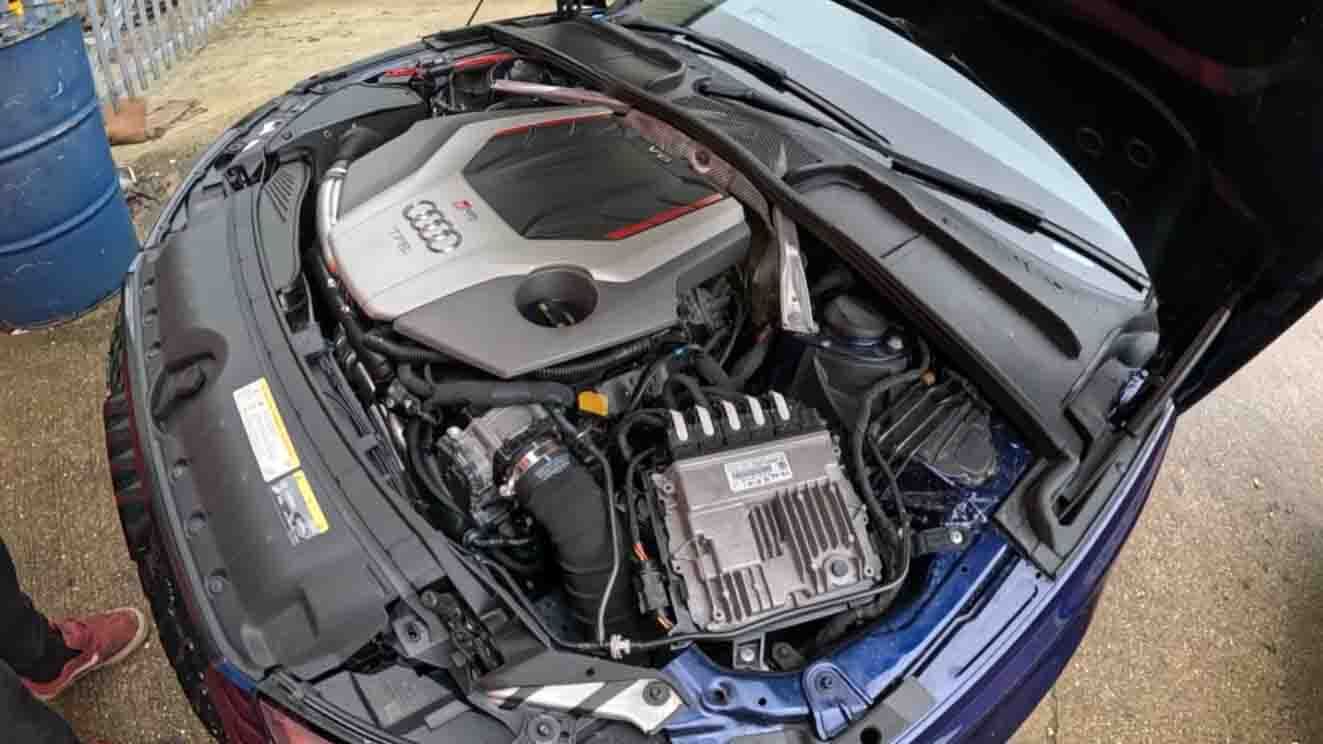
On our 550bhp Audi RS4 turbo blanket test, the turbo area was a clear heat source. After fitting turbo blankets, we measured a 47.8°C drop on the turbo surface area compared with the baseline measurement. That does not mean every car will see the same number, but it shows why controlling turbo heat at the source matters.
You can see the full data in our before-and-after turbo blanket test on a 550bhp RS4.
How to Prevent Engine Heat Soak
The correct heat soak fix depends on what is getting hot and why. We use this order when diagnosing heat problems:
1. Let the car cool down properly
After hard driving, especially in a turbo car, avoid switching the engine off immediately. Let it idle gently for a minute or two so oil, coolant and air can keep moving heat away from the turbo, head and block.
If it is safe, opening the bonnet after parking can also help trapped hot air escape faster.
This will make parts last longer, and oil cooling down through a turbocharger is always a good thing!
2. Control turbo heat with a turbo blanket
If the turbo is the main heat source, start there. A turbo blanket fits around the turbine housing and reduces the amount of radiant heat escaping into the engine bay.
This helps protect nearby wiring, hoses, intake pipework, bonnet areas and plastic components. It is especially useful on turbo cars with tight packaging or high exhaust temperatures.
Do not fit a turbo blanket over an oil leak, coolant leak or damaged turbo hardware. Fix the issue first, then add heat protection.
Watch: Our turbo blanket blowtorch test shows how much heat transfer a blanket can reduce in a controlled bench test, and why source control matters before trying to shield everything around the turbo.
3. Wrap the manifold, headers or downpipe
If the manifold, headers, or downpipe are radiating heat into the engine bay, exhaust wrap is usually the correct product. It is designed for hot exhaust pipework, not hoses or wiring.
For best results, wrap the hottest sections closest to vulnerable parts first. That is normally the manifold, turbo elbow or upper downpipe. Use a consistent overlap and secure the ends with stainless ties.
If you are unsure how much wrap you need, use our exhaust wrap calculator before ordering. Guessing the length is one of the easiest ways to end up short halfway through the job.
4. Protect hoses, wiring and lines with a heat sleeve
The heat sleeve is for the parts at risk, not the heat source. Use it on fuel lines, brake lines, clutch lines, oil lines, coolant hoses, vacuum hose, AN hose and wiring routes that pass near hot exhaust or turbo parts.
Before adding a sleeve, check that the part is healthy. Do not cover damaged wiring, leaking hoses or oily lines and hope the sleeve will fix the problem. Repair the part and improve the routing first.
5. Use reflective tape on surfaces facing radiant heat
Reflective tape and reflective sheet are useful for surfaces that face a heat source. Common examples include airboxes, intake pipes, bulkheads, panels, covers and washer bottles.
They are not a replacement for an exhaust wrap. Do not use reflective tape directly on manifolds, downpipes or dirty, oily surfaces. It needs a clean, suitable surface and a clear radiant heat path to work properly.
6. Improve airflow through the engine bay
Heat protection helps, but hot air still needs somewhere to go. Make sure your radiator, intercooler and condenser are clean. Check that fans work properly and that missing undertrays or ducting are not hurting airflow.
On track or high-power builds, bonnet vents, ducting, oil coolers, upgraded fans and larger intercoolers can all help, but they should be chosen around the actual temperature problem you are seeing.
Heat Soak Product Matching Guide
Once you know the heat source and the vulnerable part, choosing the right product becomes much easier.
Source control for turbo turbine housings to reduce radiant heat around nearby hoses, wiring and intake parts.
From £119.99
Exoracing Titanium or Carbon Exhaust Wrap
Keeps heat inside manifolds, headers and downpipes instead of letting it radiate into the engine bay.
From £24.99
Direct protection for fuel lines, oil lines, brake lines, coolant hoses, vacuum hose and wiring routes.
From £14.99
Exoracing Gold and Silver Heat Reflective Tape
Reflects radiant heat away from airboxes, intake pipework, panels, covers and bulkhead surfaces.
From £29.99
What Should You Fit First?
If you are trying to fix heat soak without wasting money, start with the part creating the most heat, then protect the parts that still sit close to it.
Control the turbine housing first, then protect oil, coolant, vacuum and wiring routes close to the turbo.
Track use creates repeated heat cycles, so use source control, component protection and airflow together.
Wrap the manifold or header if it is the heat source, then protect nearby intake surfaces or panels.
Sleeving is most effective when the part is healthy and has as much clearance as the engine bay allows.
Do not only cover the intake. Try to feed it cooler air and reflect radiant heat away from the surface.
Common Heat Soak Mistakes
Mistake 1: Shielding the nearby part but ignoring the heat source
If the turbo or manifold is the main heat source, protect the source first, where possible. Then add a sleeve or tape to the vulnerable part if it still needs protection.
We've seen it time and time again where a customer will insulate a hose, for example, but not wrap a turbo manifold, which would have a much greater effect overall in the engine bay.
Mistake 2: Using reflective tape as an exhaust wrap
Reflective tape is for surfaces, not direct exhaust contact. Use exhaust wrap on manifolds, headers and downpipes.
The glue and materials are not designed to touch a dowpipe or turbo housing directly; make sure you have the correct use case first.
Mistake 3: Covering damaged parts
Heat sleeve is not a repair. If wiring is already damaged or a line is leaking, fix it before adding protection. Just covering damaged parts isn't going to make them miraculously fixed. Make sure to fix first, then wrap after.
Mistake 4: Forgetting clearance and routing
If a hose or loom is touching the exhaust, protection is the second step. The first step is moving it away and creating clearance where possible. We always recommend rerouting as the first step, as this could solve your problem without having to spend any money. Unless you are going for a major reroute, chances are you will have to use a combination of both, but you will have a much better outcome than doing one or the other.
Mistake 5: Never recheck after heat cycles
After the first few drives, check that wrap, ties, blankets and sleeves are still secure. Heat cycles can settle materials and expose poor fitment.
This is an absolute must for the longevity of engine bay parts, and something we always recommend doing once purchasing any of our heat management products.
When Heat Products Are Not the First Fix
Heat management parts are useful, but they should not hide a more serious problem.
Do not start with a turbo blanket, exhaust wrap or heat sleeve if the car has oil leaks, coolant leaks, damaged wiring, blocked cooling airflow, missing ducting, failed fans or hoses routed directly against hot parts.
Fix the fault first. Then use heat management to stop the same area from being cooked again.
Useful Next Guides
If you are choosing between products, our heat shield vs exhaust wrap vs heat tape guide explains which protection type fits each heat problem.
For a broader background, read our guide to what automotive heat management is. If you are ready to fit an exhaust wrap, use our exhaust wrap installation guide before starting.
Frequently Asked Questions
What is engine heat soak?
Engine heat soak is when heat builds up under the bonnet and is absorbed by surrounding components. It usually happens after hard driving, idling in traffic or shutting the engine off while hot.
Can heat soak make a car lose power?
Yes. Hot intake air is less dense and more knock-prone, so the ECU may pull timing, reduce boost or add fuel. The result is less consistent power when the engine bay is hot.
Is heat soak worse on turbo cars?
Usually, yes. Turbochargers, manifolds and downpipes create a lot of radiant heat, and the intake system also has to deal with compressed air temperatures.
Will a turbo blanket damage my turbo?
A quality turbo blanket should not damage a healthy turbo when fitted correctly. Do not fit one over oil leaks, damaged hardware or the wrong size turbo housing.
Does an exhaust wrap stop heat soak?
Exhaust wrap can reduce one major cause of heat soak by keeping heat inside manifolds, headers and downpipes. It works best when the exhaust pipework is the heat source.
Should I use a heat sleeve or reflective tape?
Use a heat sleeve for hoses, lines and wiring. Use reflective tape for surfaces such as airboxes, intake pipes, panels and bulkheads. Do not use reflective tape on exhaust pipework.
Do I need to let my car idle after hard driving?
It is a good habit, especially on turbo cars. Idling gently for a minute or two keeps oil and coolant moving, which helps reduce the sudden heat spike after shutdown.
How do I know if heat soak is causing power loss?
Log intake air temperature, ignition timing and boost when the car is cool, then again after traffic or repeated pulls. If temperatures climb and the ECU pulls timing or boost, heat soak is likely part of the problem.
Final Thoughts
Engine heat soak is one of the main reasons a performance car feels inconsistent. It can raise intake temperatures, reduce power, make the ECU pull back performance and shorten the life of nearby parts.
The right fix starts with diagnosis. Find the heat source, check routing and clearance, control heat at the source, then protect the vulnerable parts.
For most turbo cars, that means a turbo blanket for the turbine housing, exhaust wrap for the manifold or downpipe, heat sleeve for hoses and wiring, and reflective tape for surfaces such as intake pipework or panels.
Shop Heat Management PartsAbout the Author
I’m Matt, the owner of Exoracing Ltd, a UK-based performance parts brand specialising in heat management and motorsport components.
Since 2018, we have helped enthusiasts, workshops and race teams reduce engine bay temperatures with practical heat-management products, first-hand testing and support from real customer builds.
Got questions about your setup? Message us on Instagram @exoracinguk or contact us through the website.