
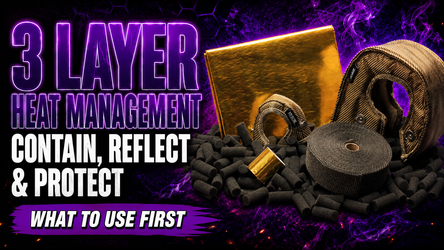
Contain, Reflect, Protect: Engine Bay Heat Method
Posted by Matthew Marks on 19th Jun 2026
Jump to a section
The Three Layer Heat Management Method: Contain, Reflect, Protect
Heat management is not about throwing the catalogue at a car. It is about finding the exact heat path, identifying what is getting too hot and using the one or two products that solve that specific problem.
Exoracing is a UK-based heat management specialist. Since 2018, Matt and the team have helped enthusiasts and workshops choose the right fix for turbo heat, exhaust heat and engine bay heat.
If you work on modified cars long enough, the pattern becomes obvious. Heat problems are solved by identifying the source, understanding how the heat is travelling and checking what is actually at risk. Only then should you choose the product.
That is what this guide does. Contain, reflect and protect are three possible methods, not a shopping list. Your car might need all three, but many cars only need one or two applied in the right place. If the layout is wrong, you may need to fix routing, clearance or leaks before fitting any heat-management product.
- Contain heat at the source first when the turbo, manifold or downpipe is the main problem.
- Reflect heat when a panel, airbox or surface is being hit by radiant heat.
- Protect hoses, wiring and lines with a heat sleeve once routing and clearance make sense.
- Repair leaks and bad routing before you add more heat protection.
- Do not assume you need all three methods. Use only the products that address the heat path you have found.
The simple answer
Diagnose first. Then contain, reflect or protect only where needed.
Use a turbo blanket or exhaust wrap when heat needs to be contained at its source. Use heat reflective tape or sheet when a bulkhead, tunnel, airbox or other surface is absorbing radiant heat. Use a heat sleeve when a hose, line or section of wiring remains too close to the hot side. Some builds need a combination; others need one well-chosen fix.
If the car has leaks, poor routing or damaged parts, fix those first. Heat protection should not be used to hide a bad layout.
Why the three-layer method works
Heat moves in different ways. Some of it is direct radiant heat from a turbo or manifold. Some of it is heat soaking into nearby parts. Some of it is simple contact heat through touching surfaces. One product usually does not solve all three.
We see the same mistake repeatedly on road cars and track cars: people protect the part that has gone soft or melted, but ignore the source that is cooking it. The better approach is to reduce the heat where it starts, then protect the parts closest to it.
That is why this method works across turbo cars, exhaust systems, intake setups and engine bays. It gives you a diagnostic framework instead of a random parts list. The three layers help you identify the available fixes; they do not mean every car must use every layer.
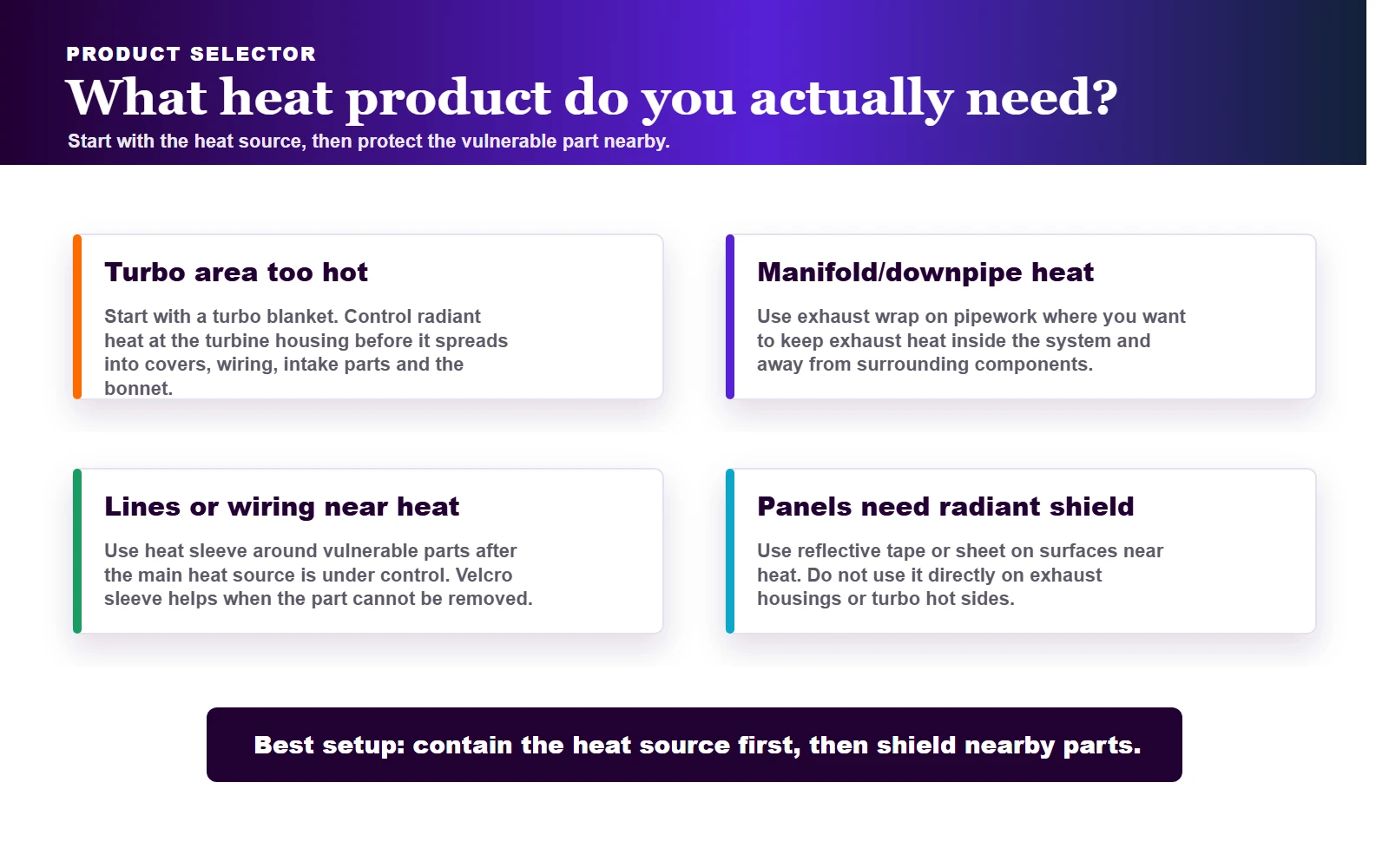
Use a turbo blanket or exhaust wrap on the part creating the heat, not on the part getting damaged by it.
Use reflective tape or sheet on panels, airboxes and covers that face the hot side.
Use a heat sleeve on wiring, hoses and lines that still sit too close to exhaust heat after routing is corrected.
Two real heat problems, two targeted fixes
Last week, we spoke to a Subaru owner dealing with excessive heat around the bulkhead and exhaust tunnel. The heat was making its way into the cabin, and he could physically feel it from inside the car.
We could have sold him a long list of products covering every part of the three-layer method. That would not have been useful. Instead, we worked through where the heat was coming from, which areas were absorbing it and what would make the biggest difference. We supplied the parts he needed most to address that specific bulkhead and tunnel problem.
Our friend and former employee Kym had a similar cabin-heat problem years ago. His exhaust tunnel became hot enough that he could feel the heat against his leg while driving. Our range was much smaller at the time, so we wrapped the relevant section of exhaust and sourced an aluminium heat shield for the tunnel. That combination dramatically reduced the temperatures he felt inside the car.
Neither car needed every product or all three methods. They needed the correct treatment for the way heat was entering the cabin. That is the point of good heat management: diagnose the path, then use the smallest effective combination of products to interrupt it.
What to fit first
This is the part people skip, and it is the part that saves the most money. Find the source, follow the heat path and identify the part at risk. If you start with the wrong assumption, adding more products only hides the problem.
Contain the heat where it starts, then protect nearby parts if needed.
Reduce the pipe temperature before adding local shielding.
Use a barrier where direct radiant heat is the issue.
Protect the vulnerable part, but do not use the sleeve to hide a bad layout.
Watch: In our exhaust wrap install video, we show the method on a real manifold and why the order matters.
Contain: control the source of heat
Containment is the first layer because it reduces the amount of heat escaping into the engine bay. If the hot side is still throwing off a lot of radiant heat, the other layers have more work to do.
Use this layer on the parts that create the heat. That usually means the turbo housing, manifold, header or downpipe. It is not the layer for wiring, hoses or flat panels.
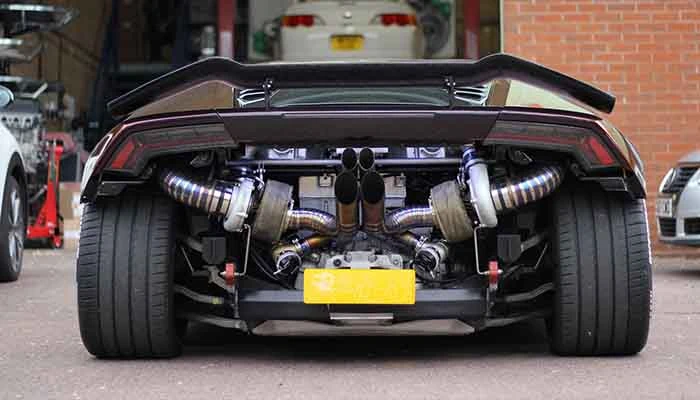
Turbo blanket
A turbo blanket makes sense when the turbo is the problem. We see this work well when the nearby issue is hot intake pipework, brittle hose material, nearby paint or a washer bottle sitting too close to the turbo area. It is source control, not a cosmetic cover.
Exhaust wrap
Exhaust wrap belongs on manifolds, headers, downpipes and other hot exhaust pipework. It is a direct way to reduce the radiant heat leaving the exhaust side of the build.
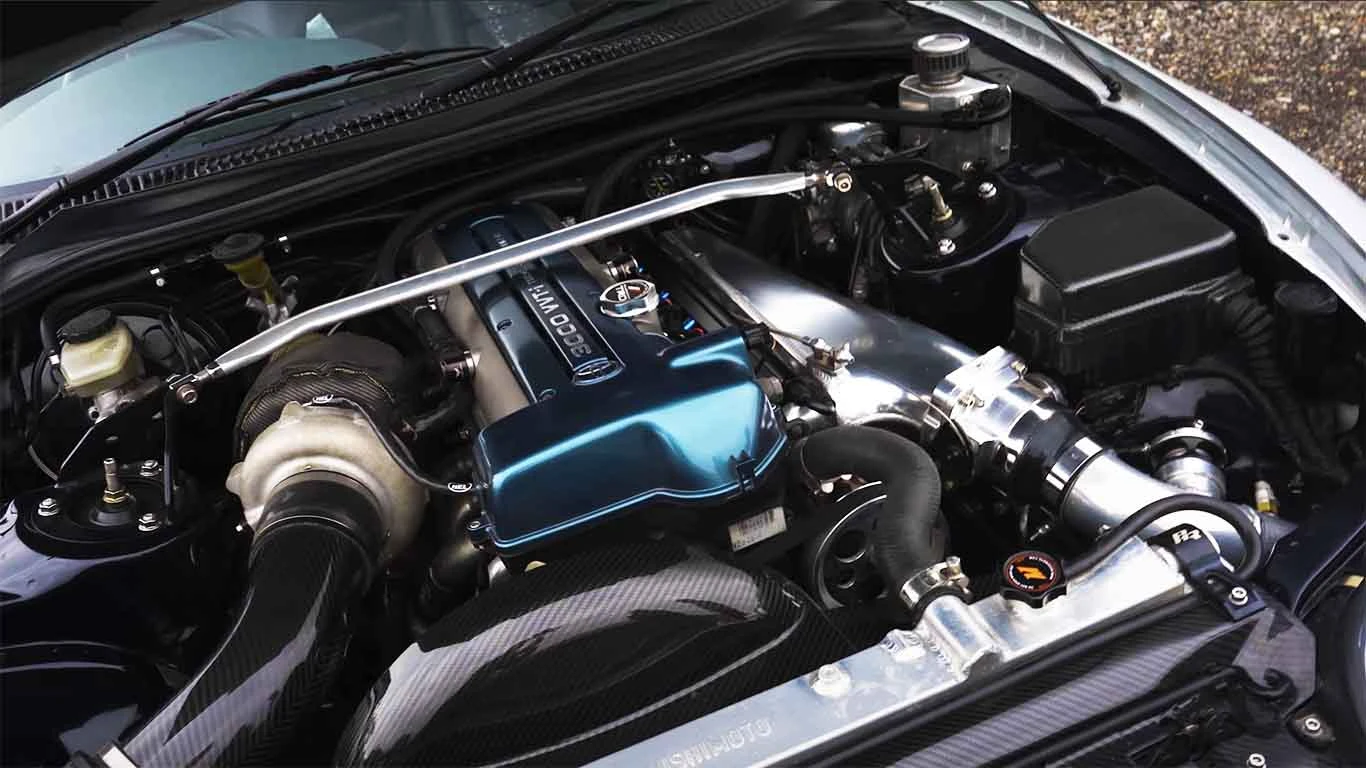
We usually see the biggest benefit when the exhaust is close to wiring, coolant hoses, brake lines or intake pipework. That is when reducing the source heat gives the rest of the build a chance to survive without unnecessary heat soak.
For the fitting side of this layer, use the exhaust wrap installation guide and the exhaust wrap calculator to estimate coverage before you start.
Reflect: keep radiant heat off surfaces
Reflect is for parts that are not the source of the heat but are still being hit by it. This is usually panels, airboxes, covers and bulkheads facing the hot side.
This layer is useful when the part is a surface rather than a line or hose. It is not a substitute for an exhaust wrap on the hot side, and it is not the right solution for wiring or hoses that need full wrap-around protection.
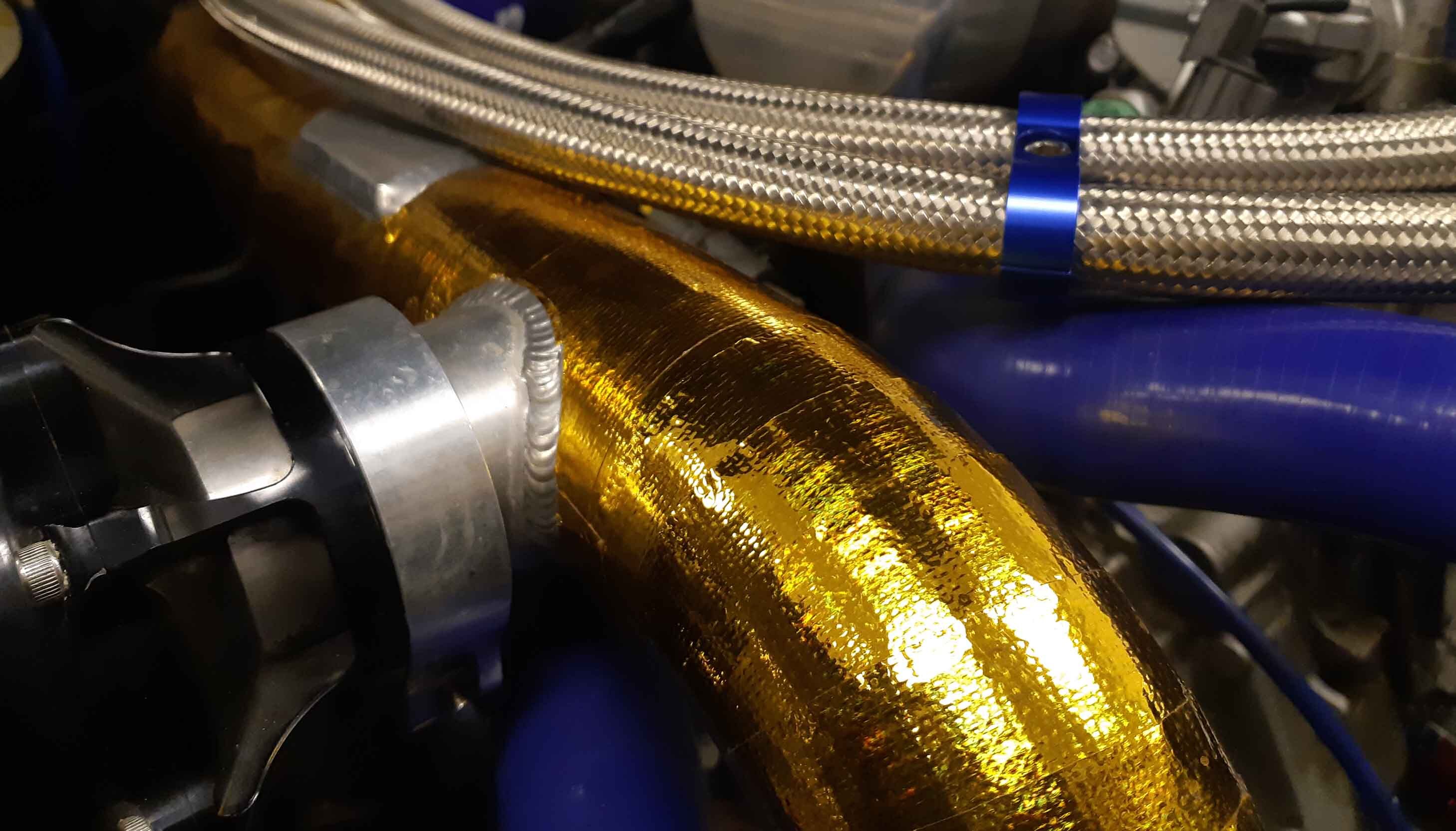
Reflective tape or sheet
Use reflective tape or a sheet when the problem is direct radiant heat hitting a surface. A good example is a panel facing a turbo or a cover sitting close to the exhaust side of the engine bay.
If you need help deciding whether you need a barrier, compare this section with our heat shield vs exhaust wrap vs heat tape guide. It shows the difference between source control and surface protection in more detail.
Protect: shield lines, wiring and hoses
Protect is the layer for parts that are already doing an important job and cannot be moved far enough away from the heat. This is where a heat sleeve comes in.
We use this layer on wiring, fuel lines, brake lines, oil lines, coolant hoses, vacuum hose and AN hose when the route is sensible but the clearance is still too tight.
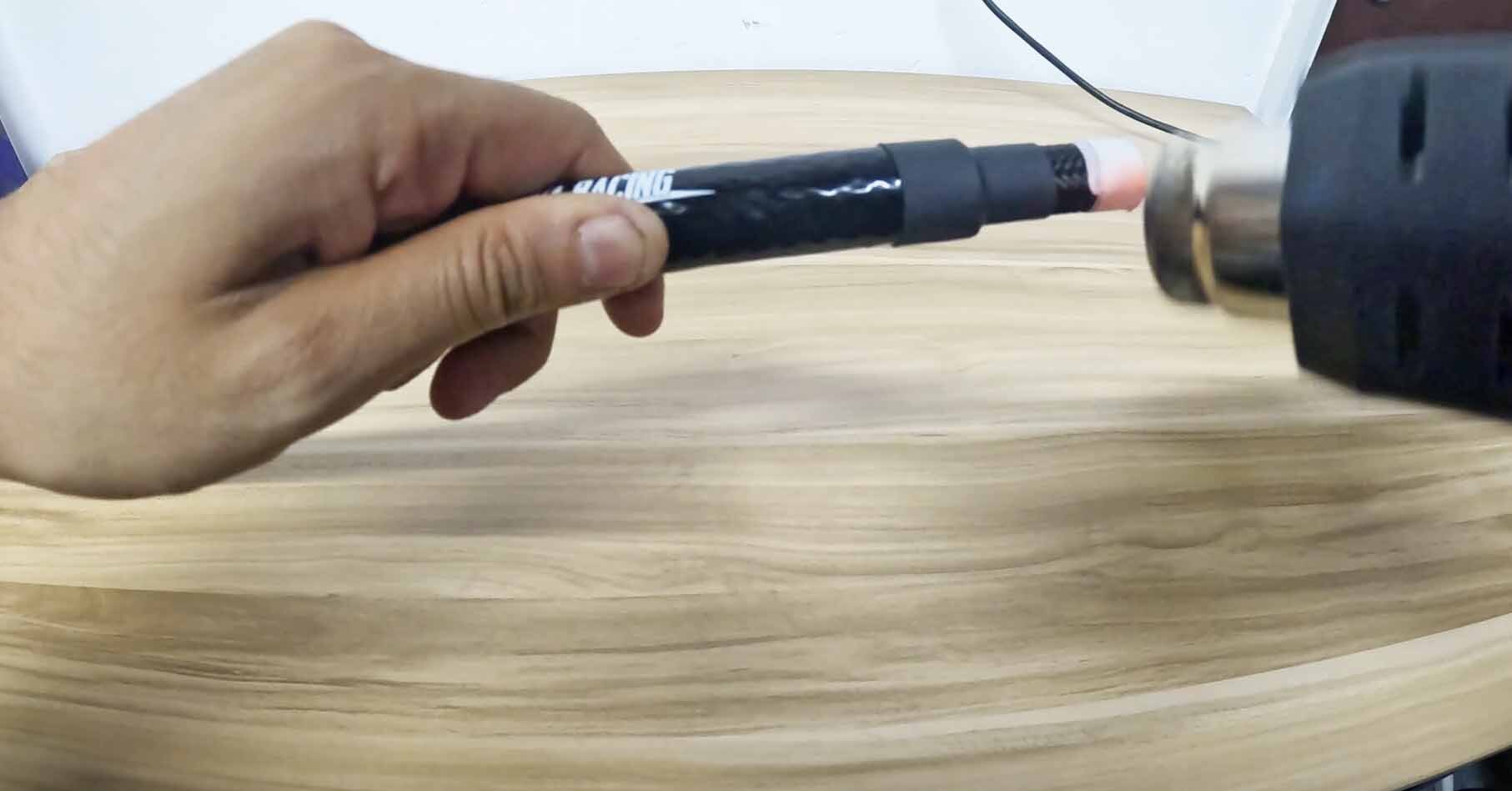
Heat sleeve
A heat sleeve is not a way to cover a damaged line or poor routing. It is the finishing layer that protects a vulnerable part once the heat source has been addressed and the path makes sense.
We see the best results on turbo oil lines, wiring looms near exhausts and fuel or brake lines that have already been routed as neatly as possible. If the route is still wrong, fix the route first.
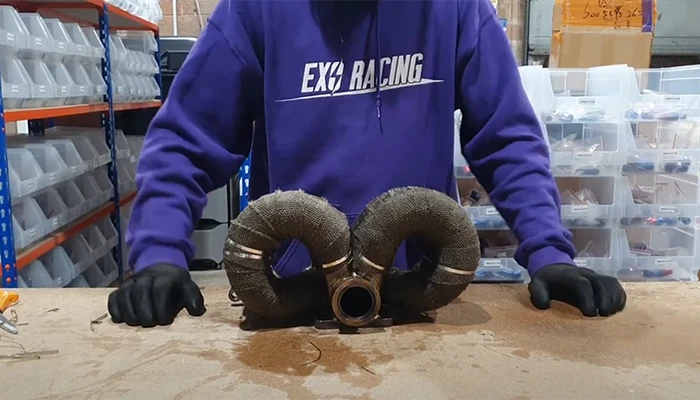
 Exoracing Turbo Blanket V3
Reduce concentrated turbo heat before it soaks into nearby hoses, wiring and intake parts.
From £119.99
 Exoracing Titanium or Carbon Exhaust Wrap
Contain manifold, header and downpipe heat at the source so nearby parts run cooler.
From £24.99
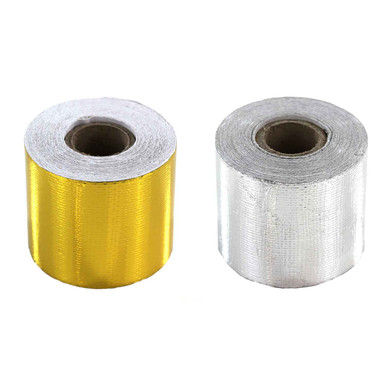 Exoracing Gold and Silver Heat Reflective Tape
Keep radiant heat off panels, airboxes and covers that face the hot side.
From £29.99
 Exoracing Silicone Fibreglass Heat Sleeve
Protect wiring, hoses and lines once routing and clearance have been sorted.
From £14.99
Common mistakes that break the method
Protecting the wrong part first
If the turbo or manifold is still throwing out huge amounts of heat, protecting one hose on its own will not solve the underlying problem.
Using reflective tape like an exhaust wrap
Reflective material is for surfaces facing heat. It does not belong on a manifold or downpipe.
Using a heat sleeve to hide poor routing
If a fuel line, brake line or wire is touching a hot part, route it properly first. Sleeve is the final layer, not the excuse for a bad path.
Ignoring leaks and contamination
We often see oily or contaminated wrap that is really a leak problem. The fix is not to keep adding more layers. The fix is to repair the leak and replace compromised material.
What happens if you get the order wrong?
If you start with the wrong layer, you can spend money without changing the real heat path. That usually means the same part still overheats, the same hose still hardens, or the same panel still gets cooked.
The expensive mistakes we see are simple: people fit a wrap to a downpipe but leave wiring touching the same area, or they fit a blanket over a turbo but ignore a hot intake pipe sitting right above it. In both cases, the root cause is still there.
When that happens, the result is not just wasted money. It is sometimes melted wiring, split hoses, heat-soaked intakes, soft paint or repeated failures after every drive.
Frequently Asked Questions
What is the three-layer heat management method?
It is a diagnostic framework with three possible actions: contain heat at the source, reflect radiant heat away from surfaces, and protect hoses, lines and wiring that still sit too close to the hot side. Use the action or combination that matches the actual problem.
Do I need all three layers on every car?
No. Some cars only need source control, some need reflective protection around a bulkhead or tunnel, and some mainly need line and wiring protection. The source, heat path and part at risk decide what to use—not the catalogue.
Should I fit a turbo blanket or exhaust wrap first?
Choose the product that matches the heat source. Turbo housings suit a turbo blanket. Manifolds, headers and downpipes suit exhaust wrap. The goal is to reduce the source heat first.
When should I use heat reflective tape?
Use reflective tape when a surface is being hit by radiant heat. It is a good choice for panels, airboxes and covers, but it is not the right fix for manifolds or downpipes.
When should I use a heat sleeve?
Use heat sleeve on wiring, hoses and lines that are already routed as well as they can be, but still sit too close to heat. It is the final protection layer, not a replacement for proper routing.
a What should I do first if the engine bay layout is poor?
Fix leaks, damage and bad routing first. Once the layout makes sense, control the source heat, then add surface protection or a heat sleeve where needed.
Can reflective tape replace exhaust wrap?
No. Reflective tape is for surfaces facing heat. Exhaust wrap is for the hot exhaust itself. They do different jobs and should not be swapped.
Final decision
If you remember only one thing, remember this: diagnose the heat path before choosing the product. Contain, reflect and protect are the tools available to you, not three compulsory purchases.
If the turbo or exhaust is releasing too much heat, contain it at the source. If a bulkhead, tunnel or other surface is absorbing radiant heat, reflect or shield it. If a hose, line or wire remains exposed after the routing has been improved, protect it with the correct sleeve. Use one method or combine them according to the problem in front of you.
For the broader range, start with our heat management range. If you want the theory first, read what automotive heat management is. If you want product choice help, open our heat shield vs exhaust wrap vs heat tape guide.
Explore Heat ManagementAbout the Author
Exoracing is a UK-based heat management and performance parts specialist.
Since 2018, we have helped enthusiasts and workshops protect wiring, hoses, fuel lines, intake parts and engine bay components from turbo, manifold and downpipe heat using practical product testing, installs and customer build experience.