
Fuel Temperature Explained: Pumps, Returns and Vapour Lock
Posted by Matthew Marks on 8th Jun 2026
Jump to a section
Fuel Temperature Explained: Pumps, Returns and Vapour Lock
True vapour lock is rare in a well-designed modern fuel system. However, fuel can still get too hot. Hot fuel is less dense, gives the pump less spare capacity and can make the system less reliable.
Exoracing provides practical heat protection for modified cars. This includes protection for fuel cells, pumps, return lines and fuel hoses in crowded engine bays.
People often blame a vapour lock whenever hot fuel causes a problem. It was a common risk on older carburettor cars. These cars used low-pressure mechanical pumps and often had fuel lines in hot engine bays.
Vapour lock is much less common on modern fuel-injected cars. These cars often use pumps inside the tank, fuel lines that stay under pressure and large injectors. Their pumps can move hundreds or even thousands of litres per hour.
However, a high fuel flow does not stop heat problems. A return-style system can keep moving fuel through a hot engine bay and back to the fuel cell. This carries heat into the cell. Problems can start if the cell is in a hot place, the tank is too small, the lines are near the exhaust, or the pump is near its limit. This can happen long before true vapour lock.
The simple answer
Modern fuel-injected cars rarely suffer true vapour lock because the fuel stays under pressure and moves quickly. Carburettor cars, pipes before the pump and low-pressure pumps are at greater risk.
Modern performance cars are more likely to suffer excessive fuel temperature. Hot fuel is less dense and gives the pump and injectors less spare capacity. It can also cause bubbles in low-pressure parts of the system. A fuel system that is already near its limit may then become less reliable.
The best approach is to design the whole system well. Place and shield the fuel cell, keep lines away from the exhaust and choose the right pump and return line. Avoid moving more fuel than needed. Protect exposed lines, but do not use covers to hide poor routing or damaged hose.
- True vapour lock mainly affects carburettors, low-pressure and poorly designed fuel systems.
- High-flow return systems resist vapour lock, but they can slowly heat the fuel cell.
- Cooler fuel is denser and gives the pump and injectors more spare capacity.
- Very cold E85 can make starting and fuel evaporation harder, so colder is not always better.
- Fuel-cell position, line routes, exhaust clearance and return design matter more than adding a sleeve later.
Why Modern Fuel Systems Rarely Vapour Lock
Classic vapour lock happens when liquid fuel turns into vapour, where the pump needs a steady liquid supply. Mechanical pumps on hot engines often had to pull low-pressure fuel from the tank. Low pressure, suction and hot pipes made it easier for vapour bubbles to form.
A modern fuel-injected system normally pushes pressurised fuel from a pump in or near the tank. Performance pumps move a lot of fuel, while the fuel rail and lines stay under pressure. Higher pressure makes vapour less likely to form. Constant fuel flow also helps clear small hot spots.
Low pressure, pipes before the pump and engine-bay heat create the highest risk.
Less fuel returns from the hot engine bay, but parts can still stay hot after the engine stops.
This system resists vapour lock, but the pump and hot return fuel can keep adding heat to the fuel cell.
Why Fuel Temperature Still Matters
Fuel expands as it gets hot. This means that one litre of hot fuel contains less fuel by weight than one litre of cool fuel. UK guidance uses an example petrol expansion rate of about 0.00123 for each degree Celsius. Real fuels vary, so use the figures below as a guide, not for an exact engine tune.
Modern engine management can adjust for normal changes in fuel flow and mixture. A correctly sized system should not suddenly run dangerously lean when the tank reaches 50°C. The main concern is losing spare capacity. A pump, injector or power supply that is already near its limit has less room to cope as the fuel gets hotter.
Usually good for pump and injector capacity. However, very cold fuel with lots of ethanol can be harder to evaporate when starting.
A well-designed injection system should cope. On high-power cars, check that the pump, injectors and return system still have spare capacity.
Treat this as a warning. Check tank heating, pump load, return design, line routes and local hot spots. Fuel type and pressure affect whether vapour forms.
Practical fuel-temperature bands
There is no single safe fuel temperature for every fuel, pump and vehicle. Use these ranges as a guide. Also check fuel pressure, pump voltage, injector duty, lambda readings and how quickly the temperature rises.
Expect good fuel density and spare delivery capacity. Very cold fuel with lots of ethanol may still need extra fuel or heat when starting.
A good system may stay stable. Check whether the temperature keeps rising and whether fuel pressure or injector duty changes.
Check the fuel-cell position, pump control, hot return fuel and pressure while the engine is under load.
Fuel type and pressure affect the real vapour risk. Do not judge the system by temperature alone.
Does colder fuel make more power?
Cooler fuel is denser and helps keep spare capacity in the fuel system.
However, colder fuel does not always create a clear power gain. Power also depends on the fuel type, injection system, engine tune, air temperature and how well the fuel evaporates.
Aim for a stable and controlled fuel temperature, not the lowest possible temperature.
What changes with E85?
An engine needs much more E85 than petrol to make the same power. The pump, injectors and lines must therefore move more fuel.
E85 is often less likely than petrol to form vapour when hot. However, it can be harder to start and evaporate when cold. This is why the E85 sold can change with the season and why some flex-fuel cars heat the fuel rail for cold starts.
E85 can still suffer from heat problems. A pump moving lots of fuel, weak wiring, a small fuel cell and a hot return flow can all raise its temperature. Every hose, pump, seal and filter must also be safe to use with ethanol.
Petrol, E10 and E85 fuel-temperature considerations
Where Fuel Heat Comes From
When finding a fault, work out whether one line is getting hot or the whole system is heating up.
A fuel hose near a manifold can suffer damage, age faster or develop one hot spot. A fuel cell that slowly gets hotter during a session points to heat entering the whole system.
A pump that is too large and always runs at full speed can add needless heat. Staged pumps or speed control may reduce fuel flow and heat when full power is not needed.
Fuel that keeps travelling through the engine bay can carry heat back to a small tank.
Improve the line route first. Then reduce the heat source or protect a good line if it is still exposed.
A cell above the exhaust or inside a sealed hot area can absorb heat even if the engine-bay lines are well placed.
How hot fuel affects the pump
A pump needs a steady supply of liquid fuel at its inlet. Hot fuel, blocked or narrow inlet parts and low pressure make bubbles more likely.
This matters most before the pump, where pressure is lowest. A restrictive filter, small feed hose, tight bend, badly placed external pump, or low fuel level can all make the problem worse.
Do not judge a pump only by its advertised litres-per-hour figure. Its real flow changes with pressure, voltage, fuel type and how it is fitted. Record pump voltage and fuel pressure when the system is hot. Even a large pump can lose pressure if its wiring is weak or its fuel pickup is restrictive.
Why low fuel level make heat problems worse
A small amount of fuel heats faster than a large amount. A low fuel level can also reduce pump cooling. During hard acceleration, braking or cornering, it may leave a poorly designed pickup uncovered. The resulting pressure loss can look like a heat problem or make one worse.
When testing a track car, record the fuel level as well as the temperature. Comparing a run with a nearly full cell against one with a nearly empty cell can give a false result.
Fuel Cell Location and Installation
The fuel-cell position affects temperature, safety and pump reliability. Keep the cell away from exhaust pipes, silencers, the differential and other hot parts. Where heat remains, use a proper barrier with an air gap. Do not rely only on reflective material stuck to a poor or dirty surface.
The cell must be firmly mounted, correctly vented and separated from people in the car. Follow all rules and safety requirements for the vehicle. A cell in the boot is not automatically cool or safe. Exhaust pipes below the floor and trapped hot air can still cause problems.
More fuel usually heats more slowly, but carrying extra fuel does not fix the source of the heat. On a track car, watch the temperature for a full session. Do not only check the cell while the car is cold in the paddock.
Return-line placement
Keep the return line away from heat, just like the feed line. The return must not add lots of air to the fuel or send hot fuel straight back into the pump pickup. Follow the tank maker's advice and consider the tank shape and internal baffles.
Deadhead, returnless and return-style layouts
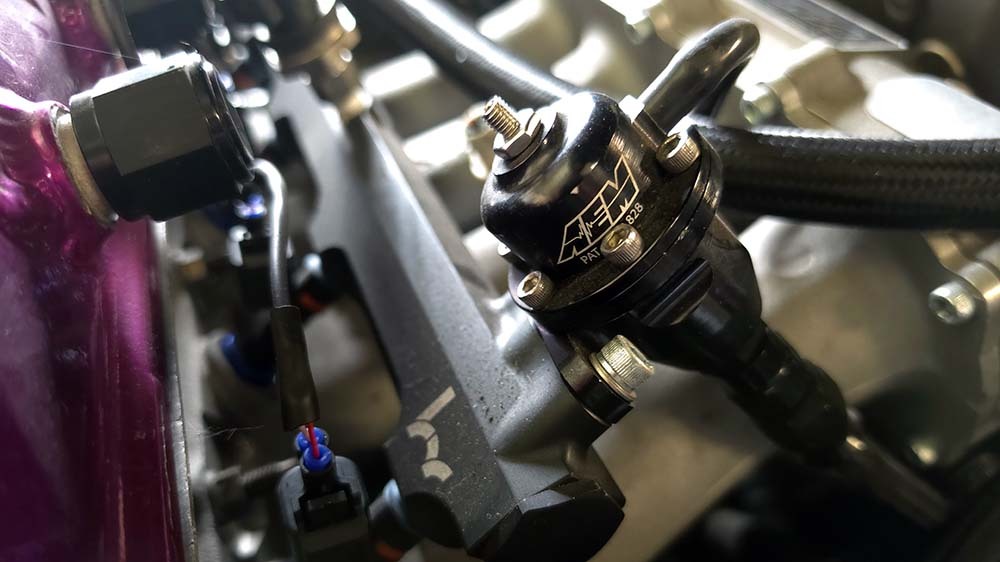
Deadhead or regulator-before-rail layouts can reduce the fuel that keeps flowing through the hot rail. However, the design must still keep fuel pressure steady and suit the injectors and regulator.
Returnless systems reduce the hot fuel returning to the tank. They often use electronic pump control.
Return-style systems give simple mechanical pressure control and clear hot fuel from the rail. However, they can carry that heat back to the cell.
No layout is best for every car. The right choice depends on power, fuel type, pump control, regulator setup, vehicle use and engine tune.
For example, see our Honda Civic EP3 fuel return system guide.
Fuel Line Placement Near Manifolds and Exhausts
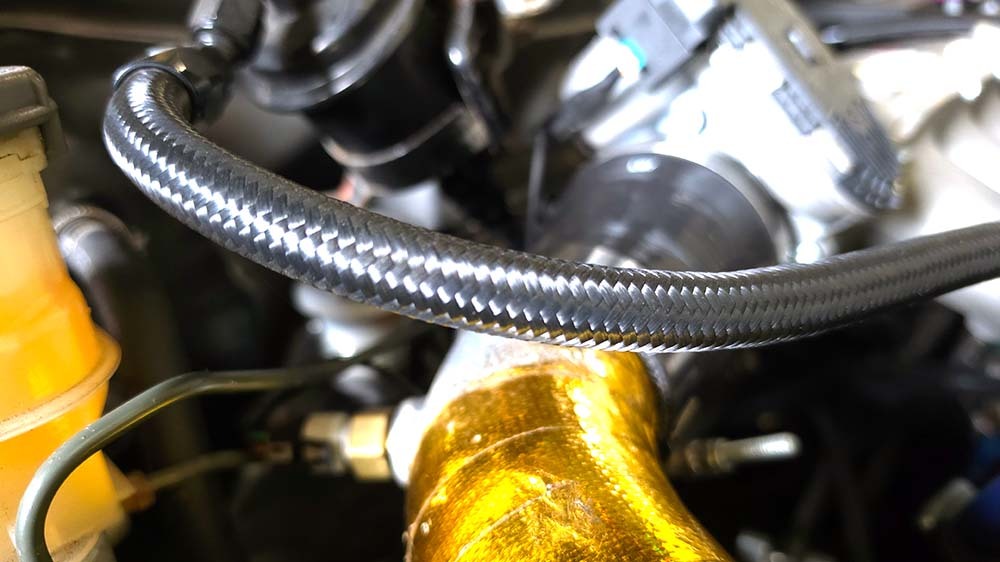
A modern pump may prevent classic vapour lock, but the hose can still be damaged by heat. Exhaust heat can age rubber, damage the outer braid, soften the wrong type of hose and heat the fuel in one area.
A line that touches hot metal, or can sag onto it, has been routed badly. A heat sleeve does not fix that.
Leave as much space as possible, firmly support the whole line and place barriers between the exhaust and fuel system where possible. Our detailed fuel line near the exhaust guide explains routing, clearance and protection choices. There is no single safe distance for every car.
Fuel Heat Management Decision Guide
Check how hard the pump works, return flow, cell size and position, and exhaust heat below the cell.
Only use a heat sleeve on a good line after improving its route.
Also check filters, restrictions, the fuel pickup and low-pressure parts for bubbles or vapour.
Check pipes before the pump, pump position, pressure, carburettor temperature and heat left after shutdown.
When is a heat sleeve useful
A heat sleeve can protect a good fuel hose or line that must stay near heat after its route has been improved. It does not cool the fuel cell, fix a small pump, repair a damaged hose or make direct contact with the exhaust safe. Measure the outside width of the line before choosing a sleeve with our heat sleeve size chart.
 Exoracing Silicone Fibreglass High Temperature Heat Sleeve 0.5m
Push-over protection for good fuel lines that are still exposed to strong heat after safe routing.
From £14.99
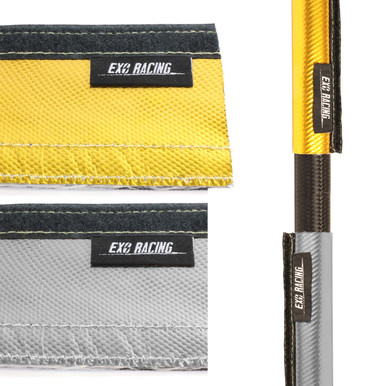 Exoracing Gold and Silver Velcro Heat Sleeve 0.5m
Protection for fitted fuel lines that cannot be pushed through a normal sleeve.
From £14.99
Watch: Our installation video shows how to measure and fit silicone fibreglass heat sleeve correctly.
How to Measure and Diagnose Fuel Temperature
Do not judge the whole fuel system from one surface reading. Repeat tests in the same conditions and measure the same points. Record fuel-cell, feed and return temperatures where possible. Also record fuel pressure, pump voltage and how long the car has been running. Compare a cold start, fully hot running and the heat left after shutdown.
The outside of a hose may not be the same temperature as the fuel inside it. Sensor position also changes what the reading tells you. A sensor in the rail measures fuel reaching the injectors. A sensor in the cell measures the main fuel supply. Record where and how you measured so that later tests are fair.
If the fuel regulator uses boost pressure, compare fuel pressure with manifold pressure. Also record pump voltage or current, injector duty cycle, lambda, fuel level and fuel temperature. Fuel temperature shows that heat exists. The other readings show whether it is harming fuel delivery or changing how the engine runs.
- Record the fuel type, amount of fuel, outside temperature and session length.
- Record fuel pressure and pump voltage when cold and fully hot.
- Measure cell, feed and return temperatures at the same places each time.
- Check the fuel-cell position and the full feed and return routes.
- Check whether pressure, fuel mixture or engine behaviour changes as the fuel heats.
- Change one thing at a time, then repeat the same test.
Worked diagnostic examples
Hot but stable: fuel starts at 18°C and reaches 52°C after a long session. Fuel pressure, pump voltage, lambda and injector duty all stay normal. The fuel is hot, but this test does not show a fuel delivery fault. Keep watching the temperature and spare system capacity.
Heat-related capacity problem: fuel gets hotter during repeated runs while fuel pressure falls under load. Injector duty rises, and lambda shows a lean mixture. Do not look at temperature alone. Before using the car hard again, check the pump supply, filters, pickup, line restrictions, return heating and total system capacity.
These are example fault patterns, not Exoracing test results or limits that apply to every car.
Design the system to control fuel temperature
- Place and shield the fuel cell away from exhaust and trapped heat.
- Choose a pump for the real pressure, fuel type and demand, not only its advertised flow.
- Use staged or speed-controlled pumps where suitable to reduce needless fuel flow.
- Use strong pump wiring, a safe pickup design and unrestricted pipes before the pump.
- Route feed and return lines away from manifolds, turbos, downpipes and exhaust tunnels.
- Prevent hot return fuel from immediately entering the pump pickup.
- Use compatible hoses, filters, seals and pumps for petrol, E10 or E85.
- Record temperature, pressure, voltage, lambda and fuel level during real use.
Common Fuel Heat Management Mistakes
Blaming the vapour lock on every hot-running problem
On a modern injected car, check the pump voltage, pressure, filters, pickup, injectors, sensors and engine tune before deciding that the fuel is turning into vapour.
Installing the largest pump and running it constantly
Extra pump capacity only helps when the system needs it. Constant high flow and electrical load can add heat. Choose and control the pump to meet the real demand with a suitable safety margin.
Protecting a line while ignoring the fuel cell
Protecting the feed line in the engine bay does not fix a cell heated by the exhaust or hot fuel repeatedly returning to the tank.
Using a sleeve to hide unsafe routing
The heat sleeve protects parts. It does not make it safe to place a fuel line against a manifold or downpipe. Replace the damaged hose and create space first.
Frequently Asked Questions
Does vapour lock happen on modern fuel-injected cars?
It is rare in a well-designed system because the fuel stays under pressure and moves quickly. It can still happen in low-pressure parts, badly designed modified systems or when the fuel is very hot, and the pump has little spare capacity.
Is colder fuel always better?
Cooler fuel is denser and usually keeps more spare delivery capacity. However, extremely cold fuel can be hard to evaporate when starting, especially if it contains lots of ethanol. A stable, controlled temperature is more useful than simply making the fuel as cold as possible.
Is 50°C fuel too hot?
A correctly sized injected system may work normally at 50°C. Judge the reading together with fuel pressure, pump voltage, fuel type and whether the temperature keeps rising. If pressure or engine behaviour changes as the fuel heats, check the spare system capacity and source of heat.
Why does a return fuel system heat the tank?
The pump adds heat, and fuel keeps travelling through the hot engine bay before returning to the tank. A high-flow pump, a small amount of fuel and long driving sessions can make the temperature rise faster.
Does E85 run cooler than petrol?
E85 cools the air and fuel mixture as it evaporates, but the fuel system must move much more of it. E85 can still get hot in the cell, pump and return system. Its cooling effect inside the engine does not stop the fuel cell from getting hot.
Will the heat sleeve cool my fuel?
A heat sleeve reduces the heat reaching an exposed line. It does not actively cool fuel or remove heat added by the pump, return system or fuel-cell position.
How close can a fuel line be to a manifold?
There is no single safe distance because temperatures, airflow, materials and shields vary. Leave as much space as possible, secure the line and add a solid barrier or suitable protection where heat still reaches it.
Final Recommendation
On a modern performance car, focus less on the name "vapour lock" and more on controlling fuel temperature while keeping steady pressure and flow. Start with the whole system: fuel-cell position, pump size and control, electrical supply, feed and return routes, filters, regulators and exhaust clearance.
Only protect individual lines after their routes are safe and the whole system is well designed. Use our heat-management product comparison to choose protection for the heat source and exposed part, or browse the Exoracing heat management range.
Shop Fuel-Line Heat Protection PartsAbout the Author
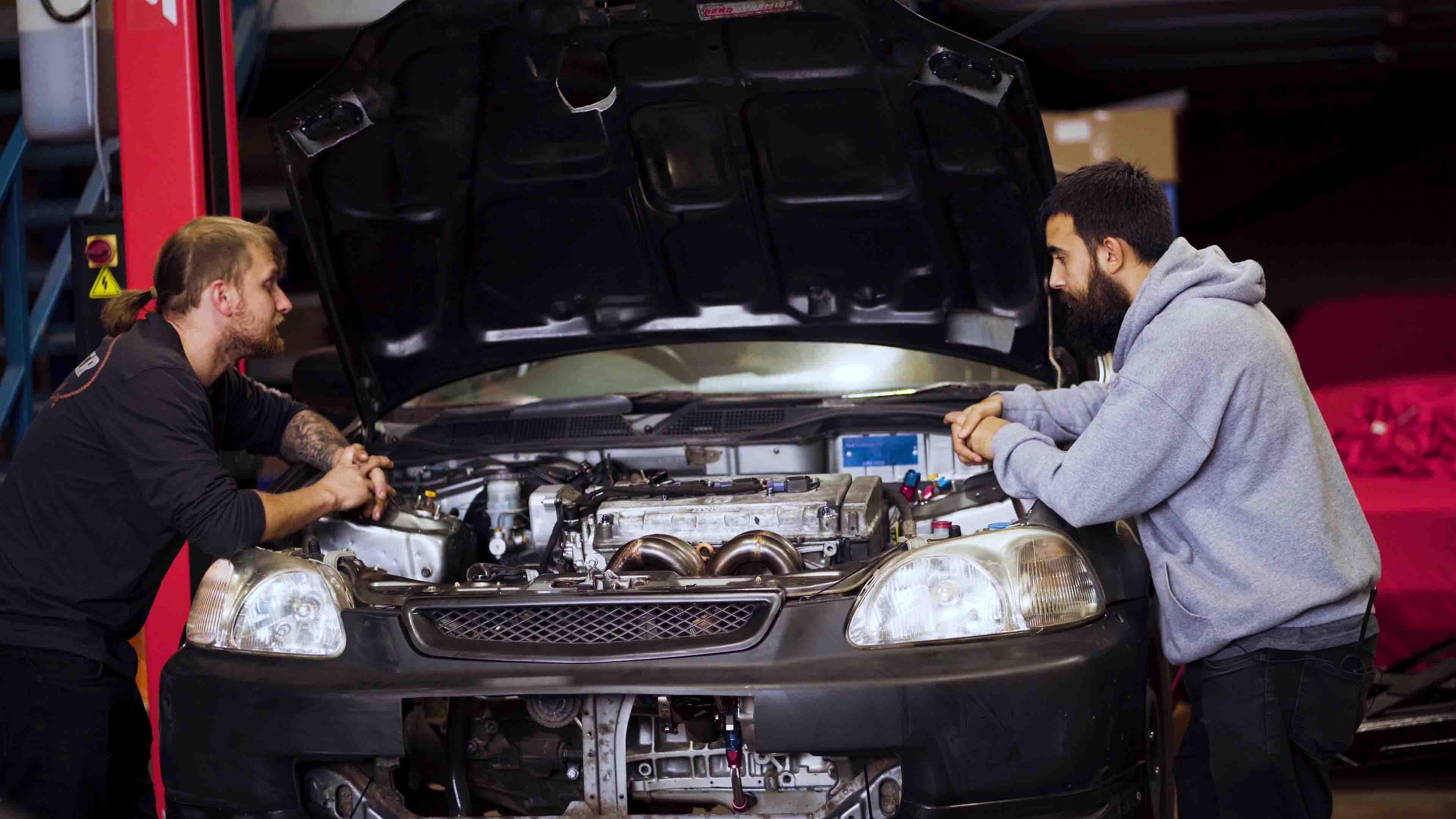
Exoracing is a UK performance-parts brand that specialises in automotive heat protection.
Since 2018, we have helped car owners and workshops protect turbo cars, track cars, fuel systems, wiring and crowded modified engine bays.
Need help protecting a fuel line after checking the whole system? Measure the line, photograph the heat source and contact Exoracing.