How To Choose a K-Series Map Sensor
Posted by Matthew Marks on 2nd Aug 2024
Jump to a section
Choosing the right K-Series MAP sensor is one of the simplest but most important parts of a turbo or tuned build.
Get it right, and the ECU can read pressure accurately, fuel the engine properly, and keep the tune stable. Get it wrong, and you can run into bad readings, poor drivability, or much worse.
There are now more K-Series MAP sensor options than ever, from standard OEM replacements right up to high BAR motorsport sensors for serious boost levels. That sounds great, but it also makes it easier to buy the wrong one if you are not clear on what BAR rating you actually need.
In this guide, we will break down what a MAP sensor does, when you need to upgrade it, how to choose the right BAR rating, and which sensors make the most sense depending on your setup.
- OEM 1.5 BAR sensors are best for naturally aspirated replacement use
- 3 BAR and 4 BAR sensors are the most common choices for turbo K-Series builds
- 5 BAR and 7 BAR sensors suit higher boost setups with aftermarket ECU control
- Choose a sensor with sensible headroom above your target boost, not just the biggest number possible
What Does a K-Series MAP Sensor Do?
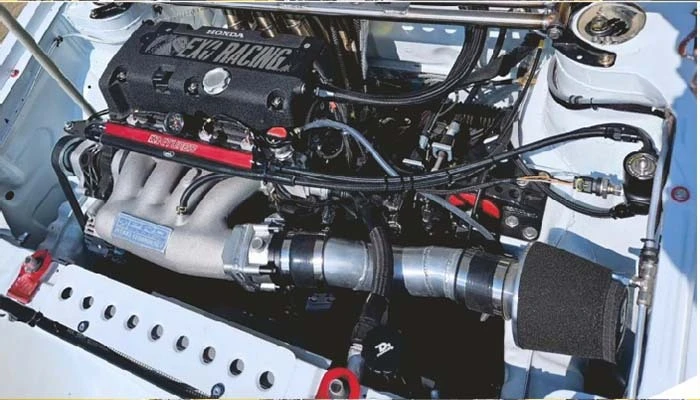
A MAP or manifold absolute pressure sensor is designed to send pressure information back to the ECU. It is typically mounted on the throttle body or inlet/intake manifold.
They measure manifold pressure and send that information back to the ECU so it can adjust fueling correctly.
As this chip has a current running through it, once it starts flexing, the current change is given to the ECU via the wiring and will show the exact pressure rating here.
Once the ECU has this pressure data, it can add the correct fuel amount to ensure you get the proper air-fuel ratio to get the most efficient bang in the combustion chamber.
If you are building the fueling side of the setup at the same time, our guide on how to choose a Honda K-Series fuel rail is a useful next read because the rail, injectors and MAP sensor all need to work together on a boosted build.
In simple terms, the MAP sensor helps the ECU understand how much load the engine is under.
That matters because a turbocharged engine at vacuum, low boost and full boost all need very different fueling and ignition behaviour.
The more accurate the pressure signal is, the easier it is for the ECU to keep the engine running safely and consistently.
Why Should I Upgrade My K-Series MAP Sensor?
When you go with a turbocharged build with the stock Honda MAP sensor, you can only read up to 1.5 BAR, with 1 BAR of that being atmospheric.
If you are still planning the whole setup rather than just the sensor, our ultimate Honda Civic turbo B/K-Series conversion guide covers the other parts that usually need upgrading alongside boost control and engine management.
So, when adding boost pressure, you must also increase the range the K-Series MAP sensor can read to allow for fuel adjustments.
This is where aftermarket options come into play and allow you to increase this sensor rating to whichever level of boost you decide to run.
The important thing to remember is that sensor choice is not about buying the biggest number possible just because it sounds better.
It is about choosing enough range for your current boost level, while leaving sensible headroom for safety and future upgrades. For most people, that means matching the sensor to the real target boost rather than guessing.
Below, we will go through the most common options available from OEM 1.5 BAR up to aftermarket 7 BAR sensors and how to work out which one you need.
 Skunk2 3 Bar MAP Sensor For Honda Civic Integra EP3 DC5 K-Series 01-06
A simple, direct fit choice for lower boost turbo builds that still want OEM-style fitment and easy installation.
From £124.49
 Speedfactory 4 Bar MAP Sensor K-Series K20 K24
A strong step up for higher boost K Series builds, with OEM-style fitment and extra headroom for future power increases.
From £127.05
OEM K-Series MAP Sensor
OEM Honda K-Series MAP sensor is generally rated to 1.5 BAR, roughly the equivalent of 14.5PSI atmospheric and around 10.5PSI of boost pressure. However, I wouldn't recommend running any boost on a stock sensor.
A stock 1.5 BAR MAP sensor can accurately read from a vacuum to 10.5PSI over atmospheric pressure.
Once you start adding positive pressure (i.e. boost pressure), the OEM 1.5 BAR MAP sensor will not be able to accurately read this, so you must upgrade to a higher BAR-rated pressure sensor, which will adjust the fuelling correctly.
Suppose you have a naturally aspirated K-Series and want a replacement MAP sensor. In that case, a Genuine Honda MAP sensor will be a perfect option.
3 Bar And 4 Bar K-Series MAP Sensor
The next step up from OEM would be the aftermarket 3 or 4-bar K-Series MAP sensors. A vast number of companies are now making these, and we will compare a few below, but each one can read different levels of boost pressure.
A 3-bar MAP sensor can accurately read from around 1-29 PSI, whereas the 4-bar MAP sensor can read from 1-43 PSI.
Some would think that because the sensor is rated to 4 BAR, it can read 4 BAR of actual boost pressure (59 PSI). The first BAR is atmospheric, so the 4 BAR sensor can only read 3 BAR of added boost pressure.
Most of the 3 and 4 Bar K-Series MAP sensor options are OEM fitment and completely plug and play, which makes installing one very simple and can be done in minutes.
5 Bar And 7 Bar K-Series MAP Sensor
As time passes, turbocharged K-Series builds get crazier, and people want more power.
As this power level increases, so does the boost pressure, so some manufacturers, such as Haltech, have created 5 and 7-bar aftermarket options to allow for this.
A 5 BAR MAP sensor can read from 1-59 PSI, and a 7 BAR can read from a staggering 1-88 PSI!
Before we move into the best brands to go for, it's worth mentioning here that you will need an aftermarket ECU to read a high BAR-rated MAP sensor accurately.
Once you move into aftermarket ECU territory, it is also worth understanding the rest of the fuel side properly, and our EP3 fuel return system guide explains one of the most common supporting upgrades on higher horsepower builds.
In most aftermarket ECU settings, there is an option to add a specific BAR rating of the MAP sensor, so the ECU knows the correct scaling and can determine the fueling from here.
This is one of the main reasons high BAR universal sensors are more common on serious builds. Once you move past simple plug-and-play parts and into bigger boost, the car usually needs a more flexible ECU setup anyway.
At that point, accurate scaling, clean wiring, and proper sensor placement become just as important as the sensor itself.
- OEM 1.5 BAR is for naturally aspirated replacement use only
- 3 BAR is a common choice for lower boost turbo builds
- 4 BAR suits many stronger street and track turbo setups
- 5 BAR and 7 BAR are for bigger boost levels and usually need more custom setup
Which Brand Of K-Series MAP Sensor Should I Go With?
I will cover 5 of the most common brands we see daily regarding the K20/K24 MAP sensors.
Regarding how reliable they are, I have used most of these sensors and brands at one time or another, and they are all just as reliable as each other.
For transparency, the only sensor I have not personally used or tested is the K-Tuned 4 BAR MAP sensor.
There are options here from OEM all the way to 7 BAR.
I've added a table underneath this section to show the boost pressure you can run with each one, colour options and anything else worth knowing!
Genuine Honda
The first brand to go with for naturally aspirated applications would be the Genuine Honda MAP sensor.
Whether you need a replacement for your old, inaccurate sensor or need to buy one for your build, they are the best OEM option.
They are mega reliable, as are all parts from OEM manufacturers!
Genuine Honda sensors tend to be one of the more expensive OEM-style choices, but they remain a strong option if you want factory fitment and reliability on a naturally aspirated setup.
Speedfactory Racing
Speedfactory Racing is a massive Honda brand worldwide; its products show precisely why!
From a massive range of turbo manifolds and intercoolers to titanium bolt kits, they are a Honda lover's dream.
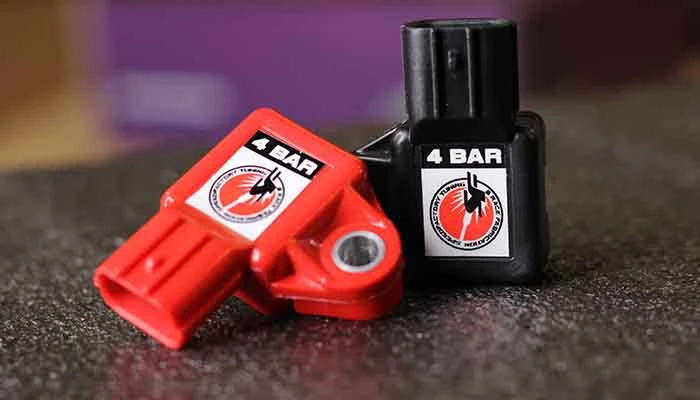
They also offer a 4-bar MAP sensor option for the K-Series, available in either red or black to suit the theme you're going for.
They are a solid option here, with the broadest range for OEM fitment, especially with the 2 colours to choose from.
Skunk2 Racing
The next brand on the list would be Skunk2 Racing, which has been around since the 90s and, again, is one of the biggest names in the Honda industry.
With products such as the Skunk2 Ultra Street intake manifold and Race series, they have created a massive product range over time.
They now offer a 3-bar and 4-bar K20 and K24 MAP sensor for direct fitment, but they are only available in black.
In terms of pricing, they align with Speedfactory and K-tuned for plug-and-play options.
K-Tuned
K-Tuned is the last brand that offers a plug-and-play factory option, but it is only available in 4 BAR and black.
In terms of fitment, they are the same as the other options and will still need to be calibrated in the ECU like the others.
They again follow suit for pricing and are a solid option when choosing a MAP sensor if the rest of their electronic range is anything to go by.
Haltech
The last brand on this list is Haltech, which has the most comprehensive range.
You would always expect their range to be huge when they specialise in engine management systems and electronics, and their map sensor range is no different.
One thing to note about Haltech is that all of their options are universal, so they are not directly plug-and-play with a K-Series.
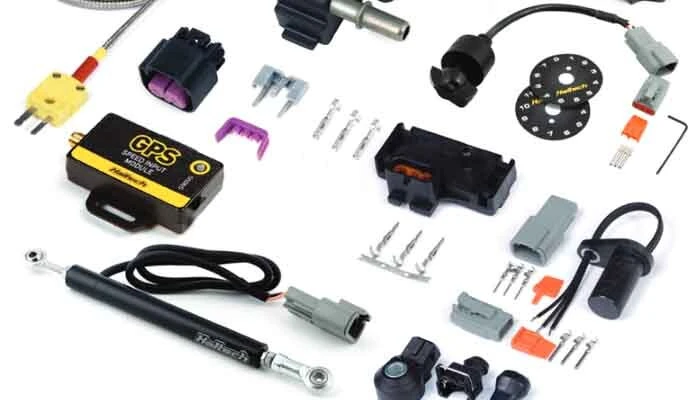
They have a wide range of MAP sensors, such as 3-bar, 4-bar, 5-bar, and 7-bar options.
They range from motorsport sensors to their 7-bar "TI" sensor, which must be remotely mounted to avoid damage to the sensor.
Suppose you are above the 43psi mark or want a solid, reliable sensor. In that case, a universal Haltech sensor is a great option.
At this level, it is also smart to think about automotive heat management, because turbo manifolds and hot side pipework can quickly start affecting nearby sensor wiring, hoses and other engine bay parts.
On turbo K-Series builds, MAP sensor wiring and any nearby vacuum hose can end up routed close to manifolds, turbo housings and hot charge pipework.
Even the best sensor can become a reliability weak point if the surrounding wiring or hose routing is not protected properly from engine bay heat.
The only downside to the higher BAR Haltech MAP sensors is the price, as they go up in cost with each increase, but it is worth knowing your car will work correctly at high boost levels!
Comparing All Of The K-Series MAP Sensor Options
Now that we've been through every option, it's time to put every single option side by side to see the best one for your application.
I've also included the maximum boost pressure you can run with each sensor in the table below. However, it's probably worth going with a higher-rated MAP sensor than your maximum boost level to account for sea level and scope in the future.
I've sorted them from the lowest to highest BAR rating to make it easy for you to choose one using the current boost level you are or want to run.
| Brand/Product | Colour | BAR Rating | Actual Boost Pressure |
Fitment |
| Genuine Honda 1.5 BAR MAP Sensor | Black | 1.5 BAR | 1PSI-10.5PSI | OEM |
| Skunk2 3 BAR MAP Sensor | Black | 3 BAR | 1PSI-29PSI | OEM |
| Haltech 3 BAR MAP Sensor | Black | 3 BAR | 1PSI-29PSI | DTM Connector |
| Speedfactory 4 BAR MAP Sensor | Black or Red | 4 BAR | 1PSI-43PSI | OEM |
| Skunk2 4 BAR MAP Sensor | Black | 4 BAR | 1PSI-43PSI | OEM |
| K-Tuned 4 BAR MAP Sensor | Black | 4 BAR | 1PSI-43PSI | OEM |
| Haltech 4 BAR MAP Sensor | Black | 4 BAR | 1PSI-43PSI | DTM Connector |
| Haltech 5 BAR MAP Sensor | Silver | 5 BAR | 1PSI-60PSI | 1/8"NPT |
| Haltech 7 BAR MAP Sensor | Silver | 7 BAR | 1PSI-87PSI | 1/8"NPT |
Frequently Asked Questions
There is a load of misinformation regarding MAP sensors and lots of questions.
Hopefully, I can clear up as many as possible here, but if you have any others you think would be helpful, please drop us a message in the comments section at the bottom!
What Does MAP Stand For?
MAP stands for manifold absolute pressure sensor, but is also known as a manifold pressure sensor. Depending on who you are talking to, air pressure or the MAP air flow sensor, though they are all the same thing.
Do I Need To Retune After Changing My MAP Sensor?
Usually, yes, or at the very least, you need to update the ECU scaling correctly. Even if the sensor physically plugs in, the ECU still needs to know exactly what sensor is fitted so it can interpret the voltage signal properly. Never assume a higher BAR sensor can simply be fitted and driven without checking the calibration.
Can I Drive With A Faulty MAP Sensor?
Although you can drive with a faulty MAP sensor in an emergency, I highly recommend against it if you can avoid it.
As the MAP sensor controls the fueling and shows the ECU the density of air going into the engine, once this reading is wrong, it can cause havoc and make the air-fuel ratio massively lean or rich.
This obviously depends on how far out the sensor is reading. Still, it isn't worth risking when it can blow an engine or go into limp mode.
Not only this, but the poor air-fuel ratio can also decrease the life of a catalytic converter and cause a lack of power, etc.
Is a MAP Sensor Plug and Play?
Most of the MAP sensors on this list will physically plug in, but you will need to adjust the MAP sensor settings on the ECU so it knows the scaling for the sensor.
For example, suppose you have a K-PRO and a Speedfactory 4 BAR MAP sensor.
In that case, you must go into the settings and select the correct BAR rating for the MAP sensor, scaler, and offset, which are usually included in the product listings or installation manuals.
Can I Clean My Old MAP Sensor?
Yes, but be careful.
Use only a product that fully evaporates, such as sensor cleaner or a suitable electronics-safe cleaner.
Avoid anything oily or residue-heavy, because that can make the sensor read worse rather than better. Once cleaned, let it dry fully before reinstalling it.
Do not use something such as WD40, as this will leave residue and potentially make the sensor more inaccurate.
Let the MAP sensor dry entirely before installation, and you're good to go!
Can I Go Too High On The BAR Rating?
In most cases, no, but there is still no point going massively higher than needed.
A sensible amount of headroom is good because it gives you room for boost creep, altitude changes, and future upgrades. For many builds, choosing the next sensible step up rather than jumping straight to the biggest sensor is the smarter move.
A simple rule is to take your target boost, add atmospheric pressure, then add a little headroom. If that total lands above the safe range of your current sensor, move up to the next suitable BAR rating.
For example, if you run 2.2 BAR of boost pressure plus the atmospheric 1 BAR, you will have 3.2 BAR. You should then go with a 4 BAR MAP sensor to leave you with a bit of headroom and be able to measure pressure accurately.
There is no need to run a vast 7 BAR sensor if you only run a single BAR of boost. In reality, any aftermarket ECU nowadays has enough resolution to make it work correctly.
If you are piecing together a full Honda project, our ultimate K-Swap installation guide is a good next step because it helps put sensor choice into the bigger picture of the whole build.
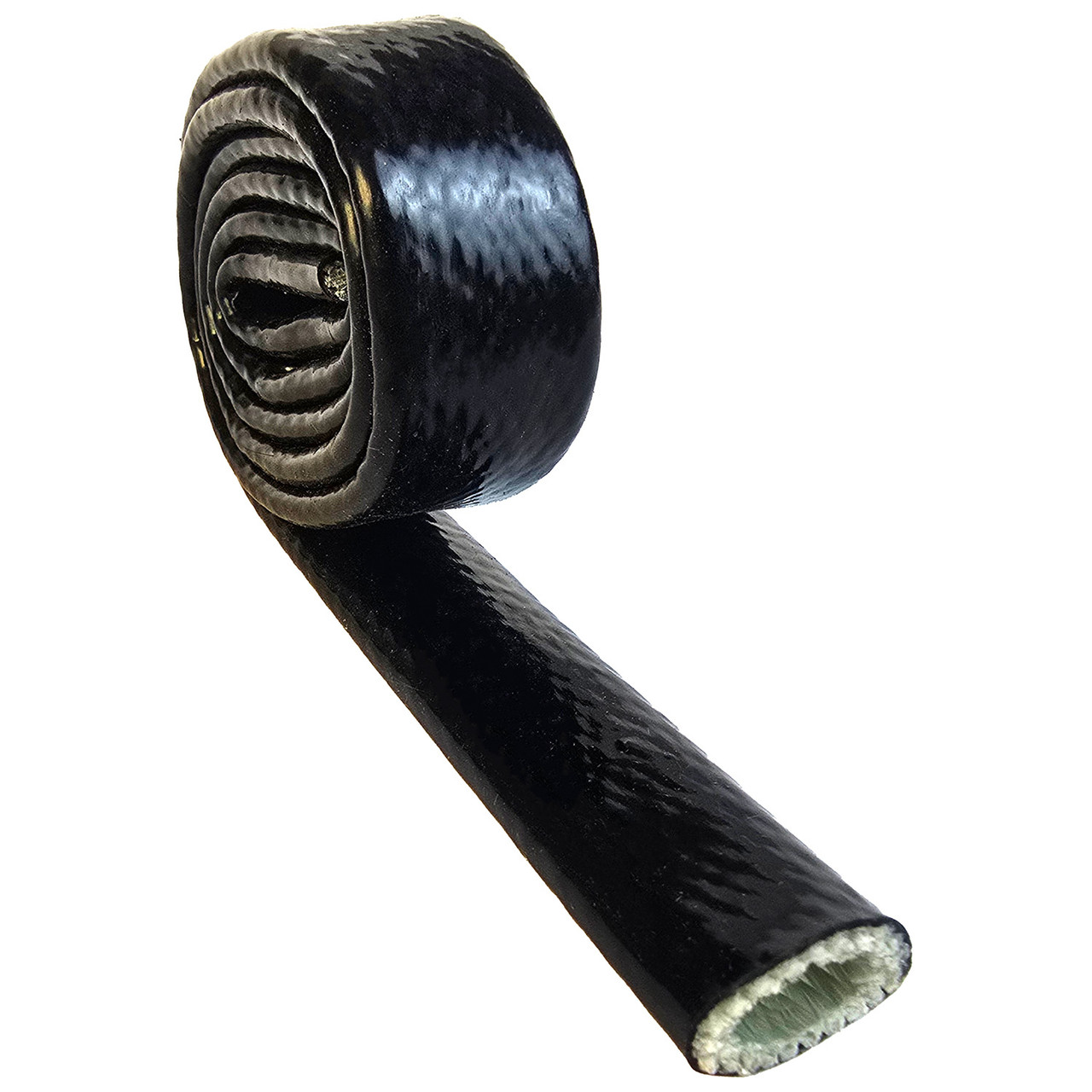 Exoracing Silicone Fibreglass High Temperature Heat Sleeve 0.5m
Helps protect MAP sensor wiring or vacuum lines when they run close to turbo manifolds, charge pipes, or other hot engine bay parts.
From £14.99
 Exoracing 10pc Heat Shrink Tags 3:1
A tidy way to finish sleeved wiring or hose ends so the install looks cleaner and is less likely to fray over time.
From £10.99
Conclusion
The best K-Series MAP sensor is not just the one with the biggest BAR rating. It is the one that matches your boost level, your ECU setup, and the way the car is actually built.
If you are naturally aspirated, an OEM-style replacement is usually all you need. If you are turbocharged, choosing the right amount of headroom and making sure the ECU is scaled correctly matters far more than simply buying the biggest sensor available.
If you are still not sure which MAP sensor suits your setup, contact us, and we will help point you in the right direction.
If you're looking to buy anything in this product article using the product cards or links, then please use our specific discount code for our blog readers here:
BLOG5
Also, if you want to learn more about the K-Series or EP3, check out some of our related articles and guides below: