
Does Heat Reflective Tape Work? Uses, Mistakes & Best Places
Posted by Matthew Marks on 11th Apr 2025
Jump to a section
Heat Reflective Tape for Cars: Where to Use It
Heat reflective tape is used on cars to reflect radiant heat away from intake pipes, airboxes, bulkheads, panels and other surfaces exposed to turbo, manifold or exhaust heat.
We use and sell heat management parts every day at Exoracing, and reflective tape is one of the first products customers ask about when they are trying to reduce heat soak or protect parts in a tight engine bay.
Shop Reflective Heat TapeIf you have seen gold or silver tape fitted to intake pipework, intercooler pipes, airboxes or engine bay panels, it is usually there for one reason: to reduce the amount of radiant heat soaking into that part.
The main thing to understand is that heat reflective tape is not the same as exhaust wrap. It is a surface protection product. It works best when the reflective face is looking towards a heat source such as a turbo, manifold, downpipe or exhaust tunnel.
The simple answer
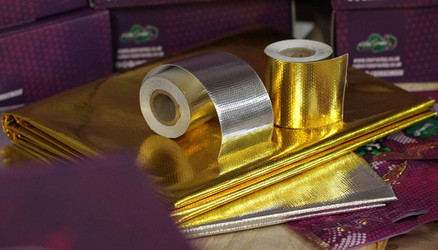
Heat reflective tape is a self-adhesive thermal barrier made from a reflective foil face, reinforced backing and high-temperature adhesive. It is designed to reflect radiant heat away from nearby surfaces.
It works well when it is fitted to a clean, non-porous surface with the reflective side facing the heat source. It is commonly used on intake pipes, airboxes, bulkheads, engine bay panels and heat shields.
Do not use reflective heat tape directly on manifolds, downpipes or exhaust pipework. For those heat sources, use source control such as an exhaust wrap, a turbo blanket or a proper heat shield first.
- Heat reflective tape helps reflect radiant heat away from surfaces in the engine bay.
- It is best for intake pipework, airboxes, bulkheads, panels, covers and heat shields.
- It is not the correct product for directly wrapping exhaust manifolds, downpipes or headers.
- Gold and silver tape do the same job, so application matters more than colour.
- For wiring, hoses and lines, a heat sleeve is usually a better direct protection product than tape.
Watch: In our heat reflective tape video, we explain what the product is for and where it makes sense on a car.
If the player is blocked in a local preview, watch the video on YouTube.
What Should You Protect With Heat Reflective Tape?
Use heat reflective tape when the vulnerable part is a clean, smooth surface facing radiant heat. It is best for narrow intake pipes, intercooler pipework, airboxes, covers and smaller panels. If the area is broad and flat, a heat reflective sheet is usually the cleaner choice.
Cut flexible strips to cover intake pipework, covers or awkward small areas.
One larger cut-to-shape piece gives fewer joins on broad, flat surfaces.
A sleeve gives direct, all-round protection to a round vulnerable part.
Use exhaust wrap for pipework or a turbo blanket for the turbine housing, then protect nearby surfaces.
For a fuller comparison of tape, wrap, sleeve and shields, use our heat shield vs exhaust wrap vs heat tape guide.
How Heat Reflective Tape Works
Engine bay heat reaches parts in three main ways: radiant heat, conductive heat and convective heat. Heat reflective tape mainly targets radiant heat, which is heat travelling in line of sight from a hot part.
That is why tape works best when it faces a turbo, manifold, downpipe, exhaust tunnel or other hot area. The reflective surface helps bounce a portion of that radiant heat away before it can soak into the protected part.
The important limitation is that reflective tape does not magically remove all heat from a poor layout. If a hose is touching a downpipe, the first job is to move the hose. If a manifold is glowing near an intake pipe, the better starting point may be source control, then surface protection.
What Is It Made From?
A good automotive heat reflective tape is normally made from three layers: the reflective foil face, a reinforced backing and an adhesive layer.
On our heat reflective tape, we use a polymer-laminated glass cloth material, a gold or silver reflective foil face and a pressure-sensitive adhesive backing. The tape is rated to 450°C continuous temperature and 1100°C intermittent temperature, and it can reflect up to 80% of radiant heat.
Does Heat Reflective Tape Work On Cars?
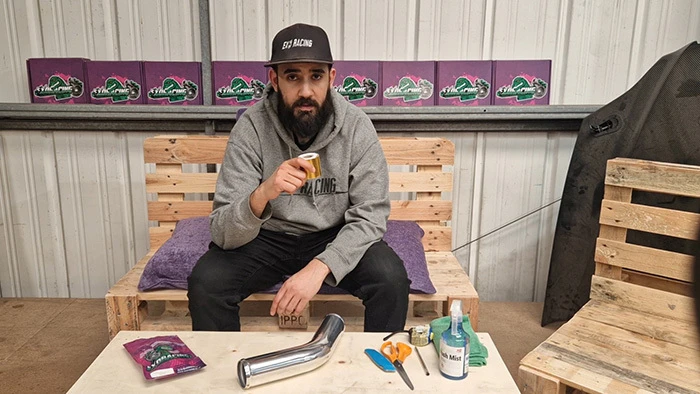
Yes, heat reflective tape works on cars when the problem is radiant heat, and the tape is fitted in the right place. We most often recommend it for parts that are not meant to become heat sinks, such as intake pipes, airboxes, washer bottles, reservoirs, bulkheads and panels close to exhaust heat.
On our own turbo AWD Honda Civic project, we used reflective tape on intercooler pipework because the turbo setup added a lot more heat to the bay. On the dyno, with the bonnet up and a fan in front of the car, intake air temperature was around ambient. That is useful as an experience point, but it is not a perfect road test because the bonnet-up dyno setup changes airflow.
That is the honest way to look at heat tape. It can help reduce heat soak and protect parts, but results depend on the heat source, distance, airflow, surface preparation and how much of the part is shielded.
Heat Tape, Heat Shield Tape, or Heat Reflective Tape?
People use several names for this product, including heat reflective tape, heat shield tape, reflective heat tape, thermal barrier tape, gold heat tape and silver heat tape. In automotive use, they normally mean an adhesive-backed reflective material used to protect a surface from radiant heat.
The naming can be confusing because not every heat-resistant tape is designed for the same job. Foil HVAC tape, electrical tape, exhaust repair tape and reflective automotive heat tape are not automatically interchangeable.
Adhesive reflective tape for surfaces facing radiant heat.
Often used for the same product, but make sure it is rated for automotive heat.
Used on manifolds, headers and exhaust pipework. Do not replace it with reflective tape.
Usually, the better product for hoses, fuel lines, brake lines, clutch lines and wiring looms.
Where To Use Heat-Reflective Tape On A Car
The best places to use reflective heat tape are surfaces that sit close to a heat source but are not themselves the heat source. Think of it as shielding the vulnerable part, not wrapping the hot part.
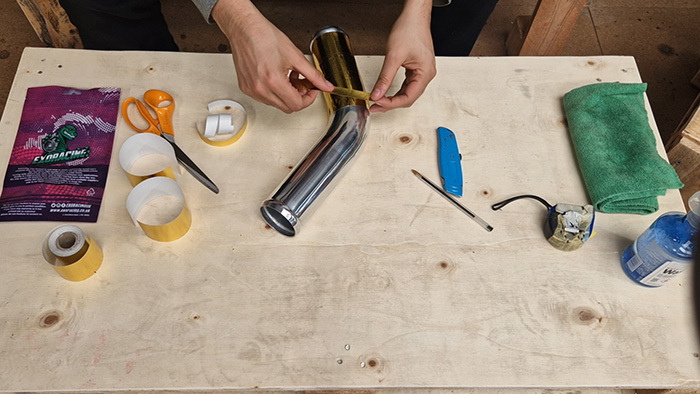
Good for curved pipework that faces turbo, manifold or radiator heat.
Better for larger flat or shaped areas because it covers more surface in one piece.
Tape can protect a nearby panel, but a sleeve is usually better on the line or loom itself.
Use an exhaust wrap, a turbo blanket or a proper heat shield, depending on the heat source.
Gold Vs Silver Heat Reflective Tape
The gold versus silver question comes up a lot. In the real world, the bigger difference is usually where the tape is fitted, how well the surface was cleaned and how much radiant heat the part is exposed to.
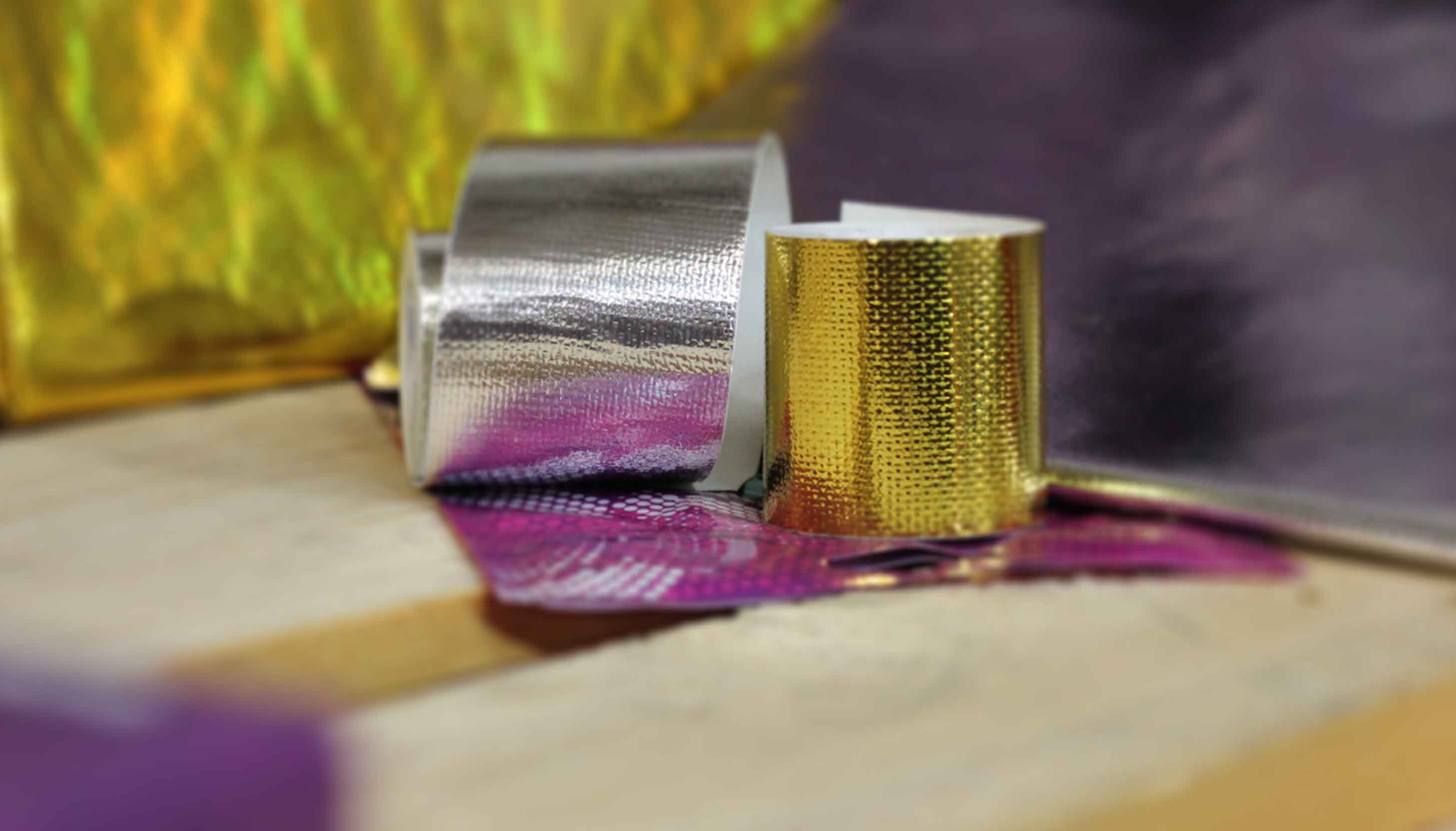
Gold heat reflective tape is often chosen because it stands out in an engine bay and is commonly associated with motorsport heat shielding. Silver heat reflective tape is more subtle and can suit cleaner OEM-style builds. For most fast road and track cars, choose the colour that suits the build and focus on correct installation.
Which Heat Management Product Should You Use?
Reflective tape is useful, but it is not always the first product to fit. A proper heat management plan starts with the heat source, then protects the part at risk.
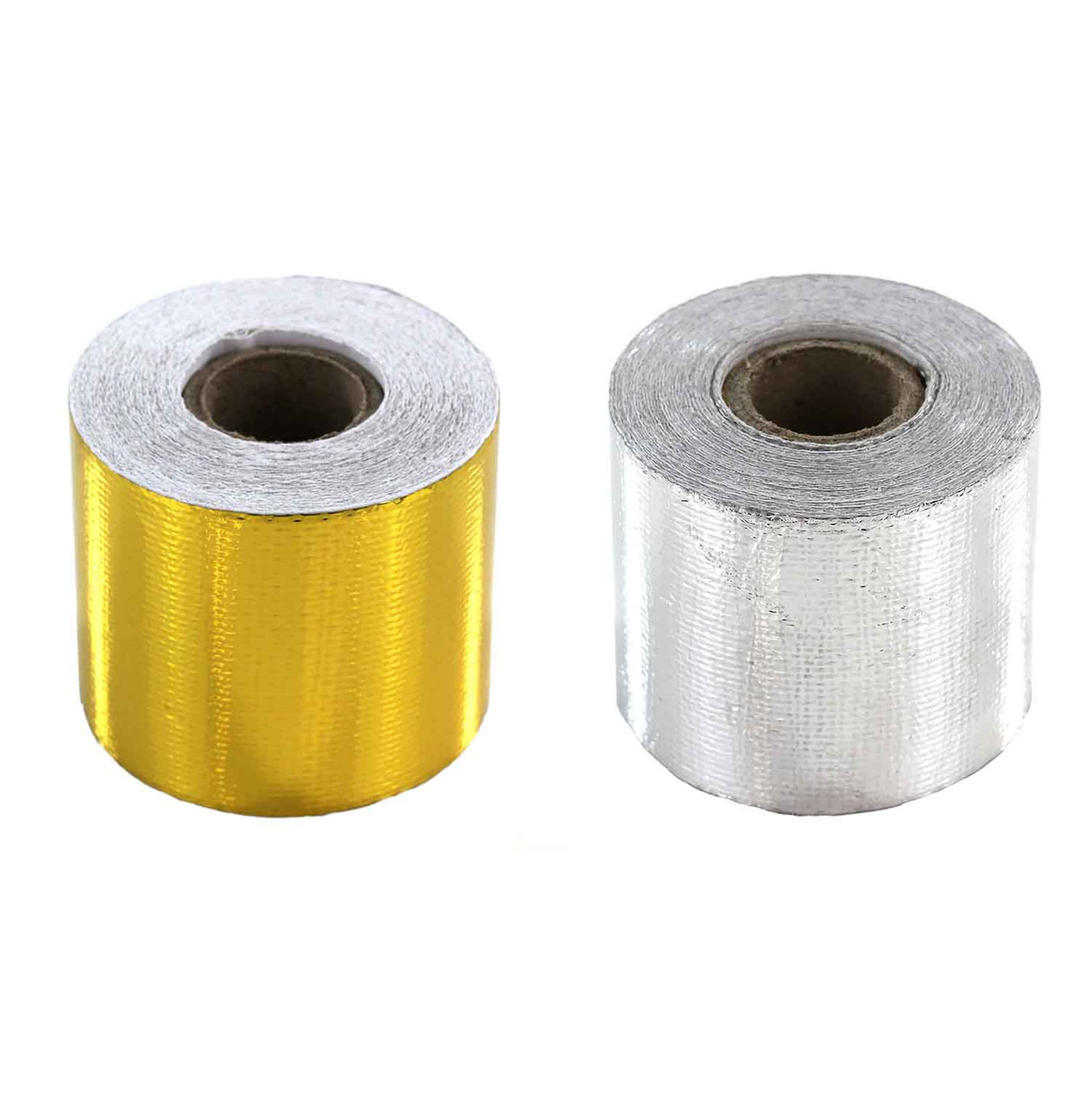 Exoracing Gold and Silver Heat Reflective Tape
Flexible surface protection for intake pipes, intercooler pipework, reservoirs and tight engine bay areas.
From £29.99
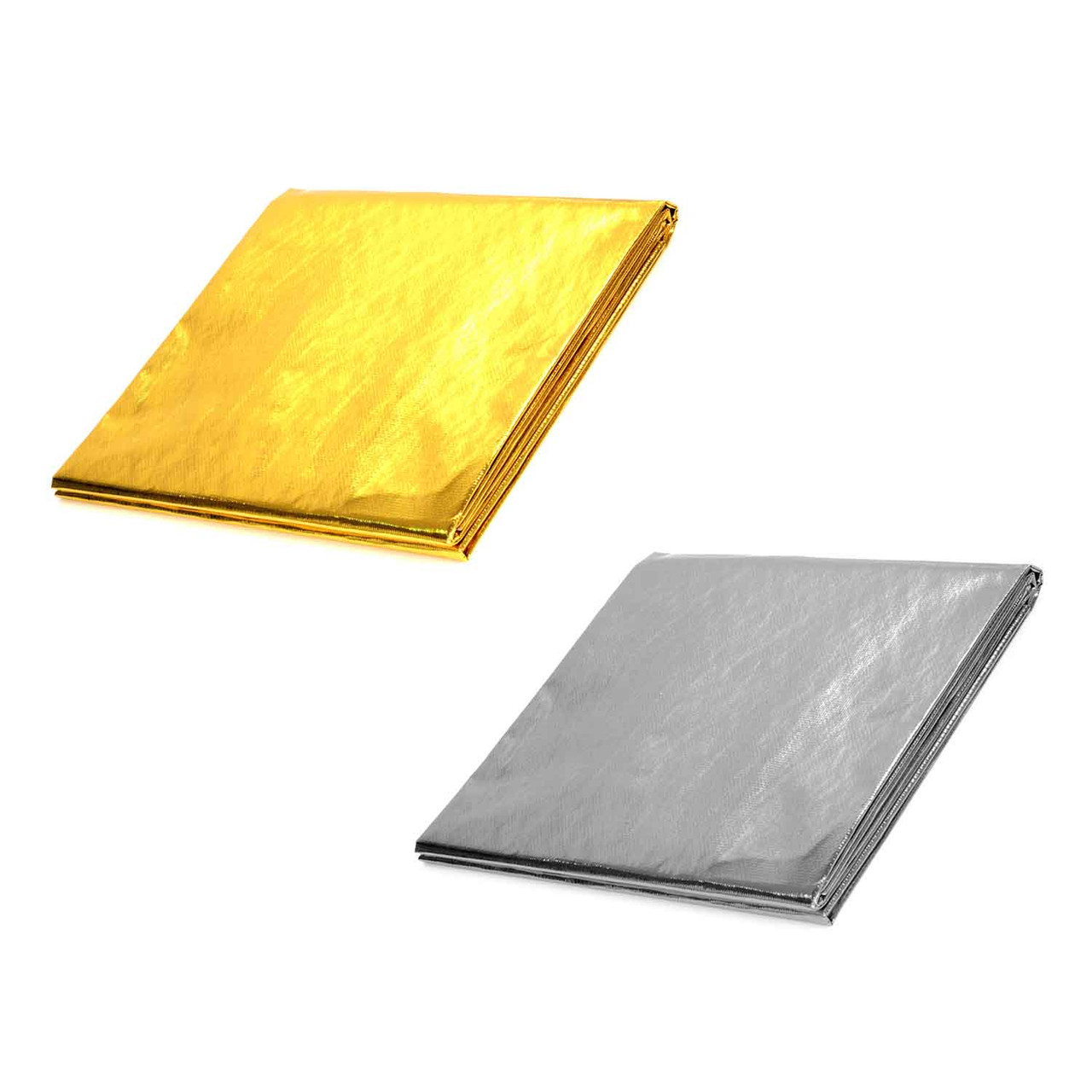 Exoracing Gold and Silver Heat Reflective Sheet 1m x 1.2m
Better for larger surfaces such as airboxes, bulkheads, firewalls, floor panels and heat shields.
From £69.99
If you are planning a wider heat management setup, our heat management range also covers turbo blankets, exhaust wrap, heat sleeves and other protection parts for different heat sources.
When Not To Use Reflective Heat Tape
Reflective heat tape is helpful, but there are situations where it is the wrong first fix.
Do not use it to cover damaged wiring, leaking hoses, oily surfaces, porous powder-coated parts or exhaust pipework. It also should not be used as a shortcut for poor routing. If a line is too close to a downpipe, move the line where possible, then add direct protection using the heat sleeve size chart, the wiring loom heat-damage guide or the fuel-line clearance guide.
From our experience, adhesion problems usually come from dirty surfaces, oily residue, applying tape to unsuitable finishes or expecting it to survive direct exhaust contact. Clean, dry, smooth and non-porous surfaces give the best chance of a proper result.
What Happens If You Ignore Engine Bay Heat?
Heat damage is not always instant. Repeated exposure can make plastics brittle, dry out hose rubber, harden wiring insulation and make intake parts suffer more heat soak over time.
Common consequences include melted wiring near manifolds, heat-damaged fuel or vacuum hose, hot cabin panels, higher intake temperatures and reflective tape lifting because it was applied after contamination or on the wrong surface.
The correction is simple: inspect the heat source, improve clearance and routing where possible, control the heat source if needed, then protect the vulnerable part with the right product.
How To Install Heat-Reflective Tape
We have a separate heat reflective tape installation guide with step-by-step details, but the short version is below.
Watch: In our install video, we show how to apply heat reflective tape cleanly without wrinkles and with better adhesion.
If the player is blocked in a local preview, watch the video on YouTube.
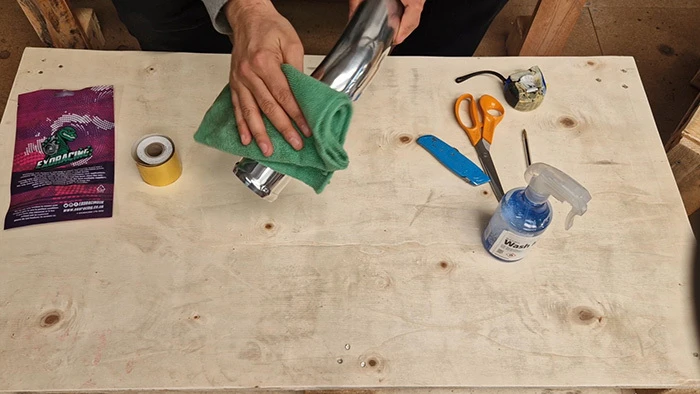
Adhesive needs a clean, dry and non-porous surface.
Strips are normally easier than trying to spiral-wrap awkward pipework.
Peel the backing gradually and press the tape down as you go.
This helps reduce air bubbles and improves contact with the surface.
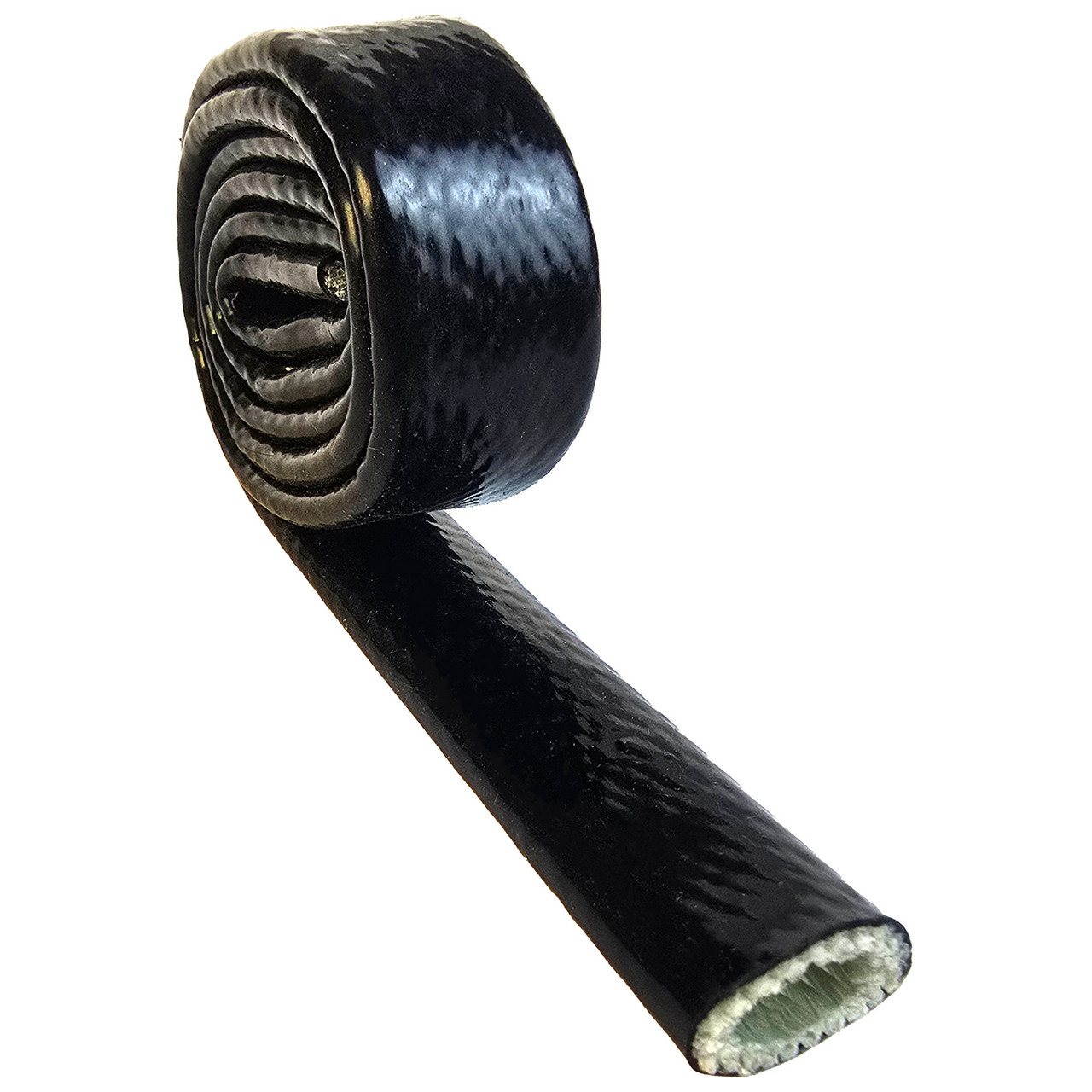 Exoracing Silicone Fibreglass High Temperature Heat Sleeve 0.5m
Direct protection for wiring, hoses, brake lines, fuel lines, oil lines and coolant lines near heat.
From £14.99
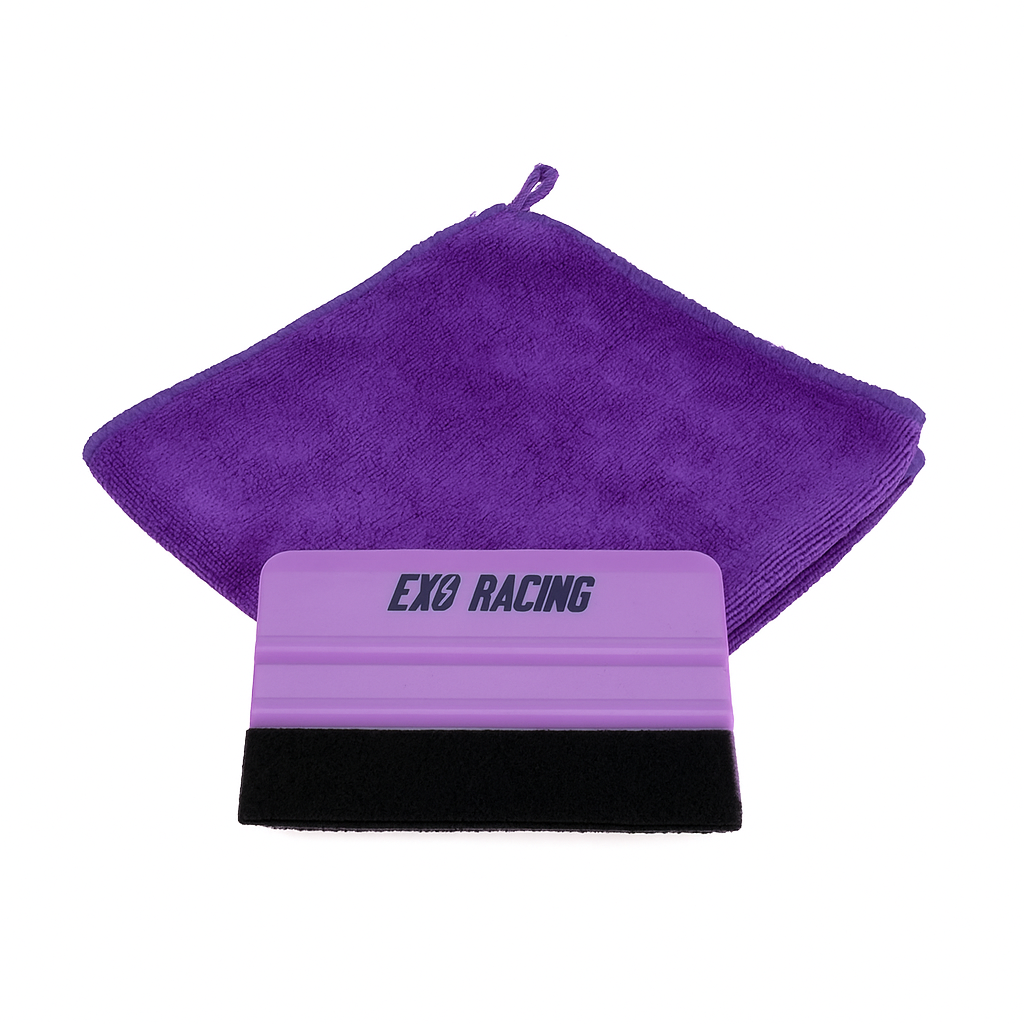 Exoracing Heat Reflective Tape Installation Kit
Includes the microfibre cloth and squeegee needed to clean the surface and smooth the tape down.
From £11.99
Common Mistakes With Automotive Heat Shield Tape
Using It On Exhaust Pipework
Reflective tape is not an exhaust wrap. If the heat source is a manifold, header, downpipe or screamer pipe, use the right source-control product instead.
Sticking It To Dirty Or Oily Surfaces
Oil, dust, silicone residue and tar remover can all affect adhesion. Clean the part properly and allow it to dry before applying tape.
Trying To Protect A Line With Flat Tape
For a hose, loom or fuel line, a heat sleeve normally gives better coverage. Tape is better on the nearby panel, cover or pipe surface.
Ignoring Clearance And Airflow
Reflective tape helps with radiant heat, but it should not be used to excuse poor routing. More clearance, cleaner airflow and proper heat source control can make the protection work much better.
Common Concerns
The most common concern is whether reflective tape will fall off. It should not lift when it is used within its limits and applied to a suitable clean surface. Problems usually come from contamination, unsuitable surfaces, too much direct heat or too little pressure during fitting.
Another concern is whether it will trap heat in the protected part. On intake pipework and panels facing radiant heat, the aim is to stop heat getting into the part in the first place. It is not there to cool a part that is already hot from internal fluid temperature or direct contact.
If you are unsure whether your issue is heat soak, poor airflow, bad routing or a cooling system fault, fix the mechanical issue first. Heat reflective tape should support a good setup, not hide a bad one.
Heat Reflective Tape FAQs
What is heat reflective tape used for?
Heat reflective tape is used to protect surfaces from radiant heat. Common automotive uses include intake pipes, intercooler pipework, airboxes, bulkheads, panels, reservoirs and heat shields.
Does heat reflective tape actually work?
Yes, it works when the issue is radiant heat, and the tape is fitted to a clean surface facing the heat source. It is less useful for direct contact heat, internal fluid heat or a mechanical overheating fault.
Can I use heat reflective tape on an exhaust?
No. Do not use reflective tape directly on exhaust manifolds, downpipes or headers. Use an exhaust wrap, a turbo blanket or a proper heat shield, depending on the heat source.
Is gold heat tape better than silver heat tape?
For most car builds, correct placement and installation matter more than choosing gold or silver. Gold is more visible and motorsport styled, while silver is more subtle.
Will heat reflective tape reduce intake temperatures?
It can help reduce heat soak into intake pipework when the pipe is exposed to radiant engine bay heat. It will not fix a poor intake location, lack of airflow or a general cooling issue on its own.
Can I use reflective tape on wiring?
You can use it on nearby panels or covers, but a heat sleeve is usually the better direct protection for wiring looms, fuel lines, brake lines and hoses.
Why does heat reflective tape lift or peel?
The most common causes are oil, dust, silicone residue, porous surfaces, not enough pressure during fitting, or using the tape too close to direct exhaust heat. Surface prep is the biggest part of a good install.
Should I use heat reflective tape or heat reflective sheet?
Use tape for narrow, curved or awkward areas such as intake pipework and smaller covers. Use sheet for larger, flatter areas such as an airbox, bulkhead, floor panel or a larger heat shield. Both need a clean, dry, non-porous surface.
How should I prepare a surface before applying heat reflective tape?
Work on a cool surface. Remove oil, dust, silicone dressing and wax with a suitable residue-free cleaner, let it dry fully, test fit the tape, then press it down firmly from the centre outwards. Check that every edge is fully bonded.
Conclusion: Should You Use Heat Reflective Tape?
Use heat reflective tape if you need lightweight surface protection against radiant heat, especially around intake pipework, airboxes, intercooler pipes, bulkheads and engine bay panels.
Do not use it as a replacement for exhaust wrap, a turbo blanket, a heat sleeve or proper routing. If the heat source itself is the problem, control that first. If a hose, line or wiring loom is at risk, consider sleeve protection as well.
If you are ready to protect pipework or panels, start with Exoracing gold and silver heat reflective tape. For larger areas, use the heat reflective sheet. For wiring and lines, measure the outside diameter and choose a suitable silicone fibreglass heat sleeve.
Use code BLOG5 at checkout if you want to order any of the parts mentioned in this guide.
Shop Heat Management PartsAbout The Author
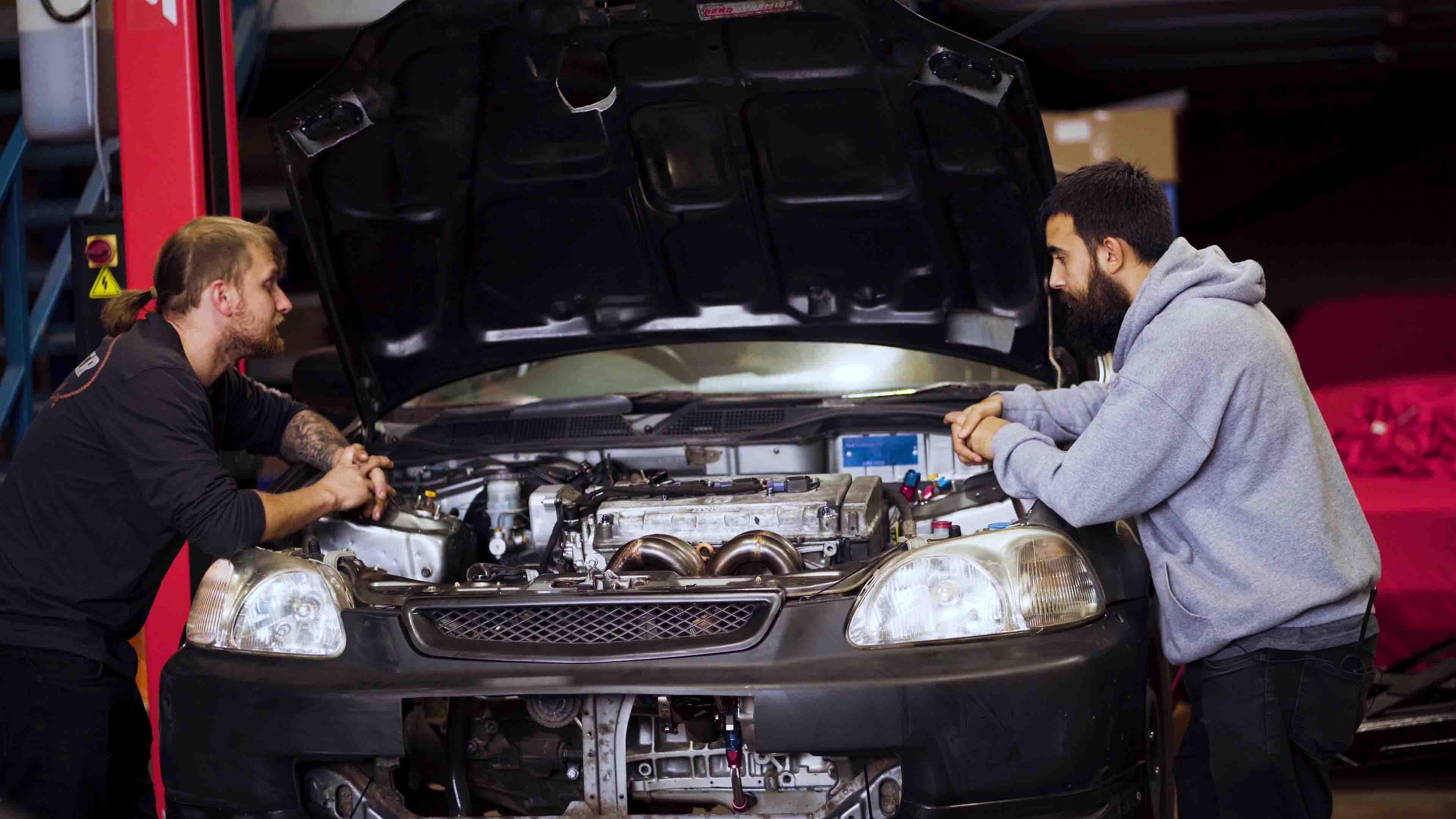
Exoracing is a UK-based performance parts and heat management specialist.
Since 2018, we have helped enthusiasts and workshops choose practical heat management parts for turbo cars, track cars, drift builds and fast road setups.