
Honda K20/K24 Turbo Heat Management: EP3, DC5 & FN2
Posted by Matthew Marks on 16th Jul 2026
Jump to a section
Honda K-Series Turbo Heat Management: EP3, DC5 & FN2
A turbo K20 or K24 build can put serious heat close to the firewall, wiring, hoses and intake pipework. This guide shows what to inspect, what to protect first and which heat-management products suit each part of the hot side.
At Exoracing, we see the same mistake repeatedly: parts are insulated before the actual heat source, routing and clearance have been checked.
The simple answer
Good Honda K-Series turbo heat management starts by identifying the heat source, then the part at risk. On EP3, DC5 and FN2 turbo conversions, that normally means checking the turbine housing, manifold, downpipe, external wastegate if fitted, screamer pipe route, oil and coolant lines, boost-control hoses, wiring and the firewall area.
Use a turbo blanket only when the turbine housing is compatible and measured correctly. Use exhaust wrap on suitable hot exhaust pipework. Use heat sleeve on hoses, lines and wiring after routing has been corrected. Use a reflective sheet, reflective tape or a rigid shield on panels and surfaces facing radiant heat.
Do not buy heat protection based only on the vehicle model. Manifold design, turbo size, wastegate position, screamer-pipe route, downpipe route, engine movement and available clearance all change the correct answer.
Start with the part creating heat, then protect the parts that cannot be moved away from it.
- Control the turbo, wastegate and exhaust heat sources before protecting nearby parts.
- Reroute vulnerable hoses, wiring and lines before insulating them.
- Measure the turbine housing before choosing a T25, T3 or T4 turbo blanket.
- Match a wastegate blanket to the wastegate size, not to a visual guess.
- Use exhaust wrap on suitable manifold, downpipe or screamer-pipe sections, not on wiring or hoses.
- Use heat sleeves on lines and looms, and reflective protection or a rigid shield on firewall and panel areas.
- Recheck everything after the first heat cycle and again after hard road, dyno or track use.
Why turbo K-Series engine bays need a heat-management plan
In K-Series engine layouts, the exhaust side sits towards the rear of the engine bay. Once a turbo conversion is added, the manifold, turbine housing, downpipe and, on many builds, an external wastegate and screamer pipe can all sit close to the bulkhead area.
That does not mean every EP3, DC5, or FN2 has the same hot-side layout. Depending on the manifold and turbo position, one car may have its main problem at the firewall, another may have boost-control hose exposure, and another may need attention around the downpipe, lambda wiring or intake pipework.
Heat also gets worse during repeated pulls, dyno sessions, track use and drag use because parts heat soak over time. A hose that survives a short road test can still become soft, brittle or discoloured after longer exposure. When customers ask us to help choose heat protection, the useful starting point is always the same: clear photos of the hot side, the part at risk and the clearance between them.
Our heat-management approach is simple: fix leaks and bad routing first, control the heat source, then protect the parts that cannot sensibly be moved further away.
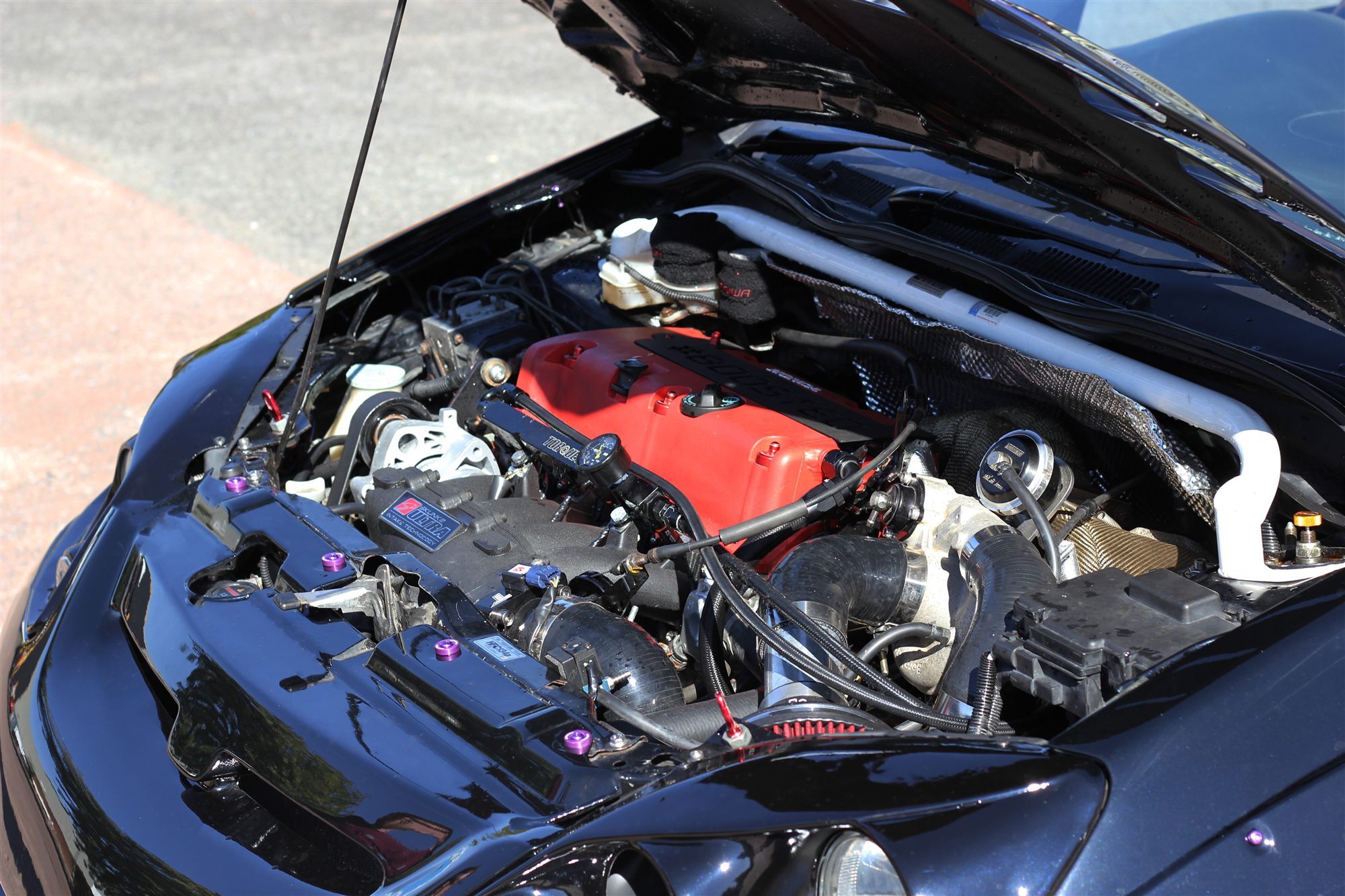
Lewis Hayman's turbo EP3 is a useful real-world example of why source control matters around a K-Series turbo hot side. It shows the kind of heat-management thinking we use, but it should not be treated as proof that every EP3, DC5 or FN2 uses the same turbo position, clearance or blanket size.
If you need the wider turbo conversion parts list, use our Honda Civic turbo conversion guide. If you are planning the engine swap itself, the Honda K-swap guide covers that wider topic. This article is only about heat management around the turbo hot side.
Inspect the complete hot side before buying anything
Inspect the car cold, with enough light to see behind the engine. Do not start with a shopping basket. Start with the heat source, the vulnerable part and the clearance between them.
K-Series turbo heat-management product table
Use an Exoracing Turbo Blanket V3 if T25, T3 or T4 sizing and clearances confirm fitment.
Use a correctly sized wastegate blanket for the body, then protect the boost-control hose separately.
Use exhaust wrap only on suitable hot pipework, not sensors, hoses or the wastegate body.
Use silicone fibreglass, sewn or Velcro heat sleeve, depending on whether the line can be removed.
Use a reflective sheet, reflective tape or an embossed aluminium shield on suitable surfaces.
Before you order, collect these details
The fastest way to choose the right K20 or K24 turbo heat protection is to collect the same details you would need for a proper fitment check. This is especially important on EP3, DC5 and FN2 turbo conversions because manifold position, turbo size and wastegate route vary between builds.
- Turbo flange and measured turbine housing size.
- Clear photo of the turbine housing from above and from the side.
- Clear photo of the firewall or bulkhead clearance behind the hot side.
- External wastegate size and screamer-pipe route, if fitted.
- Photos of oil feed, oil return, coolant lines, boost hose, vacuum hose and nearby wiring.
- Any melted, discoloured, hardened or glossy hose, conduit, wiring or plastic trim.
- Bonnet clearance and any marks showing engine movement under load.
Do not fit this here
Most heat-management mistakes come from using the right product in the wrong place. Use this table as a quick misuse check before ordering or fitting.
Contain heat in the turbocharger
The turbine housing is one of the most concentrated heat sources in a turbo K20 or K24 engine bay. A correctly fitted turbo blanket can help control radiant heat at the source, but it must be chosen based on the turbo housing, not on the car model.
The Exoracing Turbo Blanket V3 is available in T25, T3 and T4 options, but a flange name alone is not enough. Measure the turbine housing, check the housing shape and confirm clearance around actuator arms, internal-wastegate linkages, oil fittings, coolant fittings and surrounding brackets. The blanket belongs on the turbine housing, not the compressor housing or centre cartridge.
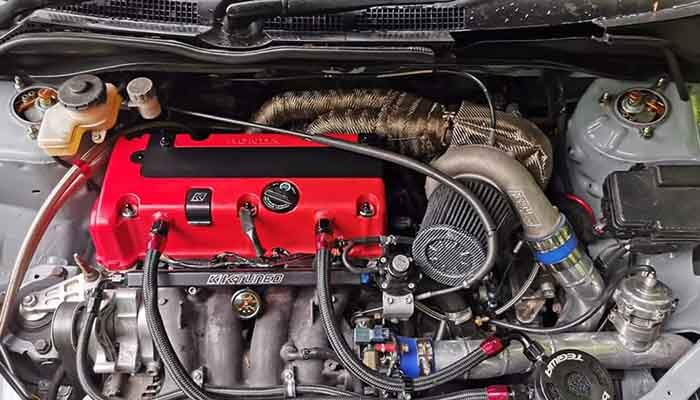
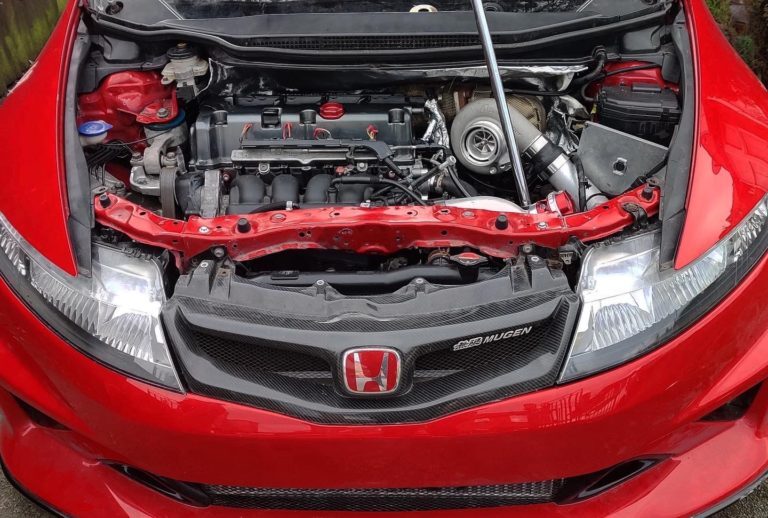
This turbo K-Series engine bay shows the source-control approach: the turbine housing is managed first with a correctly fitted turbo blanket, while the surrounding hoses, wiring and firewall still need their own routing and protection checks.
Use our turbo blanket size guide before ordering, then follow the turbo blanket installation guide. If there is an oil leak, fix it first and read our turbo blanket oil leak and fire safety guide. A contaminated blanket or a blanket forced around moving parts is not the right fix.
Send clear photos of the turbine housing, wastegate, firewall clearance, oil and coolant lines, and any wiring or hose close to the hot side. Include measurements where possible so the advice is based on your setup rather than the vehicle model.
Send Photos for Fitment Help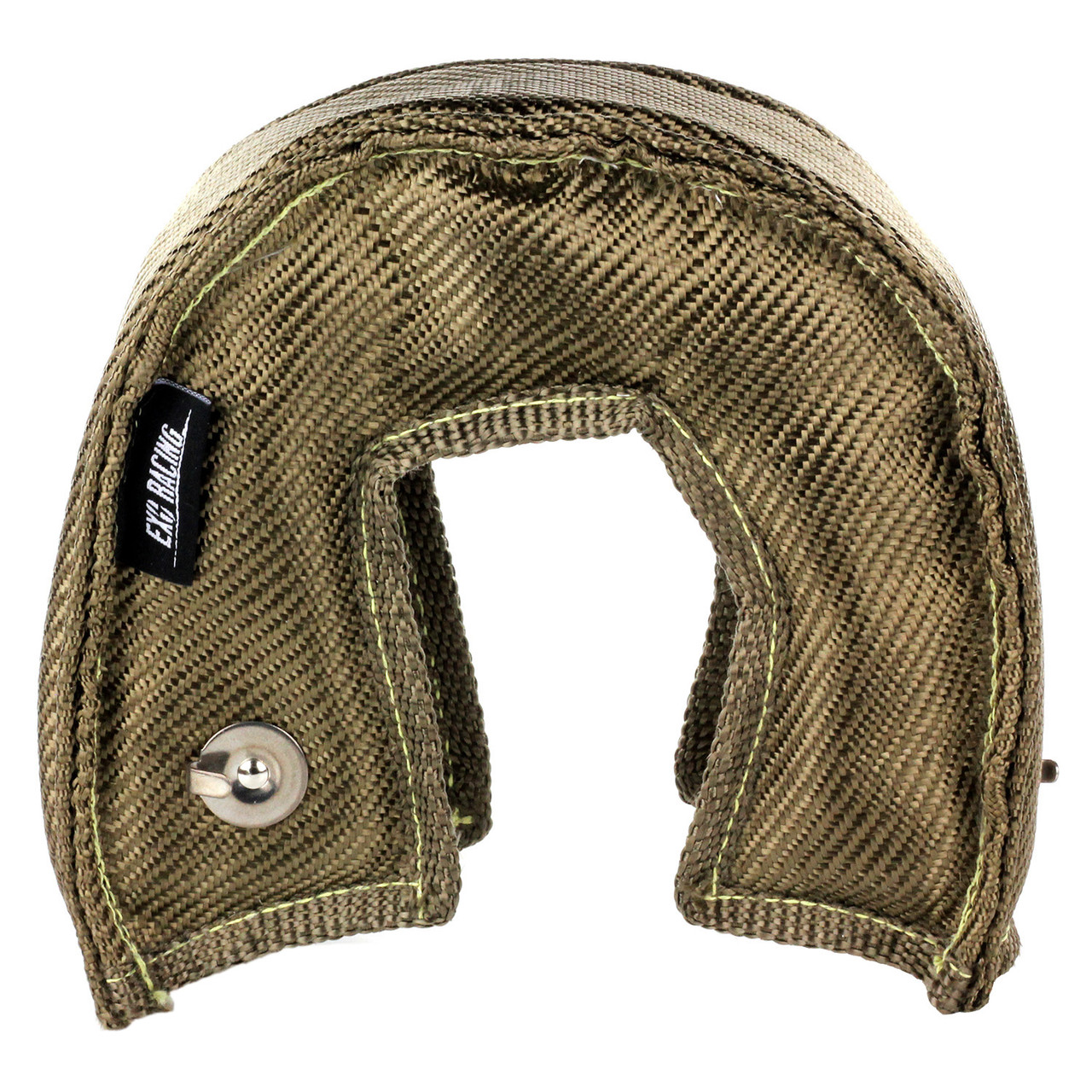 Exoracing Turbo Blanket V3
For compatible T25, T3 or T4 turbine housings, once size and clearance have been checked.
From £119.99
Best first product for the problem
If you know the problem area but not the product family, start here. The correct answer can still change once the car is inspected.
Protect the external wastegate
Not every K-Series turbo conversion uses an external wastegate. If yours does, treat it as another concentrated heat source rather than an accessory hanging off the manifold. The wastegate body can sit close to the boost-control hose, wiring, the firewall or other service items depending on the manifold and gate position.
Choose a wastegate blanket from the wastegate's stated size. Do not estimate the size visually. The Exoracing External Wastegate Blanket is listed with 38mm, 44mm, 50mm and 60mm options. The blanket controls heat from the wastegate body; it does not protect the complete screamer pipe or replace correct hose routing.
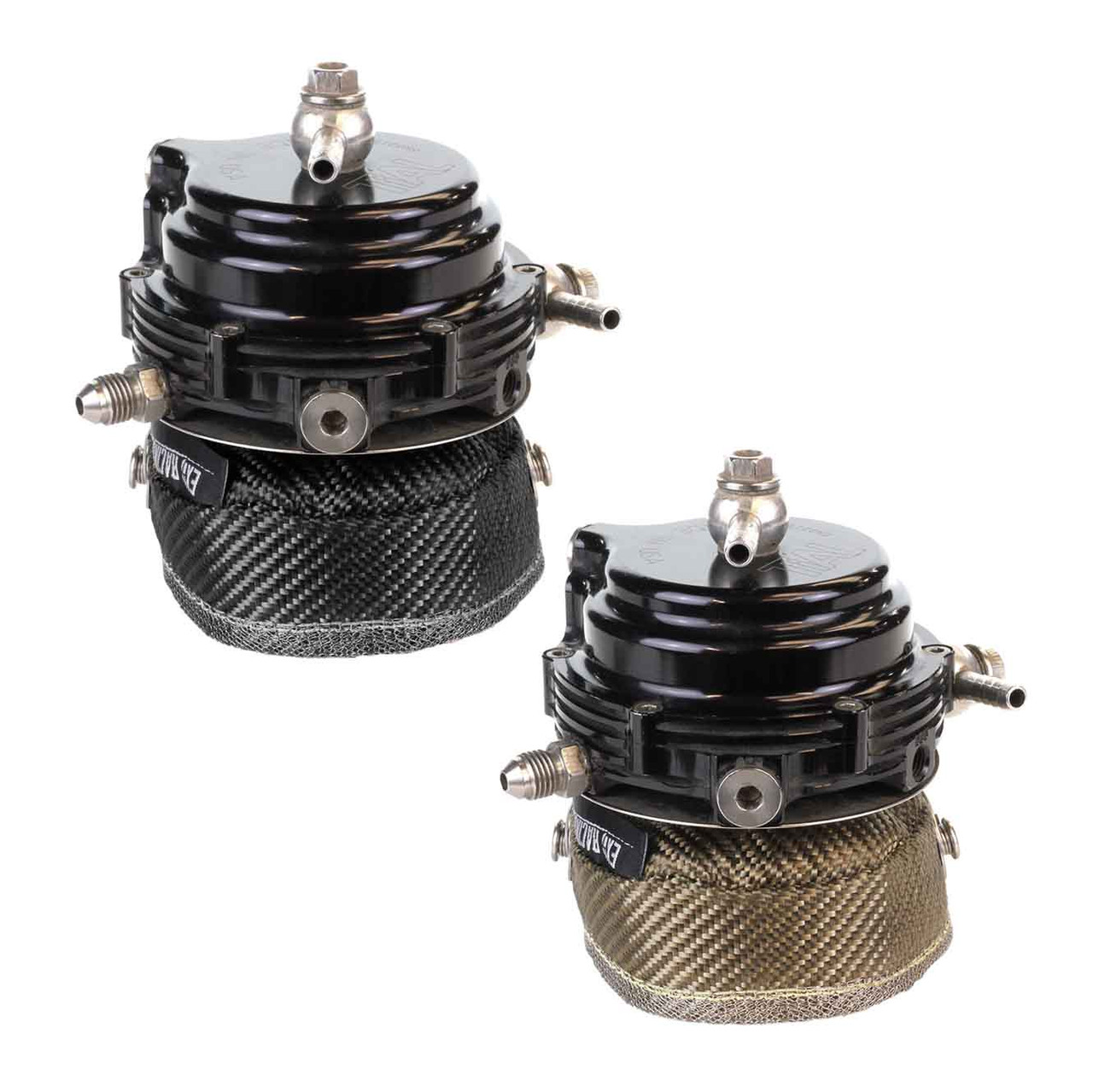 Exoracing External Wastegate Blanket Titanium or Carbon
For controlling heat from a correctly sized external wastegate body.
From £64.99
Manage manifold, downpipe and screamer-pipe heat
Turbo manifold
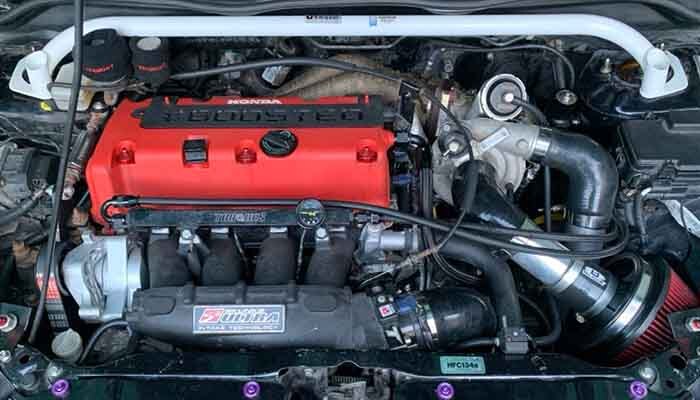
The turbo manifold can radiate heat towards the firewall, brake and clutch areas, wiring and hoses. Exhaust wrap can be useful when the manifold material, condition and access points are suitable, but do not wrap over sensors, flexi joints or serviceable clamps that need regular inspection. If the manifold is cracked, leaking or oil-contaminated, repair that first.
A sidewinder-style K20 manifold makes the heat-source problem easy to see: the manifold route, turbo position and surrounding access points all decide whether wrap, shielding, rerouting or a different protection method makes sense.
Downpipe
Downpipe route differs heavily between conversions. Check firewall exposure, lambda wiring, service joints and anything close to the pipe as the engine moves.
Exhaust wrap belongs on suitable exhaust pipework, not on wiring, hoses, the turbo compressor housing or the wastegate body.
Screamer pipe
A screamer pipe can create a concentrated path of hot exhaust gas. Check where it exits, what it points towards and whether it passes near the boost-control hose, wiring, the firewall or fluid lines. A wastegate blanket and pipe wrap can help manage heat, but a wrap cannot rescue unsafe routing.
The pipe must not be aimed at vulnerable parts.
For fitting technique, overlap and securing methods, use our exhaust wrap installation guide. Do not expect or claim a fixed horsepower gain from wrapping pipework; the practical goal here is heat control and component protection.
 Exoracing Titanium or Carbon Exhaust Wrap
For suitable turbo manifold, downpipe and screamer-pipe sections after route and access checks.
From £24.99
Protect turbo oil-feed, oil-return and coolant lines
Oil feed
Oil-feed lines are usually small and can pass close to the hot side. Check the fitting angle, any banjo or AN fitting clearance, and whether the line is supported. If the line can be removed, silicone fibreglass or a sewn sleeve can be fitted before final assembly. If the line is already installed and awkward to remove, a Velcro sleeve is usually the more practical retrofit option.
Fuel, oil and coolant line routing should be inspected with the same discipline. The line type must be correct for the fluid first; then the route, support and heat exposure can be dealt with using sleeve or shielding where appropriate.
Oil return
The oil return must maintain sensible drainage. Do not use a sleeve to hide a crushed, kinked or badly positioned return.
If the line is too close to the manifold, downpipe or screamer pipe, improve the route and control the source heat before relying on the sleeve.
Coolant lines
Coolant lines need room for movement and must be in good condition before being covered. Sleeve is not permission for a hose to touch a turbo, manifold, downpipe or screamer pipe. If the hose is marked, swollen, hardened or leaking, replace it and correct the route before adding heat protection.
Best for planned assembly where the line can pass through the sleeve.
Useful for installing hoses, wiring looms and AN lines with large fittings.
Sleeve is protection, not a substitute for safe clearance.
Use the heat sleeve size chart, the silicone fibreglass heat sleeve installation guide and the AN hose heat sleeve finder if you are unsure of sizing.
 Exoracing Silicone Fibreglass High Temperature Heat Sleeve 0.5m
Closed sleeve for lines and wiring that can be fed through before final fitment.
From £14.99
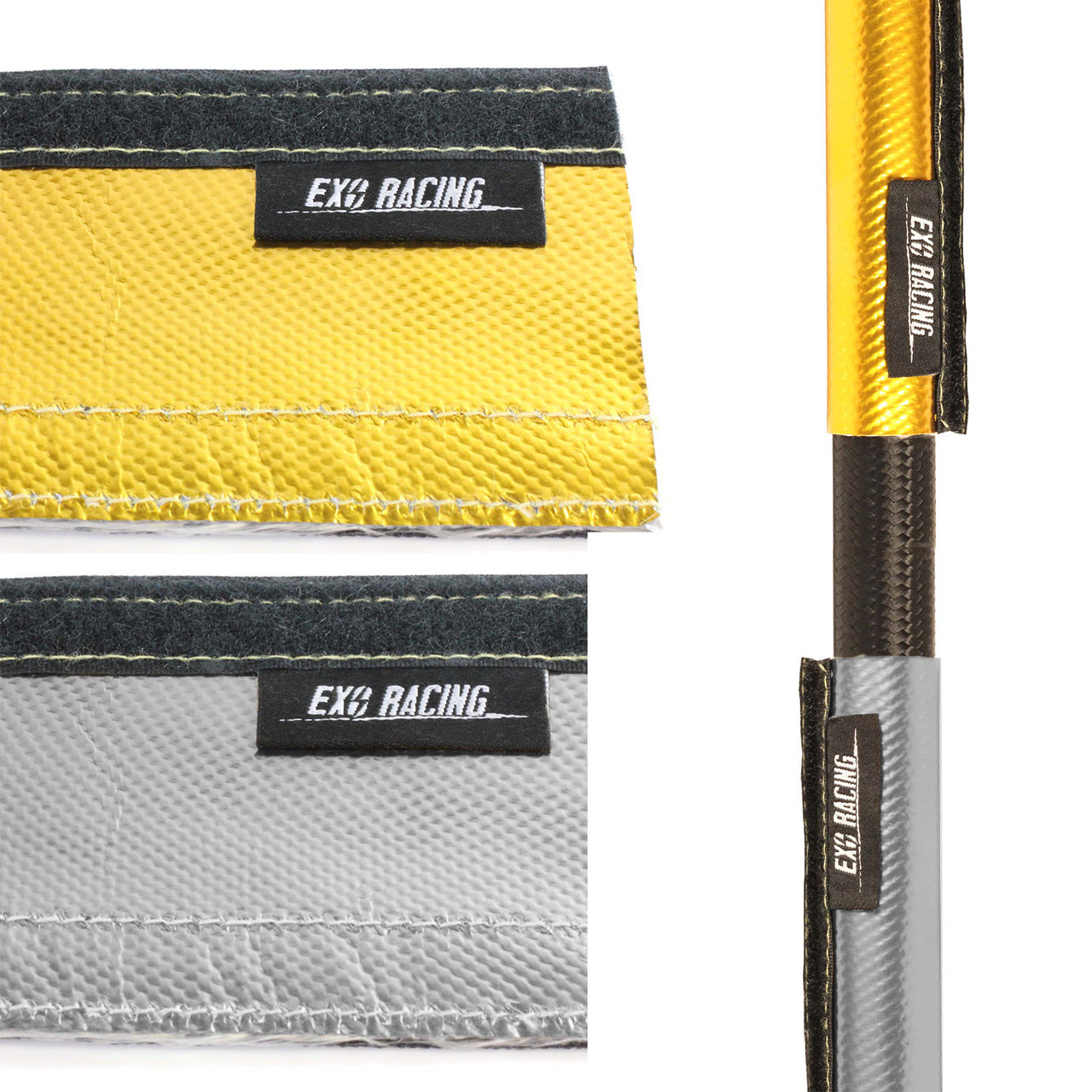 Exoracing Gold and Silver Velcro Heat Sleeve 0.5m
Retrofit sleeve for installed looms, hoses and AN lines that cannot easily be disconnected.
From £14.99
Protect boost-control and vacuum lines
External wastegate reference hoses and boost-control solenoid lines are easy to overlook because they are small.
Keep them away from the screamer pipe, manifold and turbine housing, then use correctly sized sleeves where they still face radiant heat. Secure the hose so it cannot drop onto hot pipework, but do not crush it with cable ties or clips.
Do not treat a standard vacuum hose as suitable for fuel or oil. Use the correct hose type for the fluid or pressure involved, then protect it from heat where required.
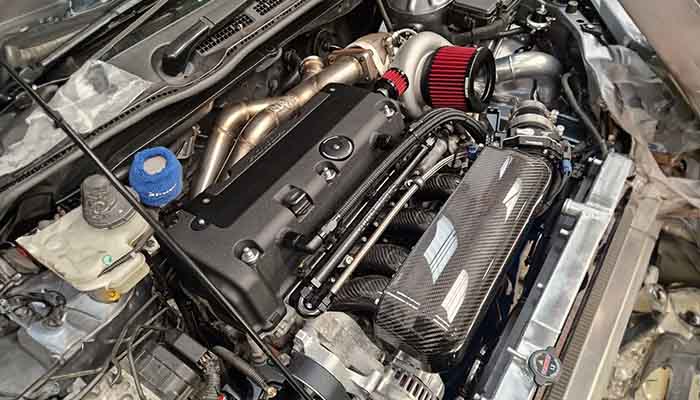
Use photos like this to trace where hoses, fittings and wiring actually run.
A heat sleeve is most useful after the line is correct for the job and the route has been moved as far from the hot side as the layout reasonably allows.
Protect the wiring loom and sensors
Check lambda sensor wiring, engine loom sections, boost-control solenoid wiring and starter or alternator wiring where relevant to your layout. If the conduit is hard, discoloured, glossy or melted, repair the wiring before covering it. Exposed copper is a stop-driving issue, not a heat-sleeve job.
Velcro sleeve is useful for already-installed looms because it can be fitted without disconnecting every plug. Still, the loom needs proper clips and enough slack for engine movement. If the loom is already heat-damaged, repair the wiring and correct the route before covering it.
Protect the firewall and bulkhead
Firewall protection works best when it is part of a system. First, improve clearance.
Then control the turbo, wastegate and exhaust heat sources. If the turbo or manifold is very close to the firewall, a rigid shield with an air gap may be more suitable than trying to rely only on adhesive reflective material.
Use heat reflective sheet on a suitable clean firewall, bulkhead, airbox, bonnet or inner-wing surfaces facing radiant heat.
Use the embossed aluminium heat shield where a physical barrier can be mounted securely and an air gap can be created. Do not apply adhesive reflective sheet directly to a manifold, turbine housing, wastegate or downpipe.
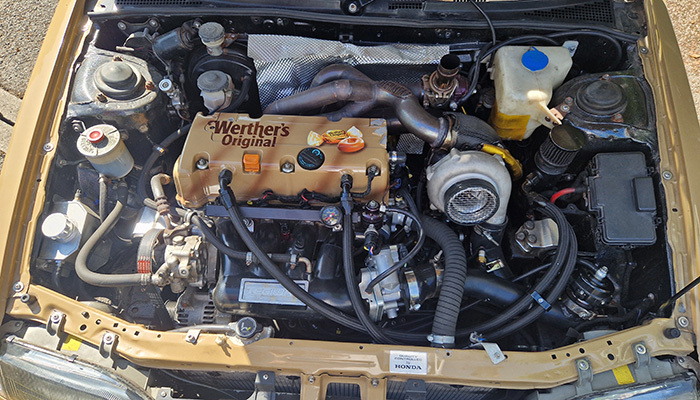
Scott's K24 turbo Honda Concerto shows the type of firewall and bulkhead protection that can make sense when a hot-side component sits close to surrounding bodywork or components.
The exact mounting points and clearances are chassis-specific, so use it as a principle rather than a direct EP3, DC5 or FN2 fitment example.
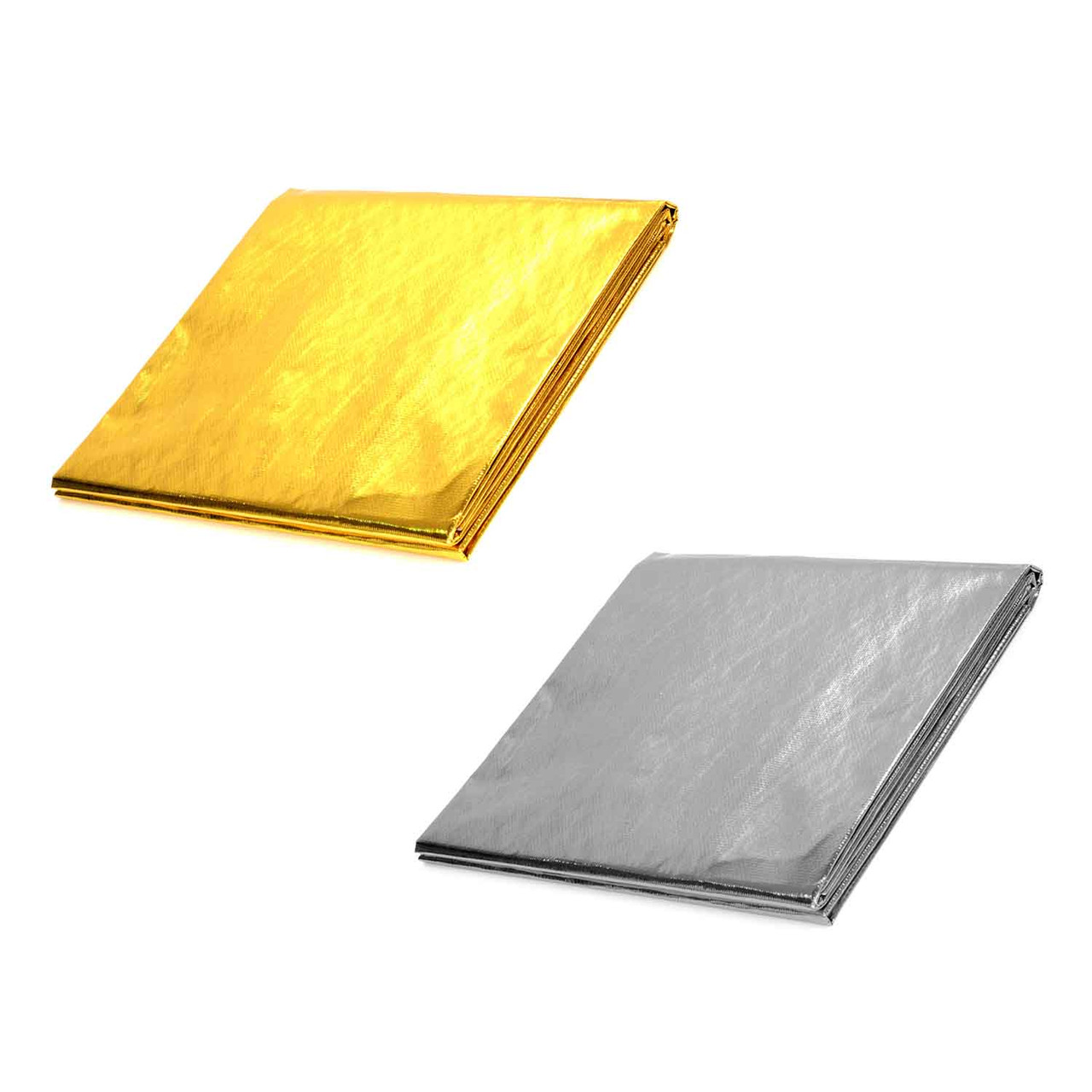 Exoracing Gold and Silver Heat Reflective Sheet 1m x 1.2m
For larger clean panels, firewall sections and smooth surfaces facing radiant heat.
From £69.99
 Exoracing Embossed Aluminium Heat Shield
Rigid shielding option where a mounted barrier and air gap are more suitable than an adhesive sheet.
From £49.99
Protect intake and charge pipework
Radiant heat from the turbo, manifold, wastegate or downpipe can heat nearby intake and charge pipework. Control the source first. Then use reflective tape on suitable intake pipes, airbox surfaces, charge pipes or smaller curved panels facing the hot side.
Do not wrap every pipe automatically, and do not claim a guaranteed intake-temperature reduction without matching test data from your setup. Reflective tape protects the surface it is fitted to; it does not replace turbo, manifold or wastegate heat control.
 Exoracing Gold and Silver Heat Reflective Tape
For intake pipes, charge pipes and smaller panel surfaces facing radiant heat.
From £29.99
EP3 vs DC5 vs FN2 considerations
The exact clearance differs between builds.
Chassis, manifold choice, turbo size, downpipe route, wastegate position, bonnet clearance, existing wiring routes and brake or clutch component positions all affect the correct solution.
On many conversions, the firewall and rear engine-bay area need attention because of the K-Series exhaust-side position. Inspect your own setup rather than assuming one product size or shopping list fits all three cars.
Suggested heat-management shopping lists
These are example systems, not mandatory bundles. Inspect the car before ordering.
Basic road turbo conversion
A compatible turbo blanket, sleeve for the most exposed oil or coolant line, and firewall protection only where the layout shows genuine exposure.
External-wastegate fast-road build
A compatible turbo blanket, correct wastegate blanket, exhaust wrap for suitable hot-side pipework, sleeve for boost, oil and wiring routes, and reflective firewall protection where required.
Track, drag or high-power build
Source control for turbo, wastegate, manifold and downpipe heat, multiple sleeve sizes, a rigid firewall shield where possible, reflective protection for intake or panel surfaces, and a regular inspection schedule.
Common K-Series turbo heat-management mistakes
- Buying a blanket based only on EP3, DC5 or FN2 fitment.
- Buying a blanket based only on the turbo flange name.
- Ignoring actuator or linkage movement.
- Fitting a blanket over an oil leak.
- Wrapping the wastegate body instead of using the correct blanket.
- Leaving the screamer pipe aimed at the wiring or the firewall.
- Using a heat sleeve to hide unsafe routing.
- Applying reflective tape directly to exhaust parts.
- Covering sensors, flexi joints or service clamps with exhaust wrap.
- Forgetting engine movement.
- Covering already damaged wiring.
- Never reinspect after the first heat cycle.
Cold check vs heat-cycle check
Do the first inspection with the car cold so you can safely see routing, clearance, leaks and loose parts. Do the second inspection after a proper heat cycle because engine movement, heat soak and material expansion can reveal problems that were not obvious during fitting.
First heat-cycle inspection checklist
- No oil, coolant or fuel leaks.
- Turbo blanket has not moved, and springs or locking wire remain secure.
- No actuator or linkage fouling.
- No line, hose or wiring contact with hot parts.
- Exhaust wrap remains tight, and there is no abnormal persistent smoke.
- The firewall shield is secure, and reflective material remains bonded.
- No fresh discolouration, hardening or melting.
- Engine movement has not closed any gaps.
FAQs
What heat protection does a turbo K20 need?
Start with the turbine housing, manifold, downpipe, wastegate if fitted, oil and coolant lines, boost-control hoses, wiring and firewall. The exact products depend on the layout and measurements.
Because of how cramped the rear of the engine bay is, the majority of the time, you will need heat management to stop future issues.
Will an Exoracing turbo blanket fit an EP3, DC5 or FN2 turbo conversion?
Only if the turbine housing is compatible and measurements confirm fitment. Do not choose a blanket from the vehicle model alone.
How do I choose between T25, T3 and T4?
Measure the turbine housing and compare it with the size guide. Do not rely only on the flange name because housings and surrounding clearances vary.
Do I need a wastegate blanket?
If your build has an external wastegate close to hoses, wiring or the firewall, a correctly sized wastegate blanket may help control heat from the body. It does not protect the screamer pipe.
Should I wrap a K-Series turbo manifold?
Only where the manifold material, condition and access points are suitable. Do not wrap over damage, leaks, sensors, flexi joints or serviceable clamps.
Should I wrap a screamer pipe?
It can be useful on suitable pipework, but only after the route is safe. A screamer pipe should not be aimed at wiring, hoses or the firewall.
How do I protect a turbo oil-feed line?
Check routing and fittings first. If the line can be removed, use a closed sleeve. If it is already installed, a Velcro sleeve may be more practical.
What should I use on wiring that cannot be disconnected?
Velcro heat sleeve is usually the best retrofit option, but damaged wiring must be repaired before it is covered.
How do I protect the firewall behind a K-Series turbo?
Improve clearance, control source heat, then use a rigid shield with an air gap or reflective sheet on a suitable clean panel. Do not stick reflective material directly to exhaust parts.
Can a heat sleeve touch the manifold or turbo?
No. A heat sleeve is not a replacement for clearance.
Reroute the hose, line or wiring so it does not touch the turbo, manifold, downpipe or screamer pipe.
Should I use reflective tape on the intake pipe?
Use it where the intake or charge pipe faces radiant heat, after controlling the turbo and exhaust heat sources. Do not use it as exhaust wrap.
What should I check after the first heat cycle?
Check for leaks, blanket movement, loose springs, actuator fouling, line contact, loose wrap, shield movement, reflective material lifting and any fresh melting or discolouration.
Conclusion: what to fit first
For Honda K-Series turbo heat management, the order matters.
Fix leaks and unsafe routing first. Contain heat at the turbo, wastegate and exhaust where possible. Reflect heat away from the firewall, intake and panel surfaces. Protect the lines and wiring that cannot be moved further away. Then recheck the car after heat cycling.
If you are unsure, send clear photos and measurements of the turbine housing, wastegate, firewall clearance, lines or wiring at risk. Do not expect an accurate fitment from the vehicle model alone.
Shop K-Series Turbo Heat Protection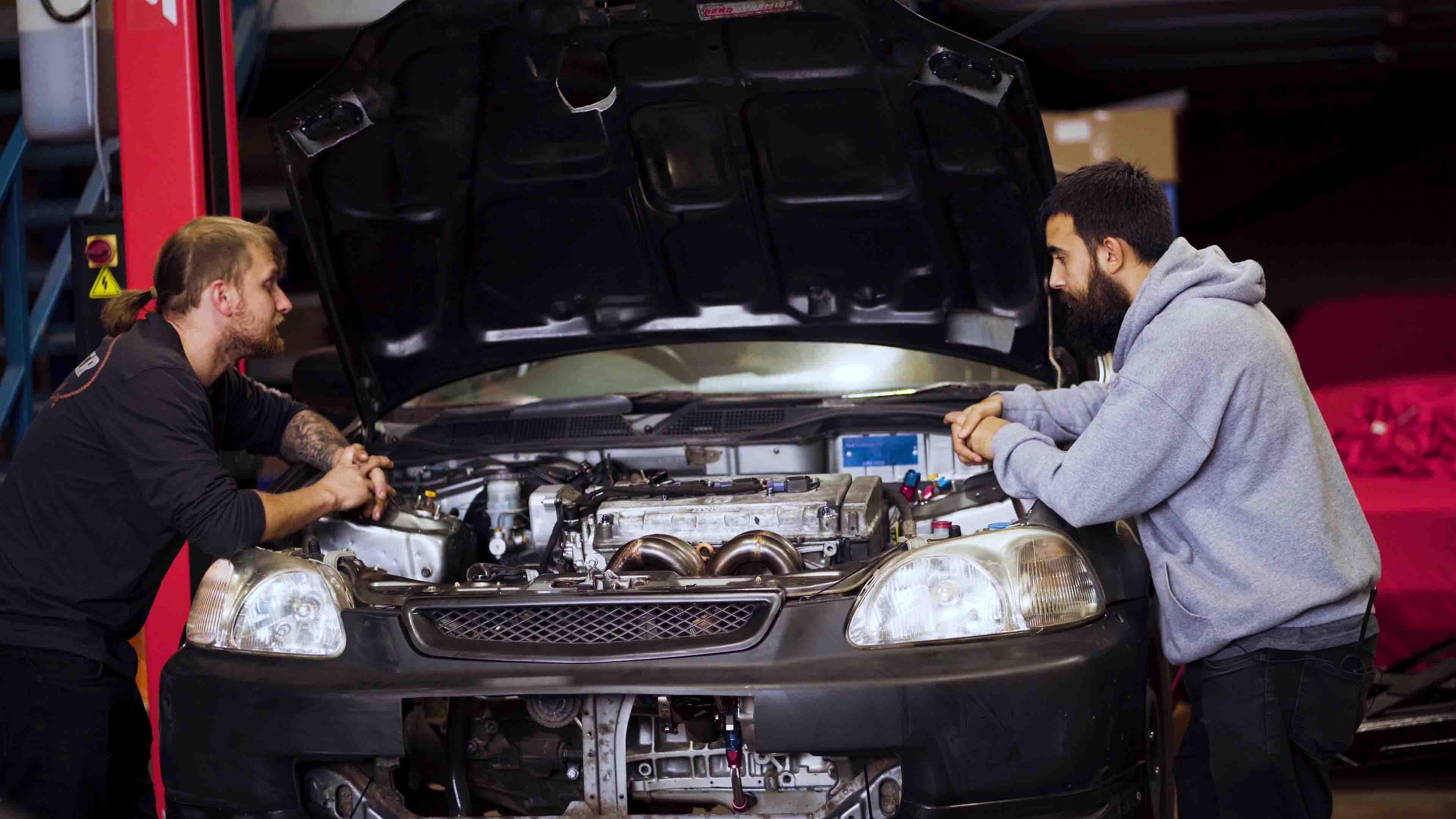
About the Author
Matt and the Exoracing team help UK enthusiasts and workshops choose practical heat-management parts for turbo, exhaust, wiring, hose, line and engine-bay applications. Our guides focus on routing, source control, component protection and post-install inspection.