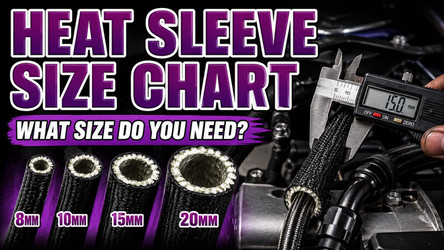
Heat Sleeve Size Chart: What Size Do You Need?
Posted by Matthew Marks on 7th May 2026
Heat Sleeve Size Chart: What Size Heat Sleeve Do You Need?
Use this heat sleeve size chart to match silicone, sewn or Velcro heat sleeve to hoses, AN lines, wiring looms, fuel lines, brake lines and coolant hoses.
This guide is brought to you by Exoracing, UK specialists in heat management and performance parts.
Shop Heat Sleeve and Heat Management PartsChoosing the heat sleeve size should be simple, but it is one of the easiest parts of the job to get wrong, and we've also gotten it wrong a few times, hence why we have decided to create these charts. If the sleeve is too tight, it catches on the hose, refuses to go past fittings and can be frustrating to install. If it is too loose, it can move around, leaving exposed sections and looking untidy.
The short version is this: measure the outside diameter of the part you are protecting, then choose the closest heat sleeve inner diameter above that measurement. Do not choose by the named hose size alone, because AN size, bore size and outside diameter are not the same thing.
At Exoracing, we see this most often with turbo oil feeds, fuel lines, brake lines, coolant hoses and wiring looms routed near manifolds, downpipes or turbo housings. This guide gives you a practical size chart, then explains when to size up, when to use a split sleeve, and when a heat sleeve is not the first fix.
The simple answer
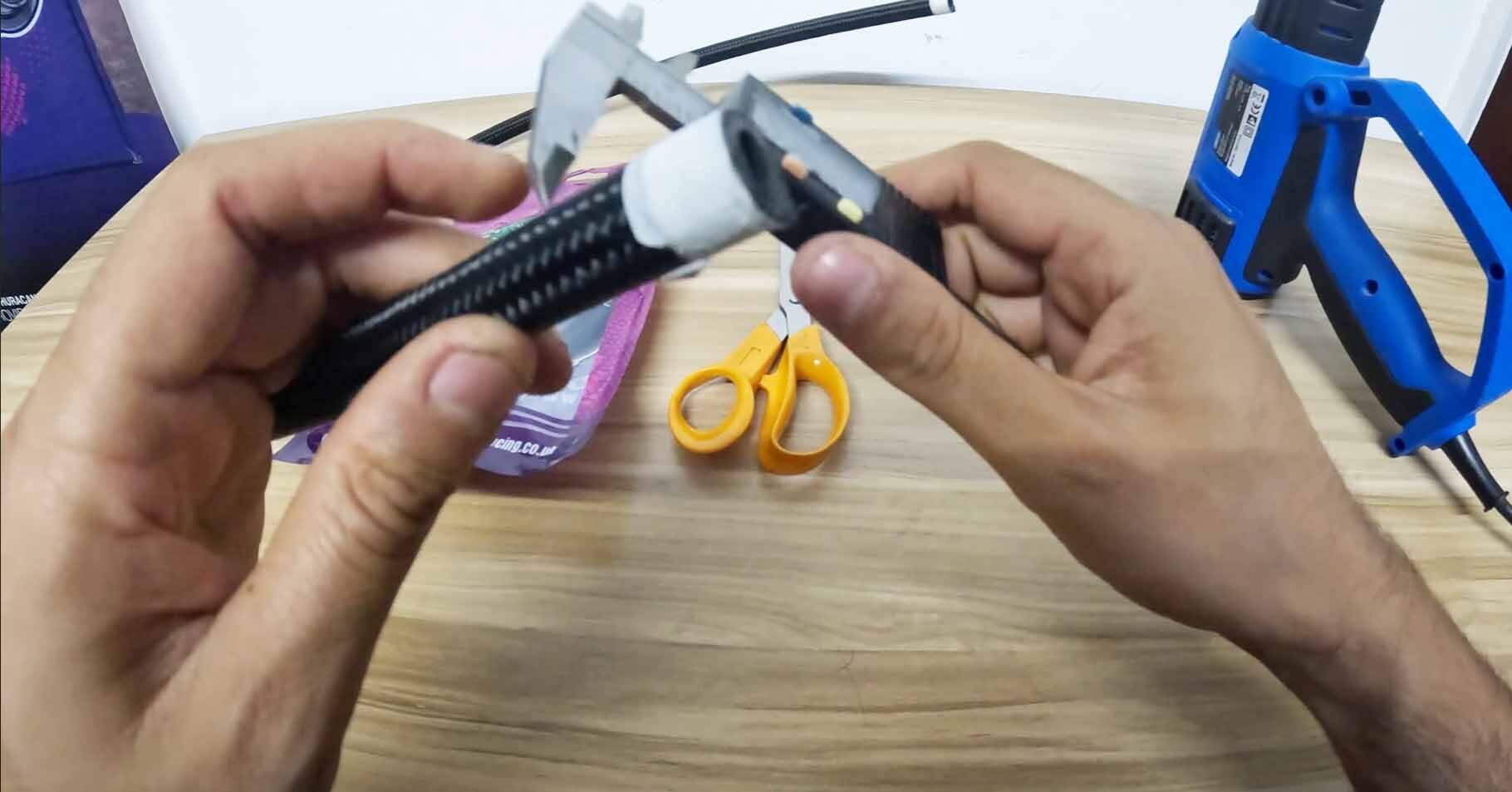
Measure the outside diameter, not the hose name. Use vernier callipers if possible, or wrap a tape measure around the hose and convert circumference to diameter.
Choose the sleeve ID closest to your measured OD. For example, a 14mm outside diameter hose usually suits a 15mm heat sleeve.
Size up if the sleeve must pass over fittings, bends or bulky joins. If the line is already fitted and cannot be removed, use a Velcro-style heat sleeve instead.
- Heat sleeve sizing is based on the outside diameter of the hose, line, cable or loom.
- Choose the sleeve inner diameter closest to the measured outside diameter.
- Silicone fibreglass heat sleeve is available in ID from 8mm to 30mm.
- Sewn and Velcro reflective heat sleeves are available in 15mm, 20mm, 25mm and 30mm ID.
- If the hose is already fitted, has large ends, or cannot be disconnected, a Velcro sleeve is usually easier to install.
Heat Sleeve Size Chart by Measured Outside Diameter
Use this chart after measuring the outside diameter of the part you want to protect. The sleeve size refers to the sleeve inner diameter, usually shortened to ID.
Best for small wiring, sensor wiring or small lines when the measured outside diameter is no more than 8mm.
Use when an 8mm sleeve would be too tight or when the line has a slightly uneven outer surface.
A common size for small hoses, loom sections and compact oil or fuel lines.
Often suits slimmer AN lines and smaller hoses. Also, the smallest sewn or Velcro sleeve size available currently.
A safe choice for thicker fuel hose, coolant hose sections and lines that need a little fitting clearance.
Use for larger coolant hoses, grouped wiring, or larger AN hose outer diameters.
For larger hose runs, thicker looms or bundled lines, where a smaller sleeve would snag.
Exoracing AN Hose OD Reference Chart
AN size describes the hose and fitting family, but the outside diameter changes depending on the hose construction. These figures are taken from the OD data on our Exoracing AN hose product pages. Use them as a guide, then measure the actual hose before ordering the sleeve.
How this chart was built
The OD reference above uses the published sizing data from our own AN hose product pages, including black nylon braided rubber hose, stainless braided rubber hose, black nylon braided PTFE hose, stainless braided PTFE hose and push-lock hose.
We sell and support these hoses and heat management parts daily, but we still recommend measuring the actual hose in your hand. Hose ends, bends, heat shrink, clips, and access around the car can all change which sleeve is easiest to fit.
AN Heat Sleeve Size Chart
Use this chart to turn the OD figures above into a sleeve starting point. Silicone sleeve gives the widest size range from 8mm to 30mm ID. Sewn and Velcro reflective sleeves start at 15mm ID, so very small PTFE lines may suit a silicone sleeve better.
The hose OD is 6.35mm, so an 8mm silicone sleeve is the closest standard option.
The hose OD is 8mm. Use 8mm for a close fit, or 10mm if you need easier installation.
Rubber braided is 11.2mm OD, and push-lock is 11.94mm OD, so 12mm silicone is close. Choose 15mm if using a sewn or Velcro sleeve.
The hose OD is 10.92mm, making 12mm silicone the closest size. Reflective sewn and Velcro sleeves start at 15mm.
The hose OD is 14.2mm, so 15mm is the closest sleeve size and should give a neat fit.
The hose OD is 16mm, so 15mm will be too tight. Use 20mm instead.
The hose OD is 13.72mm, so 15mm is the closest standard sleeve size.
The rubber braided is 17.1mm OD, and the push-lock is 19.05mm OD, so 20mm is the practical starting point.
The hose OD is 16mm, so 20mm gives sensible installation clearance.
The rubber braided is 20.8mm OD, and the push-lock is 23.88mm OD, so 25mm is the closest suitable size.
The hose OD is 19.3mm, so 20mm is close. Size up if the sleeve needs to pass over fittings.
Rubber braided is 24.4mm OD, which suits 25mm. Push-lock is 25.4mm OD, so use 30mm for easier fitment.
The hose OD is 30.5mm, which is just above the standard 30mm sleeve ID. Do not assume a 30mm sleeve will fit.
The hose OD is 35.81mm, so it is larger than the standard 30mm heat sleeve range.
Silicone, Sewn or Velcro: Which Sleeve Should You Size For?
The size is only half the decision. You also need the right sleeve type for the job. A push-over sleeve is ideal when the line can be removed or the ends are small enough. A Velcro sleeve is better when the line is already fitted, or the hose ends are too large to pass through a normal sleeve.
Use for hoses, wiring and lines close to serious heat. Available in 8mm, 10mm, 12mm, 15mm, 20mm, 25mm and 30mm ID.
Use when the hose or line can be removed, and you want a neat reflective finish. Available in 15mm, 20mm, 25mm and 30mm ID.
Use when the hose, loom or line is already fitted and cannot be slid through a normal sleeve. Available in 15mm, 20mm, 25mm and 30mm ID.
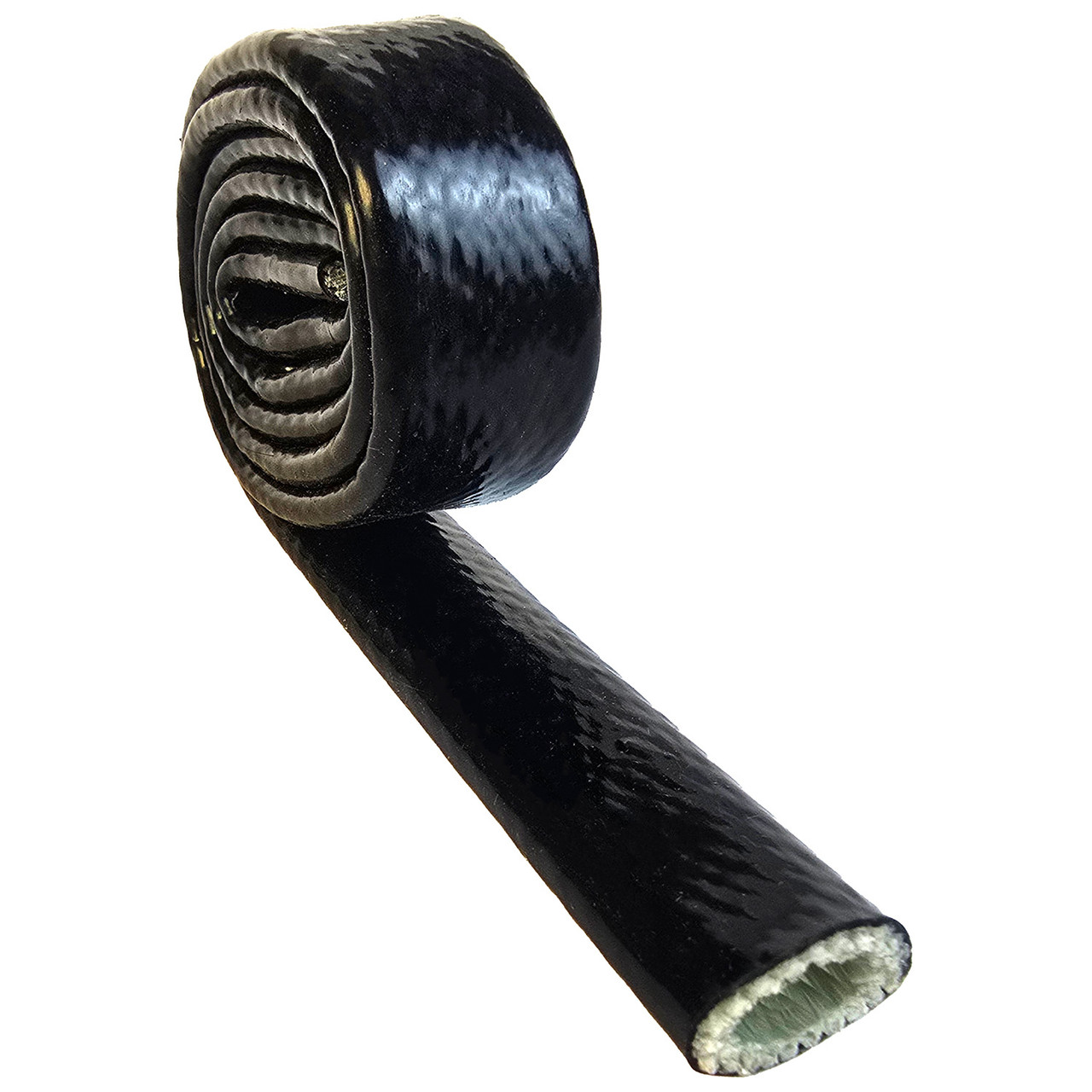 Exoracing Silicone Fibreglass Heat Sleeve
High temperature protection for hoses, wiring and lines near exhaust manifolds, turbos and downpipes.
From £14.99
 Exoracing Gold and Silver Velcro Heat Sleeve
Retrofit heat protection for hoses, wiring and lines that cannot be removed from the car.
From £14.99
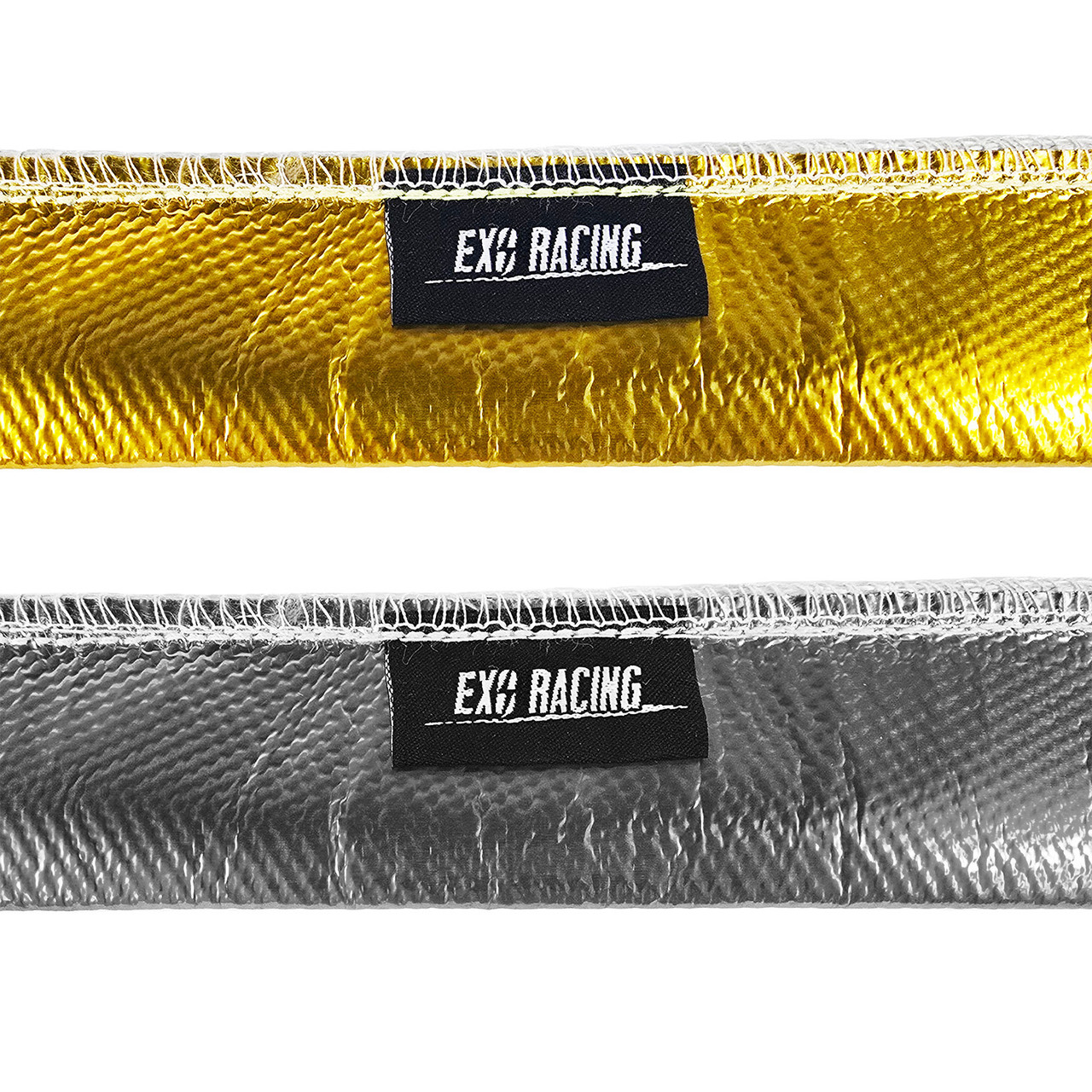 Exoracing Gold and Silver Sewn Heat Sleeve
Push-over reflective sleeve for removable hoses, oil lines, coolant lines and wiring routes.
From £14.99
How To Measure for a Heat Sleeve
The best tool is a vernier calliper because it reads the outside diameter directly. Measure the thickest part of the hose, cable, line or loom you want to protect. If you only have a tape measure, wrap it around the outside, note the circumference, then divide that number by 3.14 to estimate the diameter.
Measure the part as it will sit in the car, not just the bare hose on the bench. Braided hose, rubber hose, cable sleeving, heat shrink, clips and fittings can all change the size you need.
If you are protecting a section near a turbo, manifold or downpipe, also measure the clearance to the heat source. If the line is nearly touching the exhaust, fix the routing first. Heat sleeve works best with sensible clearance, not as a cover-up for a line rubbing on a hot pipe.
If you are building the AN line at the same time, choose and assemble the hose correctly before finalising the sleeve length. Our ultimate AN fittings guide explains the main hose and fitting types, while our rubber braided AN fitting guide and PTFE fitting guide cover assembly steps in more detail.
Watch: How To Install Silicone Fibreglass Heat Sleeve
Common Heat Sleeve Sizing Mistakes
Choosing by an AN size only
AN size is useful, but it is not enough on its own. Different hose constructions can have different outside diameters. Always measure the hose you actually have.
We have customers making this mistake quite often, so always measure to ensure you have the correct ID and OD for your application.
Forgetting about fittings and bends
A sleeve might fit the straight hose but fail to pass over a crimp, banjo, AN fitting or bend. If the sleeve needs to slide over anything larger than the hose itself, size for the largest point.
The sewn and velcro sleeving is a good way to describe this, as if the bends are very tight, the reflective style sleeving will start to bend on itself, so a silicone heat sleeve would be a better option in this case.
Using a sleeve to hide bad routing
If a fuel line, brake line, or oil line is touching a downpipe, move it first if you can. Heat sleeve helps protect vulnerable parts, but it should not be used to justify unsafe routing.
Heat sleeves, although rated to their specific temperatures, are not designed to touch a manifold or downpipe. Silicone heat sleeve works better than sewn reflective, for example, if you are within 15-20mm of the heat source, but routing always plays a very important part in protecting hoses or wiring and longevity.
Sleeving damaged wiring or leaking hoses
Do not cover brittle wiring, split coolant hose, leaking fuel hose or contaminated oil lines and call it fixed. Repair the part first, then protect it properly.
We've seen this happen time and time again, and at the minimum, nothing will happen; worst case, it's a fire risk. Always better to be safe than sorry, and if you are unsure whether it will be ok or not, chances are you will need to change it.
When Heat Sleeve Is Not the First Fix
The heat sleeve protects the vulnerable part. It does not remove the heat source.
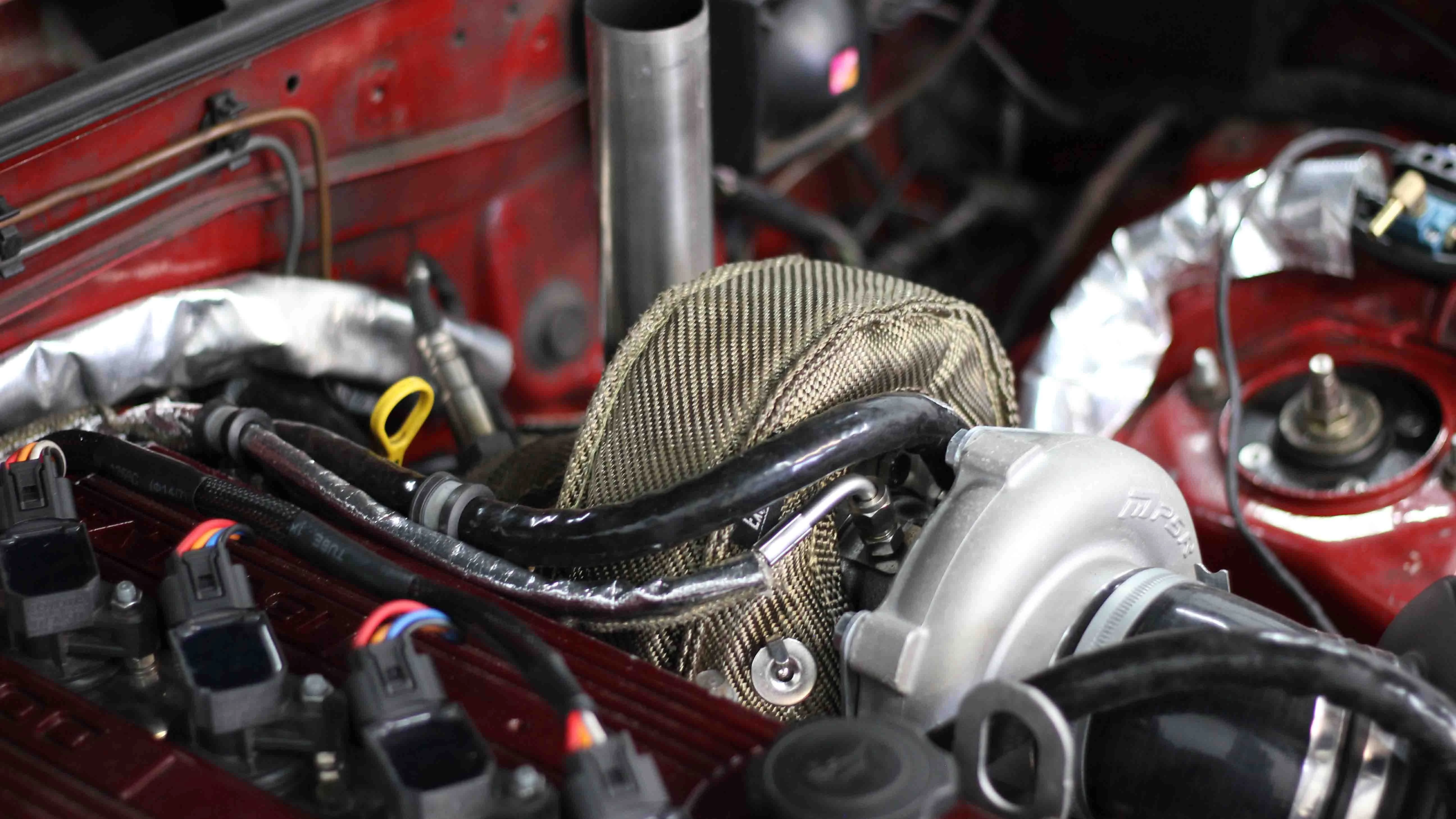
If the turbo housing, manifold or downpipe is flooding the engine bay with radiant heat, you may also need source control such as a turbo blanket, exhaust wrap or a proper heat shield.
For broader product choice, use our heat shield vs exhaust wrap vs heat tape vs heat sleeve guide. For fitting steps, use our silicone heat sleeve installation guide.
Choose the sleeve size from the measured OD.
Measure the hose, cable or line, choose the closest sleeve ID above it, and size up if the sleeve needs to pass over fittings or bends.
Shop Heat Sleeve ProductsFAQ
How do I know what size heat sleeve I need?
Measure the outside diameter of the hose, line, cable or loom, then choose the closest sleeve inner diameter above that measurement. Do not choose by hose name alone.
Should the heat sleeve be tight or loose?
It should slide on without being forced, but sit neatly once installed. If it is too tight, installation becomes difficult. If it is too loose, it may move and expose the part you are trying to protect.
What size heat sleeve for AN06 hose?
Measure it first. As a guide, an AN06 nylon braided hose can be around 14mm OD, which suits a 15mm sleeve, while a rubber push lock AN06 hose can be around 16mm OD, making 20mm a safer choice.
Can I put a heat sleeve over the fittings?
Only if the sleeve ID is large enough to pass over the fitting. If that makes the sleeve too loose on the hose, remove the fitting before installation or use a Velcro heat sleeve. We also now include heat shrink tags with our silicone heat sleeve to get the neatest finish possible.
What size heat sleeve for wiring?
Measure the finished wiring bundle, including loom tape, conduit or sleeving. Choose the closest heat sleeve ID above that measurement, and size up if the bundle bends tightly.
Can I use a heat sleeve on an exhaust pipe?
No. Heat sleeve is for hoses, wiring, lines and cables near heat. Use an exhaust wrap, a heat shield or source control for hot exhaust pipework.
When should I use a Velcro heat sleeve?
Use a Velcro heat sleeve when the hose, loom or line is already fitted, and you cannot slide a normal sleeve over the end. It is also useful when fittings are too large to pass through a push-over sleeve.
Conclusion
The right heat sleeve size comes from one measurement: the outside diameter of the part you want to protect. Measure the hose, line, cable or loom, choose the closest sleeve ID above it, and size up when fittings, bends, or tight access make installation harder.
For most push-over jobs near serious heat, Exoracing Silicone Fibreglass Heat Sleeve is the best starting point. For already fitted lines, use a Velcro heat sleeve. For removable lines where you want a reflective finish, use a sewn heat sleeve.
Related Exoracing Guides
- How to install silicone fibreglass heat sleeve
- The ultimate guide to AN fittings
- How to install AN fittings to a rubber braided hose
- How to install AN PTFE fittings to braided hose
- Heat shield vs exhaust wrap vs heat tape vs heat sleeve
About the Author
I'm Matt, the owner of Exoracing Ltd, a UK-based performance parts brand specialising in heat management and performance parts.
Since 2018, we've helped enthusiasts and workshops choose practical heat protection for turbo cars, track cars, modified engine bays, fuel systems, wiring routes and oil line setups.
Got questions about your setup? Message us on Instagram @exoracinguk or contact us here.