
Car Heat Protection Selector: What Should You Fit First?
Posted by Matthew Marks on 29th Jun 2026
Car Heat Protection Selector: What Should You Fit First?
Most car heat protection problems are misdiagnosed. People often buy the product they have heard of, such as exhaust wrap, when the actual problem might be turbo heat, radiant heat on a panel, or a fuel line that needs a sleeve and better routing.
At Exoracing, we help modified car owners choose heat management parts by finding the heat source, the path heat is taking and the part at risk before recommending a product.
Shop car heat protection parts- If the heat source is the turbo, start with a turbo blanket or a proper turbo heat shield.
- If the heat source is exhaust pipework, use exhaust wrap or a rigid heat shield with an air gap.
- If wiring, hoses, fuel lines, brake lines or oil lines are close to heat, use heat sleeve first after checking routing and damage.
- If panels, bulkheads, airboxes or intake pipes are heat soaked by radiant heat, use reflective tape, reflective sheet or a heat shield.
- If several areas are affected, use the Contain, Reflect, Protect method: contain source heat, reflect radiant heat, then protect vulnerable parts.
The simple answer
The right automotive heat protection product depends on what is creating the heat and what is being damaged or heat soaked. Do not start with a product. Start with the problem.
Use a turbo blanket for turbo turbine housing heat, exhaust wrap for hot pipework, heat sleeve for hoses and wiring, reflective tape or sheet for surfaces, and a heat shield when you need physical separation. If you want the wider comparison before choosing, use our heat shield vs exhaust wrap vs heat tape guide.
Before fitting anything, fix oil leaks, fuel leaks, damaged wiring, poor routing and parts touching the exhaust. Heat protection should not be used to hide an unsafe layout.
What Our Previous Heat Management Work Tells Us
This selector is built from the same pattern we see across Exoracing heat-management support, testing and build content: the wrong first product usually comes from misreading the actual heat problem. The examples below are why we keep coming back to source, path and victim.
In our wiring loom melting guide, we explain how heat-damaged wiring on our own turbo Civic caused restart issues and blown fuses. That is why wiring gets inspection, repair and routing before we add a heat sleeve.
In our fuel line heat guide, we explain a previous customer issue where a fuel line rubbed through a bulkhead because it had no grommet. Heat sleeve would not have fixed the route by itself, and would have also eventually rubbed through.
In our track-day heat problems guide, we mention a drift Mazda MX5 customer whose wastegate lines had started to melt from heat. That is why the selector includes vacuum and boost lines near turbos, not only larger hoses and wiring looms.
In our before-and-after RS4 turbo blanket test, the measured turbo-area surface reading dropped from 117.8°C to 70.0°C at the measured point after fitting blankets. That result is specific to that test, but it shows why source control belongs early in the decision.
In our heat sleeve size chart, we say sleeve sizing is one of the easiest parts to get wrong because fittings, bends and access around the car change what will actually fit.
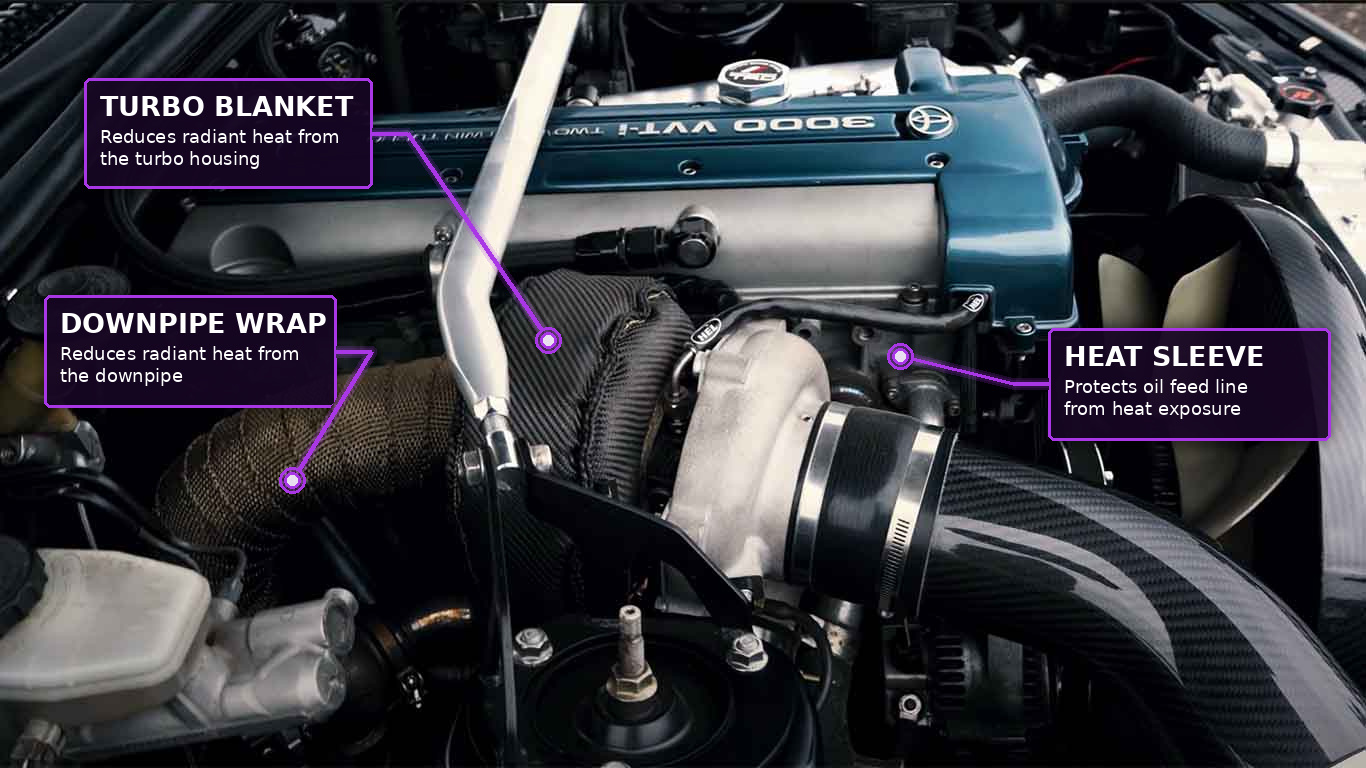
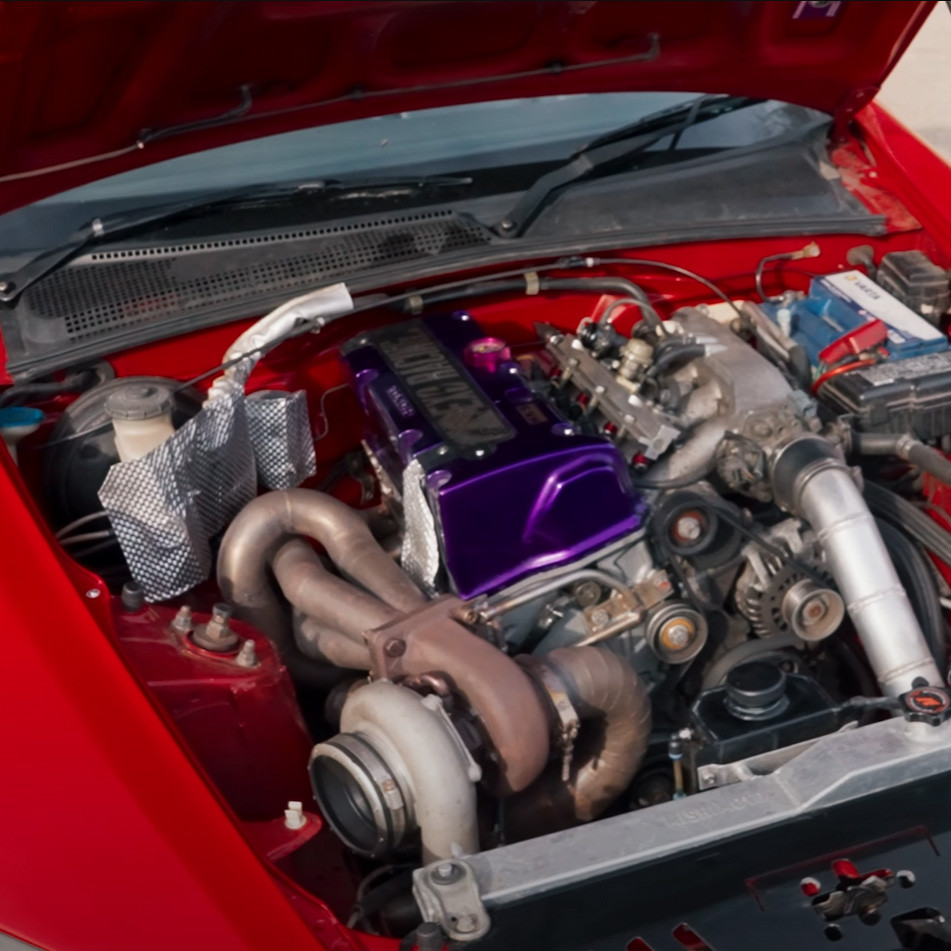
This annotated engine bay example shows why the selector starts with the heat source and then works outwards to nearby lines, wiring, panels and intake parts.
The Simple Rule: Source, Path, Victim
The quickest way to choose car heat protection is to split the problem into three parts.
Turbo turbine housing, exhaust manifold, downpipe, screamer pipe, exhaust tunnel or brake area.
Radiant heat in line of sight, conducted heat through contact, or heat soak building over time.
Wiring, fuel hose, oil line, brake line, intake pipe, airbox, bulkhead, bonnet paint, starter motor or cabin.
For example, a turbo heating an intake pipe is usually source heat plus radiant heat soak. A manifold melting a wiring loom is source heat plus a vulnerable component too close to it.
A downpipe heating a fuel line may need routing corrected first, then sleeve or shielding. Cabin heat from an exhaust tunnel usually needs a barrier or shield, not tape wrapped around the exhaust inside the car.
For deeper diagnosis, our engine bay heat problems guide covers common symptoms and fixes.

Car Heat Protection Selector Table
The first product to fit is not always the only product, but it is the one that usually deals with the main problem first. Always fix the worst and most problematic issue first.
What Each Heat Protection Product Is Best For
Turbo Blankets
A turbo blanket is source control for the turbine housing. It is best when the turbo itself is radiating heat into the engine bay, towards wiring, hoses, bonnet paint, intake pipework or nearby fluid lines.
It is not for manifolds, downpipes, naturally aspirated cars, oil-soaked turbo areas or incorrectly sized applications. Check the turbo is cold, clean and leak-free before fitting, and recheck the blanket after heat cycles. If you are unsure on fitment, use the turbo blanket size guide before ordering. If contamination is the concern, read our turbo blanket oil leak safety guide.
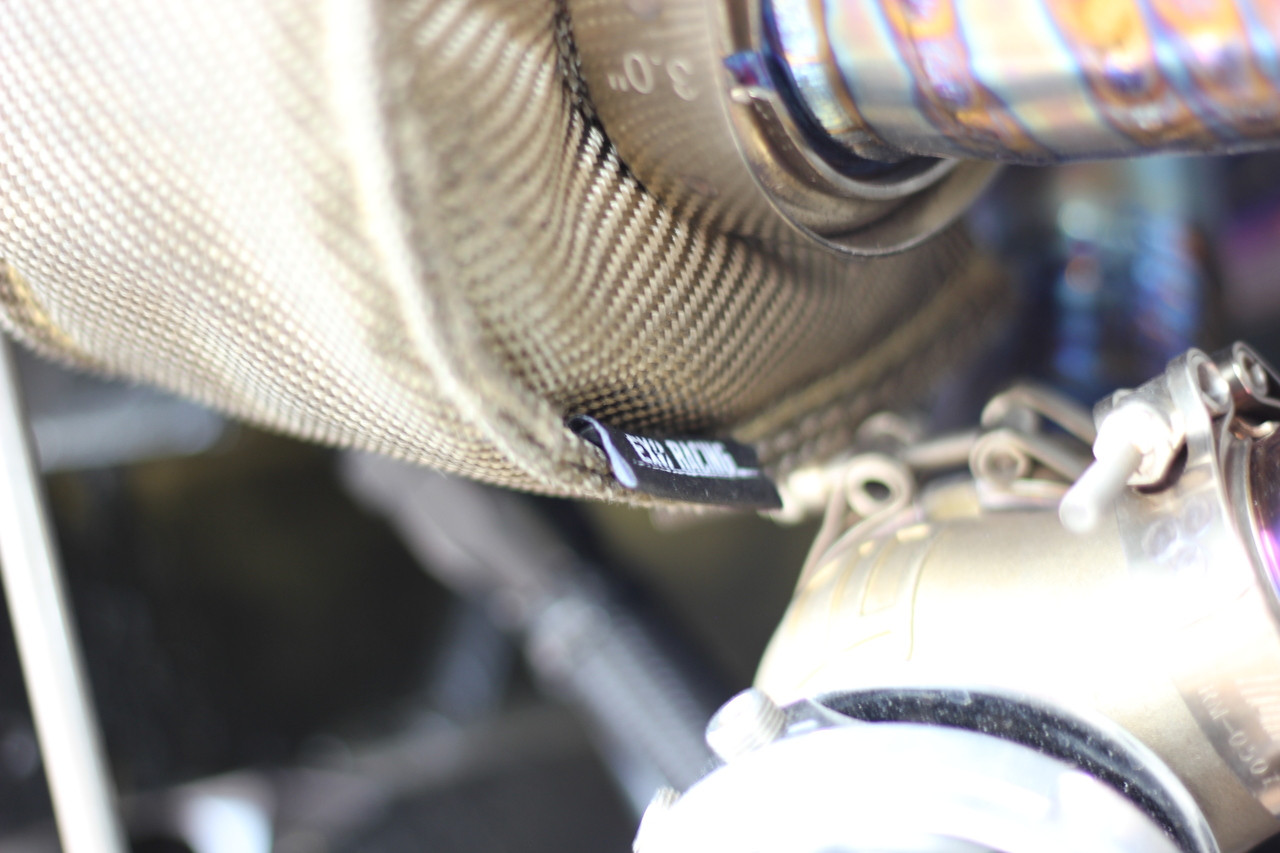
Watch: Turbo blanket heat control and installation.
Exhaust Wrap
Exhaust wrap is for hot exhaust pipework such as manifolds, headers, downpipes and screamer pipes. It helps contain heat on the exhaust side before it radiates into nearby parts.
It is not for wiring, hoses, intake pipes, plastic parts or flat panels. From our product support questions, a common mistake is using exhaust wrap as a universal fix when the real problem is a line or loom sitting too close to heat. If your concern is smoke after fitting, our exhaust wrap smoking after install guide explains what is normal and what needs inspection.
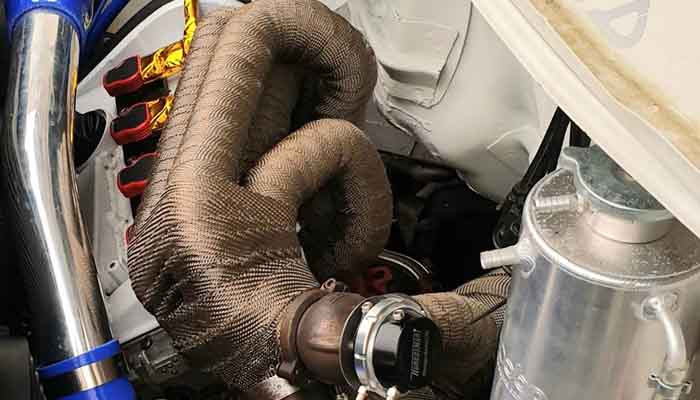
Watch: Exhaust wrap installation support for manifolds and downpipes.
Heat Sleeve
Heat sleeve is component protection. Use it on wiring, fuel lines, brake lines, clutch lines, oil lines, coolant hoses, vacuum hose and AN hose when the part has to pass near heat.
It is not exhaust wrap and should not be used on pipework that is creating the heat. Measure the outside diameter of the hose, cable or line, choose the closest sleeve size up and avoid forcing sleeve over damaged or leaking parts. Use the heat sleeve size chart if you need help choosing the correct sleeve diameter.
Reflective Heat Tape
Reflective heat tape is for surfaces facing radiant heat, such as intake pipes, airboxes, engine covers, bulkheads and small brackets. It works best when there is line-of-sight radiant heat from a turbo, manifold or downpipe.
Do not stick adhesive reflective tape directly onto exhaust manifolds, downpipes or turbo housings. Clean the surface properly first, because oily, dusty or rough surfaces are a common reason adhesive heat protection lifts. For prep and application detail, use our heat reflective tape installation guide.
Watch: Reflective tape and sheet product guidance for surface heat protection.
Reflective Heat Sheet
Reflective heat sheet is the larger surface version of reflective tape. It suits airboxes, bulkheads, covers, panels and fabricated intake shields where a bigger area needs protection from radiant heat.
It is not the right first fix for a hose or wire touching a hot part. If the vulnerable part is a line or loom, protect the component with heat sleeve and improve routing first.
Bolt-On Or Fabricated Heat Shields
A heat shield is best when you need physical separation and an air gap. Use it around bulkheads, starter motors, washer bottles, brake lines, underbody areas, fuel tanks, intake areas and tight engine swap spaces.
A shield is not a magic replacement for source control. It works best when mounted securely, kept away from moving parts and combined with source control or sleeve where the setup needs it.
If the manifold or downpipe itself needs a close-fitting stainless outer layer rather than a separate air-gap barrier, follow our step-by-step weldable exhaust heat shield installation guide before cutting the material.
Heat Management Kits
A heat management kit makes sense when the car has several linked heat problems. A turbo conversion, engine swap or drift car may need source control, surface protection and line protection at the same time. If the car feels fine cold but gets worse after traffic, repeated pulls or track use, read our engine heat soak guide before assuming one product will fix everything.
The mistake to avoid is buying a bundle without checking the car. A good kit should match the actual source, path and victim on your setup.
Recommended Heat Protection Products
These are the main product types to consider once you have identified the heat source and the part at risk.
 Exoracing Turbo Blanket V3
Contains heat around the turbo turbine housing before it radiates into nearby hoses, wiring and panels.
From £119.99
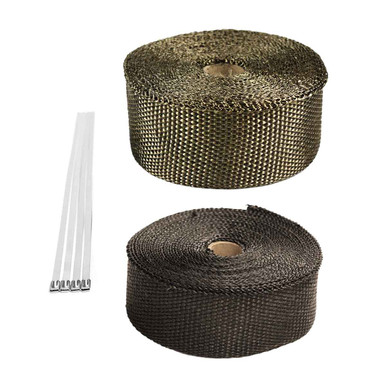 Exoracing Titanium or Carbon Exhaust Wrap
Wraps manifolds, headers and downpipes when the exhaust pipework is the main heat source.
From £24.99
 Exoracing Silicone Fibreglass High Temperature Heat Sleeve 0.5m
Protects hoses, wiring, fuel lines, oil lines and brake lines where routing near heat cannot be avoided.
From £14.99
 Exoracing Embossed Aluminium Heat Shield
Creates a rigid radiant heat barrier for bulkheads, panels, starter motors, hoses and tight engine bays.
From £49.99
Contain, Reflect, Protect
For a modified turbo car, the strongest heat management setup is often layered rather than relying on one product. The full method is covered in our Contain, Reflect, Protect engine bay heat guide.
This reduces the heat leaving the source before it attacks the engine bay.
This helps surfaces facing the heat source resist radiant heat soak.
This protects the individual components that still have to live near the heat.
What To Buy First By Budget
Common Mistakes That Cause Heat Protection To Fail
- Do not put adhesive reflective tape directly on exhaust parts or turbo housings.
- Do not assume exhaust wrap fixes every heat problem.
- Do not ignore oil, fuel, coolant or power steering leaks on turbo blankets or exhaust wrap.
- Do not let wiring, fuel lines or brake lines touch hot exhaust parts.
- Do not use temperature ratings without understanding continuous and peak exposure.
- Do not fit adhesive products over dirty, oily, rusty or loose surfaces without preparation.
Printable One-Page Heat Protection Checklist
Print this section before working on the car or save it with your build notes. It is designed as a quick workshop checklist for choosing the first correct heat protection product.
Car Heat Protection Checklist
Vehicle: ________________________________________________
Heat source: _____________________________________________
Part at risk: ____________________________________________
1. Identify the problem
Turbo, manifold, downpipe or exhaust tunnel identified.
Victim part identified: wiring, hose, line, panel, intake, airbox or bonnet.
Heat path checked: radiant heat, direct contact, airflow heat or heat soak.
2. Safety check first
No oil, fuel, coolant or power steering leaks near hot parts.
No wiring, fuel lines or brake lines touching exhaust parts.
Damaged, brittle, cracked, melted or rubbing parts repaired before protection is fitted.
3. Choose the first product
Turbo heat: turbo blanket or turbo heat shield.
Exhaust pipework heat: exhaust wrap or fabricated heat shield.
Hose, line or wiring risk: heat sleeve after routing is checked.
Panel, intake or airbox heat soak: reflective tape, reflective sheet or heat shield.
4. Fit and recheck
Adhesive surfaces cleaned, dry and suitable before tape or sheet is fitted.
Wrap, sleeve, shield and blanket clear of moving parts and sharp edges.
First heat cycle completed, then car cooled and inspected again.
Notes after recheck: ____________________________________________
What Happens If You Ignore Heat Problems?
Heat damage often starts quietly. A loom goes stiff before it melts. A hose hardens before it cracks. Reflective tape lifts because the surface was not prepared. A turbo blanket becomes unsafe because oil has leaked into it. These are the problems we want customers to prevent rather than hide.
The serious risks are melted wiring, damaged fuel hose, softened vacuum line, brake or clutch line heat exposure, heat-soaked starter motors, damaged paint and repeated intake heat soak. The correction is not always to add more material. Sometimes the right first step is rerouting, repair, cleaning, shielding or creating more air gap.
Common Concerns Before Buying
Should I fix routing before buying heat protection?
Yes. If a fuel line, brake line, oil line or loom is touching a hot part, the first fix is clearance and routing. Heat sleeve and shielding are there to protect a sensible layout, not make a bad layout acceptable. Plus, relocating hoses and lines is often free and has a significant impact on heat reduction.
Can a turbo blanket catch fire?
The main risk is contamination. Do not fit a turbo blanket over oil, fuel, coolant or power steering leaks. Fit it only to a clean, leak-free turbo area and inspect it after the first heat cycles.
Will exhaust wrap smoke after installation?
Some light smoke during early heat cycles can happen as moisture and residue burn off. If the smoke smells of oil or fuel, is heavy, or does not settle, switch the car off and inspect the area.
Can heat sleeve melt?
Heat sleeve still has limits, especially if it is touching exhaust parts or covering a damaged component. Use it with clearance wherever possible and choose the correct sleeve for the hose, line or wiring size.
Is reflective tape enough for an intake pipe?
It can help with radiant heat on a surface, but it is not a substitute for controlling the heat source. If a turbo or downpipe is close to the intake, consider source control and shielding as well.
What should I check after fitting heat protection?
After the first heat cycle, let the car cool fully and recheck fasteners, wrap tension, sleeve position, adhesive edges, clearance to moving parts and any signs of oil, fuel or coolant contamination.
Final Decision: What Should You Fit First?
If you know what is getting hot but do not know what to fit, go back to the selector table and identify the source, path and victim. Start with the first product that controls the actual problem, not the product that looks easiest to install.
If you are still unsure, contact Exoracing with clear photos of the heat source, the affected part and the clearance available.
A few photos of the turbo, manifold, downpipe, loom, fuel line, brake line or bulkhead can make the correct heat protection choice much clearer.
Browse Exoracing heat management partsAbout the Author
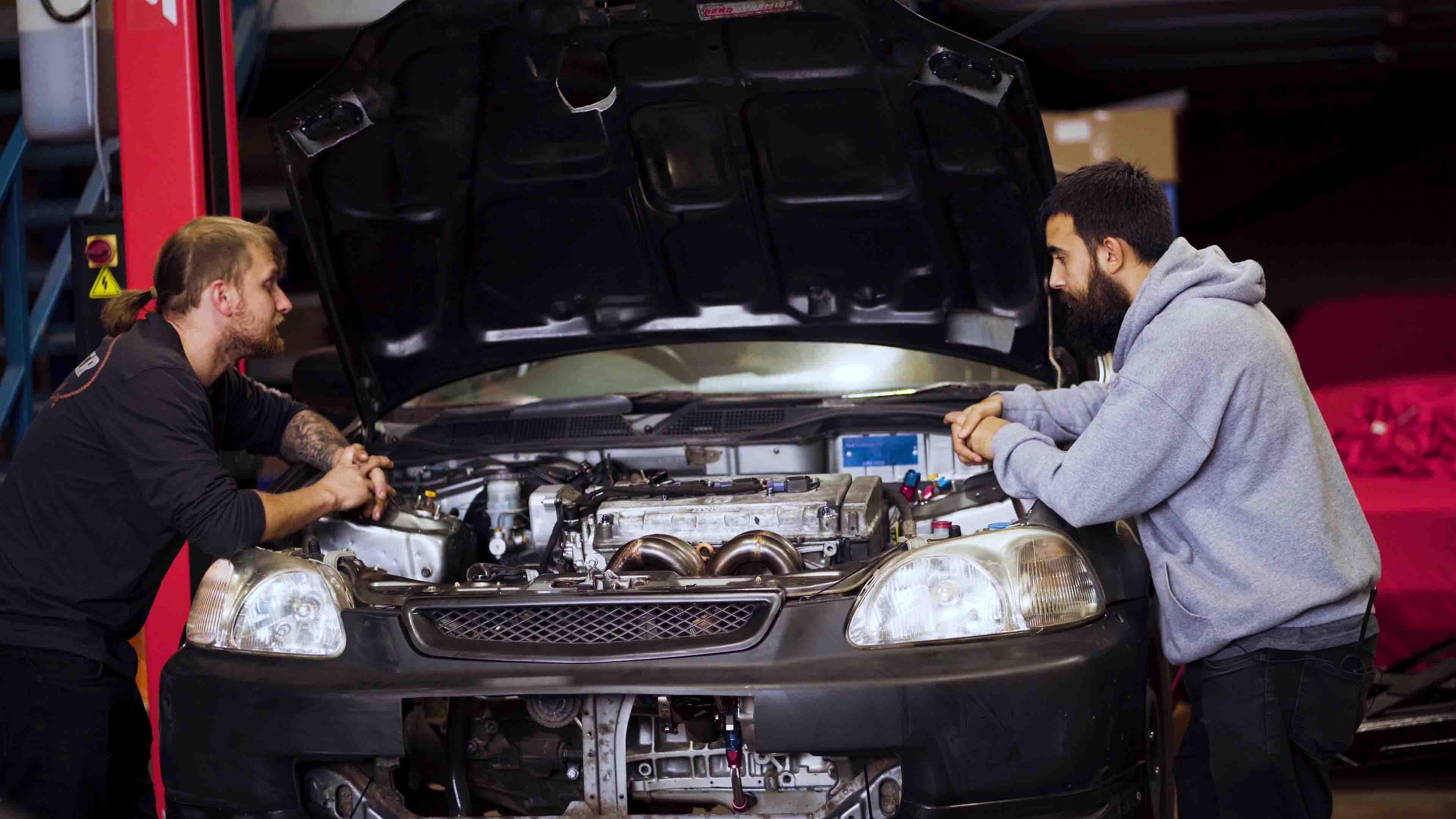
Matt and the Exoracing team help UK car enthusiasts, workshops and track-day customers choose practical heat management parts for turbo conversions, engine swaps, drift cars, road cars and race builds.
Our guidance focuses on choosing the right product for the actual heat source, the part at risk and the clearance available.